Start With Function, Not Aesthetics
The instinct when moving into a first flat is to start decorating immediately. Resist it. A space that looks cohesive but doesn't work for how you actually live will feel frustrating within weeks.
Before anything else, do a functional audit. Ask yourself where you'll eat, sleep, work, and store things. Identify which daily activities the flat needs to support - and whether the existing layout supports them. Our room-by-room audit checklist can help you assess each space clearly before spending anything.
It's also worth understanding a few design terms before diving deeper. Key organizing vocabulary - like zoning, visual weight, and negative space - appears everywhere in home content, and knowing what these mean prevents wasted effort.
Zoning
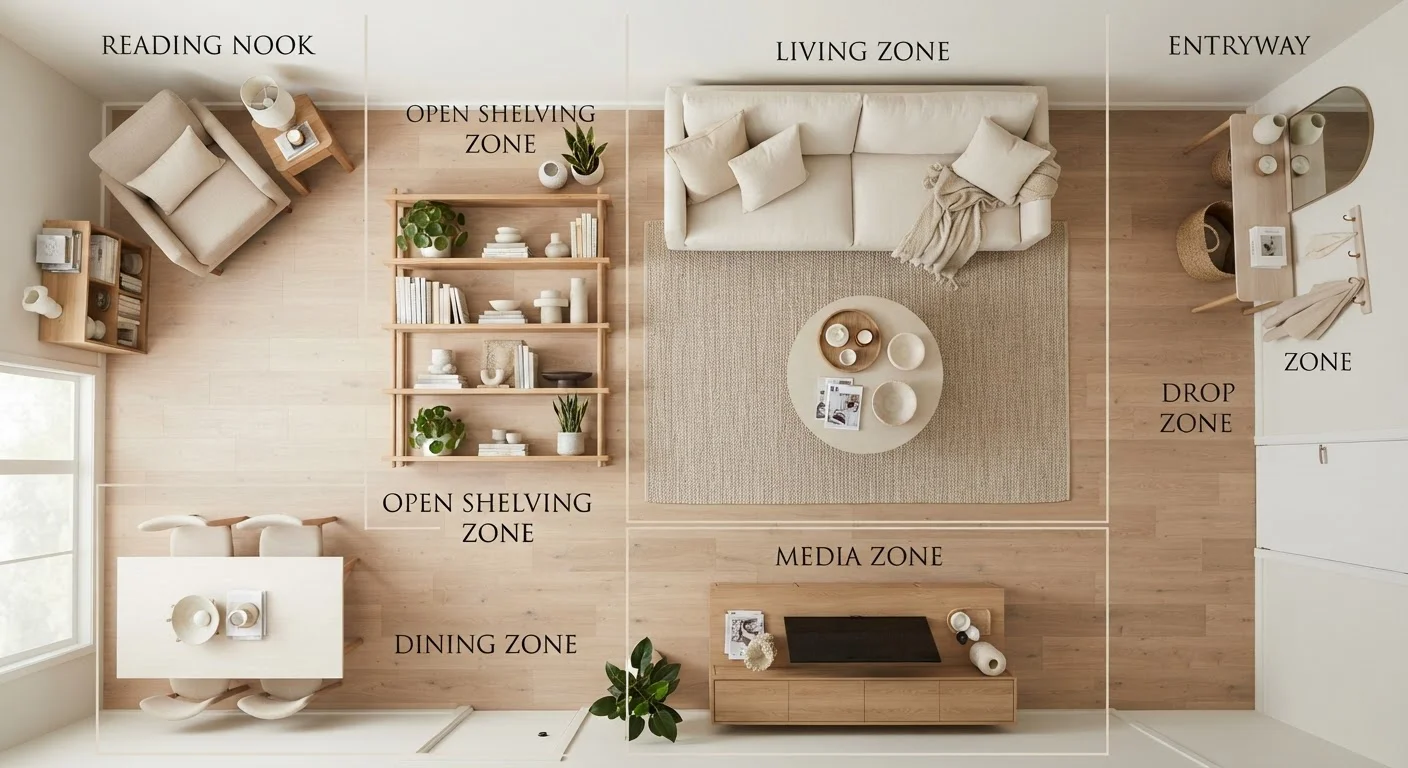
Dividing a room into distinct areas for different activities - such as sleeping, working, and relaxing - using furniture, rugs, or lighting rather than walls.
Visual weight
How heavy or dominant an object looks in a space. Dark, large, or highly textured items carry more visual weight than light-colored or smaller ones.
Negative space
The empty or unoccupied areas in a room. Intentional negative space prevents a space from feeling cluttered and gives the eye somewhere to rest.
Multifunctional furniture
Furniture designed to serve more than one purpose - such as a storage ottoman or a sofa bed - helping maximize limited square footage.
Focal point
The first thing your eye is drawn to when entering a room, such as a large window, a fireplace, or a piece of art. Arranging furniture to acknowledge the focal point creates a sense of intention.
Claiming Your Space: Layout Basics
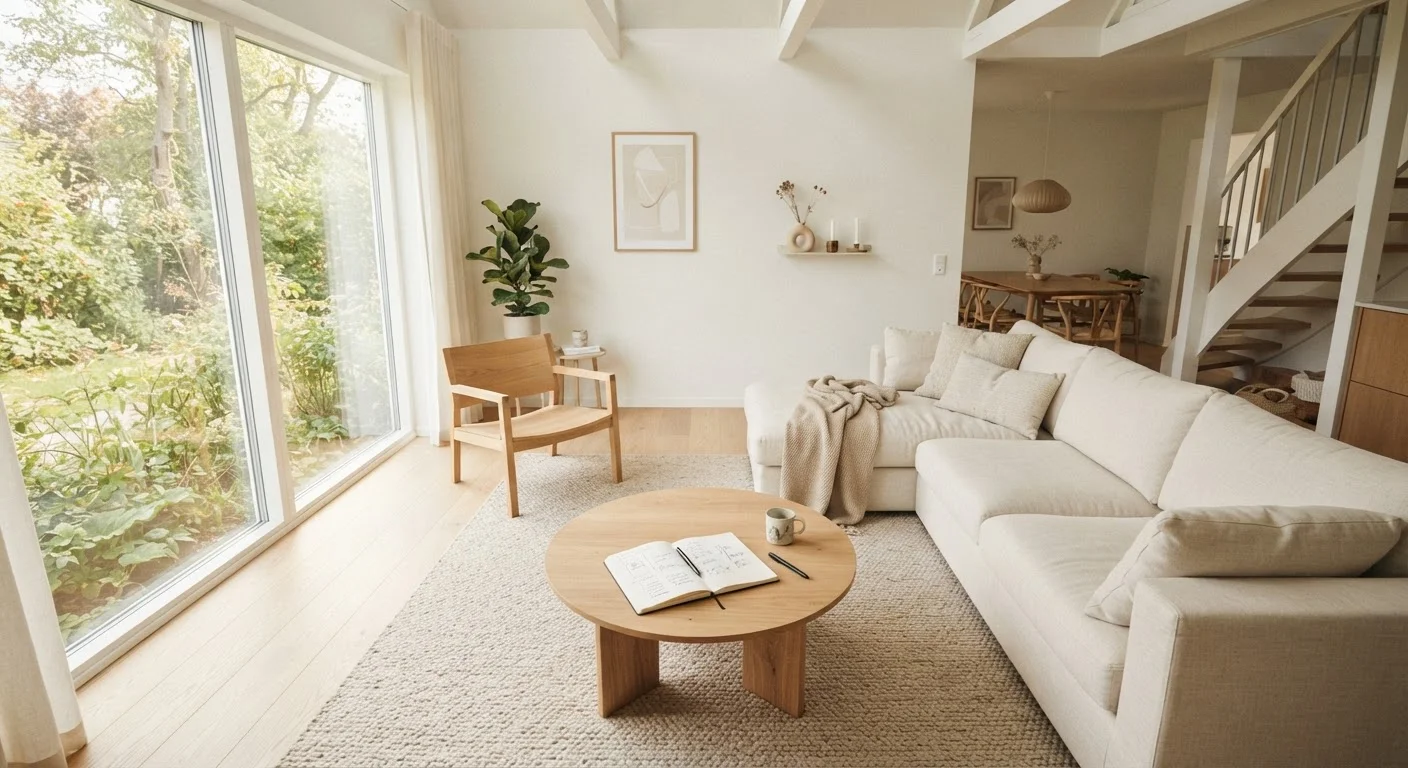
In a small flat, furniture placement determines everything. Start by identifying the room's focal point - a window, a fireplace, or simply the longest wall - and arrange seating around it. Avoid pushing all furniture against walls; floating a sofa slightly inward often makes a room feel larger, not smaller.
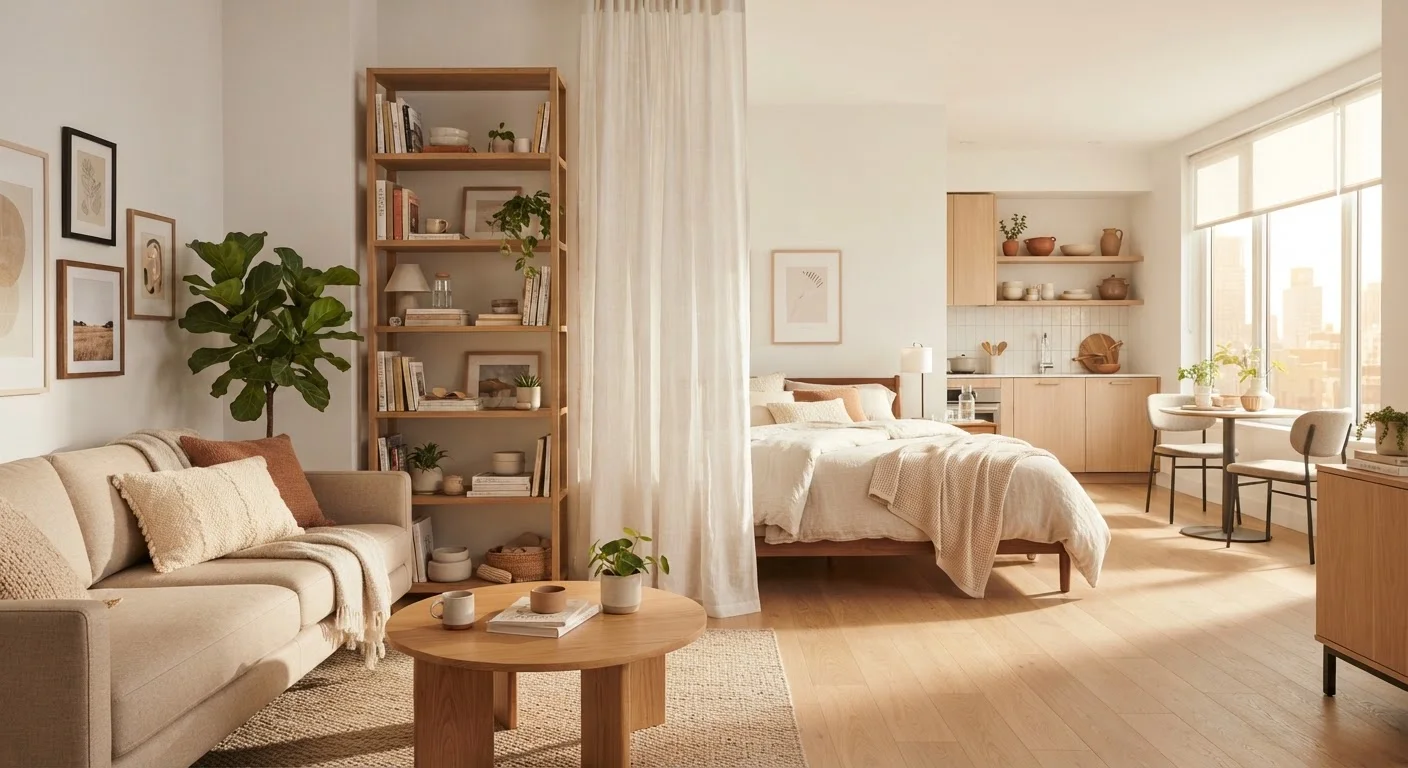
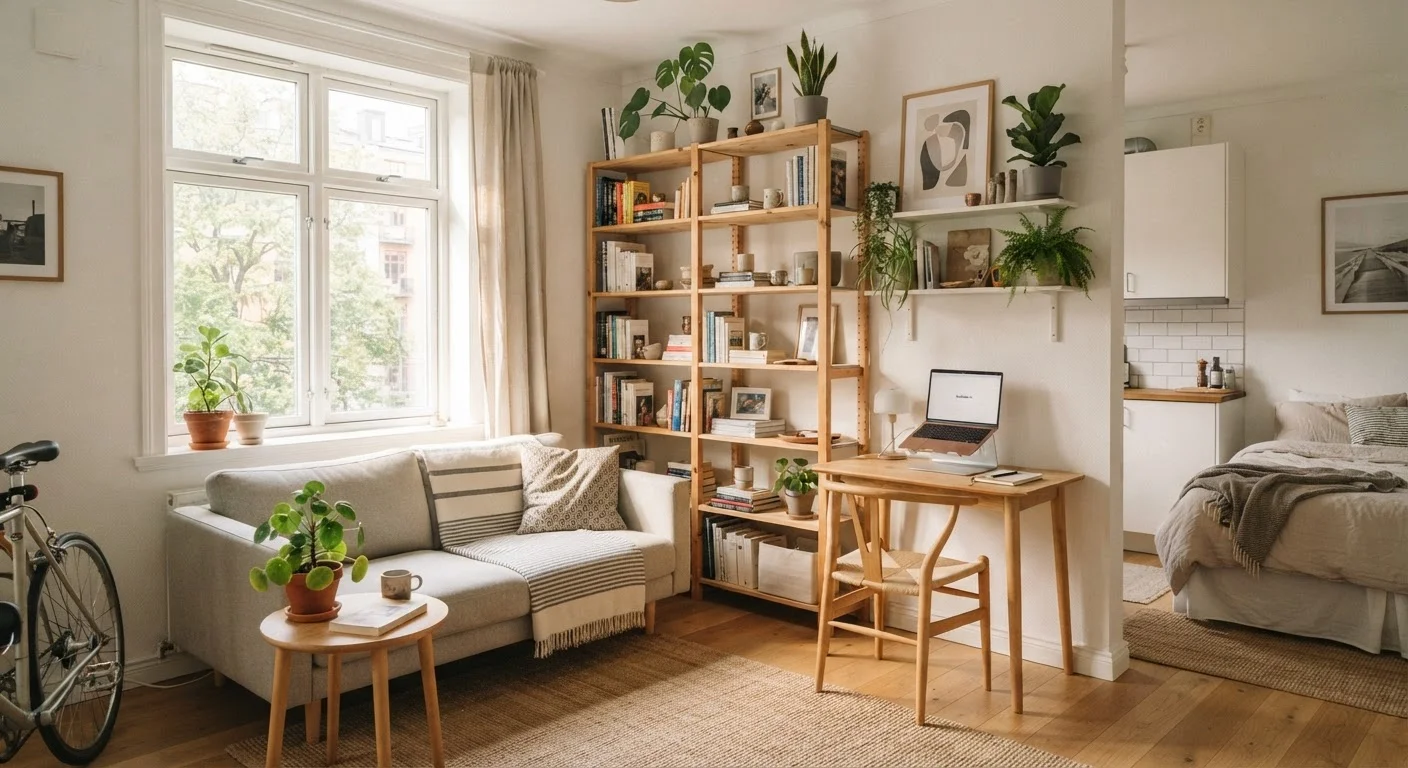
Zoning is especially important in studios or open-plan layouts. Use a rug to define a living area, a narrow bookcase to visually separate a sleeping zone, or a change in lighting to distinguish a workspace from a relaxation area. For more tactics on this, see rental-friendly room division strategies that don't require drilling.
If you work from home, carving out even a small dedicated corner matters more than most people expect. Our guide on setting up a home office in a shared flat covers how to create a functional workspace without dominating your living area.
Try Before You Commit
Before buying furniture, use painter's tape on the floor to map out the footprint of each piece you're considering. This simple trick reveals whether a sofa or desk fits the space comfortably without any heavy lifting. It takes five minutes and can save you from a costly return.
Storage That Works in Small Spaces
Most first flats have less storage than you need. The solution isn't buying more bins - it's using the space you have more strategically.
Vertical space is almost always underused. Tall shelving units, hooks near entryways, and wall-mounted storage above desks free up the floor area that makes small rooms feel cramped. The principles behind this approach are covered thoroughly in our guide to small-space organization principles that apply across every room.
Multifunctional furniture earns its keep in compact spaces. Beds with built-in drawers, storage ottomans, and fold-out desks all consolidate what would otherwise require multiple separate pieces. For an honest look at where these pieces excel - and where they disappoint - see our analysis of multifunctional furniture.
Don't Overbuy Storage Early On
It's tempting to stock up on bins, baskets, and shelving units when first moving in, but buying storage before understanding your habits often means buying the wrong kind. Live in the space for a few weeks first - you'll have a much clearer sense of where clutter actually accumulates and what type of storage genuinely helps.
Adding Character Without Overspending
Once storage and layout are in order, style follows naturally. The most effective approach at this stage is restraint: choose two or three colors and repeat them across textiles, accessories, and plants rather than accumulating unrelated pieces.
Shelving is often where this goes wrong. Objects placed without visual logic look chaotic regardless of how carefully each piece was chosen. Our breakdown of why shelves look cluttered - and how to fix it explains the visual balance rules that make a big difference.
For decorating strategies that stretch further than you might expect, decorating on a tight budget covers material swaps, focal-point decorating, and color theory shortcuts worth knowing. If you're also thinking about sustainability, sustainable organizing approaches offers alternatives to filling your flat with plastic storage products.
Renter Considerations Worth Knowing
Most first flats are rentals, which means working within a landlord's constraints. That's less limiting than it sounds. Removable adhesive hooks, tension rods, peel-and-stick picture-hanging strips, and freestanding furniture allow meaningful personalization without touching walls permanently.
For a broader range of reversible improvements, our guide to renter-friendly upgrades covers changes you can make safely and reverse at the end of your tenancy. If you're thinking about painting or more involved improvements, check paint finish guidance and confirm with your landlord before starting.
Finally, treat your home setup as a planned budget line rather than an impulse spend. Our budgeting basics hub can help you approach setup costs with the same structure you'd apply to any other major expense. A first flat doesn't need to be perfect on day one - it just needs to work well enough that you can think clearly and build gradually.
This article is for general informational purposes only. Costs, lease terms, and regulations vary by location - always review your lease agreement and verify local requirements before making changes to a rental property.