
Why Flat-Pack Furniture Fails - and What You Can Do About It
Flat-pack furniture gets a bad reputation for wobbling, sagging, and falling apart - but most of those failures trace back to assembly habits, not the furniture itself. The particleboard and MDF used in self-assembly pieces are engineered to work well when joints are properly aligned and fasteners are fully seated. When they're not, stress concentrates unevenly and the piece degrades faster than it should.
The good news: a handful of deliberate techniques during and after assembly can make a meaningful difference in how long a piece holds up. Whether you're setting up a first apartment or adding a desk to a home office, these structural habits are worth building now. See our guide to organizing and styling a first flat for broader context on furnishing a new space efficiently.
Getting the Joints Right From the Start
The joint is where everything happens structurally. Most flat-pack pieces rely on cam locks, wooden dowels, and confirmat screws - and each one has an easy-to-miss failure mode.
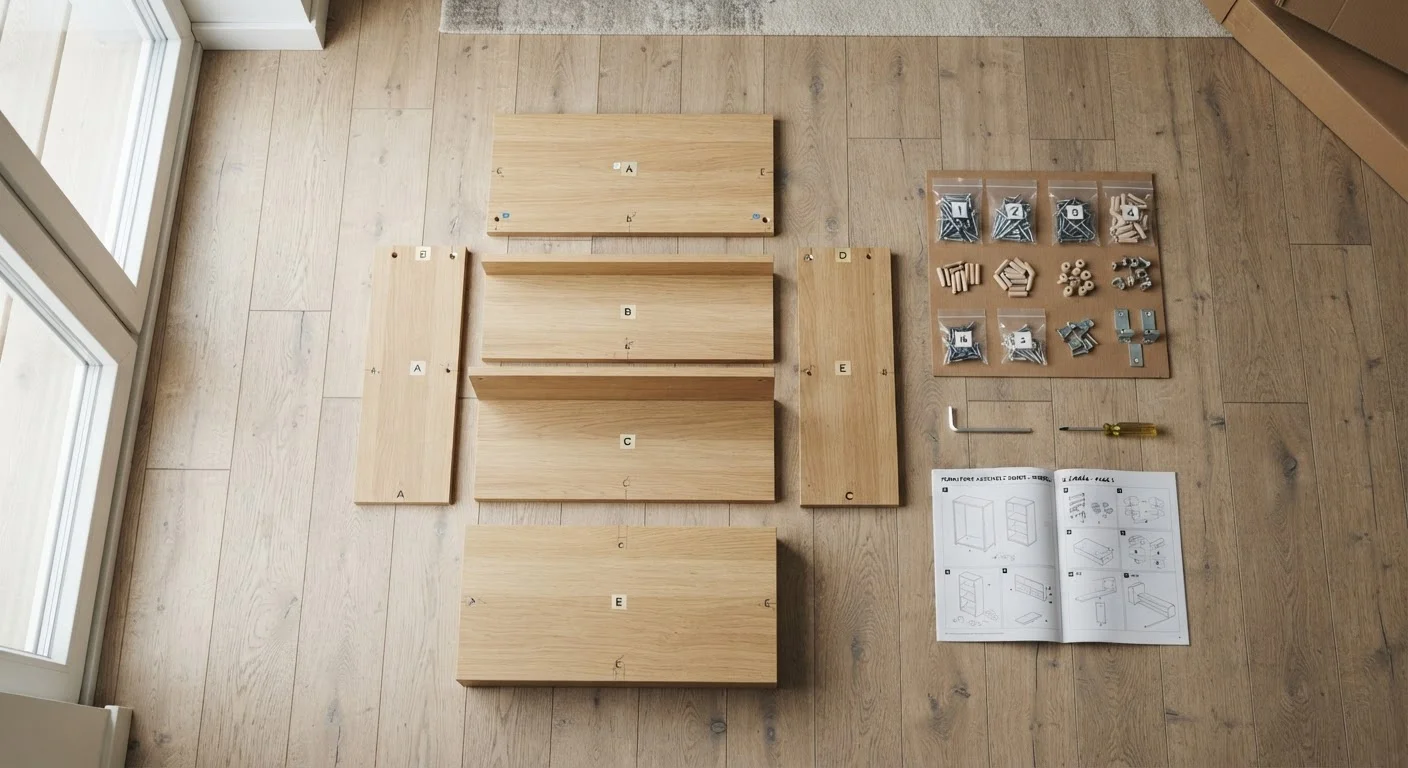
Cam locks (the barrel-shaped metal fasteners) should rotate a full 90 degrees to a snug stop. If yours stops short or spins freely, the hole may be misaligned - disassemble, realign, and retry rather than forcing it. Dowels serve as alignment guides, not primary load-bearers, so they rely on the surrounding joint being square. Before locking anything permanently, do a complete dry-fit run: assemble without glue or final tightening, check that panels are flush and corners are square using a speed square, then disassemble and reassemble properly. This extra pass catches alignment problems before they're locked in.
For pieces that will bear real load - bookshelves, bed frames, media units - applying a thin bead of wood glue to dowel holes before pressing them together adds significant shear resistance. Wipe away any squeeze-out immediately with a damp cloth and allow the glue to cure before loading the piece.
Addressing Wobble and Racking
Racking - the side-to-side lean a bookcase or wardrobe develops over time - usually starts the moment a piece is assembled on an uneven floor and is then pushed against a wall. The back panel on most flat-pack furniture is thin hardboard stapled or pinned into a routed channel; it's the primary element preventing racking, and it only works when it's installed squarely.
Before attaching the back panel, measure the diagonal dimensions corner to corner. Both diagonals should be equal. If they differ by more than about ¼ inch, gently rack the carcass until they match, then fix the back panel. This keeps the frame true.
Adjustable furniture feet are worth adding even when a piece comes without them - they're inexpensive hardware available at most home improvement stores. Leveling feet let you compensate for uneven floors without shimming, which keeps the carcass square under load. For taller pieces like wardrobes and bookcases, wall anchoring with a bracket and appropriate wall fastener is an important safety measure, particularly if the space is shared with children. Check small-space organization principles for more on placing furniture safely in compact rooms.
Maintenance and Long-Term Care
Even a well-assembled piece needs attention over time. Cam locks and confirmat screws back off slightly under repeated loading and thermal cycling - a quick walk-through with a hex key every six to twelve months catches this before looseness becomes structural damage.
Particleboard is vulnerable to moisture at exposed edges. Applying a thin coat of clear sealant or edge banding to any raw cut edges - particularly on pieces near sinks or windows - slows moisture uptake noticeably. If a cam lock hole has stripped, filling it with wooden toothpicks and wood glue before re-driving the fastener restores grip rather than leaving the joint loose.
For multifunctional pieces that convert or fold regularly, inspect pivot points and hinges each time you reassemble. Those mechanisms accumulate wear faster than static joints. For a deeper look at how convertible furniture holds up under real use, see the case for multifunctional furniture.
If you're setting up a desk in a shared space, a well-assembled, stable unit matters for daily usability - our home office setup guide covers layout and storage considerations specific to flatshares.