The Core Principle: Friction and Flow
Every small-space organization problem is really a friction problem. When putting something away requires three extra steps, it doesn't get put away - it lands on the nearest surface. Effective organization means designing systems where the path of least resistance is also the tidy choice.
Ask this about every storage decision: how many actions does it take to retrieve and return this item? If the answer is more than two, the system will fail within weeks. Hooks near the door beat closed cabinets for daily items. Open shelves at eye level beat deep drawers for things you use regularly.
This friction lens applies across every room. Research into why tidy spaces feel better confirms that reducing decision fatigue at the point of return is as important as the initial setup.
Start With One High-Friction Zone
Rather than overhauling your entire home at once, identify the single spot that generates the most daily frustration - usually the entryway or kitchen counter. Fix the friction there first. The visible improvement builds motivation to tackle the next area without overwhelming your time or budget.
Vertical Space Is the Small-Home Multiplier
Floor area is fixed, but vertical space is almost always underused. In a typical apartment, the zone between the top of furniture and the ceiling - often 18 to 36 inches - is pure capacity waiting to be claimed.
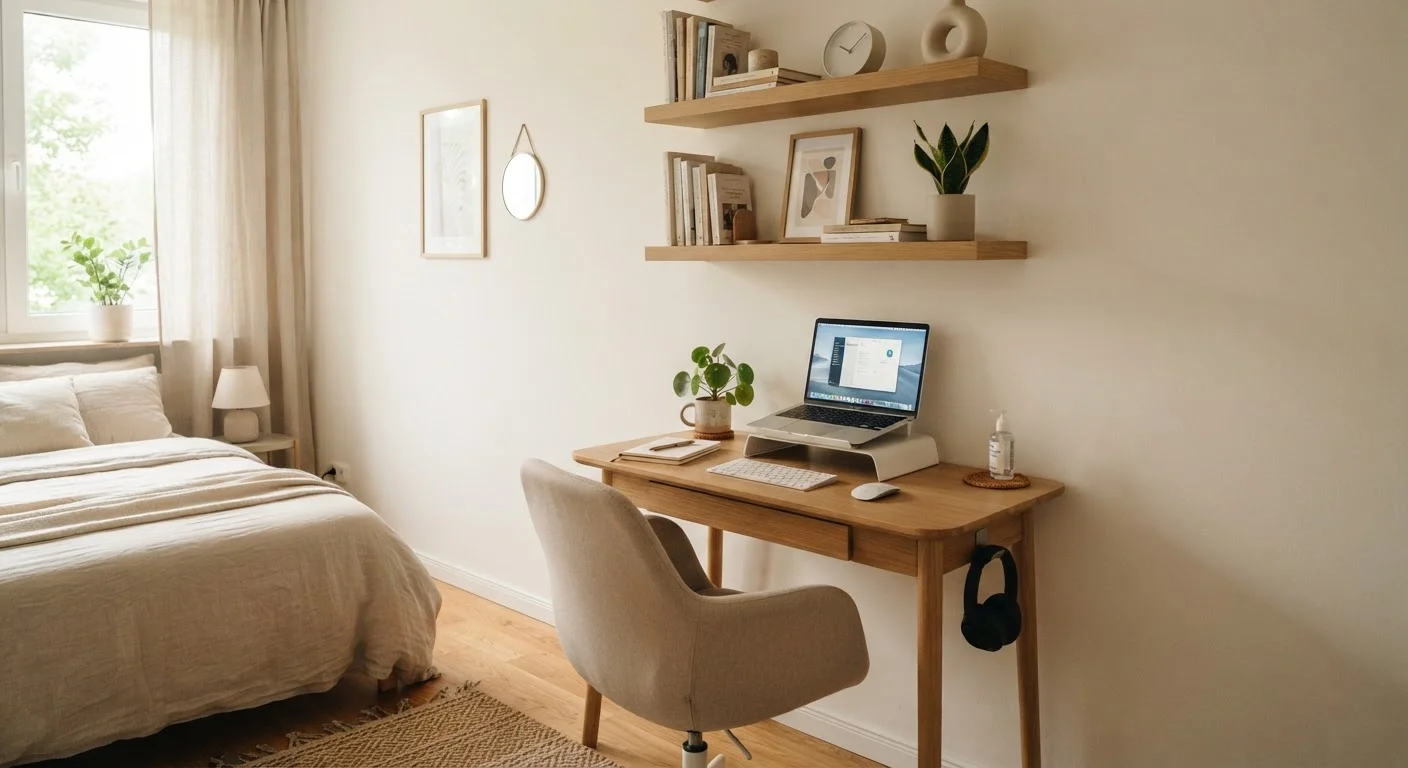
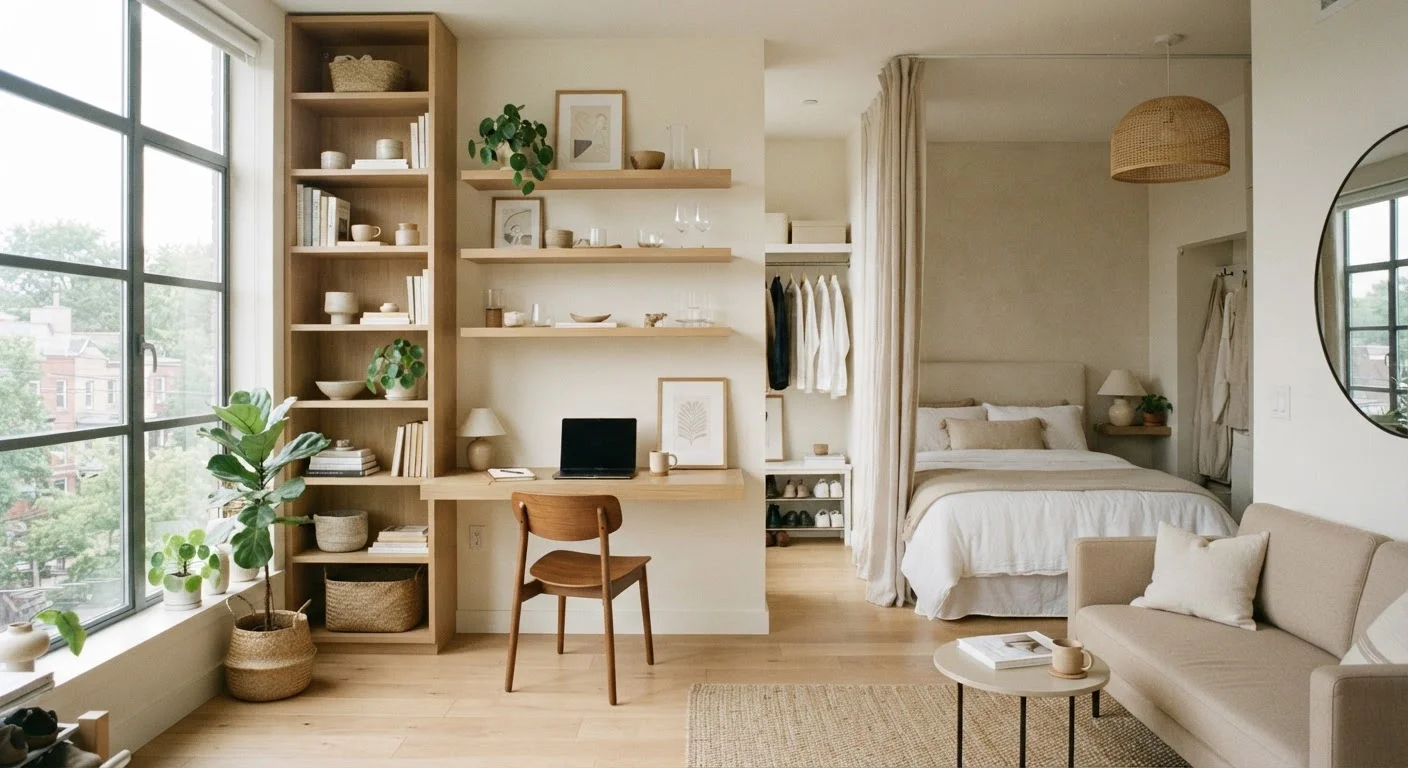
Floating shelves, tall bookcases anchored to walls, and over-door organizers are the most accessible tools here. The key is coherence: shelving that runs at a consistent height across a wall reads as intentional rather than improvised. Group similar items together and leave deliberate breathing room - overcrowded vertical storage trades one visual problem for another.
68%
Apartments where vertical space is underutilized
Interior design practitioners frequently note that most renters use less than half their available wall height for storage, leaving significant capacity unused.
2 steps
Maximum retrieval actions for a sustainable system
Behavioral organization research suggests that storage requiring more than two actions to access or return an item is routinely bypassed in daily life.
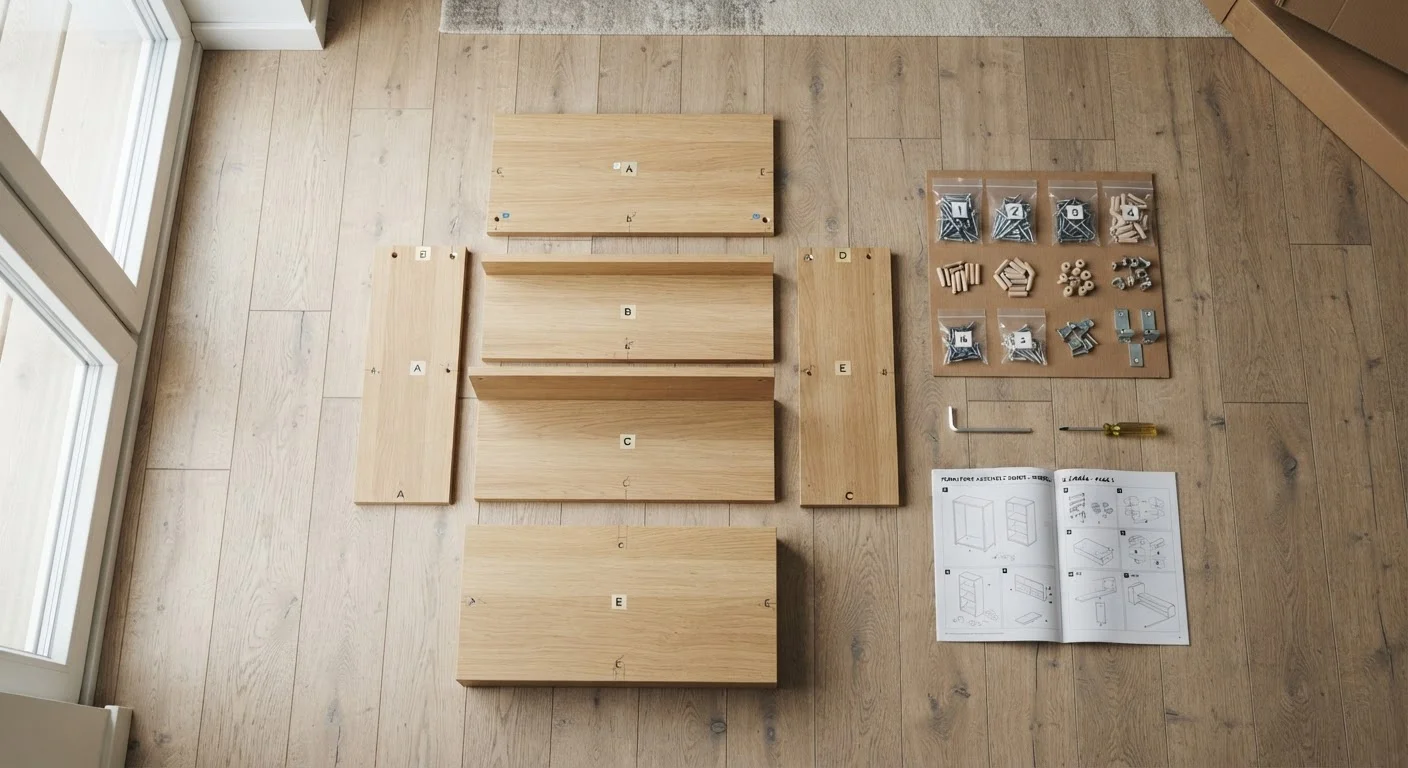
For furniture choices, look for pieces that do double duty vertically - a storage ottoman that also raises items off the floor, or a lofted bed that frees the area below for a desk. Properly reinforced flat-pack furniture is worth considering here: tall shelving anchored firmly to a stud is safer and more usable than a wobbly unit you unconsciously avoid loading.
Zone-Based Thinking for Every Room
Zoning means assigning a dominant purpose to distinct areas within a room - even if those areas are only a few feet apart. In a studio, the sleeping zone, work zone, and living zone can each be defined by a rug, a shift in lighting, or the orientation of furniture, without any physical partition.
Clear zones prevent category creep, which is when work papers migrate onto the dining table or gym gear colonizes the bedroom corner. Each zone should have storage sized to its function: only what belongs in that zone lives there.
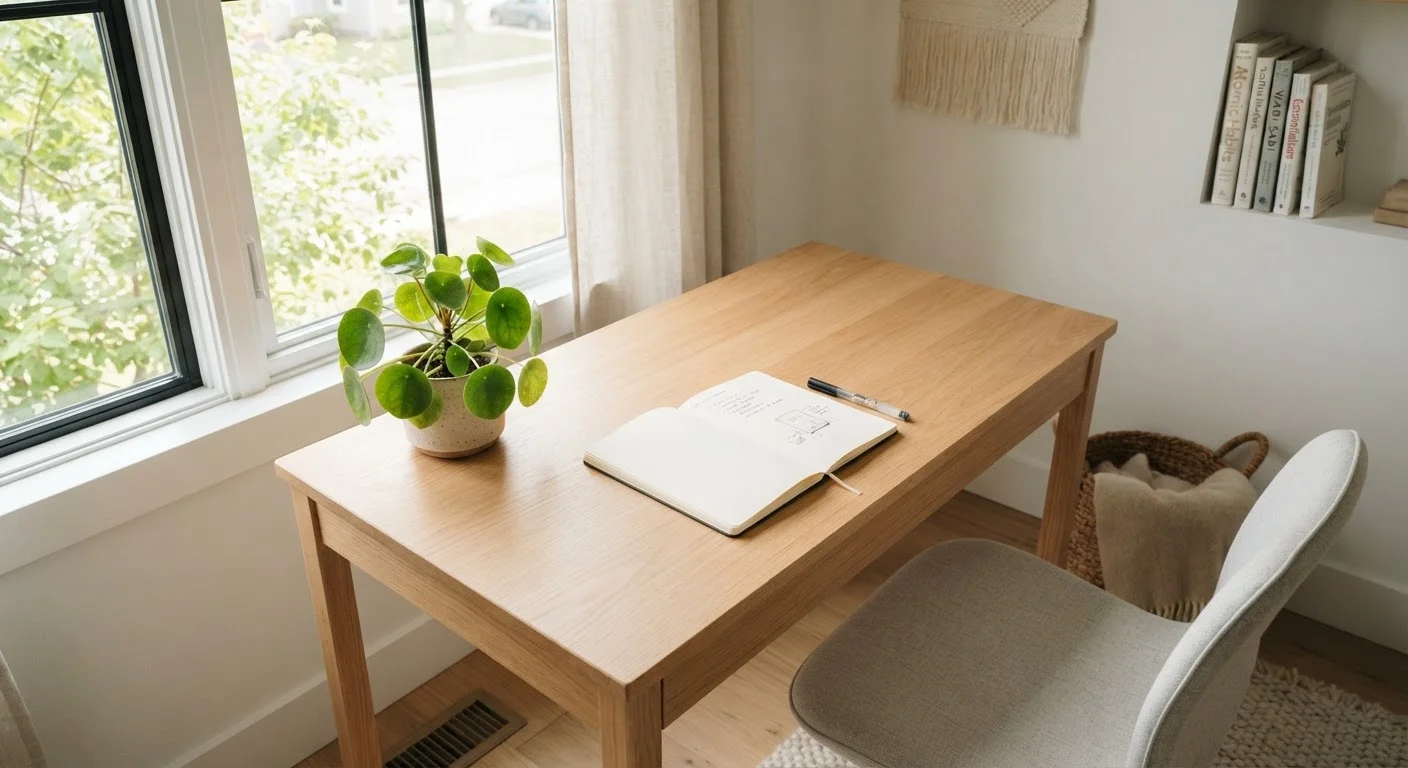
This is especially relevant for anyone working from home. Setting up a home office in a shared flat requires particularly deliberate zoning, since blurred spatial boundaries directly affect both productivity and relationships.
When defining zones in an open-plan space, start with lighting rather than furniture. A dedicated task lamp or pendant marks a zone more powerfully - and more cheaply - than a room divider.
Lighting changes how a space is perceived and used at a neurological level, signaling transition between activities without any structural change.
Label storage containers on the inside front edge rather than the top - you will read them while standing, not from above, and the label stays visible even when the container is full.
Practical labeling systems need to match the actual viewing angle of the user; misaligned labels are ignored and the system breaks down within weeks.
The Edit-First Rule Before Any Purchase
The instinct when a space feels disorganized is to buy more storage. This almost always makes things worse. New bins and baskets give clutter more places to hide rather than less clutter to manage.
Before any organizational purchase, do a full edit of the space: remove everything, categorize what remains by frequency of use, and only return what genuinely belongs there. Items used daily stay within easy reach. Items used monthly can live in harder-to-access spots. Items used rarely - or not at all - should leave the space entirely.
This pairs naturally with a broader sustainability lens. Organizing without buying more plastic is achievable precisely because the edit step reveals how little new storage most people actually need. If you are setting up from scratch, starting a first flat with limited budget offers a sequenced approach to prioritizing purchases.
Don't Organize Before You Edit
Purchasing storage solutions before culling what you own is the most common small-space mistake. It relocates clutter rather than reducing it, and often results in money spent on containers that don't fit the space or the items once editing is done. Always assess volume first, then shop.
Visual Calm Without Sacrificing Personality
Visual clutter taxes the brain differently from physical clutter, but the effect is similar: it reduces focus and raises background stress. In small spaces, the visual field is compressed, so every element carries more weight.
Three levers produce the most return: limiting your color palette to two or three tones across storage and display items, using consistent materials (matching baskets, uniform bin labels), and controlling sightlines so the eye has a natural resting point in each zone. Color, light, and scale interact in ways that can make a compact room feel generous or cramped depending on your choices.
Personality comes from curated display, not volume. A single gallery wall, a small collection of meaningful objects on one open shelf, or a plant grouping adds character without visual noise. Indoor plants in small spaces are a low-cost way to bring warmth and texture.
“Clutter is not just a physical problem - it competes for your attention the same way a notification does. A visually calm space is not a luxury; for many people it is a functional prerequisite for thinking clearly.”
— Eve Edelstein, Neuroscientist and environmental design researcher
Maintaining Systems Over Time
Even well-designed systems degrade if there is no maintenance rhythm. The most realistic approach is a brief weekly reset - 10 to 15 minutes returning items to their zones - rather than occasional deep reorganization. The latter is exhausting enough that it rarely happens on schedule.
Build the reset into an existing habit: the end of a workday, a Sunday evening before the week starts. Productivity habits that support daily routines translate directly into home maintenance when anchored the same way.
Seasonal reviews - twice a year - are the right cadence for deeper editing and reassessing whether zones still match how you actually live. Lives change: a new job, a new hobby, or a new roommate shifts what needs to be accessible. Systems should adapt to behavior, not the other way around.