Why Maintenance Habits Matter More Than Mechanical Knowledge
You don't need to understand how an engine works to keep one running well. What you do need is a consistent set of habits - checks done regularly enough that problems surface early, before they strand you on the highway or hand a mechanic a much larger bill than necessary.
Most breakdowns aren't sudden failures. They're the result of gradual neglect: a slow tyre leak that was never checked, oil that went unchanged for too long, a coolant level that crept toward empty. The good news is that the habits preventing these scenarios are genuinely simple - they just need to become routine.
For context on the driving behaviours that quietly add wear alongside maintenance neglect, see habits that accelerate wear on your car. Together, proactive checks and mindful driving form the foundation of a vehicle that stays reliable.
Dipstick
A thin metal rod that sits in the engine oil reservoir. You pull it out, wipe it, reinsert it, and pull again to read the oil level on its markings.
Coolant
A liquid (usually a mix of antifreeze and water) that circulates through the engine to regulate temperature and prevent overheating.
Service interval
The mileage or time period after which a specific maintenance task - like an oil change or filter replacement - is due, as specified by the vehicle manufacturer.
Tread depth
The measurement of how much rubber remains on a tyre's surface. Worn tread reduces grip, especially on wet roads.
Brake fluid
A hydraulic fluid that transmits the force from your brake pedal to the brakes at each wheel. It absorbs moisture over time, which reduces its effectiveness.
Tyre rotation
Moving tyres from one position on the vehicle to another (e.g. front to rear) on a regular schedule so they wear evenly and last longer.
The Weekly Checks Every New Driver Should Do
Three checks take under five minutes combined and cover the most common causes of avoidable breakdowns:
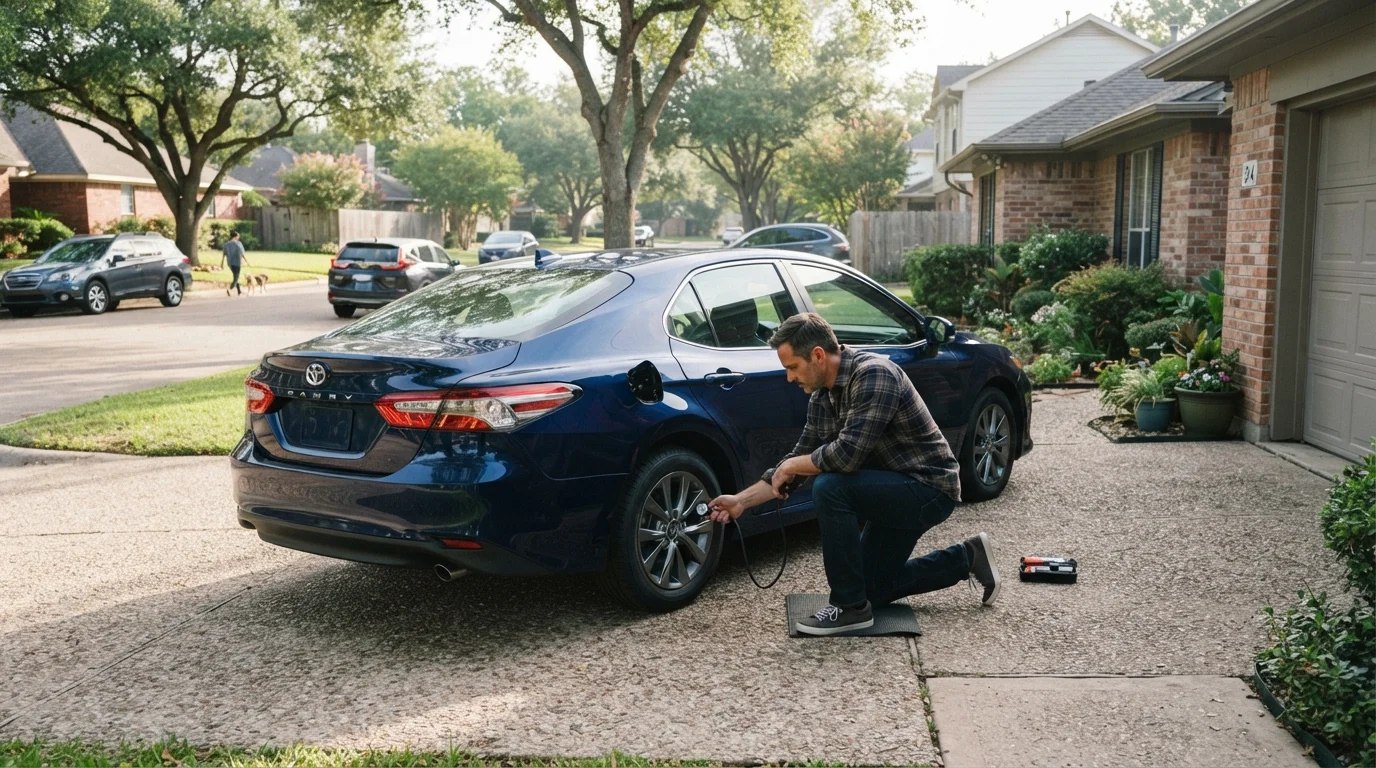
- Tyre pressure: Under-inflated tyres affect handling, fuel economy, and tyre life. Check when the tyres are cold - before driving or after less than a mile. The correct pressure is in your owner's manual or the sticker inside the driver's door jamb, not on the tyre sidewall.
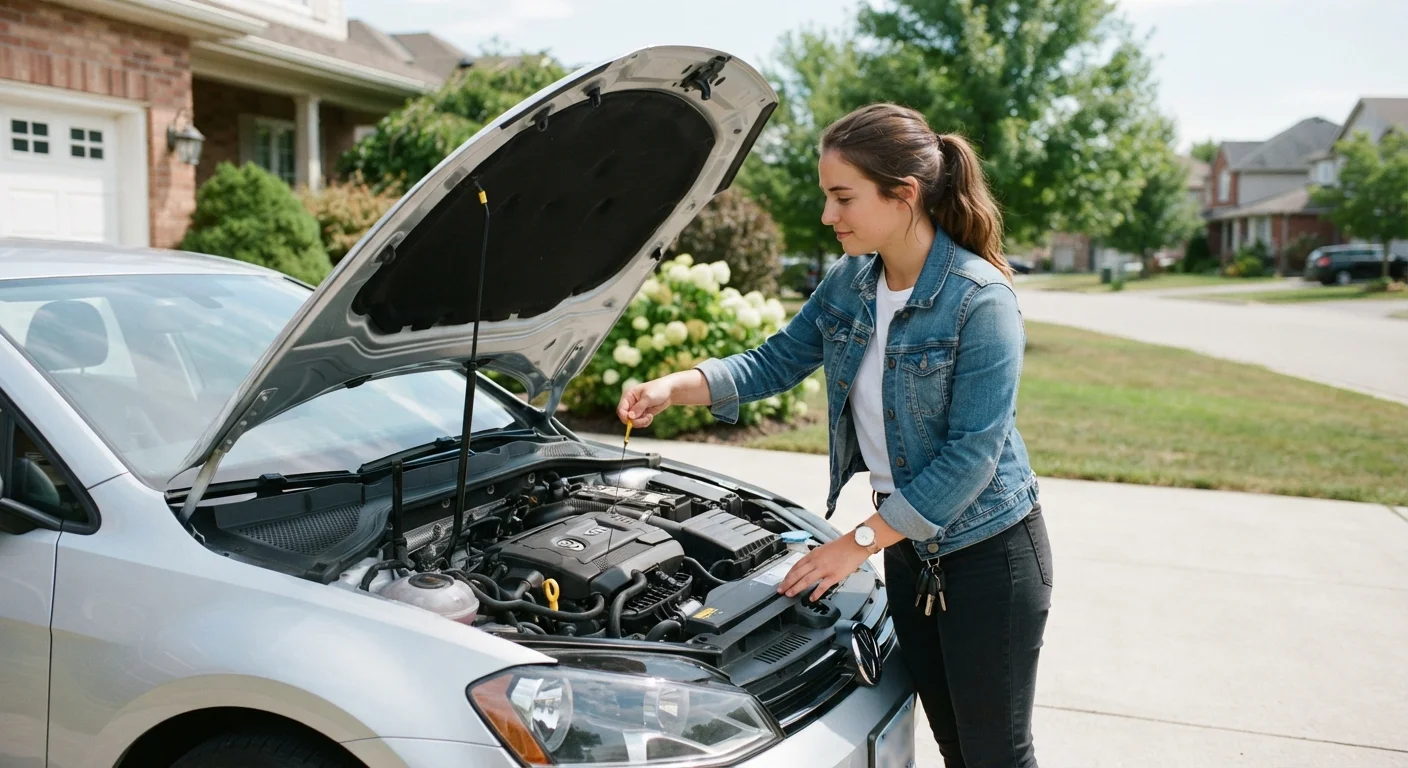
- Engine oil level: Low oil means metal-on-metal contact inside your engine. Use the dipstick - wipe, reinsert, pull - and check the level falls between the min and max markers. Note the colour too: black and gritty oil is overdue for a change.
- Coolant level: The coolant reservoir (a translucent plastic tank near the radiator) has min/max markings. Check it when the engine is cold. A consistently dropping level can indicate a leak that needs professional attention.
Once per month, also check your windshield washer fluid and all exterior lights - brake lights, indicators, and headlights. These are simple to overlook and legally required to function correctly.
Make Checks Part of a Fuel Stop
Linking your weekly checks to a specific routine - like every other fuel stop - removes the need to remember them separately. Pop the hood while the tank fills, take 90 seconds to check oil and coolant, and glance at the tyres as you walk around the car. Small habits attached to existing ones stick far better.
Before any extended drive, run through a broader pre-trip check. Our driver's preparation checklist covers everything worth confirming before you leave home.
Understanding Your Service Schedule
Your vehicle's owner's manual contains a service schedule - a table specifying what needs to be inspected or replaced at certain mileage or time intervals. This is the document that should govern your maintenance decisions, not generic internet advice or whatever interval the previous owner followed.
Common scheduled items include:
- Engine oil and filter: Interval varies significantly by vehicle and oil type. Many modern cars with synthetic oil can go 7,500-10,000 miles between changes; others call for more frequent service. Check the manual.
- Air filter: Typically inspected every 15,000-30,000 miles. A clogged filter reduces engine efficiency.
- Spark plugs: Standard plugs often last 30,000 miles; iridium or platinum plugs can go much longer. Misfires are a common symptom of worn plugs.
- Brake fluid: Absorbs moisture over time, which lowers its boiling point. Most manufacturers recommend replacement every two years regardless of mileage. See our deeper look at brake maintenance from a driver's perspective.
- Tyres: Rotation every 5,000-7,500 miles evens out wear. Check tread depth periodically - the legal minimum in most US states is 2/32 of an inch, though many safety organizations recommend replacing at 4/32.
It's also worth knowing that some commonly repeated maintenance rules don't hold up under scrutiny. Car maintenance myths that cost drivers money walks through the most persistent ones.
Warning Signs You Should Never Ignore
Warning lights, sounds, and smells are your car's communication system. Treating them as background noise is how small problems become expensive ones.
Never Open the Coolant Cap When Hot
The cooling system operates under pressure. If the engine has been running recently, the coolant is extremely hot and pressurised - opening the cap can cause scalding fluid to spray out. Always wait at least 30-45 minutes after the engine has been switched off before checking or topping up coolant.
- Red dashboard warning lights: These indicate conditions requiring immediate attention - oil pressure loss, engine overheating, brake system faults. Stop driving safely when it's feasible and investigate.
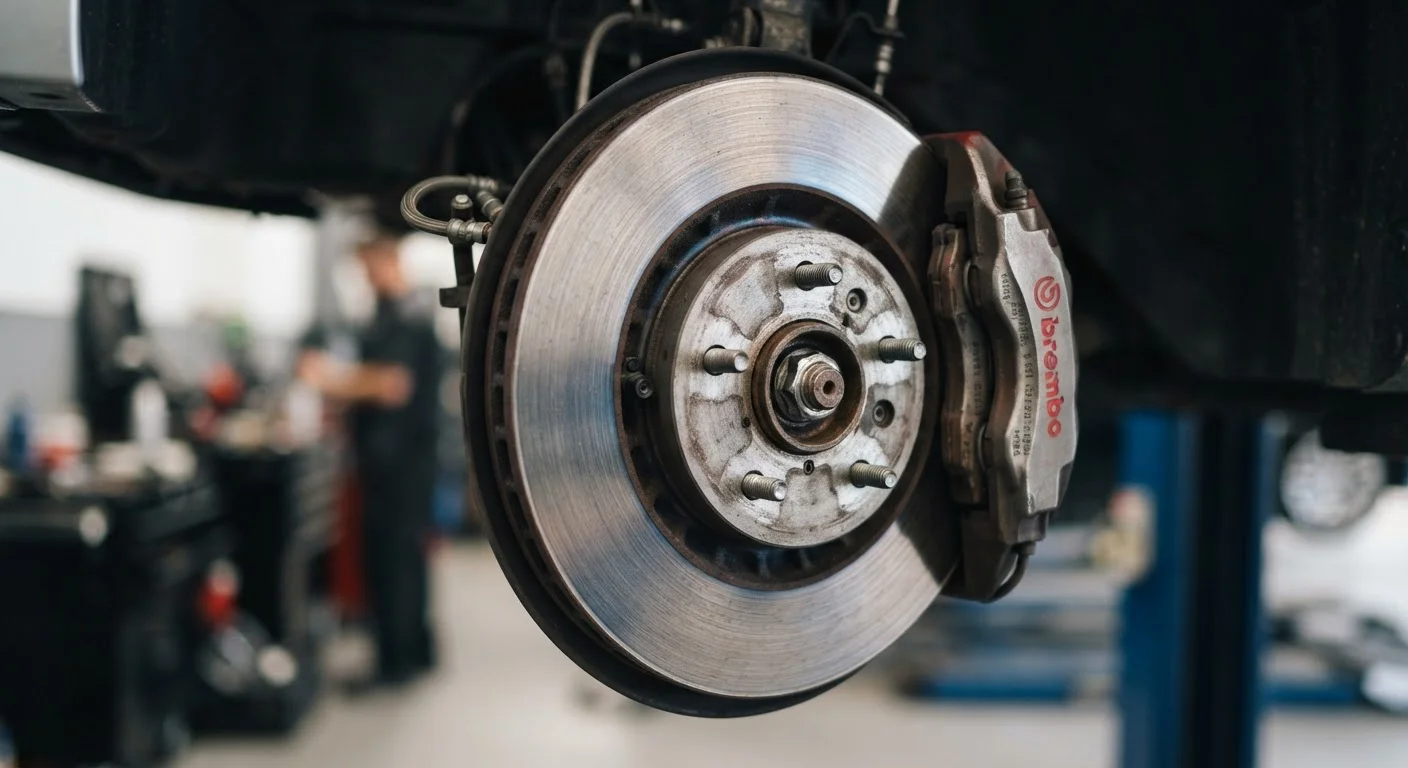
- Squealing or grinding brakes: Squealing often signals worn brake pad indicators. Grinding usually means metal-on-metal contact - a more urgent problem. Neither should be driven on longer than necessary before a mechanic assesses them.
- Pulling to one side: Can indicate uneven tyre pressure, alignment issues, or uneven brake wear. Have it checked - it affects both safety and tyre life.
- Burning smells: An acrid smell after braking can mean overheated brake pads. A sweet smell may indicate a coolant leak. An oil smell inside the cabin suggests an oil leak near the exhaust. None of these are normal.
- Vibration through the steering wheel: At highway speeds, this often points to wheel balance issues. At lower speeds or when braking, it can indicate warped brake rotors.
For context on how driving behaviour intersects with some of these warning signs, the habits that separate safe drivers from lucky ones is a useful companion read.
Building a Simple Maintenance Record
A maintenance log doesn't need to be elaborate - a notes app, a spreadsheet, or a physical logbook all work. Record the date, mileage, what was done, and who did it. That's it.
The benefits compound over time: a clear history helps mechanics diagnose problems faster (reducing labour time and guesswork), and a documented service record meaningfully supports resale value. Buyers and dealers can verify a car was looked after, which matters at point of sale.
If you're building or formalising your record, keeping records of your car's maintenance history explains what to include and how to organise it effectively.
One last consideration: car maintenance is an ongoing expense. Treating it as a fixed monthly budget item - rather than a surprise - makes it far more manageable. Consistent upkeep costs less over time than reactive repairs, and it's worth building that expectation into your financial planning from the start. Setting aside an emergency fund alongside a maintenance budget gives you a solid financial cushion for the unavoidable surprises.
Your Vehicle's Owner's Manual
The primary reference for your car's service intervals, fluid specifications, warning light meanings, and tyre pressure. If you have a used car without a printed manual, most manufacturers make them available as free PDFs on their official websites.
Maintenance Log Template
A simple spreadsheet or printable log tracking service date, mileage, task performed, and cost. Keeping one from your first service makes it far easier to demonstrate a car's history when you eventually sell or trade it.