Why This Line Exists - and Why It Matters
Electrical work sits in a unique position among home improvement tasks. Unlike painting a room or assembling furniture, mistakes with wiring can cause fires, injury, or death - and the consequences often don't show up immediately. A loose wire connection behind a wall may smolder for months before igniting.
That's why every US jurisdiction enforces the National Electrical Code (NEC) - a model code updated every three years and adopted (often with local amendments) by states and municipalities. The NEC defines which work requires a licensed electrician, which requires a permit, and which a homeowner can legally do themselves. The exact rules vary by state and even by county, so checking your local authority's requirements before starting any project is essential.
Understanding this framework isn't about being intimidated - it's about working confidently within a clear boundary. For a broader look at scoping home projects, see our guide on planning home improvement projects without the overwhelm.
Rules Vary by Jurisdiction - Always Check First
While the NEC provides a national framework, individual states, counties, and municipalities can be more restrictive. Some jurisdictions prohibit homeowners from doing any permitted electrical work themselves; others allow it with proper documentation. Before starting any project, contact your local building or permits department to confirm what's allowed in your area.
What Homeowners Can Typically Do Themselves
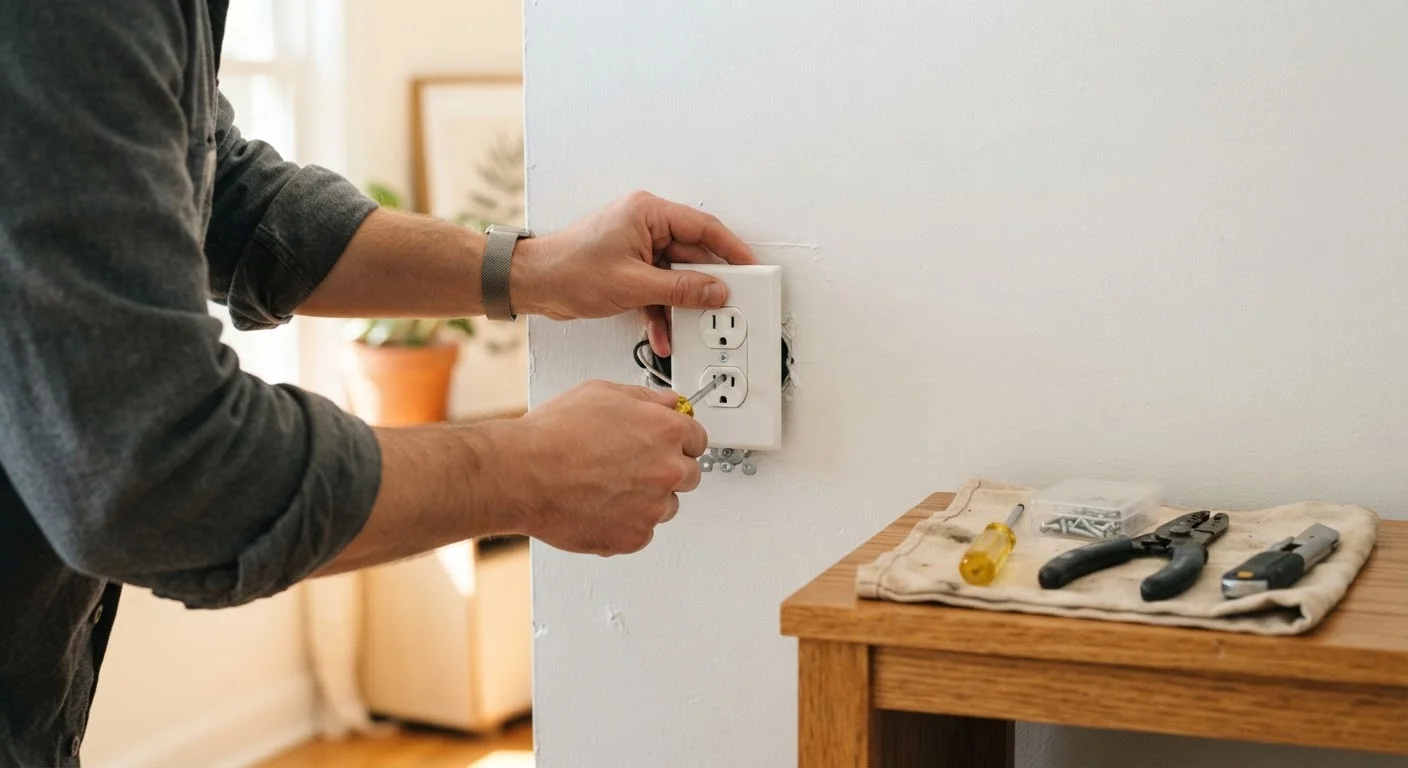
Most jurisdictions allow homeowners to perform basic, like-for-like electrical replacements on existing circuits - provided the power is properly shut off and verified dead before any work begins. Tasks that generally fall within DIY territory include:
- Replacing a standard outlet or switch with an identical type (same amperage, same location)
- Installing a GFCI outlet in place of a standard one - a straightforward swap that can significantly improve safety in kitchens and bathrooms
- Replacing a light fixture or ceiling fan on an existing, rated junction box
- Swapping a standard light switch for a dimmer compatible with your existing bulbs and wiring
- Replacing a faulty breaker of the same amperage - though this is near the edge of the safe DIY boundary and requires extra caution
The common thread: you're replacing an existing component with an equivalent one, on a circuit that's already designed and sized for that load. You're not adding capacity, rerouting wiring, or altering the system's structure.
Save money on straightforward, low-risk repairs
Licensed electrician call-out fees and hourly labor rates add up quickly. Replacing an outlet, switch, or fixture yourself can reduce a $150-$300 service call to the cost of the part.
Build genuine understanding of your home's systems
Working safely on a simple circuit gives you firsthand knowledge of how your home is wired, making it easier to describe problems accurately when you do call a pro.
Schedule repairs on your timeline
For non-urgent fixes like a broken switch or outdated outlet, DIY means not waiting days for an electrician's availability.
GFCI upgrades meaningfully improve safety
Replacing standard outlets with GFCI (ground fault circuit interrupter) outlets in wet areas is one of the highest-value safety upgrades a homeowner can make - and it's within beginner scope.
Where You Must Stop - and Call a Licensed Electrician
Certain tasks are off-limits for DIY - either by law, by safety risk, or both. Even experienced, tool-savvy homeowners should step back from:
- Any work inside the main service panel - including adding breakers, rewiring the panel, or touching the main lugs, which remain live even when the main breaker is off
- Running new circuits from the panel to a new location, such as adding an outlet in a garage or a dedicated circuit for a large appliance
- Upgrading service capacity (e.g., from 100A to 200A) - this involves the utility company and requires licensed work and inspection
- Working with aluminum wiring found in many homes built in the 1960s and 70s - it requires special connectors and professional assessment
- Installing a subpanel, generator interlock, or EV charger circuit
Structurally invasive projects carry similar logic - just as you'd consult a structural professional before removing walls, as we explain in our piece on load-bearing walls, you should defer to a licensed electrician the moment work exceeds existing circuit maintenance.
Electrical mistakes can be invisible and deadly
A loose wire nut or incorrect connection may pass a visual check but create a fire hazard inside the wall. Unlike a bad paint job, you won't necessarily see the error.
Scope creep risks exceeding your competency
A simple outlet swap can reveal older wiring, missing ground conductors, or a box that's too small - complications that require professional assessment to address safely.
Permits and code compliance are easy to overlook
Skipping required permits for electrical work can affect your insurance coverage and create problems at sale. Many homeowners don't discover the issue until it's costly to fix.
The main panel is genuinely dangerous
Even with the main breaker off, the service entrance wires feeding the panel remain live. Accidental contact can be fatal, and this risk is not mitigated by careful technique alone.
Safety Fundamentals You Cannot Skip
Even for the tasks that are within DIY scope, there are non-negotiable practices that separate a safe job from a dangerous one:
- Shut off the correct breaker at the panel and confirm it's the right one before touching anything.
- Test with a non-contact voltage tester - a basic, inexpensive tool that confirms a wire is de-energized. Never assume a circuit is dead because the breaker is off.
- Understand what you're looking at before disconnecting. Photograph the existing wiring configuration before removing any component.
- Don't exceed the rated capacity of the box, outlet, or circuit you're working on.
- Use the correct wire gauge for any replacement connections - mismatched gauge is a fire risk.
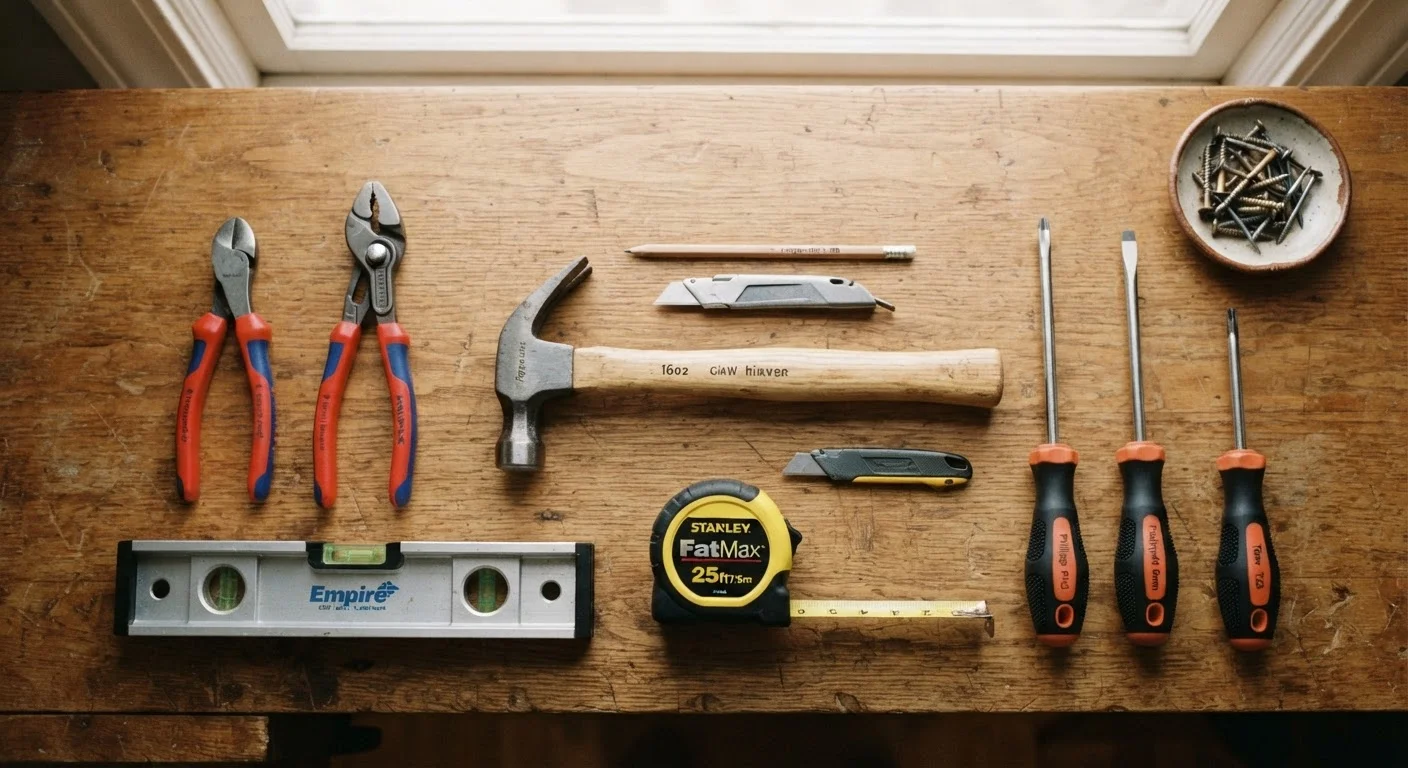
Brushing up on the right tools for the job is also worthwhile. Our beginner's guide to hand tools covers foundational knowledge before you start any project.
~51,000
Home electrical fires reported annually in the US
According to the US Fire Administration, electrical fires cause an estimated 500 deaths and $1.3 billion in property damage each year.
~40%
Older homes wired before modern NEC standards
The US Census Bureau's American Housing Survey estimates a substantial share of the US housing stock predates electrical codes that are now considered baseline safety requirements.
The Permit Question - Don't Skip It
Many homeowners skip permits to save time or money. This is one of the most consequential DIY myths that end up costing more. In most US jurisdictions, electrical work beyond simple fixture swaps requires a permit and subsequent inspection by a code officer.
Unpermitted work can:
- Void your homeowner's insurance policy if a fire is traced to that work
- Create legal disclosure obligations (or complications) when you sell your home
- Result in mandatory removal and redo of the work at your expense
Pulling a permit as a homeowner doing your own work is usually straightforward - your local building department can walk you through the process. The inspection that follows is also a valuable free check on your work.
This article is for general informational purposes only and does not constitute electrical, legal, or safety advice. Always verify applicable codes and permit requirements with your local authority having jurisdiction (AHJ), and consult a licensed electrician for any work beyond basic like-for-like replacements on existing circuits.