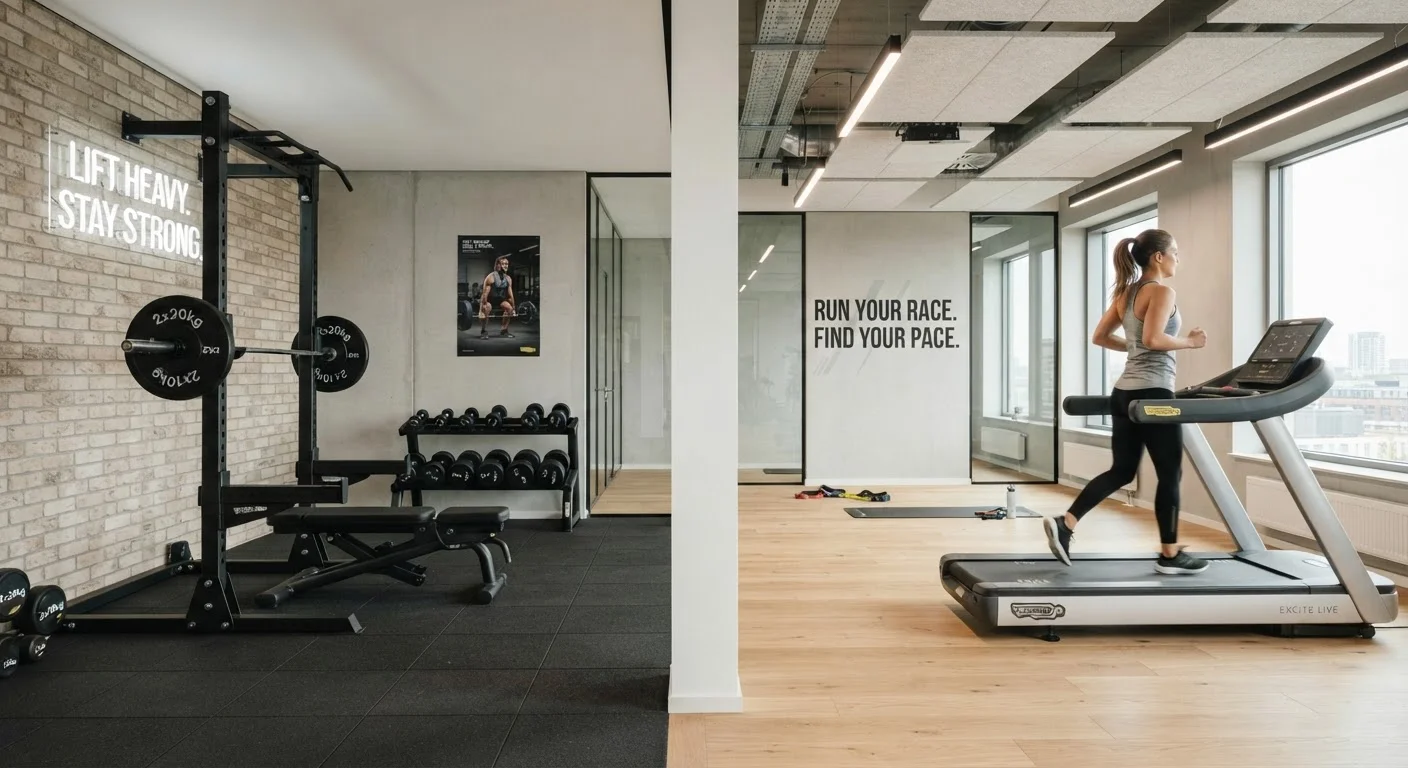
A structured checklist covering health readiness, goal clarity, schedule, and equipment considerations before committing to a new training plan.
Key Takeaways
Clearing basic health readiness questions before training reduces injury risk and programme abandonment.
Specific, time-bound goals are more likely to survive a demanding professional schedule than vague intentions.
Matching workout frequency to your realistic availability matters more than choosing the perfect programme.
Equipment and environment gaps are easier to solve before week one than after you've already lost momentum.
A brief mental health and stress check helps you choose training intensity that supports rather than undermines recovery.
Why the Prep Phase Deserves More Than Five Minutes
Most people start a new exercise programme by downloading a plan and showing up on Monday. That momentum is valuable - but without a short, structured assessment first, even well-designed programmes get abandoned within three to four weeks, often for entirely preventable reasons: a nagging injury that was already there, a schedule that never actually had room, or goals so vague they couldn't survive a single bad week.
This checklist is not a barrier to starting. It's a calibration tool. Work through it honestly - ideally with a pen and paper - and you'll enter your first session with clearer expectations, a better-fitted plan, and a significantly higher chance of still training two months from now.
This content is general health and fitness information, not medical advice. If you have existing health conditions, injuries, or any uncertainty about your readiness to exercise, consult a qualified healthcare professional before beginning a new training programme.
Health & Medical Readiness
Answer the PAR-Q (Physical Activity Readiness Questionnaire) honestly - if you answer yes to any question, consult a doctor before proceeding.Must
Identify any current injuries, chronic pain, or musculoskeletal issues that may require exercise modifications.Must
Note any cardiovascular, metabolic, or respiratory conditions and confirm exercise clearance with your healthcare provider if relevant.Must
Check whether any current medications affect heart rate, hydration, or exercise tolerance.Should
Establish a rough baseline: note your current resting heart rate, general energy level, and sleep quality over the past two weeks.Should
Goal Clarity
Write down one primary goal in specific, measurable terms - avoid vague targets like 'get fit' in favour of something trackable.Must
Set a realistic timeframe for your primary goal, accounting for your current fitness level and schedule constraints.Must
Identify what success looks like at the four-week mark, not just the twelve-week mark, so you can track early progress.Should
Separate outcome goals (e.g. run a 5K) from process goals (e.g. train three times per week) - both matter, but process goals drive consistency.Should
Schedule & Lifestyle Fit
Map your actual weekly calendar and identify which specific days and time windows are genuinely available for training.Must
Choose a programme frequency that matches your available slots - not an aspirational number you hope to hit.Must
Identify your peak energy windows (morning, lunchtime, evening) and align training sessions accordingly when possible.Should
Plan for at least one or two full rest or active-recovery days per week and protect them in your schedule proactively.Must
Consider travel, work deadlines, or seasonal commitments in the next 8-12 weeks that could disrupt your routine.Nice to have
Environment & Equipment
Confirm your training location - gym, home, or outdoors - and verify it's accessible during your planned windows.Must
List the equipment your chosen programme requires and confirm you have access to it before week one.Must
Identify any equipment gaps and research low-cost or bodyweight alternatives to avoid stalling at the start.Should
Ensure appropriate footwear and clothing for your chosen activity type - this is a basic injury-prevention step, not a luxury.Should
If training at home, designate a specific space and remove friction - layout, lighting, and access all affect consistency.Nice to have
Stress & Recovery Capacity
Rate your current overall stress load on a simple 1-10 scale and choose programme intensity accordingly - high stress demands lower-intensity starts.Must
Assess your average sleep duration over the past two weeks; insufficient sleep significantly impairs training adaptation and recovery.Should
Consider whether your nutrition habits can support increased physical output - not perfection, but adequate protein and overall caloric intake.Should
How to Use This Checklist Alongside Your Broader Routine
Once you've worked through these items, a few practical follow-through steps will sharpen your plan further. If your goal involves balancing resistance work and cardiovascular training, the question of sequencing becomes important early - our guide to prioritising strength or cardio in a busy week walks through that trade-off in detail based on goal type and recovery capacity.
It's also worth recognising that physical training doesn't exist in isolation. Stress load, sleep quality, and emotional bandwidth all influence how your body responds to exercise. If you suspect burnout or high baseline stress is a factor, the daily mental health self-check for working professionals offers a structured way to audit those signals before they interfere with your training consistency.
High Stress Loads Change the Calculus
Starting an intense exercise programme during a period of significant psychological stress, poor sleep, or illness can worsen recovery rather than improve it. Research in exercise physiology consistently shows that the body's stress-response system doesn't distinguish well between physical and psychological stressors. If your current stress load is high, consider beginning with lower-intensity movement - walking, mobility work, or light resistance training - and scaling up as capacity improves. This is not a reason to avoid exercise; it's a reason to start smarter.
Finally, revisit this checklist every eight to twelve weeks. Your schedule, health status, and goals evolve - and your programme should too. The assessment that served you well at the start of a training block may need updating as your fitness improves or your life circumstances shift.
Health & Wellness Editorial Team is the collective byline for our editorial team and contributor network. Articles published under this byline or an editorial pen name are researched, written, and reviewed according to our editorial standards for clarity, consistency, and independence before publication.
The content provided on our blog site traverses numerous categories, offering readers valuable and practical information. Readers can use the editorial team’s research and data to gain more insights into their topics of interest. However, they are requested not to treat the articles as conclusive. The website team cannot be held responsible for differences in data or inaccuracies found across other platforms. Please also note that the site might also miss out on various schemes and offers available that the readers may find more beneficial than the ones we cover.