Why Feeding Method Matters Beyond the Bowl
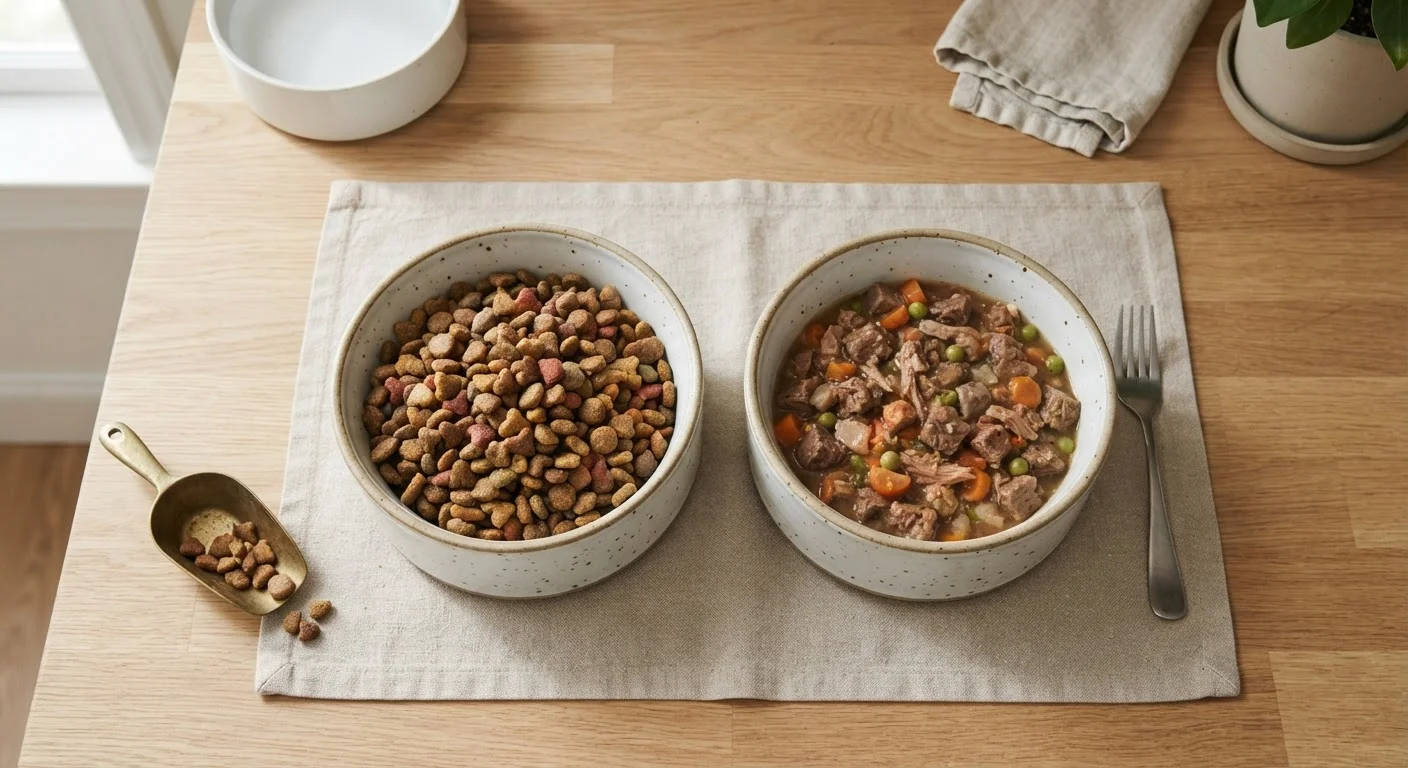
Most pet owners spend time researching what to feed their animals - dry vs. wet, grain-free vs. traditional - but the how and when of feeding is equally consequential. Feeding schedules affect caloric regulation, digestive health, behavioral patterns, and even the bond between pet and owner. For a deeper look at the food itself, see our comparison of dry kibble vs. wet food.
The three dominant approaches - free-feeding, timed meals, and puzzle feeders - each carry distinct trade-offs. Understanding those trade-offs through a species-aware lens is the foundation of good nutritional management.
| Free-Feeding | Timed Meals | Puzzle Feeders | |
|---|---|---|---|
| Portion control | Difficult to monitor | Precise and consistent | Depends on setup |
| Obesity risk | Higher, especially dogs | Lower with correct portions | Lower - slows intake |
| Appetite monitoring | Very difficult | Easy to track daily | Moderate - effort varies |
| Mental stimulation | None | Minimal | High |
| Multi-pet suitability | Poor | Good with supervision | Good with separate units |
| Owner time required | Low | Moderate | Moderate (cleaning required) |
| Best species fit | Some cats only | Dogs and cats | Dogs and cats |
Free-Feeding: Constant Access, Variable Outcomes
Free-feeding means leaving food available at all times, allowing pets to self-regulate intake. It is most commonly used with dry kibble because wet food spoils quickly at room temperature.
Where it works: Some cats are naturally efficient self-regulators and maintain a healthy weight on free-feeding, particularly if they are young, active, and the sole pet in the household. Free-feeding also reduces feeding-related anxiety in cats with unpredictable human schedules.
Where it falls short: Research consistently links free-feeding to higher obesity rates in both cats and dogs. In multi-pet households, dominant animals often consume a disproportionate share. Critically, appetite is one of the earliest behavioral signals of illness - a pet that always has food available makes it far harder to notice a meaningful change in intake.
Free-Feeding and Illness Detection
Pets hide signs of illness instinctively. One of the earliest detectable indicators is a change in appetite - eating less, eating more, or eating at unusual times. Free-feeding makes these changes invisible until symptoms become more obvious. If you choose to free-feed, weigh your pet monthly and schedule regular veterinary check-ups to compensate for reduced day-to-day visibility.
Free-feeding is generally not recommended for dogs, as most dog breeds lack reliable satiety signaling and will continue eating past physiological need.
Timed Meals: The Evidence-Based Default
Timed meal feeding involves offering measured portions at set intervals - typically twice daily for adult dogs and cats. It is the approach most commonly recommended by veterinary nutritionists because it provides clear caloric control and makes appetite monitoring straightforward.
Metabolic benefits: Structured meals support more predictable glucose metabolism and can reduce bloat risk in larger dogs when combined with appropriate rest periods post-meal. Two meals daily is preferable to one large feeding for most adult pets.
Behavioral benefits: Mealtimes create routine, and routine is a significant stress-reducer for domestic animals. Timed feeding also supports training, since food motivation peaks when a pet is appropriately hungry. For how feeding ties into broader routine-building, explore our monthly pet care checklist.
How to Monitor Appetite on Timed Meals
Measure portions consistently using a kitchen scale rather than a cup - kibble density varies significantly between formulas, making volume measurements unreliable. After each meal, note whether your pet finished promptly, ate slowly, or left food behind. A sudden change in eating behavior over two or more consecutive meals warrants a veterinary conversation.
Puzzle Feeders: Enrichment as a Feeding Strategy
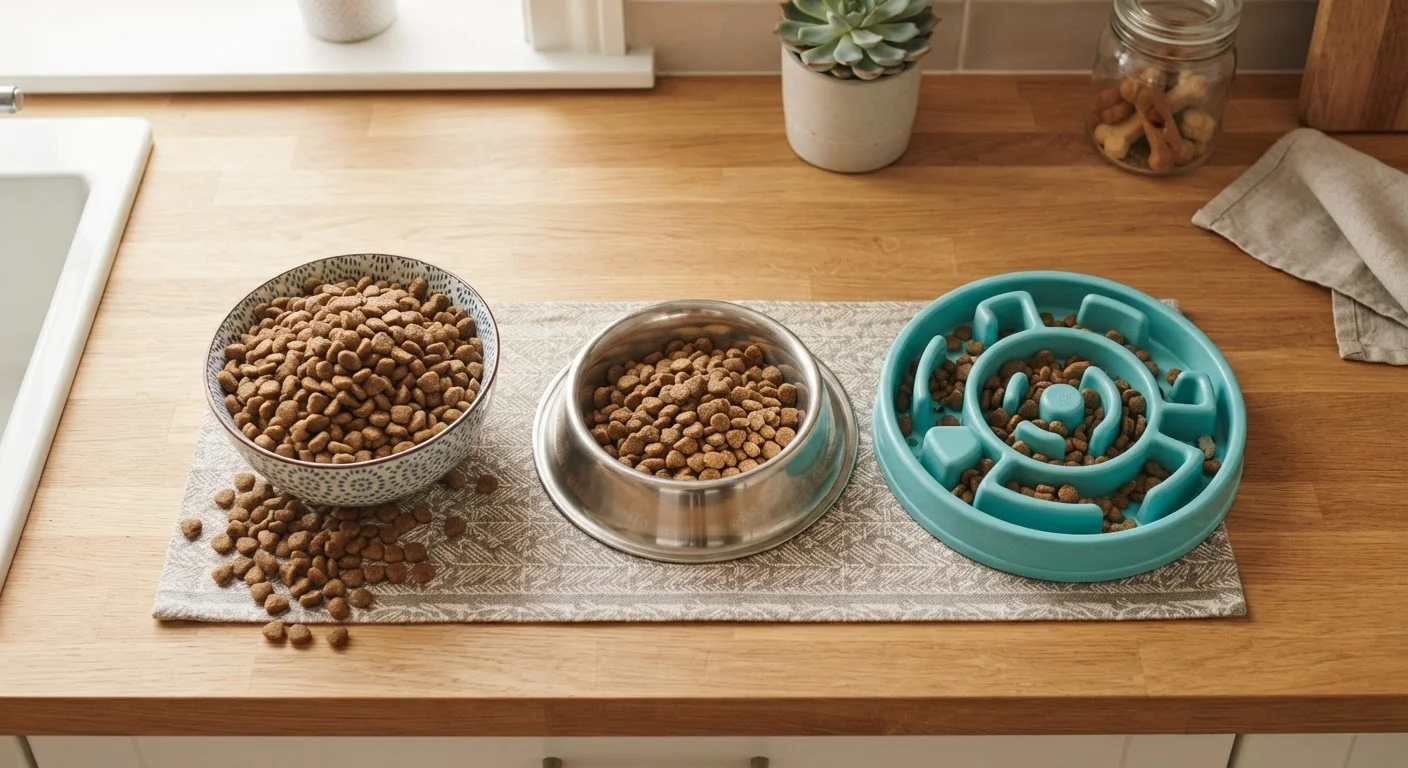
Puzzle feeders - devices that require pets to work for their food - aren't a separate feeding schedule so much as a delivery method that can be layered onto either timed meals or, with care, free-feeding setups. They range from simple rubber toys to multi-step foraging boards.
Cognitive and physical benefits: For dogs especially, eating too fast is a documented risk factor for gastric issues. Puzzle feeders naturally extend mealtime, slowing consumption. Beyond digestion, foraging engages species-typical behaviors - sniffing, problem-solving, and persistence - that reduce boredom-driven behaviors like destructive chewing or excessive barking. This connects directly to the science covered in our article on enrichment activities that match how animals think.
Practical considerations: Puzzle feeders need to be cleaned regularly to prevent bacterial buildup. They should be matched to the individual pet's problem-solving level - too difficult causes frustration; too easy provides no benefit. Rotating feeder types prevents habituation. For pets with joint issues or vision impairment, ensure the design is physically accessible.
59%
US pets estimated overweight or obese
According to the Association for Pet Obesity Prevention's clinical surveys, over half of US cats and dogs are assessed as overweight or obese by veterinary professionals.
2-3×
Longer mealtime with puzzle feeders
Veterinary behaviorists generally observe that food-dispensing devices can extend mealtime two to three times compared to eating from a standard bowl, slowing food intake.
Puzzle feeders are particularly effective as part of a behaviour-aware home environment, where feeding, play, and rest zones are thoughtfully arranged.
Choosing the Right Approach for Your Pet
Species, age, health status, and household dynamics all factor into the decision. A few guiding principles:
- Dogs: Default to timed meals. Free-feeding is rarely appropriate. Puzzle feeders make an excellent mealtime delivery method.
- Cats: Healthy adult cats may tolerate free-feeding with dry food, but timed meals are preferable for weight management and health monitoring. Puzzle feeders address cats' natural predatory feeding drive effectively.
- Multi-pet households: Timed meals with supervision, or separate feeding stations, are essential to prevent resource guarding and unequal intake.
- Pets with health conditions: Diabetes, kidney disease, hyperthyroidism, and GI disorders all require specific feeding protocols. A veterinarian or veterinary nutritionist should guide the schedule in these cases.
Feeding strategy is also worth revisiting over time - life stage, activity level, and health can all shift the optimal approach. Include a feeding method review in your regular wellness check-ins, and note that food rewards used in training should be factored into the total daily caloric budget. See how food fits into the broader reinforcement picture with our piece on the full spectrum of reinforcement.
This article is intended for general informational purposes only. Consult a licensed veterinarian or veterinary nutritionist for guidance specific to your pet's health needs and medical history.