Why Your Home Is Always Training Your Pet
Most pet owners think of training as something that happens during designated sessions - treats out, cue given, reward delivered. But from your animal's perspective, the environment is running a continuous curriculum. The placement of furniture, the predictability of feeding times, the ambient noise level, the availability of exit routes - all of these factors shape behaviour minute by minute, whether you intend them to or not.
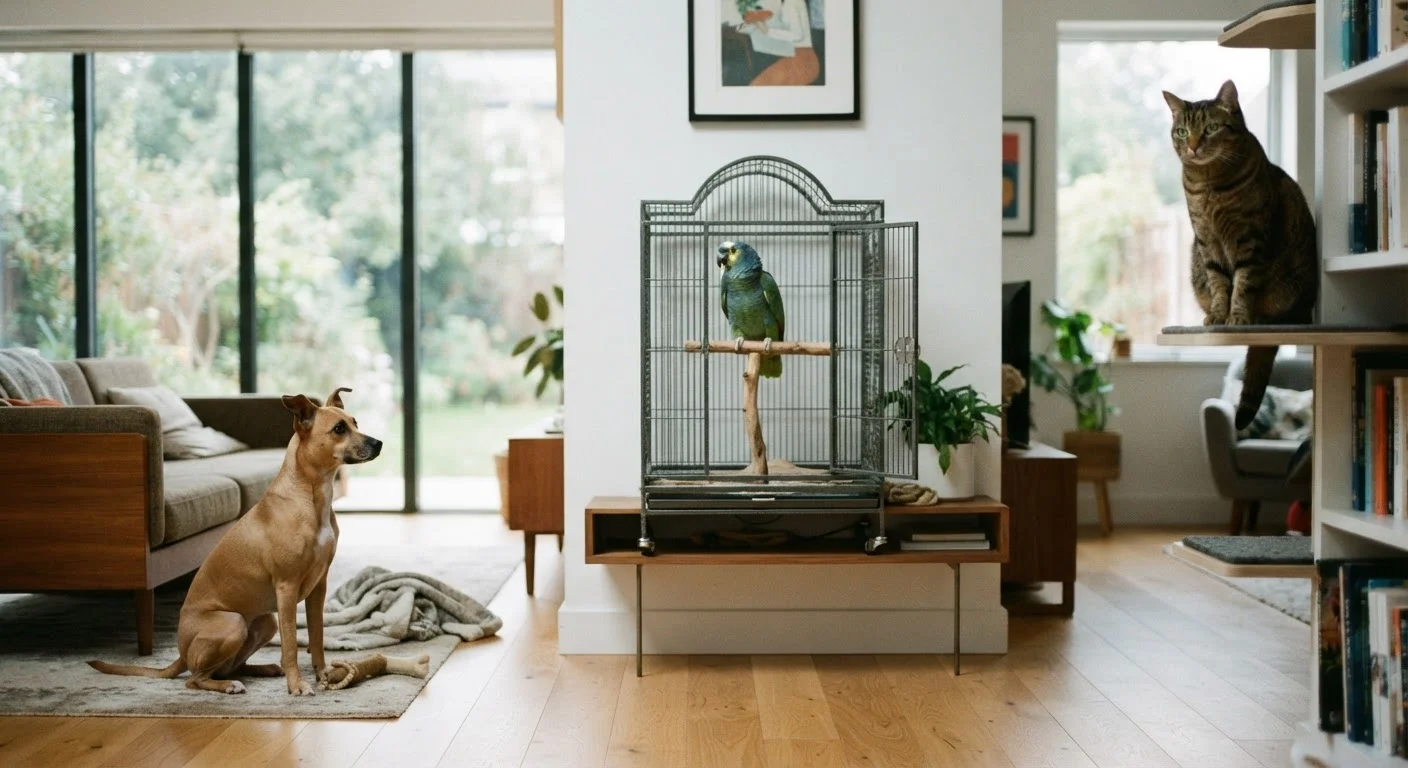
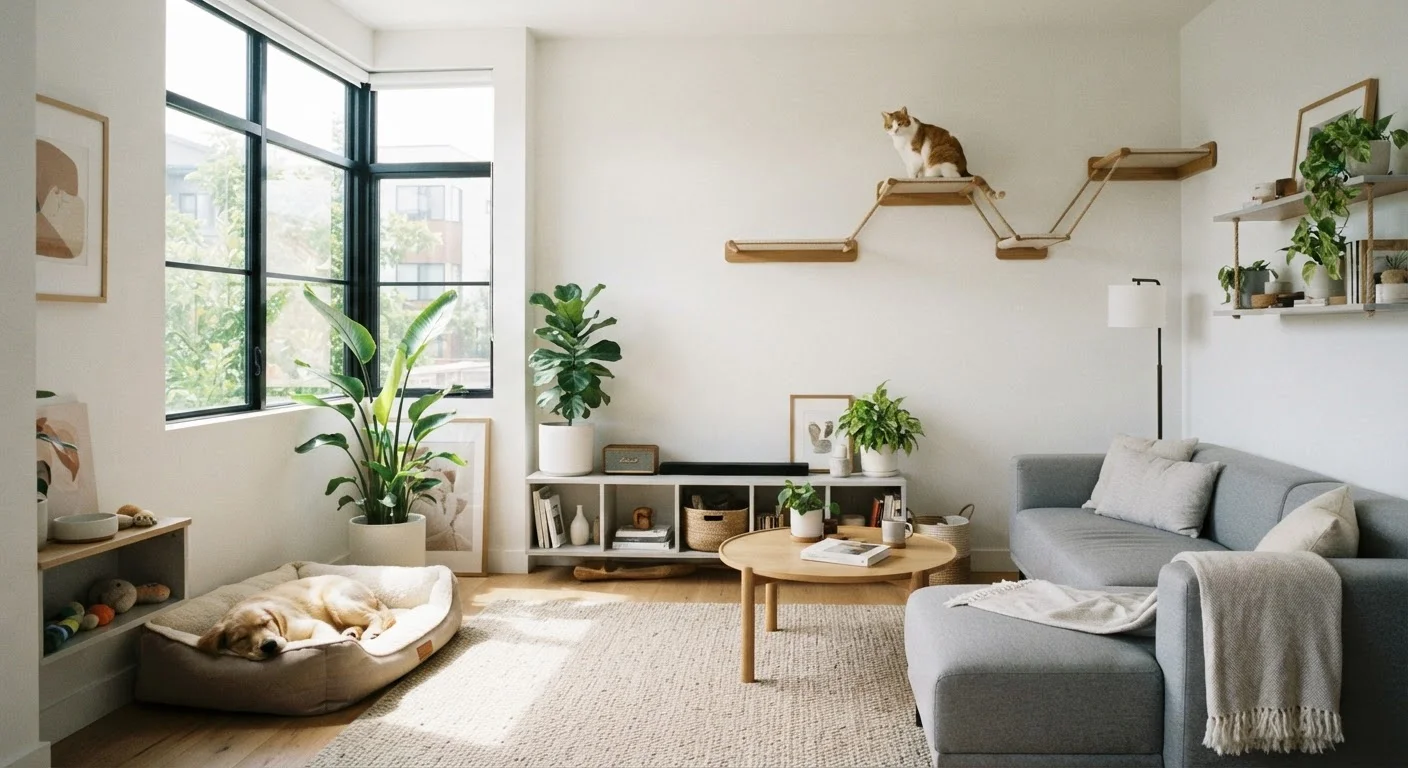
Animal behaviorists describe this concept as antecedent arrangement: structuring the environment so it sets animals up for success before any behaviour even occurs. A cat with no elevated perches will compete for counter space. A dog confined to a high-traffic hallway may rehearse barrier frustration daily. A bird without visual access to the household may develop attention-seeking vocalisations. None of these outcomes require bad intentions - just an unaudited space.
This checklist walks you through each dimension of your home environment - spatial, sensory, social, and temporal - so you can identify friction points and address them systematically. For context on how territorial instincts intersect with spatial design, see territorial behaviour across domestic animals. And if behavioural issues persist after environmental changes, training a pet with fear or anxiety offers complementary techniques.
Spatial Layout
Sensory Environment
Routine and Temporal Structure
Social and Interaction Design
Tools That Make the Audit Easier
You don't need specialist equipment to conduct a meaningful environmental audit, but a few items sharpen your observations and help you implement changes effectively.
Notebook or digital observation log
Record behavioural patterns, timestamps, and locations across several days before making changes.
Decibel meter app
Measure ambient sound levels in your pet's rest and feeding zones to identify aversive noise exposure.
Thermometer or infrared temperature gun
Verify surface and ambient temperatures in rest areas, essential for reptiles and senior animals.
Baby gate or room divider
Create separated zones for multi-pet households to reduce resource competition and manage introductions.
Puzzle feeder or foraging toy
Deliver cognitive enrichment during meal times, reducing boredom-driven behaviours between interactions.
Once you've made adjustments, the work isn't finished. Behaviour is dynamic: what works for a two-year-old dog may need revision for a senior one. Build environment reviews into your regular routine - the monthly pet care checklist is a practical place to add brief behavioural observations. For species-specific signals that can tell you whether your changes are working, reading pet body language is an essential reference.
Don't Overhaul Everything at Once
Sudden, sweeping changes to a pet's environment can be as stressful as the problems you're trying to solve. Introduce spatial and sensory modifications incrementally - one zone at a time - and observe your pet's response before proceeding. Animals with prior anxiety histories are especially sensitive to abrupt environmental shifts.
If your pet shows sudden behavioural shifts - increased aggression, withdrawal, or compulsive behaviours - environmental changes alone may not be sufficient. Consult a veterinarian or a credentialed applied animal behaviourist to rule out medical or deep-seated anxiety causes. See also signs your pet may be in pain for a guide to physical cues that often accompany behavioural changes.