Why Body Language Literacy Matters
Pets communicate constantly through posture, facial expression, ear position, and movement - yet most owners interpret only the most obvious cues, like a wagging tail or hissing. The problem is that signals are species-specific, context-dependent, and easy to conflate. A wagging tail on a dog signals arousal, not always friendliness. A slow blink from a cat signals relaxation, not sleepiness. Misreading these cues can erode trust, escalate stress, and in some cases lead to bites or injury.
This reference is organized by species to give you a practical lookup tool. For a deeper dive into canine signals specifically, see our guide to dog body posture. For a broader signal index across species, the animal communication signals field reference is a useful companion.
| Signals to read simultaneously | At least 3 (ears, tail, posture) (Applied Animal Behaviour Science consensus) |
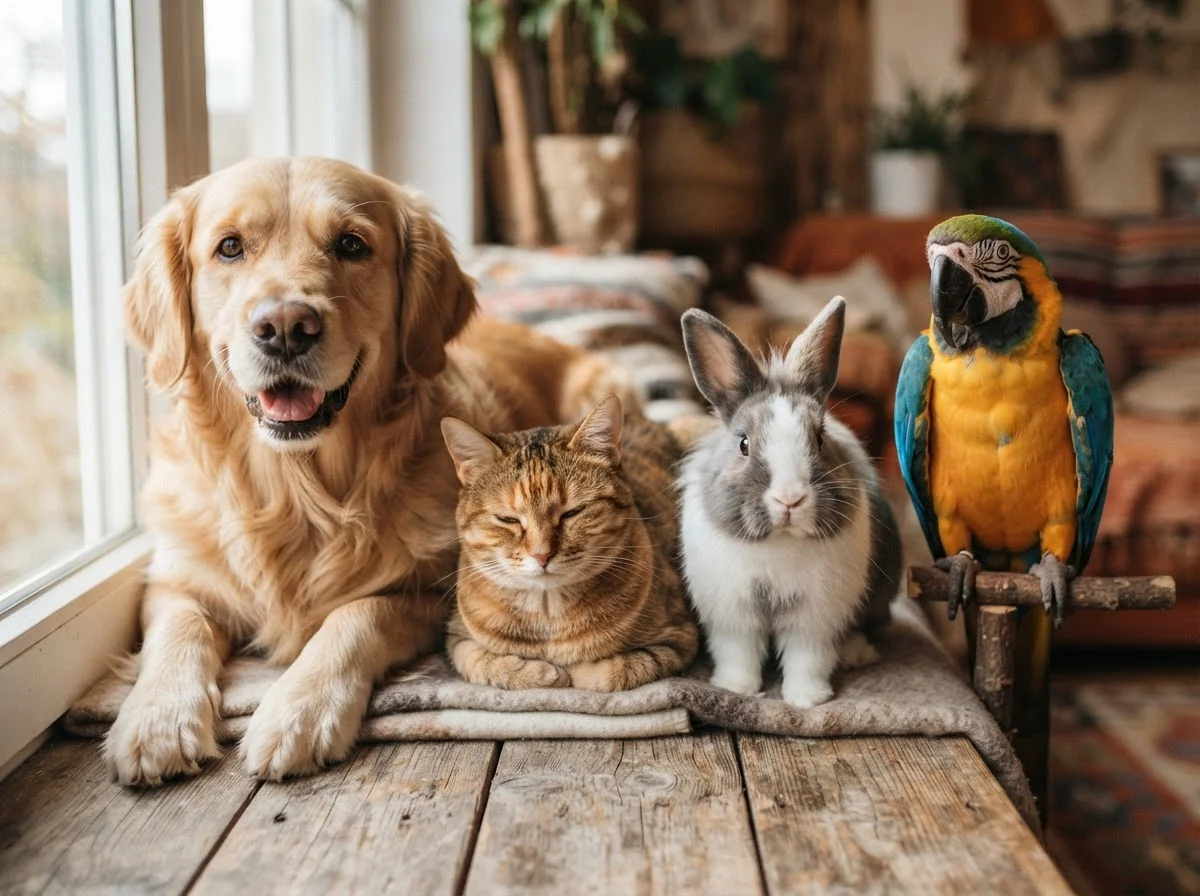
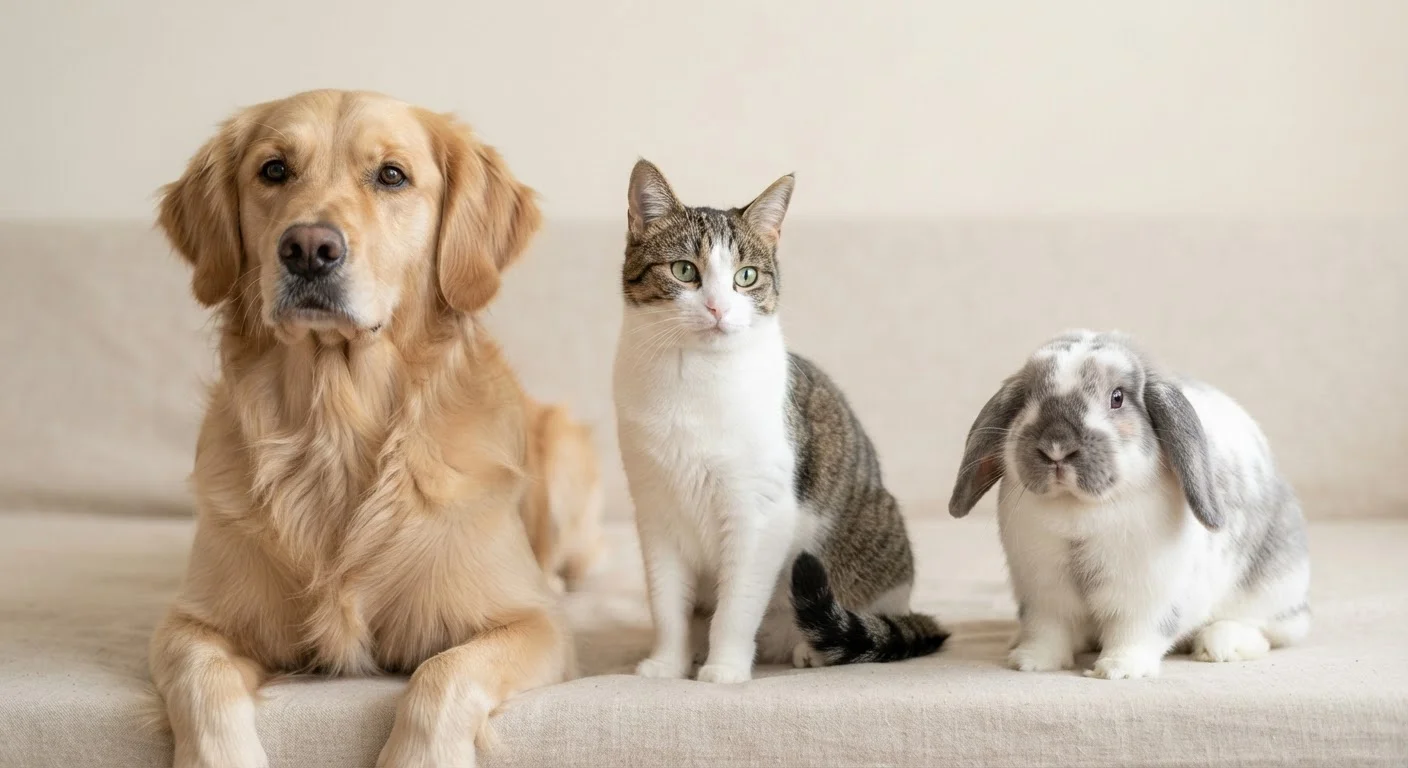
| Species covered in this guide | Dogs, cats, rabbits, guinea pigs, birds |
| Slow blink significance (cats) | Relaxation and non-threat signal (Humphrey et al., Scientific Reports, 2020) |
| Thumping in rabbits | Alarm/perceived threat signal (House Rabbit Society behavioural guidelines) |
| Hackles raised (dogs) | Arousal - not always aggression (Temple Grandin, Animals in Translation) |
Dogs: Reading Posture, Ears, and Tail Together
No single signal tells the whole story with dogs. Ethologists emphasize reading clusters of signals rather than isolated gestures.
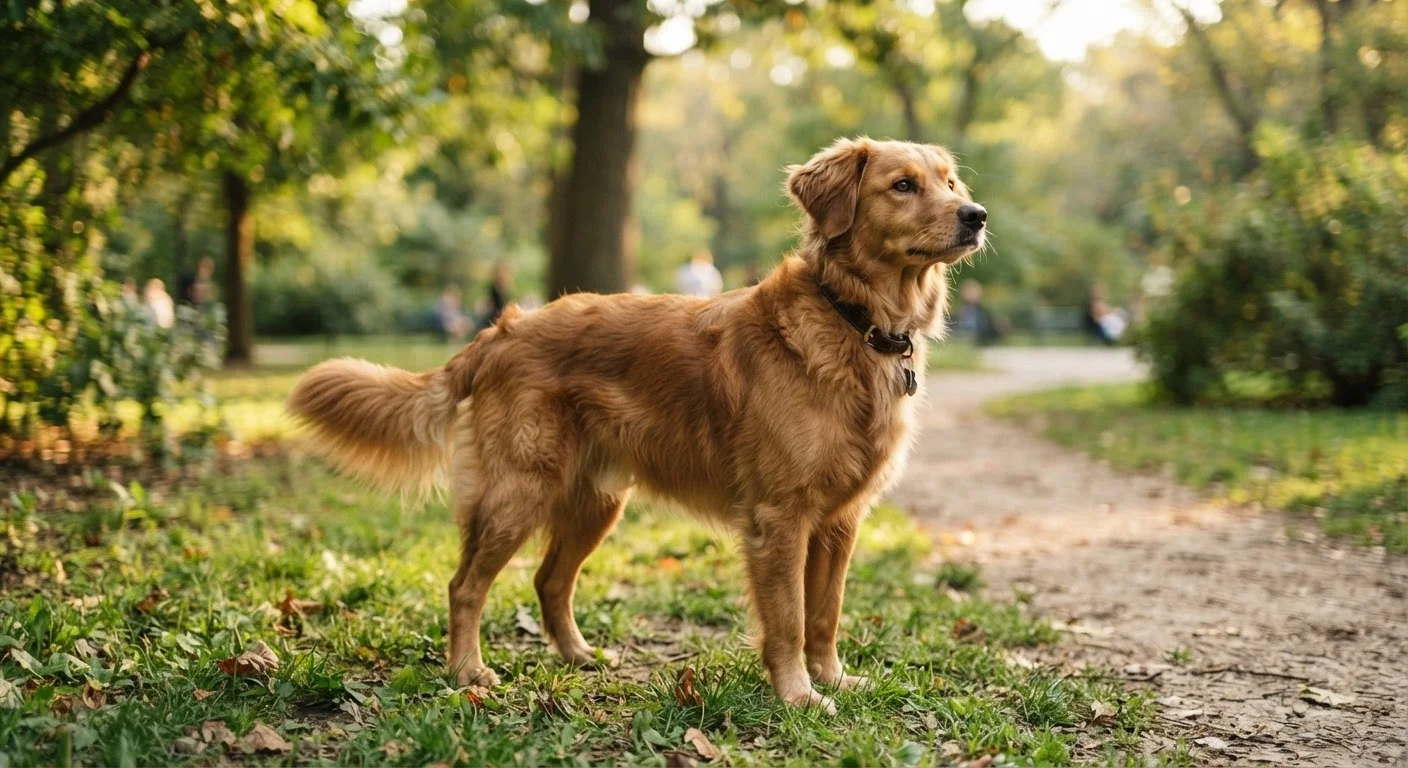
- Relaxed dog: Soft eyes, slightly open mouth, ears in neutral position, tail hanging loosely or wagging in wide sweeps below spine level.
- Playful dog: Play bow (front end lowered, hindquarters raised), bouncy movement, high-frequency tail wag. Ears may be back but face remains soft.
- Anxious dog: Tail tucked under the body or low and stiff, ears pinned back, yawning, lip-licking, avoiding eye contact, crouched posture. These are calming signals - the dog is attempting to de-escalate.
- Aroused or warning: Piloerection (hackles raised) along the spine, stiff body, direct stare, tail held high and either still or vibrating rapidly, weight shifted forward.
Eye contact is particularly significant: a hard, unblinking stare is a challenge; a soft gaze with blinking is social bonding. Never interpret a wagging tail alone as an invitation - assess the full posture. For a detailed breakdown, tail position and weight distribution in dogs explains each cue mechanistically.
Cats: Tail, Ears, and the Slow Blink
Cats are often labelled inscrutable, but their signalling system is precise once you learn its vocabulary.
Piloerection
Involuntary raising of fur or feathers along the back or body, caused by autonomic nervous system activation. In mammals, it often signals heightened arousal, fear, or aggression.
Calming signals
A set of behaviours - including yawning, lip-licking, and looking away - that animals use to communicate non-threat and reduce tension in social encounters. The concept was developed by Norwegian dog trainer Turid Rugaas.
Affiliative behaviour
Actions that promote social bonding and reduce conflict between individuals, such as mutual grooming or slow blinking in cats.
Binkying
A rapid, spontaneous leap and mid-air twist performed by rabbits and guinea pigs that behaviorists associate with positive emotional states and high welfare.
Play bow
A posture in dogs where the front legs are stretched forward and the chest lowered toward the ground while the hindquarters remain raised, used to solicit play.
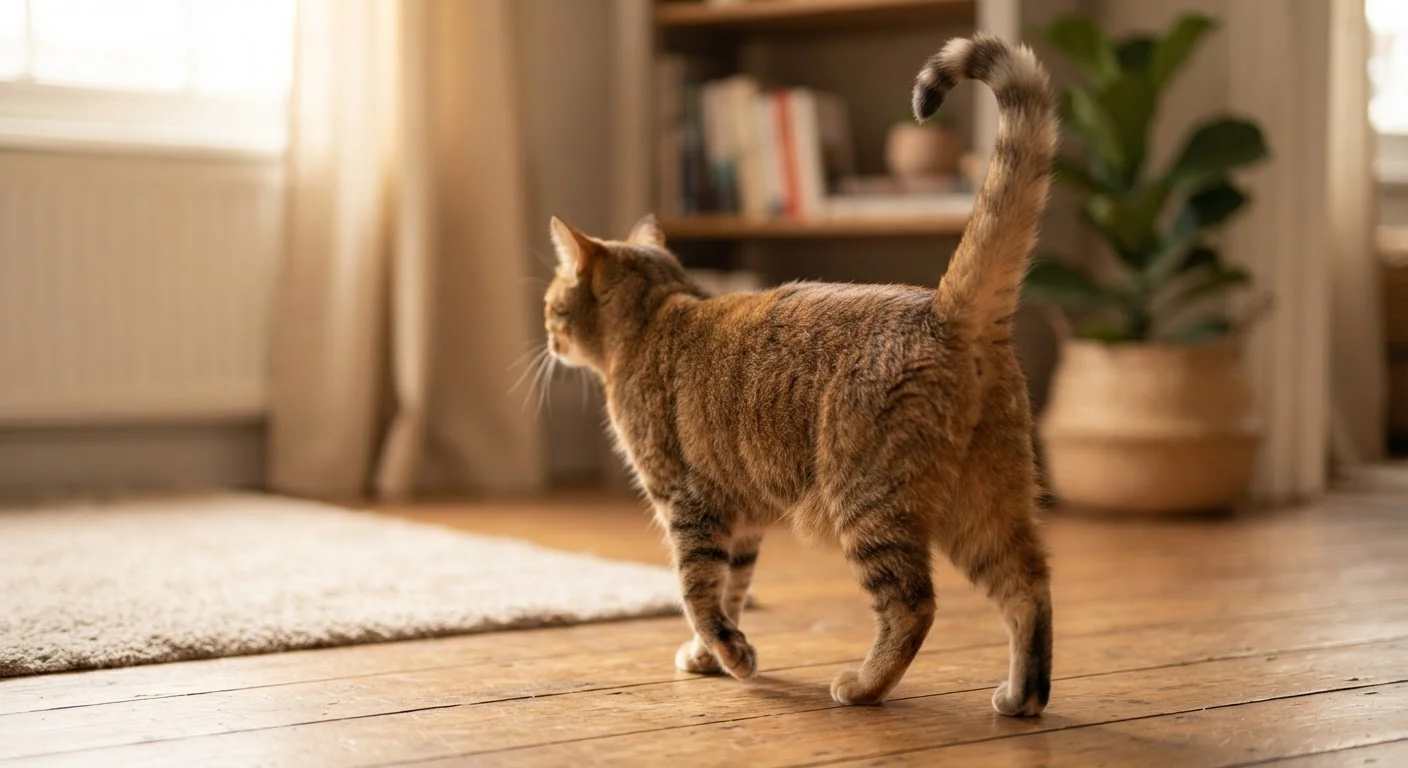
- Tail vertical, tip hooked: Friendly greeting, confident approach - safe to initiate contact.
- Tail puffed (piloerected): Fear or extreme arousal. The cat is attempting to appear larger.
- Tail low or tucked: Submission, fear, or pain. Persistent low-tail posture warrants a veterinary check.
- Slow blink: A relaxed, non-threatening signal. Returning a slow blink is widely considered an affiliative gesture in feline communication research.
- Ears forward: Alert and engaged.
- Ears rotated sideways ("airplane ears"): Irritation or overstimulation - reduce interaction.
- Ears flattened back: Fear or aggression; withdrawal is warranted.
For a comprehensive tail-position reference, see every cat tail position decoded. Context matters enormously - a cat with flattened ears and a puffed tail is very different from one with flattened ears and a slow blink.
Small Animals: Rabbits, Guinea Pigs, and Birds
Small animals are frequently misread because their signals are subtler and their stress responses can be silent until a welfare threshold is crossed.
Rabbits
- Binkying (leaping and twisting mid-air): Pronounced joy and contentment.
- Thumping: Alarm signal - the rabbit has detected a perceived threat.
- Flattened against the ground, ears pinned: Fear. Restraint in this state increases injury risk.
- Flopped on side: Counter-intuitively, this signals deep relaxation, not illness - context distinguishes the two.
The emotional complexity of rabbit behaviour is covered in more depth in our dedicated article.
Guinea Pigs
- Purring (low rumble): Contentment when stroked; a higher-pitched rumble signals displeasure.
- Teeth chattering: Warning signal - reduce stimulation immediately.
- Popcorning (spontaneous jumping): Joy, mirroring the rabbit's binkying.
Birds
- Feathers sleeked flat: Alert or afraid.
- Feathers slightly fluffed: Relaxed and comfortable.
- Excessive feather fluffing with lethargy: Potential illness - veterinary attention is recommended.
- Beak grinding: Contentment, often heard just before sleep.
Understanding how territorial instincts layer onto these signals across species is covered in territorial behaviour across dogs, cats, and birds. Many everyday signals are also misinterpreted - common pet behaviours owners get wrong is a useful next read.
70%
Of dog bites preceded by missed warning signals
Research reviewed by the American Veterinary Medical Association suggests the majority of dog bites occur when human observers fail to recognize pre-bite warning cues.
2020
Year slow-blink cat communication was formally studied
A peer-reviewed study published in Scientific Reports by Humphrey et al. was among the first to empirically examine the slow-blink exchange between cats and humans.