
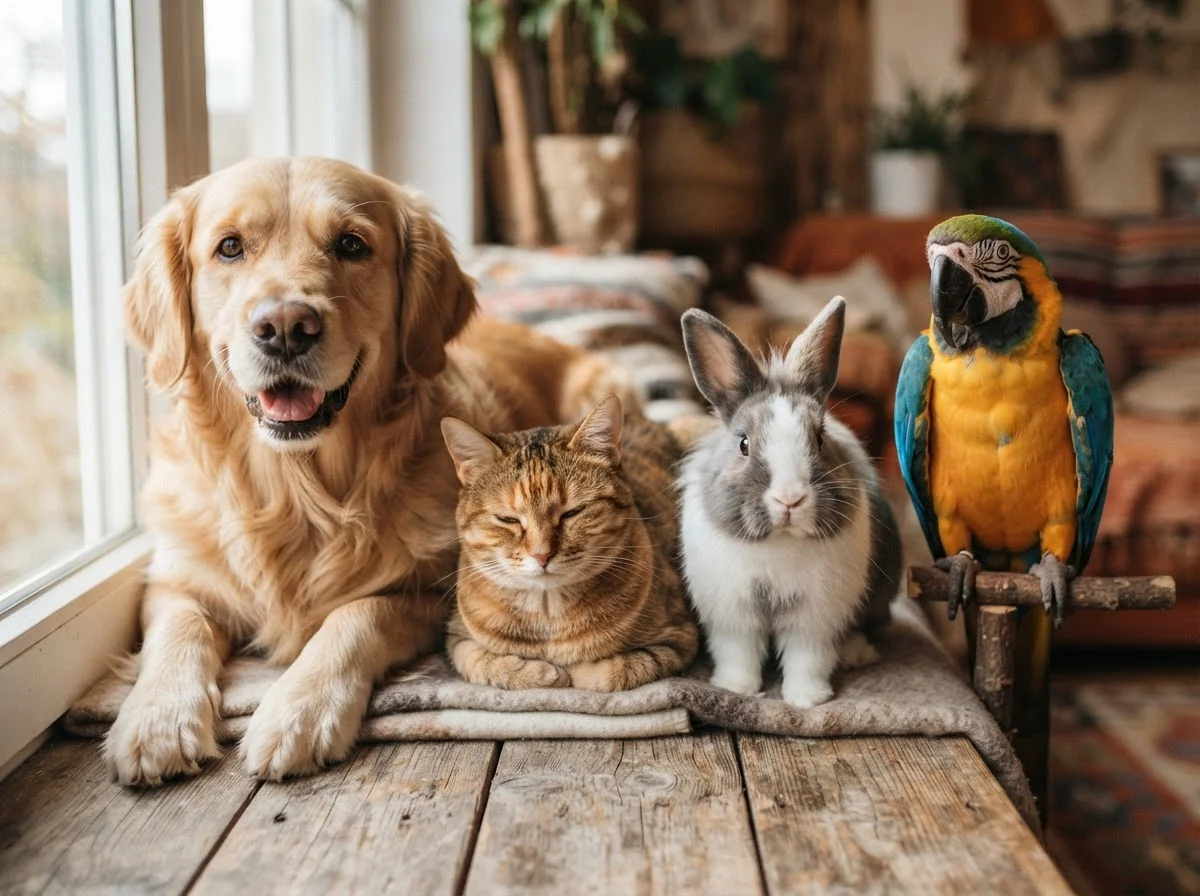
How to Use This Reference
Animals communicate continuously through body posture, facial expression, vocalisation, and scent - most of it below the threshold of casual human awareness. This field reference organises common signals by species and channel so you can look up a specific behaviour quickly and understand its most likely meaning in context.
A few principles apply across all entries. First, signals cluster: a single ear position means less than an ear position combined with tail carriage and muscle tension. Second, context is irreducible - the same signal can indicate play arousal or aggression depending on the situation. Third, individuals vary; use these entries as starting points, not verdicts. For a deeper dive into signals that owners routinely misread, see our guide to misread pet behaviours.
Calming signal
A behaviour used by animals, particularly dogs, to reduce social tension or communicate non-threatening intent. Examples include yawning, lip-licking, and looking away. The concept was developed by Norwegian dog trainer and behaviourist Turid Rugaas.
Appeasement behaviour
Actions performed by an animal to reduce conflict or signal submission to a perceived threat. These differ from calming signals in that they are directed at a specific individual perceived as dominant or threatening.
Conspecific
A member of the same species. Used when describing animal-to-animal communication within a species, as distinct from interspecies communication between pets and humans.
Affiliative signal
A behaviour that promotes social bonding and friendly interaction. Slow blinking in cats and tail-high greetings are examples of affiliative signals.
Predatory arousal
A heightened motivational state triggered by prey-like stimuli. In domestic cats, this can be elicited by small fast-moving objects and is distinct from aggression, though the two can overlap.
Binkying
A rabbit-specific behaviour involving spontaneous leaping and twisting in mid-air. It is widely interpreted by animal behaviourists as a strong positive indicator of contentment and physical wellbeing.
Dog Communication Signals
Dogs are highly expressive and have evolved specifically to communicate with humans, making their signals relatively well-documented in the scientific literature.
| Species studied | Dog, cat, rabbit, companion bird |
| Signal channels | Postural, facial, vocal, and scent-based |
| Dog play bow | Front end lowered, rear raised - universal play invitation (Applied Animal Behaviour Science literature) |
| Cat vocalisation to humans | Meowing is largely a human-directed adaptation (Applied animal behaviour research) |
| Rabbit thumping | Alarm signal derived from wild antipredator behaviour |
| Key reading principle | Read signal clusters, not isolated gestures |
Body Posture
- Play bow (front end lowered, rear raised): An invitation to play. Widely considered one of the clearest positive signals in canine communication.
- Stiff, forward-leaning stance with weight shifted to front feet: Alertness escalating toward threat assessment. Combine with tail and ear position before drawing conclusions.
- Curved, loose body approaching sideways: Friendly, non-threatening intent - common in well-socialised dogs greeting strangers.
- Belly exposure (slow, relaxed): Comfort and social ease. Distinct from belly exposure paired with tense muscles and tucked tail, which signals appeasement or fear.
Facial and Vocal Signals
- Lip lick (brief, out of feeding context): A calming or appeasement signal, often indicating mild stress or conflict.
- Yawn (non-sleep context): Frequently a self-calming behaviour; may also signal fatigue or discomfort in a social situation.
- Soft, rhythmic bark: Attention-seeking or play solicitation.
- Low, sustained growl: A warning that should never be punished - it is a dog's clearest communication that a threshold has been reached.
For a full breakdown of how tail, ear, and eye signals combine, refer to our species-by-species body language reference.
Cat and Rabbit Communication Signals
Cats
Cats developed most of their communication system for feline-to-feline use. Vocalisations like meowing are largely a secondary adaptation directed at humans, according to research in applied animal behaviour.
- Slow blink: A relaxed, affiliative signal. Returning a slow blink to a cat is widely used in positive interaction protocols.
- Tail held high, tip curved: Confident, friendly approach - the greeting posture cats use toward familiar individuals.
- Puffed tail, arched back: Fear or threat response. The animal is attempting to appear larger.
- Chattering (at birds or insects): Generally interpreted as predatory arousal; the exact function is debated among researchers.
- Head bunting (rubbing head against you): Scent-marking combined with social bonding - a strongly affiliative signal.
Territorial Signals Deserve a Separate Framework
Several signals in cats - urine marking, cheek rubbing on objects, and staring at entry points - relate specifically to territorial behaviour rather than social communication. These follow their own logic and are worth understanding in their own right. Our article on territorial behaviour across domestic animals covers these patterns in detail.
Rabbits
Rabbits rely heavily on body posture and subtle ear movement because they evolved as prey animals that avoid loud signalling. Their communication is easy to overlook. For a thorough treatment, see The Emotional Lives of Rabbits.
- Binkying (mid-air twist or jump): A reliable indicator of happiness and physical wellbeing.
- Thumping rear foot: Alarm signal. In the wild, this alerts nearby conspecifics to danger.
- Flattened ears, crouched posture: Fear or submission. Remove the stressor before attempting interaction.
- Tooth grinding (loud): Pain or significant discomfort - warrants veterinary assessment.
- Soft tooth chattering: Contentment, often during gentle petting.
Bird Communication Signals and When to Seek Advice
Companion Birds (Parrots and Cockatiels)
Companion parrots are among the most cognitively complex of common pets, and their signals reflect that complexity. Behaviour can shift rapidly, so reading clusters of signals is especially important.
90%+
Of parrot illness masked until late stage
Prey-species instinct to conceal weakness means behavioural changes are often the first observable sign of illness in companion birds, according to avian veterinary consensus.
3-4
Signal channels active simultaneously
Research in animal communication indicates dogs routinely broadcast posture, facial, vocal, and scent signals at the same time - underscoring why reading clusters matters.
- Feathers fluffed, eyes half-closed (warm environment): Relaxation and comfort.
- Feathers fluffed persistently with lethargy: Possible illness - parrots instinctively mask sickness, so this is a significant warning sign requiring prompt veterinary attention.
- Pin-point pupils (rapid constriction and dilation, known as flashing or pinning): High arousal - excitement, curiosity, or agitation depending on context.
- Wing drooping: In fledglings, normal; in adult birds outside of bathing or heat, may indicate illness or injury.
- Regurgitation toward owner: A bonding behaviour - birds regurgitate food to favoured companions.
Knowing When to Go Beyond This Reference
This guide covers typical, species-normative signals. When behaviour changes suddenly, intensifies without clear trigger, or is accompanied by physical symptoms - changes in appetite, elimination, coordination, or appearance - consult a veterinarian experienced with the relevant species. Behavioural shifts are often the earliest indicator of underlying health issues. Understanding how your pet's environment contributes to these signals is the logical next step; Building a Behaviour-Aware Environment for Your Pet walks through how space and routine affect daily behaviour. For those exploring how training intersects with communication, Clicker Training vs. Verbal Markers explains how animals process the signals we send back to them.
This article provides general educational information about animal behaviour and is not a substitute for professional veterinary or animal behaviour advice. If you are concerned about your pet's health or behaviour, consult a qualified veterinarian or certified animal behaviourist.