The Science Behind the Signal
At the core of both clicker training and verbal markers lies a concept from behavioral science: the conditioned reinforcer. Neither a click nor the word 'yes' has any inherent meaning to an animal. Both become powerful predictors of reward through a process called classical conditioning - the same mechanism Ivan Pavlov documented with his famous salivation experiments.
The process is straightforward: you pair the marker (click or word) with a primary reinforcer, typically a high-value food treat, dozens of times until the marker alone produces an anticipatory response. Once that association is established, the marker can bridge the gap between the moment a correct behavior occurs and the moment the reward is delivered - which is why timing is everything.
To understand why reward-based systems work so reliably, see the science behind positive reinforcement. The marker's only job is to say, unambiguously: that exact action, right now, is what earned your reward.
| Criterion | Clicker Training | Verbal Markers |
|---|---|---|
| Acoustic consistency | Identical every repetition | Varies with mood and energy |
| Convenience | Requires carrying equipment | Always available, hands-free |
| Timing speed | Very fast - mechanical response | Slightly slower - vocal delay |
| Species versatility | Works across many species | Most natural for dogs; viable for cats |
| Noise sensitivity risk | May startle anxious animals | Easily softened or modulated |
| Learning curve | Low for beginners | Requires consistent vocal discipline |
| Long-term usability | Often faded as training advances | Integrates naturally into daily life |
Where Clickers Have the Edge
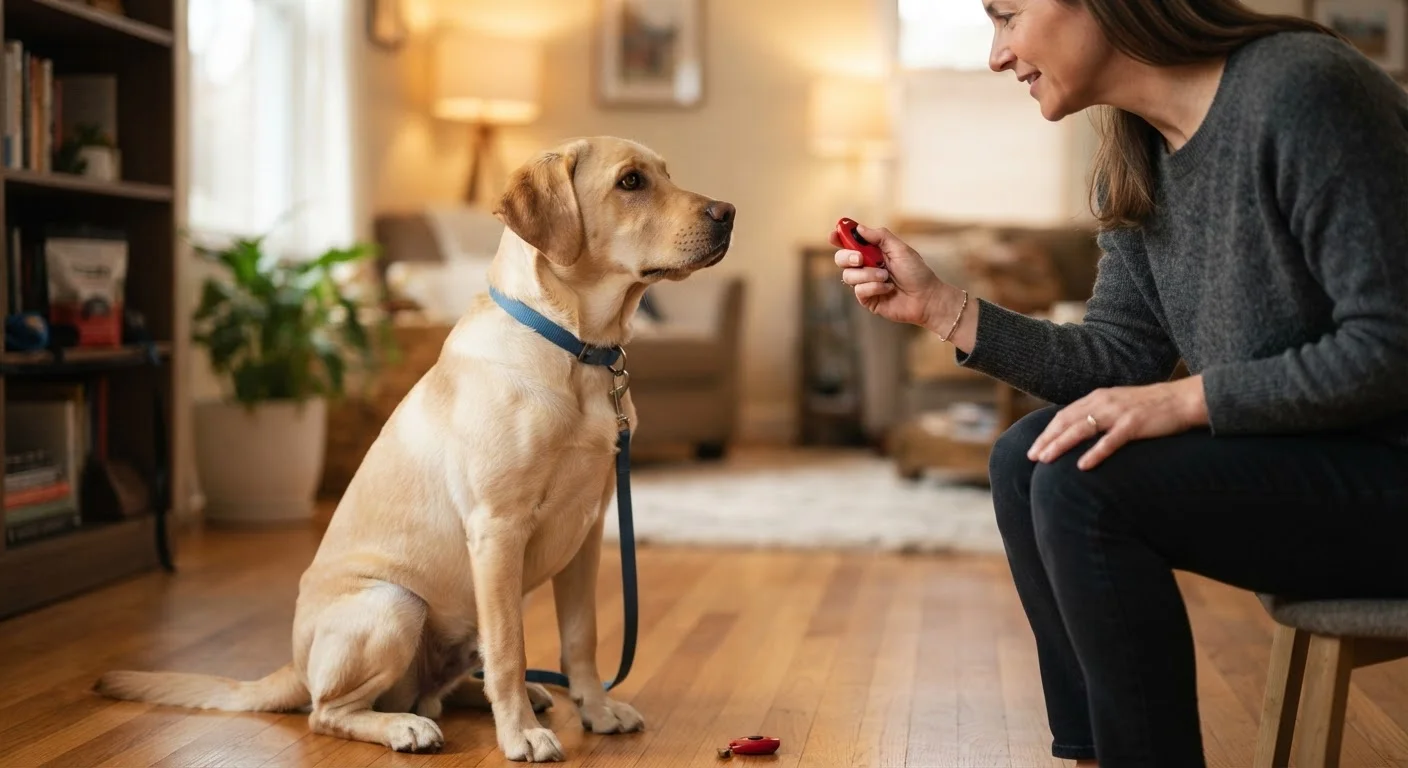
A clicker produces the same sound every single time. That acoustic consistency is genuinely difficult to replicate with the human voice, which shifts in pitch, volume, and emotion depending on context, energy level, and stress. When you're excited that your dog finally nailed a difficult behavior, 'yes!' sounds very different from when you're tired and distracted.
This uniformity makes clickers particularly effective for shaping - the technique of reinforcing successive approximations toward a target behavior. When you need to mark a subtle body position or a fleeting moment of stillness, the clicker's speed and clarity do real work. For a deeper look at shaping and related techniques, see shaping, luring, and capturing.
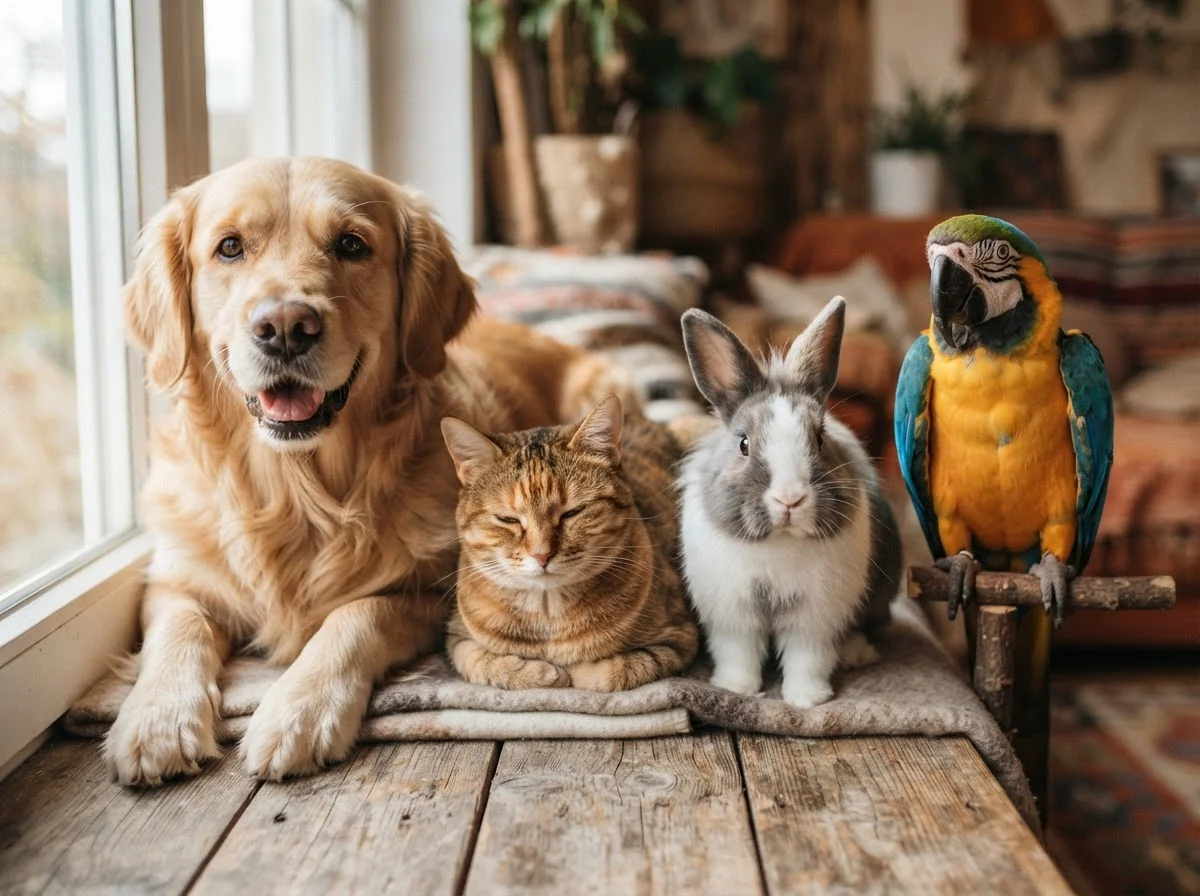
Clickers also travel well across species. The same click that trains a Labrador works for a cockatiel or a rabbit - there's no cross-species confusion about tone or intent.
0.1-0.2s
Optimal marker-to-behavior window
Behavioral research suggests a reinforcer or marker delivered within roughly half a second of a behavior is most effective at creating clear associations.
3 species
Common pets trained with clickers
Clicker methods are documented across dogs, cats, and small mammals including rabbits and guinea pigs in applied animal behavior literature.
Where Verbal Markers Have the Edge
The single biggest advantage of a verbal marker is that it's always with you. In real-world training - on a walk, at the vet, in a crowded environment - fumbling for a clicker breaks your focus and your timing. A single consistent word like 'yes' or 'good' can be delivered the instant a correct behavior occurs, hands-free, without breaking stride.
Verbal markers also carry a natural emotional warmth that clickers lack. While that warmth can be a disadvantage when inconsistency creeps in, it becomes an asset in relationship-building and in situations where the tone itself communicates something meaningful to your pet. This ties directly into how animals read and respond to human communication - explored in animal communication signals.
For cats especially, verbal markers often prove more practical. Cats are responsive to short, distinctive sounds, and a verbal cue integrates naturally into the quieter, lower-intensity sessions that feline training tends to require. See what makes cat training different for more on species-specific approaches.
Charging Your Marker Takes Repetition
Whether you're introducing a clicker or a verbal marker, the first step is always the same: pair it with a reward 20-40 times in short sessions before using it to mark behavior. Skipping this step means the signal carries no predictive value for your pet - and a meaningless marker won't speed up learning. Consistency during this loading phase is what determines how reliably the marker performs later.
Choosing the Right Tool for Your Situation
The honest answer is that neither method is universally superior - and many experienced trainers use both, depending on the task. A useful framework is to ask three questions: How precise does my timing need to be? How consistent can I realistically be? What does this individual animal respond to best?
Beginners often find clickers easier to start with because the tool's consistency compensates for the natural variability in a new trainer's voice. As skills improve, many trainers shift toward verbal markers for everyday reinforcement while reserving the clicker for teaching new, technically demanding behaviors.
Whatever you choose, the underlying principles are identical - and both sit firmly within the evidence base for reward-based training methods. The marker is not magic; it works because of the association you build and the consistency you maintain. For a broader view of how these training concepts fit into understanding animal behavior, the relationship between communication and learning is a thread worth following.
This article is for general educational purposes. Training approaches should be adapted to your individual pet's health status, temperament, and history. Consult a certified professional trainer or veterinary behaviorist for animals with fear, aggression, or trauma-related concerns.