Why the Method Matters
Most pet owners know that rewards accelerate learning - but fewer realize that how you prompt a behavior in the first place shapes how fluent and reliable that behavior ultimately becomes. Three foundational techniques - shaping, luring, and capturing - serve as the primary routes trainers use to elicit behavior before reinforcing it. Each has distinct mechanics, strengths, and limitations.
Understanding the differences lets you match the right approach to the behavior you're teaching, your pet's temperament, and your own skill level. For the behavioral science underpinning why reward-based methods work at all, see why positive reinforcement works.
| Core technique: Luring | Using a motivator (usually food) to guide the animal into a position |
| Core technique: Capturing | Marking and rewarding a behavior the animal performs spontaneously |
| Core technique: Shaping | Reinforcing successive approximations toward a target behavior |
| Lure fade timing | Typically within 3-5 repetitions to prevent prompt dependency (Applied animal behavior consensus) |
| Marker timing window | Approximately 0.5 seconds after the behavior for clear communication (Operant conditioning research) |
| Best technique for complex behaviors | Shaping by successive approximations |
Luring: Fast to Start, Careful to Fade
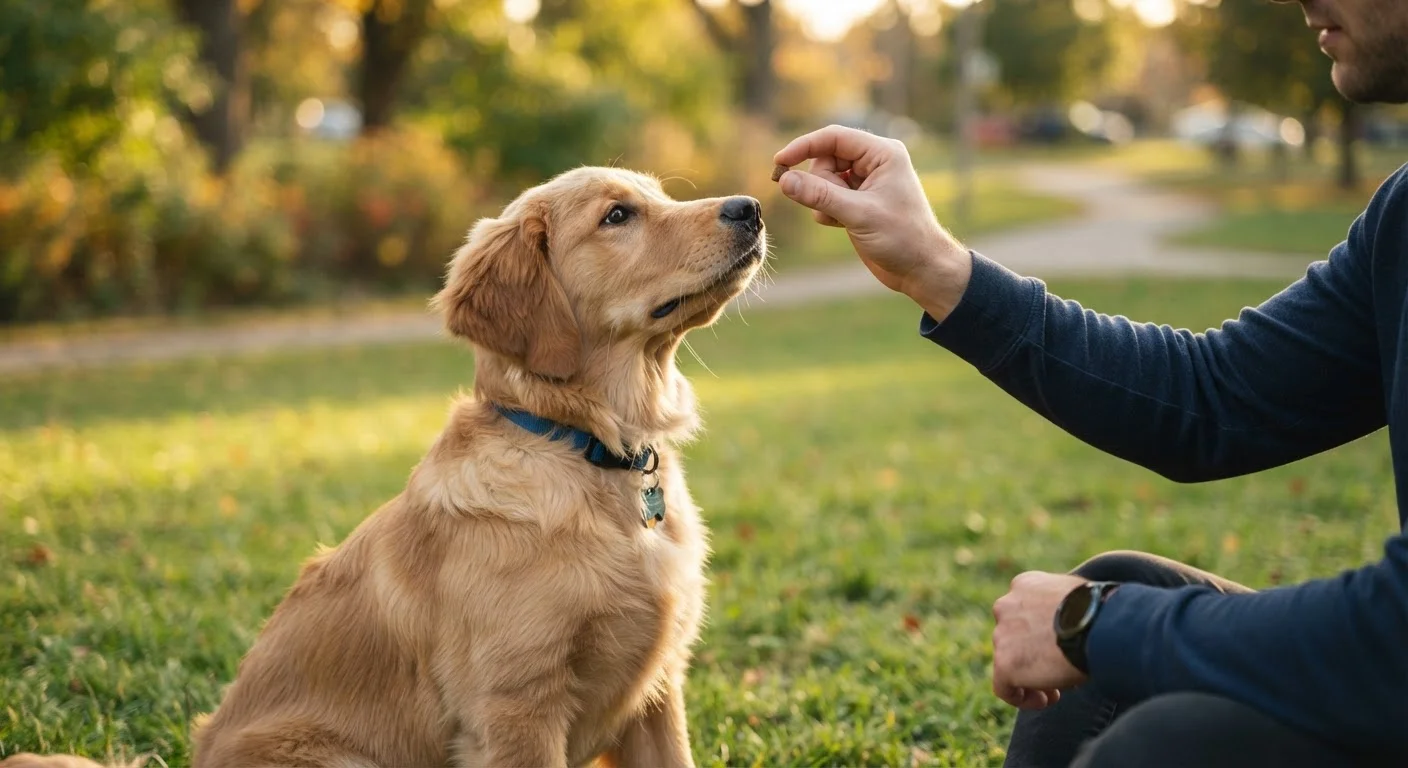
Luring uses a motivator - most commonly food held in your hand - to physically guide the animal into position. To teach a sit, you hold a treat near the dog's nose and arc it slowly back over the head; the body follows naturally. It's the fastest way to get a first repetition of many behaviors, making it ideal for beginners and for behaviors with a clear end-position like sit, down, or spin.
The critical caveat: lures must be faded deliberately and quickly. Research in applied animal behavior consistently shows that animals trained with persistent lures often become prompt-dependent - they won't perform without the food visible. Trainers typically recommend fading the food lure within three to five repetitions, transitioning to an empty hand signal that mimics the original gesture. The reward still comes, but from a separate location (a pocket or treat pouch) after the behavior is complete.
Luring is less useful for behaviors that don't have a neat body position, and it can inadvertently cue a behavior the handler doesn't intend - subtle hand movements become unintended signals. See how marker signals work alongside luring to understand how precise feedback complements this technique.
Capturing: Reinforcing What Already Happens
Capturing means waiting for the animal to perform a behavior spontaneously, then marking and reinforcing it the moment it occurs. There's no physical prompting involved - the trainer simply observes and responds. This approach is especially powerful for behaviors that occur naturally but are difficult to engineer physically, such as a dog offering a yawn, a cat stretching, or a parrot vocalizing on cue.
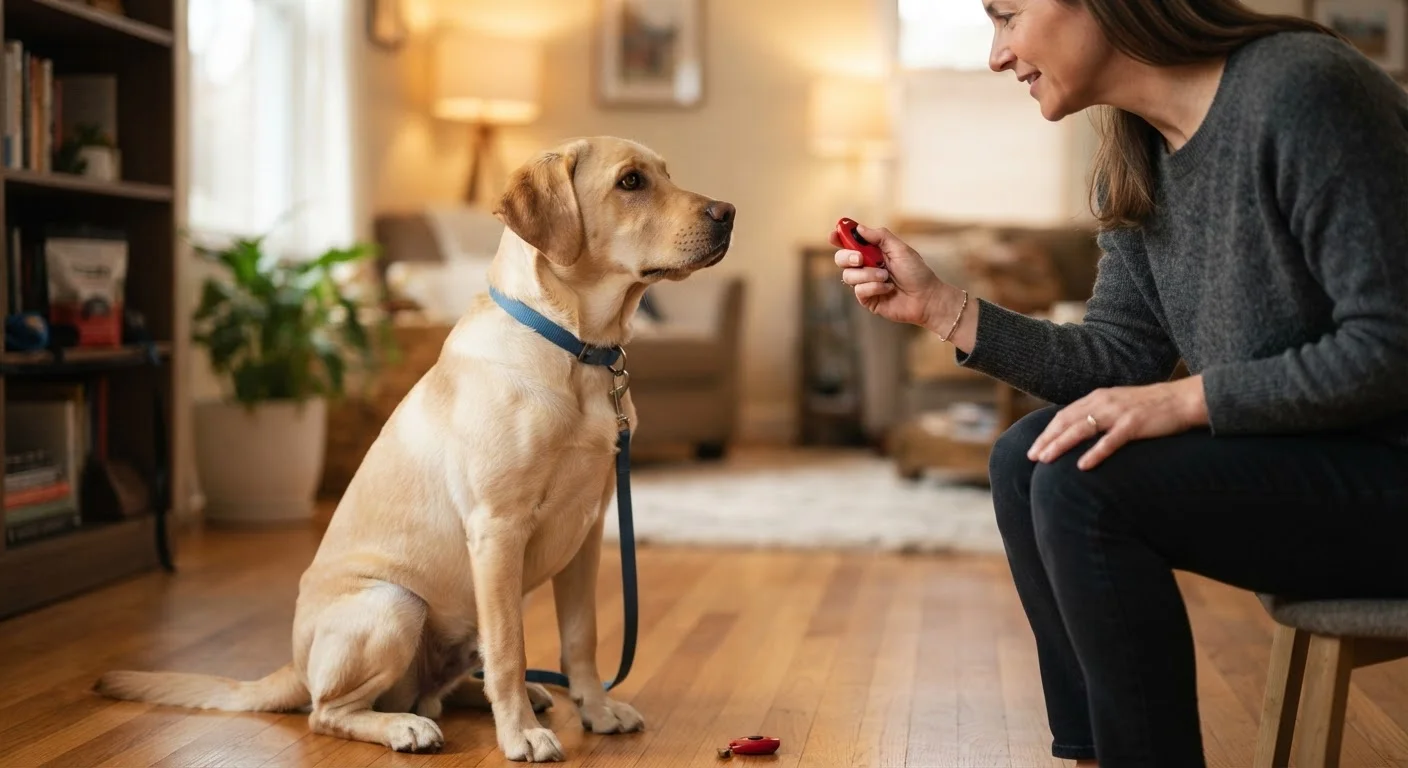
The technique demands patience and timing. A marker signal - a click from a clicker or a short verbal cue like "yes" - must arrive within about half a second of the behavior to clearly communicate what earned the reward. Without precision, the animal reinforces the wrong movement.
Capturing also produces behaviors with strong intrinsic quality: because the animal isn't being guided, the resulting behavior often looks more fluid and natural than one trained through luring. It's widely used for teaching animals to "go to place," relax on a mat, or offer calm behavior - responses that are hard to physically prompt. For pets who are anxious or hesitant, capturing low-arousal behaviors builds confidence without pressure; working with fearful pets explores this in depth.
Shaping
A training process in which successive approximations - behaviors that increasingly resemble the final goal - are reinforced until the target behavior is reached. It relies on breaking the end goal into small, achievable steps.
Luring
Using a reward, typically food held in the hand, to physically guide an animal into a desired position or movement. The lure must be faded promptly to avoid the animal becoming dependent on its presence.
Capturing
Marking and reinforcing a behavior at the exact moment the animal performs it spontaneously, without physical prompting. Timing precision is essential for the animal to associate the reward with the correct behavior.
Prompt dependency
A condition in which an animal will only perform a trained behavior when a specific prompt - such as a visible treat - is present. It commonly results from failing to fade lures or other artificial cues during training.
Successive approximations
The incremental steps used in shaping, where each step is a behavior that moves progressively closer to the final target behavior. Each approximation is reinforced before criteria are raised.
Marker signal
A distinct, brief signal - such as a click or the word 'yes' - used to pinpoint the exact moment a desired behavior occurs. It bridges the gap between the behavior and the delivery of a reward.
Shaping: Teaching Through Approximations
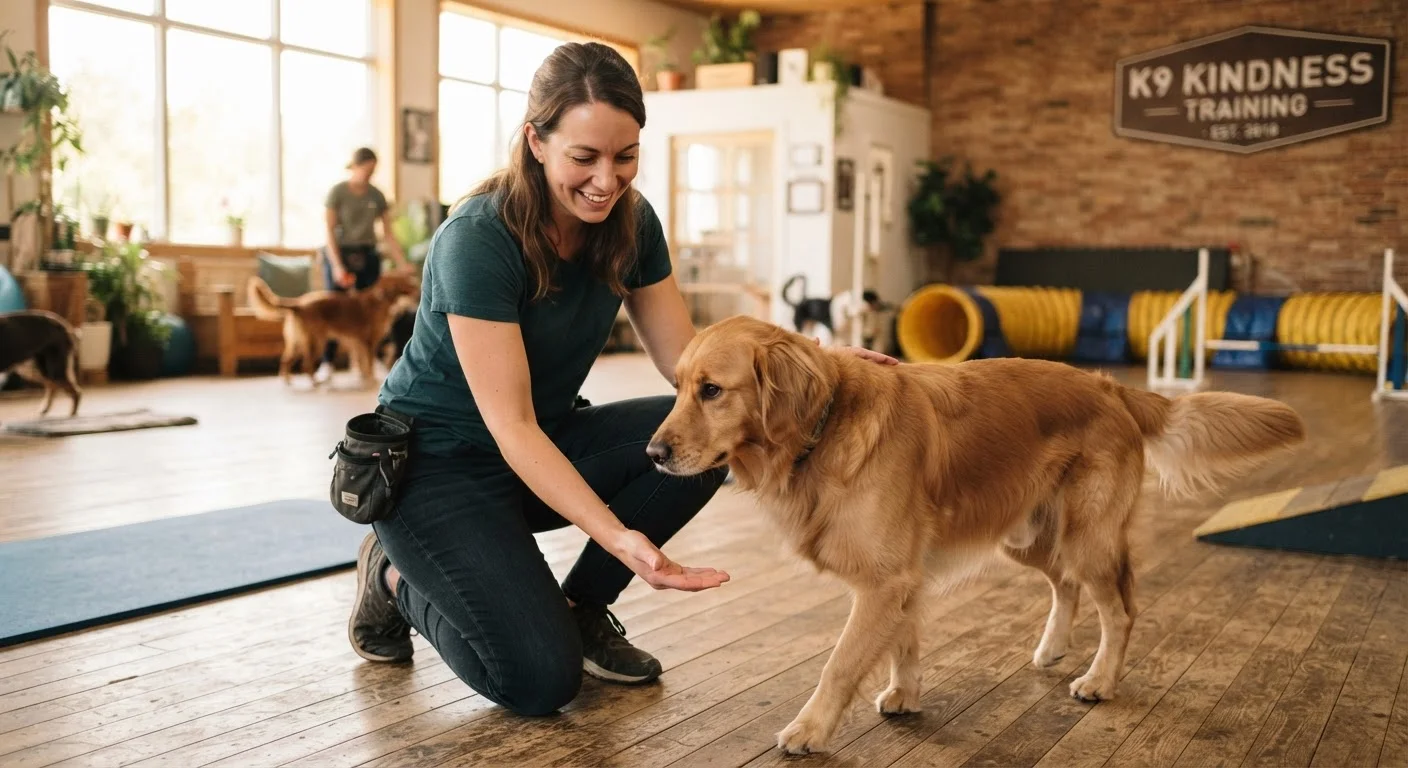
Shaping - formally called shaping by successive approximations - involves reinforcing incremental steps toward a target behavior rather than waiting for the complete response. If you want a dog to retrieve a specific object, you might first reward any glance at the object, then nose contact, then mouth contact, then picking it up, and so on. Each step is a behavioral approximation that moves closer to the goal.
Shaping is the most flexible of the three techniques. It can teach complex, multi-step behaviors that would be impossible to lure physically, and it actively engages the animal's problem-solving capacity - a quality that supports healthy cognitive engagement across species. Animals trained heavily through shaping often become more creative and confident learners over time.
The trade-off is skill demand. Effective shaping requires the trainer to plan a clear approximation sequence in advance, raise criteria at the right pace (too fast causes frustration; too slow causes disengagement), and deliver precise, timely markers. Pairing shaping with rewards beyond food - such as play or environmental access - can sustain motivation across longer sessions. the full spectrum of reinforcement covers those options in detail.
Choosing and Combining Techniques
In practice, skilled trainers rarely use one technique exclusively. A common sequence: lure to get the first few repetitions of a simple behavior, capture naturally occurring variations to build fluency, and shape when building complex chains or working past a plateau. The table below summarizes key considerations.
| Technique | Best For | Main Risk |
|---|---|---|
| Luring | Simple positions, fast first reps | Prompt dependency if not faded |
| Capturing | Natural behaviors, low-arousal responses | Requires timing and patience |
| Shaping | Complex or novel behaviors | Demands clear criteria planning |
One useful mental check: if your pet looks confused or frustrated, your criteria may be too large - break the step down. If your pet seems bored or disengaged, consider whether the reward is sufficiently motivating, or whether play-based reinforcement might shift the energy. Behaviors also need to be practiced across different contexts to truly generalize - why pets obey at home but not elsewhere explains that process. Matching method to moment - rather than defaulting to a single approach - is what separates competent training from expert training.