
Why Desk Work Makes Movement So Hard
Sitting for eight or more hours disrupts more than your posture. Sustained sedentary time suppresses lipoprotein lipase activity - an enzyme involved in fat metabolism - and blunts blood glucose regulation. After a long desk day, your body is physiologically less primed to move, not just psychologically reluctant. Recognizing that fatigue isn't laziness is the first honest step.
There's also a structural problem: desk work fills the exact time slots most people would otherwise exercise. Commutes eat mornings, meetings colonize lunch, and cognitive fatigue taxes evenings. The case for micro-exercise throughout the workday addresses this directly - short, frequent movement breaks can meaningfully offset the effects of prolonged sitting without requiring a dedicated gym session.
Sedentary behavior
Any waking activity involving very low energy expenditure, such as sitting or reclining. Distinct from simply "not exercising" - it has its own measurable health effects independent of how much you work out.
Moderate-intensity movement
Physical activity that noticeably raises your heart rate and breathing, but still allows you to hold a conversation. Brisk walking and light cycling typically fall in this range.
Implementation intention
A specific plan that links a situation or cue to a behavior: "When X happens, I will do Y." Research shows these if-then plans significantly increase follow-through on intentions.
Progressive overload
Gradually increasing the demands placed on your body over time - through more reps, more resistance, or longer duration - so that adaptation and improvement continue.
Habit loop
A behavioral cycle composed of a cue (trigger), a routine (the behavior), and a reward. Understanding and designing this loop is central to making new habits automatic.
Mobility
The ability to move a joint through its full range of motion with control. Different from flexibility, which is passive - mobility involves active muscular engagement and functional movement quality.
The Mindset Shift That Changes Everything
Most beginners approach fitness with a volume-first mindset: commit to five days a week, download a demanding program, and push hard from day one. This approach has a high failure rate - not because of weak willpower, but because it ignores how habits are actually formed.
The more durable frame is consistency over intensity. A 20-minute walk performed reliably four times a week produces better long-term outcomes than an ambitious program abandoned after three weeks. Behavioral research consistently shows that habit formation depends on repetition and environmental cues more than effort. Your goal in the first four to six weeks isn't fitness - it's building a reliable trigger-routine-reward loop around movement.
Start Smaller Than Feels Productive
A common beginner mistake is choosing an intensity level that feels meaningful in week one but becomes unsustainable by week three. If your planned session feels almost too easy, you've likely found the right starting point. The goal in the first month is showing up - not performance. Adaptation follows consistency, not effort alone.
This same principle applies across skill domains. Professionals who struggle with online learning habits often face the identical trap: sporadic high-intensity effort instead of sustainable, low-friction routines.
Scheduling Movement Like a Professional
Exercise that isn't calendared doesn't happen consistently. Treat each session as a meeting with yourself - assign it a specific time, block it visibly, and protect it from overruns. Research on implementation intentions (the "when and where" of planned behavior) shows that people who schedule specific exercise times are substantially more likely to follow through than those who intend to exercise "when there's time."
Three scheduling approaches work well for desk professionals:
- Morning anchor: Exercise before the workday starts, removing the decision from an already depleted evening. Even a 25-minute session counts.
- Lunch window: A 30-minute workout at midday can fit within a standard lunch break and often improves afternoon focus.
- Split sessions: Two 15-minute movement blocks - one mid-morning, one after work - accumulate meaningfully and suit fragmented schedules.
For a deeper framework once you've built baseline consistency, designing a flexible workout week offers practical principles for professionals whose schedules shift week to week.
What to Actually Do When Starting From Zero
The best starting program is the one with the lowest barrier to entry. For most desk-bound beginners, that means two to three categories of movement:
- Walking: Underestimated and highly effective. Brisk walking elevates heart rate into a moderate-intensity zone for most sedentary adults and carries minimal injury risk. Aim for sessions of 20-30 minutes.
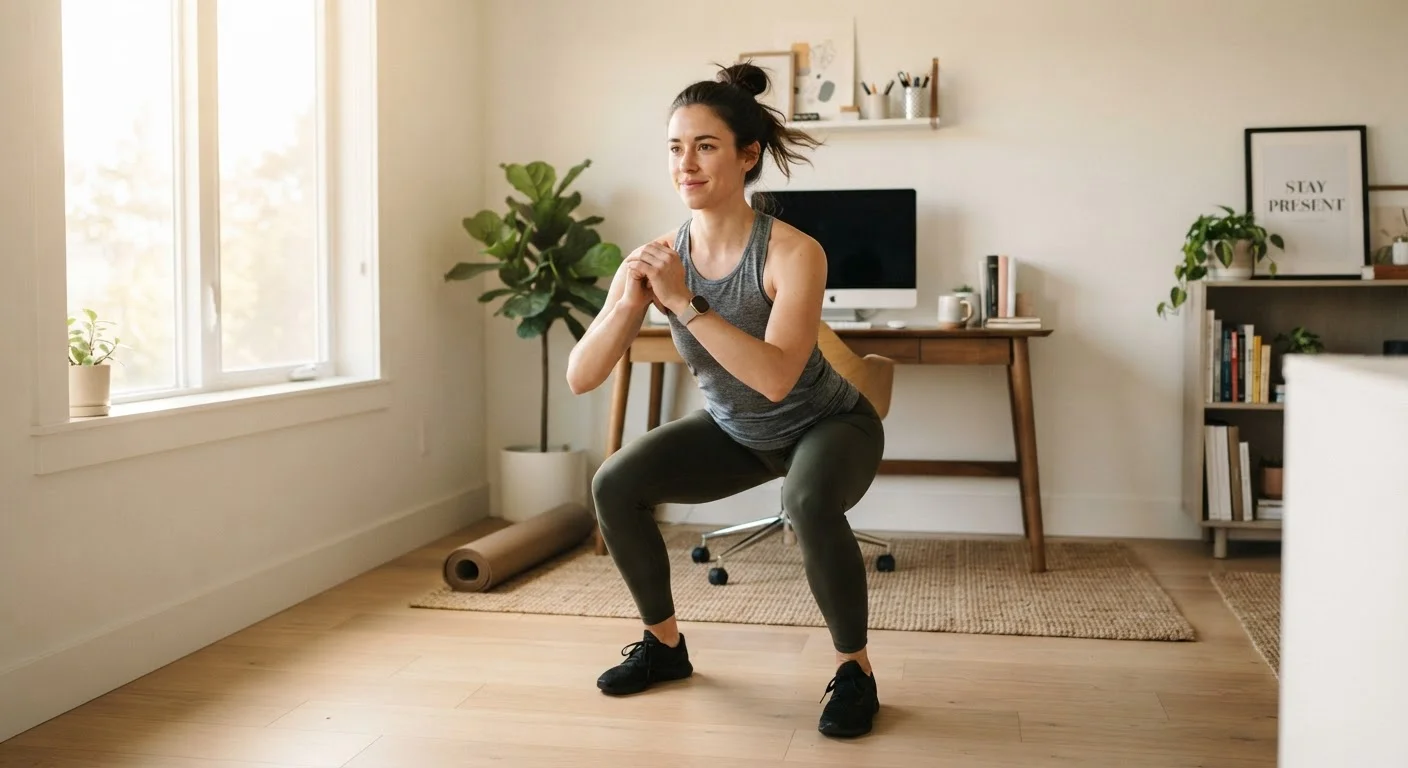
- Bodyweight resistance: Squats, push-ups, glute bridges, and planks build functional strength without equipment. Two sessions per week of 15-20 minutes each is sufficient to stimulate adaptation in beginners.
- Mobility work: Desk posture compresses hip flexors, tightens thoracic spine, and shortens pectoral muscles. Basic mobility drills address these patterns and reduce injury risk as activity increases. See what you miss when you skip mobility work for a thorough breakdown.
Don't Skip the Recovery Days
Beginners often feel motivated to exercise every day in the first week, then burn out or get injured within two weeks. Rest days are when adaptation actually occurs - muscles repair and strengthen during recovery, not during the session itself. For beginners, two to three sessions per week with rest days in between is a well-supported starting structure.
This article provides general health and fitness information only and is not a substitute for professional medical advice. Consult a qualified healthcare provider before beginning any new exercise program, especially if you have existing health conditions.
Making It Stick: The Habit Infrastructure
Motivation is unreliable. Infrastructure isn't. Three elements make movement habits durable for busy professionals:
- Environmental design
- Place workout clothes where you can see them. Keep a resistance band or mat visible. Reduce the physical steps between deciding to move and actually moving. Friction is the enemy of new habits.
- Anchor cues
- Attach movement to an existing, reliable behavior. "After I close my laptop, I do ten minutes of movement" is more durable than a vague intention. The existing behavior becomes the trigger.
- Minimum viable session
- Define a floor - the smallest version of a workout that still counts. On days when time or energy is genuinely limited, completing your minimum (even a 10-minute walk) preserves the habit chain. Skipping nothing for three months beats skipping everything after a missed week.
Movement habits also reinforce broader professional performance. Consistent physical activity is associated with improved executive function, stress regulation, and sleep quality - all of which compound into better focus and output. For professionals working across different environments, adapting productivity habits to your work setting explores how routine design shifts meaningfully between remote, hybrid, and office contexts.
The full reference for building on these foundations - including recovery, progressive overload, and long-term programming - is covered in the working professional's complete fitness reference.