
Why Sitting All Day Is a Distinct Problem
Many professionals assume that a gym session in the morning or evening neutralizes a day spent at a desk. The research tells a more complicated story. Studies in exercise physiology have identified sedentary behavior - defined as extended waking time in a sitting or reclining posture with low energy expenditure - as a health risk factor that operates somewhat independently of whether someone also exercises regularly.
Prolonged uninterrupted sitting has been associated with reduced insulin sensitivity, elevated triglycerides, impaired vascular function, and increased all-cause mortality risk, even in people who meet weekly physical activity guidelines. The underlying mechanism involves the suppression of lipoprotein lipase (an enzyme involved in fat metabolism) during extended muscular inactivity, alongside reduced glucose uptake in skeletal muscle.
In short: the body responds to inactivity in real time, not just as an average over the week. This is the problem movement snacks are specifically designed to address. For a broader foundation on building movement into a professional life, see the guide to building a sustainable movement habit.
This Applies Even to Regular Exercisers
The health risks of prolonged sitting are not fully offset by exercising before or after work. Research has found that individuals who meet weekly exercise guidelines but sit for eight or more uninterrupted hours daily still show elevated metabolic risk markers compared to those who break up their sitting time. Movement snacks address a gap that the gym cannot close on its own.
What the Research Actually Shows
The evidence base for movement snacks has grown considerably over the past decade. Several controlled trials have found that interrupting sitting every 30 minutes with short bouts of light to moderate activity - even as brief as three minutes of walking - significantly attenuated postprandial (after-meal) blood glucose and insulin responses compared to continuous sitting. One frequently cited study design compares continuous sitting to equivalent-duration sit-break protocols and consistently finds the interrupted pattern produces better metabolic outcomes.
Cognitive performance is another documented benefit. Research published in occupational health and sports science journals has found that brief movement bouts during the workday are associated with improvements in attention, executive function, and self-reported energy levels. For professionals managing sustained cognitive demands, this is arguably as important as the metabolic angle.
~30 min
Maximum recommended sitting interval before a movement break
Multiple occupational health researchers and exercise scientists suggest interrupting sitting at least every 30-60 minutes based on metabolic response data.
11%
Reduction in postprandial blood glucose from short activity breaks
Research published in exercise physiology journals has found light-intensity walking breaks reduced post-meal blood glucose by approximately 11% compared to uninterrupted sitting.
3-5 min
Duration sufficient to produce measurable cardiovascular response
Studies on 'exercise snacks' consistently find that bouts as short as three to five minutes at moderate intensity elicit clinically meaningful physiological changes.
It's worth being clear about the limits of the evidence: most studies are short-term, conducted in laboratory settings, and measure surrogate markers rather than long-term disease endpoints. The consensus view is that movement snacks are beneficial and low-risk, but the precise optimal frequency, duration, and intensity remain active research questions.
How to Actually Implement Movement Snacks
The practical barrier is rarely motivation - it's structure. Without an external trigger, sitting hours accumulate invisibly. The most effective implementation strategies share a common feature: removing the decision entirely by tying movement to existing cues.
- Time-based triggers: Set a recurring reminder every 45-60 minutes. When it fires, stand up and move for two to four minutes before resetting.
- Task-transition hooks: Use the end of each meeting, call, or focus block as an automatic movement cue - walk to get water, do a set of standing calf raises, or pace during a short phone call.
- Stair substitution: Default to stairs whenever the option exists. A two-flight climb produces a meaningful cardiovascular stimulus in under 60 seconds.
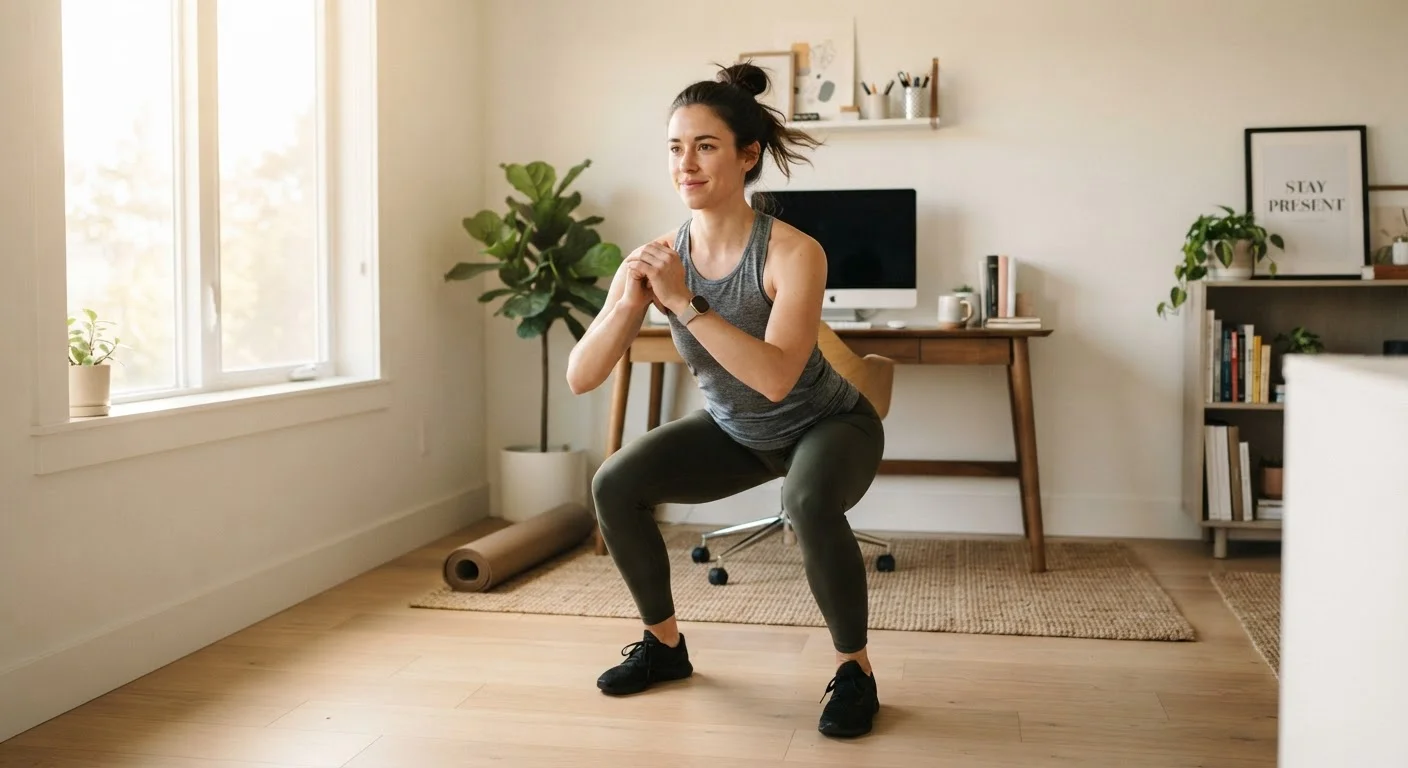
- Bodyweight micro-sets: Desk push-ups, wall sits, or air squats require no equipment and no change of clothes. Ten repetitions take less than 30 seconds.
The goal is not athletic performance - it's interrupting the physiological downward slide of prolonged sitting. Intensity matters more than aesthetics; an activity that mildly elevates your breathing is more effective than passive stretching. For a complementary approach to joint health that pairs well with movement snacks, explore mobility work for desk-bound professionals.
Start With Just One Anchor Habit
Rather than trying to overhaul your entire day at once, pick a single consistent trigger - such as standing up at the end of every video call - and make that automatic before adding more. Habit stacking on existing routines dramatically improves adherence compared to relying on willpower or motivation alone.
Movement Snacks in the Context of a Full Wellness Picture
Movement snacks are one layer of a broader health strategy, not a standalone solution. They are most effective when layered on top of - not substituted for - structured aerobic and resistance training across the week. Current public health guidelines in the US (from the Physical Activity Guidelines for Americans) recommend at least 150 minutes of moderate-intensity aerobic activity weekly alongside muscle-strengthening activities on two or more days. Movement snacks do not count toward those totals in standard guidance, but they address the sitting-specific risks that accumulate even in people who meet them.
Nutrition timing also interacts with movement behavior. Brief activity after a meal blunts the blood sugar response partly because working muscle acts as a glucose sink independent of insulin. This is one reason a short walk after lunch is a particularly high-leverage habit. For more on this interaction, see how food affects energy levels throughout the day.
For professionals building out the rest of their wellness strategy, a complete fitness and movement reference covers training principles, recovery, and habit formation in greater depth.
This article is for general informational and educational purposes only and does not constitute medical advice. Consult a qualified healthcare professional before beginning any new exercise program, particularly if you have an existing health condition.