What Play-Based Training Actually Means
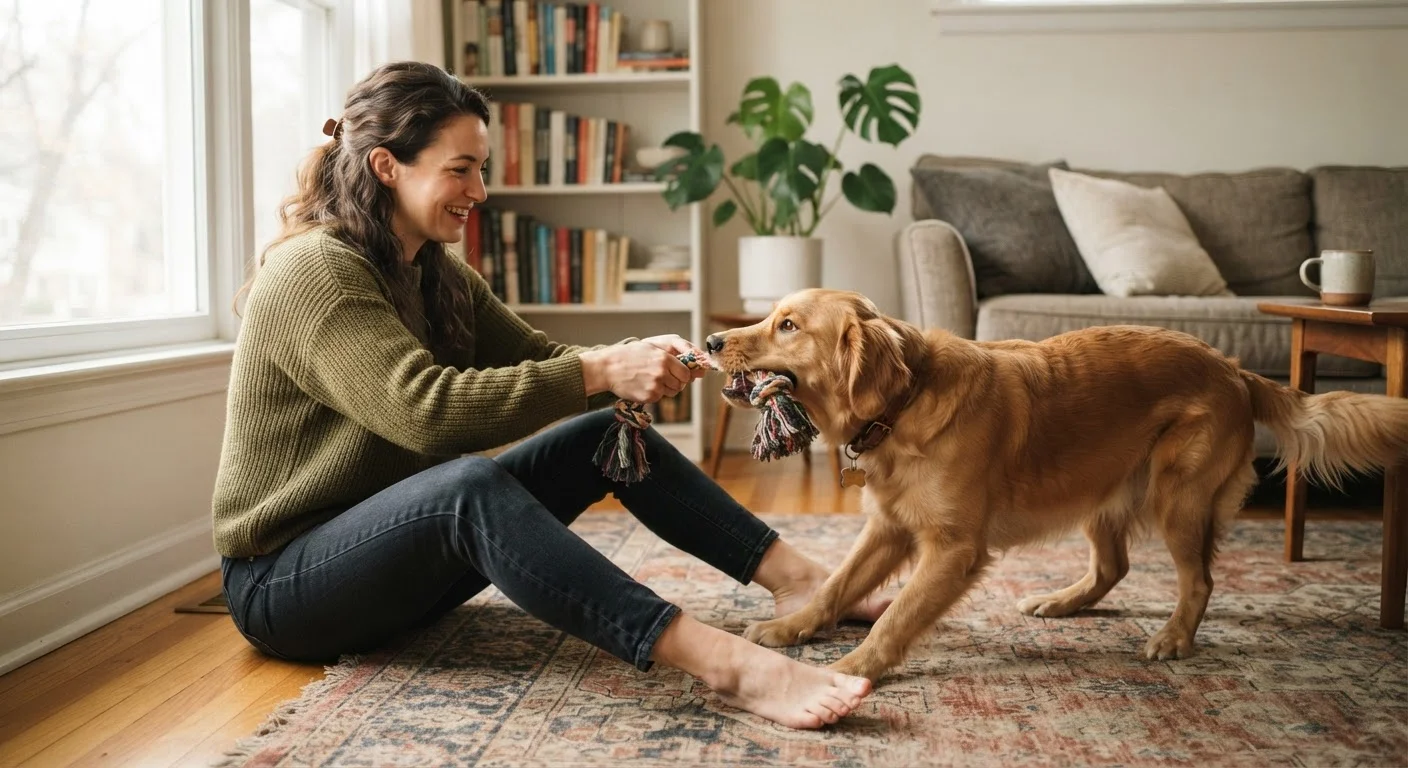
Play-based training uses structured interactive play - fetch, tug, chase games, toy rewards - as both a motivator and a teaching medium. It's grounded in the same operant conditioning framework as treat-based training: desired behaviors are reinforced, making them more likely to recur. The difference is the currency. Instead of a food reward, the pet earns access to play or a toy.
This approach draws on research into the predatory motor sequence in animals - the chain of behaviors (orient, stalk, chase, grab, kill, consume) that underlies much of what we recognize as play in carnivores. By tapping into this sequence deliberately, trainers can harness powerful intrinsic drives rather than relying solely on external food motivation. See the behavioral science behind positive reinforcement for the foundational principles that make this work.
Taps into intrinsic animal motivation
Play activates hardwired predatory and social drives, producing high arousal and engagement that food sometimes cannot match - particularly in working-breed dogs.
Strengthens the human-animal bond
Interactive play makes the owner the source of fun rather than just the holder of treats, deepening the relational quality of training sessions.
Reduces dependence on food rewards
For pets with dietary restrictions or weight concerns, play offers a non-caloric alternative that still functions as a potent positive reinforcer.
Supports physical exercise alongside training
Play-based training sessions simultaneously meet enrichment and exercise needs, which matters for high-energy breeds prone to boredom-related problem behaviors.
Can sustain motivation in distraction-heavy environments
High-value play rewards can compete effectively against environmental distractions in ways that lower-value food treats sometimes cannot.
The Genuine Advantages
Play as reinforcement isn't just a feel-good alternative to treats - it carries real, evidence-backed training benefits that distinguish it in specific contexts.
74%
Dogs showing higher task engagement with play rewards
Research published in Applied Animal Behaviour Science found that dogs in working contexts demonstrated greater persistence on tasks when play, rather than food, was used as the primary reinforcer.
2-5 min
Optimal focused play-training session length
Animal learning literature generally suggests keeping individual play-reinforced training bursts short to maintain peak arousal without tipping into uncontrolled excitement.
One often-overlooked advantage is context generalization. Food rewards can become strongly associated with a specific training setting, meaning a pet may perform reliably at home but struggle elsewhere. Play, being more emotionally activated and physically dynamic, can sometimes produce behaviors that transfer more readily - though this still requires deliberate practice. For a deeper look at that challenge, see why pets obey at home but not anywhere else.
The Real Limitations
Proponents of play-based training sometimes overlook meaningful structural challenges that can undermine its effectiveness when applied without care.
Can blur behavioral boundaries if unstructured
Without clear start and stop cues, play sessions can escalate arousal to the point where the pet stops processing training signals - reinforcing wildness rather than calm compliance.
Not universally motivating across species and ages
Many cats, senior pets, and low-drive dogs find toy interaction only mildly rewarding, making play an unreliable primary reinforcer for these populations.
Harder to deliver with split-second timing
Food treats can be dispensed instantly at the exact moment of a correct behavior; initiating a play sequence introduces a delay that can weaken the association between behavior and reward.
Risk of inadvertently reinforcing rough behaviors
Games like tug or wrestling can teach pets that biting, jumping, or grabbing clothing is acceptable - particularly if rules around the game are not consistently applied.
Requires higher owner skill and consistency
Effective play-based training demands that the owner manage their own energy and timing carefully; inconsistent handling can send mixed signals that confuse rather than teach.
Perhaps the most practical issue is individual variation. Not all pets are equally play-motivated. Many cats, senior animals, and dogs with low prey drive simply do not find toy interaction rewarding enough to use as a primary reinforcer. As discussed in how training needs shift across a pet's lifetime, reinforcement preferences change with age and must be reassessed accordingly.
Play-Based Training Is Not the Same as Free Play
A common misconception is that simply playing with your pet constitutes training. Effective play-based training requires deliberate structure: a clear cue to begin, defined rules during play, and a consistent signal to end the session. Free, unstructured play has enrichment value but does not teach the specific behavioral associations that structured play-training targets. The distinction matters for owners hoping to transfer play's motivational power into reliable real-world behaviors.
Integrating Play Into a Broader Training Toolkit
The most scientifically sound approach treats play not as a replacement for other reinforcers, but as a complement to them. Understanding the full spectrum of reinforcement - including food, praise, environmental access, and play - allows owners to match the reward to the animal's state and the behavior being trained.
Practically, this might mean using food rewards to introduce new behaviors precisely, then switching to play as a high-value jackpot for fluent, enthusiastic performance. Alternatively, short play sessions can serve as "resets" between focused repetitions, maintaining arousal without tipping into overexcitement. The environment also matters: a behaviour-aware home setup can make play sessions more predictable and controlled. For a technical view of the teaching methods that underpin all of this, shaping, luring, and capturing provides essential context.