The Core Nutritional Differences
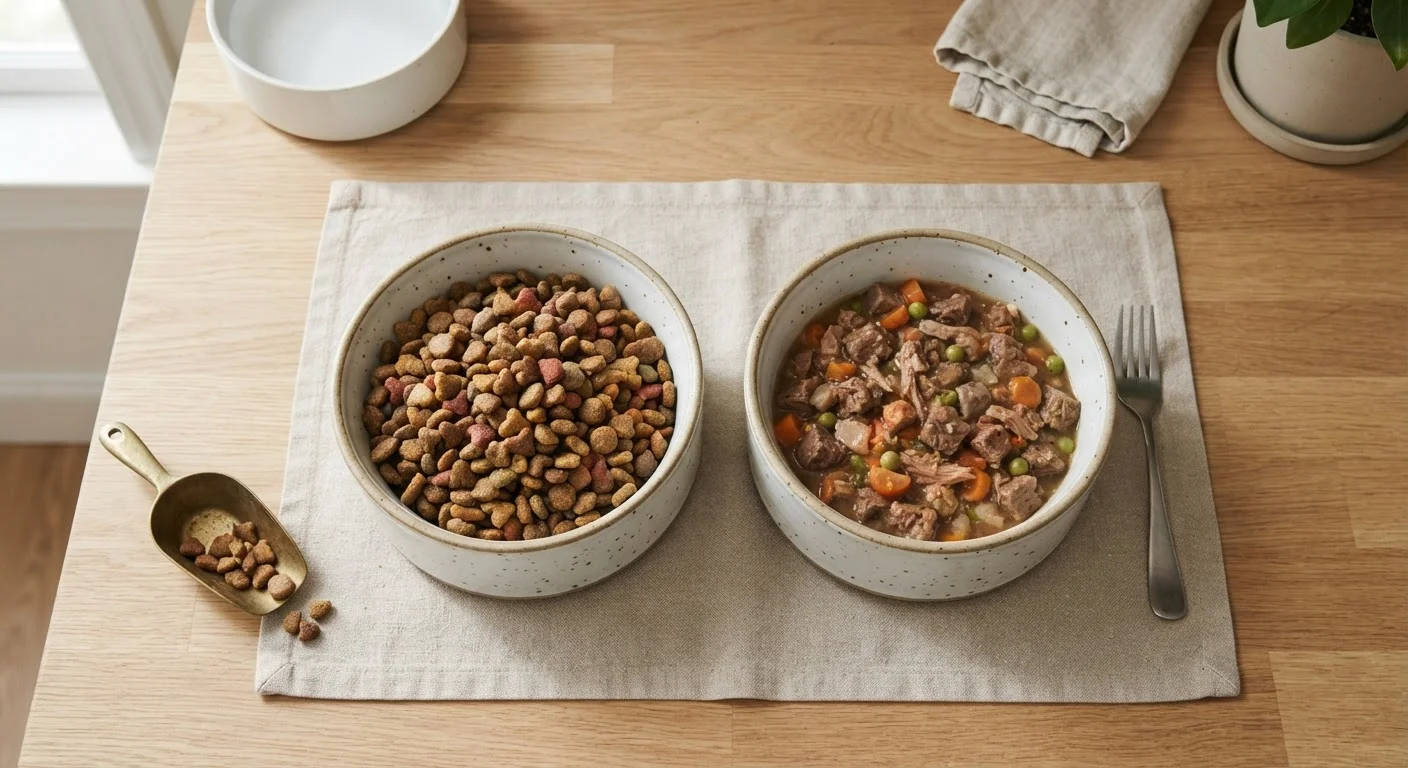
The most fundamental distinction between dry kibble and wet food is moisture content. Wet food typically comprises 70-80% water, while dry kibble contains around 8-12%. This gap has cascading effects on caloric density, texture, palatability, and how the food fits into an animal's overall diet.
Because kibble has most of its moisture removed during processing, the remaining nutrients - protein, fat, carbohydrates, and micronutrients - are packed into a smaller volume. On a dry-matter basis (stripping away moisture to compare nutrient content directly), the two formats are often closer than they appear. A wet food that looks protein-rich at 10% crude protein on the label may actually deliver a similar dry-matter protein level to a kibble listing 30%, once moisture is accounted for. Understanding this helps owners avoid misreading labels - a skill covered in depth in What Your Pet's Food Label Is Actually Telling You.
Carbohydrate content is another meaningful divergence. Kibble manufacturing typically requires starch to bind the mixture and allow extrusion into shelf-stable pellets, meaning most dry foods carry a higher carbohydrate load. Many wet foods, particularly pâtés and stews, use less starch and can deliver higher proportional protein and fat content.
| Criterion | Dry Kibble | Wet Food |
|---|---|---|
| Moisture content | 8-12% | 70-80% |
| Caloric density (per gram) | Higher | Lower |
| Typical carbohydrate load | Higher (binder required) | Lower |
| Shelf life (unopened) | Months | Years (canned); days (pouch) |
| Storage after opening | Sealed bag, weeks | Refrigerated, 24-48 hours |
| Relative cost per calorie | Lower | Higher |
| Palatability | Moderate | Generally higher |
| Dental abrasion benefit | Modest | Minimal |
| Hydration contribution | Minimal | Significant |
Hydration, Urinary Health, and Species-Specific Considerations
Hydration is arguably where the wet food advantage is clearest. Cats evolved as desert predators who obtained most of their moisture from prey, making them poor drinkers by default. Feeding a dry-only diet to cats with underlying urinary sensitivities is a widely discussed concern in veterinary nutrition circles, though it's important to note that the relationship between diet format and urinary disease is complex and individual. Pets on wet food diets consistently show higher urine volume and lower urine concentration, which is broadly associated with urinary tract health.
For dogs, the hydration gap matters less - dogs tend to compensate by drinking more water. Still, dogs with a history of urinary crystals, kidney disease, or certain metabolic conditions may benefit from the additional fluid load wet food provides. Always discuss dietary format changes with your veterinarian if your pet has an ongoing health condition.
For a deeper look at how much water your pet actually needs and how diet format factors in, see Pet Hydration: How Much Water Is Enough?.
70-80%
Moisture in typical wet pet food
Compared to just 8-12% in dry kibble, wet food delivers substantially more fluid per gram consumed.
2-4×
Higher per-calorie cost of wet food
Calorie-for-calorie, wet food typically costs significantly more than dry kibble across comparable quality tiers.
~50%
Cats' daily water from diet (prey-based)
In the wild, cats obtain roughly half or more of their daily water from prey tissue, underscoring the relevance of wet food for moisture intake.
Practical Considerations: Cost, Storage, and Feeding Logistics
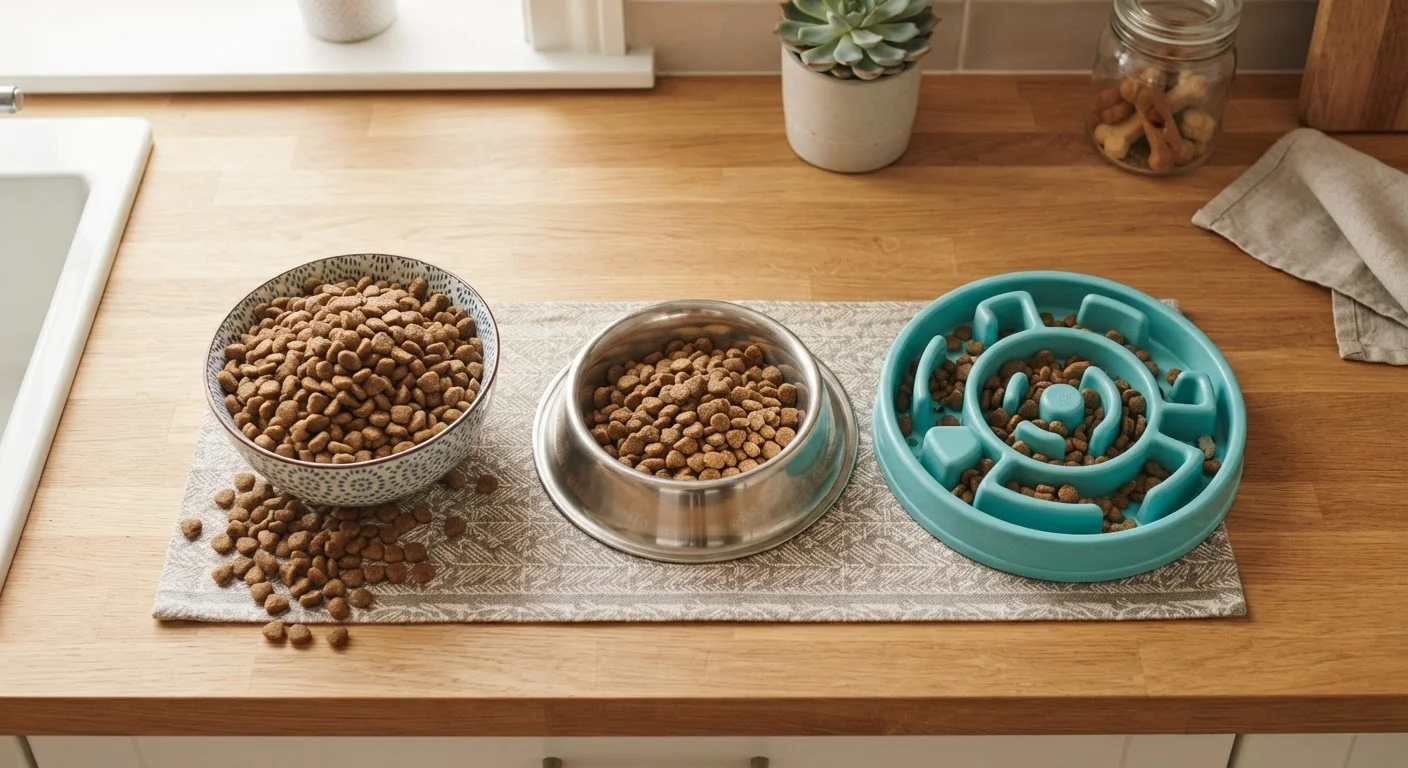
Dry kibble wins on practicality for most households. A bag of kibble can remain shelf-stable for months when stored correctly (sealed, cool, and dry), and it works seamlessly with timed feeders, puzzle feeders, and free-feeding setups. Approaches to Feeding Schedules explores how format interacts with meal-timing strategies.
Wet food, by contrast, must be refrigerated after opening and typically used within 24-48 hours. This creates more waste risk and higher per-calorie cost. On a calorie-equivalent basis, wet food can cost two to four times more than kibble, depending on the formulation and brand tier.
A growing number of owners use a combination approach - kibble as the daily base with wet food added as a topper or rotating inclusion. This hybrid strategy can boost palatability and hydration without the full cost commitment of an all-wet diet. If pursuing this route, be mindful of total daily caloric intake; wet food adds real calories and can tip a pet into overfeeding if not accounted for.
Check for AAFCO Nutritional Adequacy
Regardless of format, look for an AAFCO (Association of American Feed Control Officials) nutritional adequacy statement on the label. This indicates the food has been formulated or tested to meet established minimum nutrient profiles for a specific life stage. Neither wet nor dry food is inherently complete - the adequacy statement is what confirms it. Foods labeled 'for supplemental or intermittent feeding only' are not intended as a sole diet.
Making the Right Call for Your Pet
There is no single universally correct answer. A healthy, well-hydrated adult dog eating AAFCO-compliant kibble and drinking freely is nutritionally well-served. A cat with recurrent urinary issues or an elderly dog with dental pain may genuinely do better on wet food. The decision should be driven by the animal's health status, age, species, activity level, and any veterinary guidance - not by marketing language on packaging.
It's also worth contextualising pet food within broader nutritional debates. Just as discussions about ultra-processed vs. whole foods in human nutrition resist simple answers, pet food quality varies enormously within both the dry and wet categories. Processing method, ingredient quality, and formulation matter as much as format. Similarly, if you're weighing ingredient choices within a format, Grain-Free Diets for Pets is worth reading before making assumptions about which ingredients signal quality.
When in doubt, a board-certified veterinary nutritionist can provide individualized guidance - particularly for pets with chronic conditions, life-stage transitions, or complex dietary histories.
This article is for general informational purposes only and does not constitute veterinary or medical advice. Consult a licensed veterinarian for guidance specific to your pet's health needs.