Why Grain-Free Became a Pet Food Phenomenon
Grain-free pet food moved from specialty shelves to mainstream dominance over roughly a decade, driven by a broader cultural appetite for "ancestral" and "clean label" eating that crossed over from human food trends. Marketing positioned grains as fillers - cheap, unnecessary, and potentially harmful - while grain-free diets were framed as premium, protein-rich, and species-appropriate.
The reality is more nuanced. Grains like oats, barley, and brown rice provide digestible carbohydrates, fiber, and micronutrients in a well-formulated diet. They are not inherently harmful to most pets. The conversation around grain-free diets has also been complicated by a genuine and unresolved scientific question about cardiac health - something that deserves careful, evidence-based attention rather than either panic or dismissal.
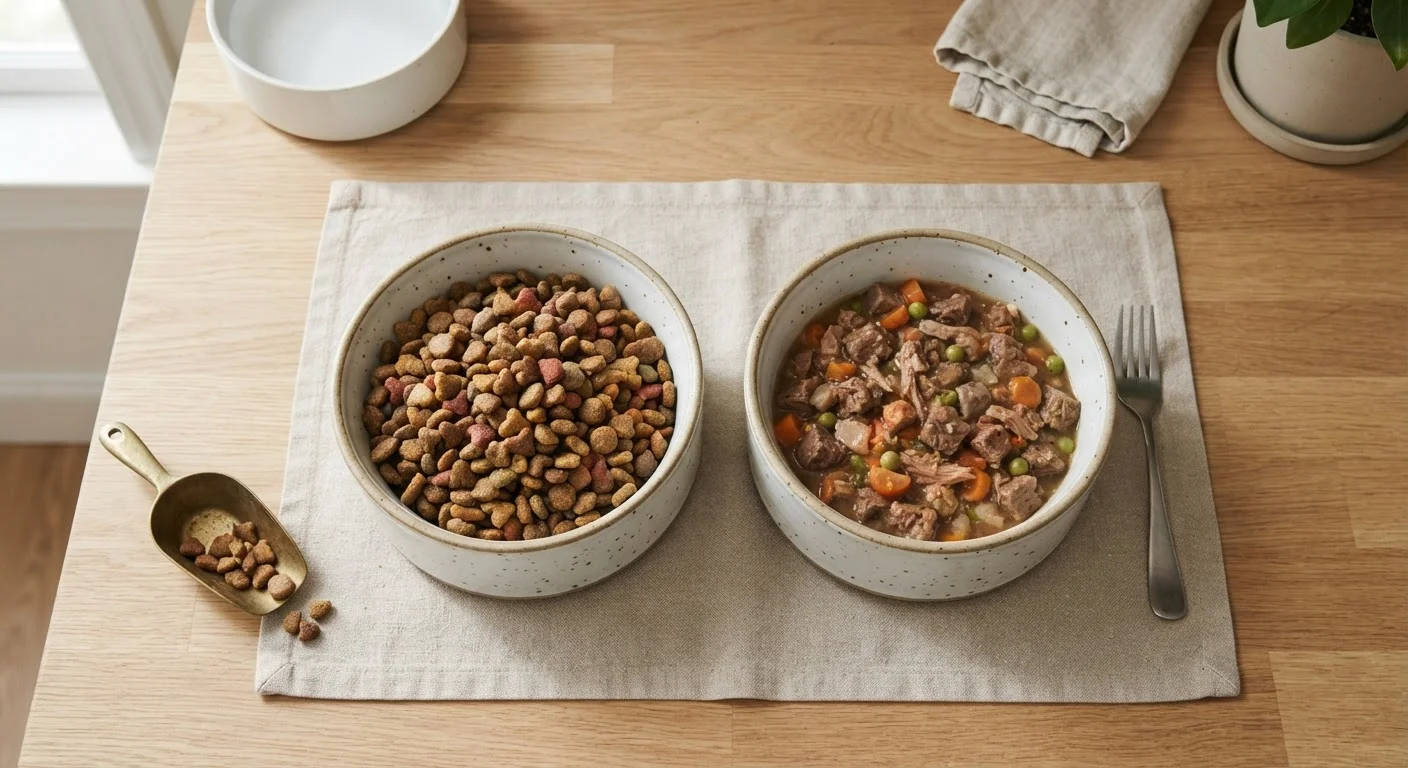
For context on how grain-free fits within the broader kibble landscape, see our comparison of dry and wet pet foods and what those format differences actually mean nutritionally.
Myth
Grain-free diets are more natural and healthier for all pets because wolves and wild cats don't eat grains.
Fact
Domestic dogs are genetically adapted to digest starch; wild diet logic doesn't translate cleanly to companion animal nutrition.
Domesticated dogs diverged from wolves thousands of years ago, and genetic research - including a widely cited 2013 study published in Nature - identified key mutations in dogs that improve starch digestion compared to wolves. Cats are obligate carnivores with different nutritional demands, but "grain-free" doesn't automatically mean "high-meat." Many grain-free formulas replace grains with starchy legumes like peas, lentils, or potatoes, which can be equally high in carbohydrates. The argument from wild ancestry sounds intuitive, but it oversimplifies how domestication has shaped companion animal metabolism.
Myth
Most pets who react badly to food have a grain allergy, so grain-free is the safe choice.
Fact
True grain allergies are uncommon in dogs and cats; animal proteins such as beef, dairy, and chicken are the most frequently identified dietary allergens.
According to a review published in Veterinary Dermatology, the most common food allergens identified in dogs are beef, dairy, wheat, chicken, egg, and lamb - with wheat ranking considerably lower than animal proteins. In cats, beef, fish, and chicken top the list. Food elimination trials, conducted under veterinary supervision, are the gold-standard diagnostic tool - not a preemptive switch to grain-free food. If you suspect your pet has a food sensitivity, a systematic elimination diet with a hydrolyzed or novel-protein food is more diagnostically useful than simply removing grains.
Myth
Grain-free food is proven to cause heart disease in dogs.
Fact
The FDA's investigation identified an association between certain grain-free diets and dilated cardiomyopathy (DCM), but a definitive causal mechanism has not been established.
In 2018, the U.S. Food and Drug Administration (FDA) began investigating reports of DCM - a serious heart condition - in dogs eating grain-free diets high in legumes, potatoes, and legume seeds. The agency issued updates through 2019, noting that the association was not fully explained by taurine deficiency alone and that the mechanism remained under study. As of the FDA's most recent public communications, the investigation is ongoing and causation has not been confirmed. However, the signal is significant enough that many veterinary cardiologists recommend caution, particularly for breeds already predisposed to DCM. This is an area of active research, and uncertainty should be taken seriously rather than dismissed.
Myth
Grain-free diets are always higher in protein, making them better for muscle health.
Fact
Grain-free does not equal high-protein - many grain-free products substitute grains with carbohydrate-dense legumes or root vegetables.
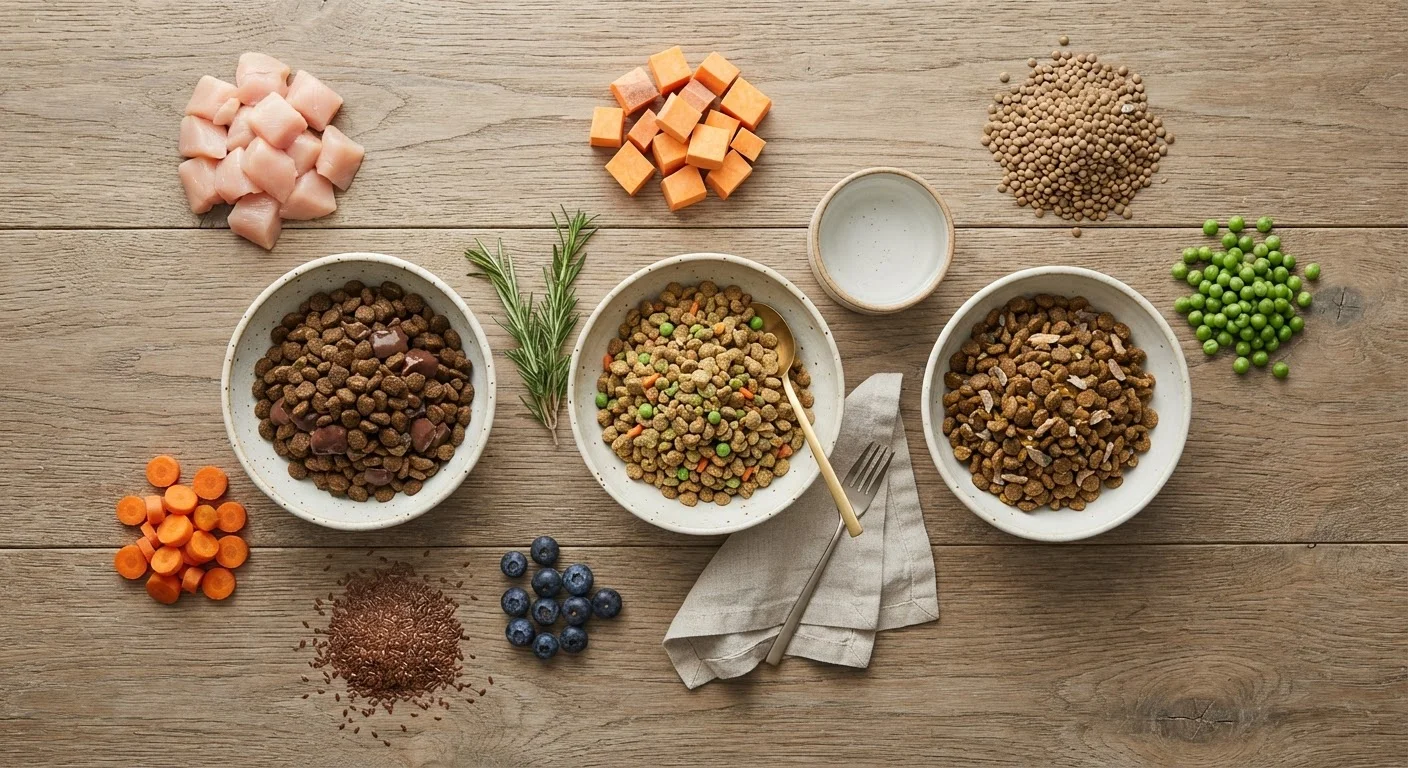
The "grain-free" label describes what a food lacks, not what it contains. Many grain-free formulas achieve their carbohydrate content through peas, lentils, chickpeas, sweet potatoes, or tapioca - all of which are substantial carbohydrate sources. Actual protein percentages vary widely across both grain-inclusive and grain-free diets. If protein density is your goal, the guaranteed analysis panel on the label - and ideally a call with a veterinary nutritionist - will give you far more useful information than a grain-free claim alone. For guidance on reading those labels, see what your pet's food label is actually telling you.
Myth
Switching to grain-free is a harmless experiment - if it doesn't help, you can just switch back.
Fact
Frequent or unsupported diet changes can disrupt gut microbiome stability and make diagnosing real food sensitivities harder.
Pets' gastrointestinal systems benefit from dietary consistency. Abrupt changes can cause temporary digestive upset, and cycling through multiple diets without veterinary guidance complicates the diagnostic picture if a genuine food sensitivity is later suspected. A proper elimination diet requires a minimum of eight to twelve weeks on a single novel or hydrolyzed protein diet to yield meaningful results. Treating dietary change as a low-stakes experiment can inadvertently introduce dietary variables that obscure root causes. Any significant diet change should involve a transition period and, ideally, professional input.
What the Evidence Actually Supports
The FDA's ongoing DCM investigation remains the most consequential piece of open science in this space. The agency's alerts focused specifically on diets where peas, lentils, legume seeds, or potatoes appeared in the first several ingredients - not on grain-free diets as a blanket category. Breeds with a known genetic predisposition to DCM (Doberman Pinschers, Boxers, Great Danes, for example) warrant additional vigilance, and veterinary cardiologists have generally recommended caution for those dogs.
The FDA-DCM Investigation Is Ongoing
The FDA has not concluded its investigation into the association between certain grain-free diets and dilated cardiomyopathy (DCM) in dogs. No definitive causal mechanism has been established, but the association is considered serious enough to warrant discussion with your veterinarian - especially for large breeds with a genetic predisposition to cardiac conditions. Do not wait for symptoms to consult a professional if you have concerns about your dog's diet and heart health.
For pets without diagnosed conditions or documented allergies, the case for a grain-free diet over a well-formulated grain-inclusive diet is not supported by current evidence. The Association of American Feed Control Officials (AAFCO) nutritional adequacy statement - look for "complete and balanced" on the label - applies to grain-inclusive and grain-free foods alike, so that marker alone won't tell you which option is safer.
~1-2%
Estimated prevalence of true food allergies in dogs
Veterinary dermatology literature suggests true food hypersensitivity is relatively uncommon; environmental allergies are more frequently diagnosed.
Top 3
Most common dog food allergens: beef, dairy, chicken
A review in Veterinary Dermatology found animal proteins, not grains, account for the majority of confirmed food allergy cases in dogs.
If your pet has a documented grain sensitivity confirmed through an elimination diet, a grain-free formula may be appropriate. In all other cases, food choice should be guided by the full nutritional profile, ingredient quality, and life-stage appropriateness - not the presence or absence of grains. The pet food label guide can help you evaluate those factors directly.
For anyone navigating the wider landscape of dietary myths - including how these debates echo in human nutrition - nutrition myths that refuse to die offers useful parallels.
This article is for general informational purposes only and does not constitute veterinary advice. Always consult a licensed veterinarian or board-certified veterinary nutritionist before making significant changes to your pet's diet, particularly if your pet has a health condition.