
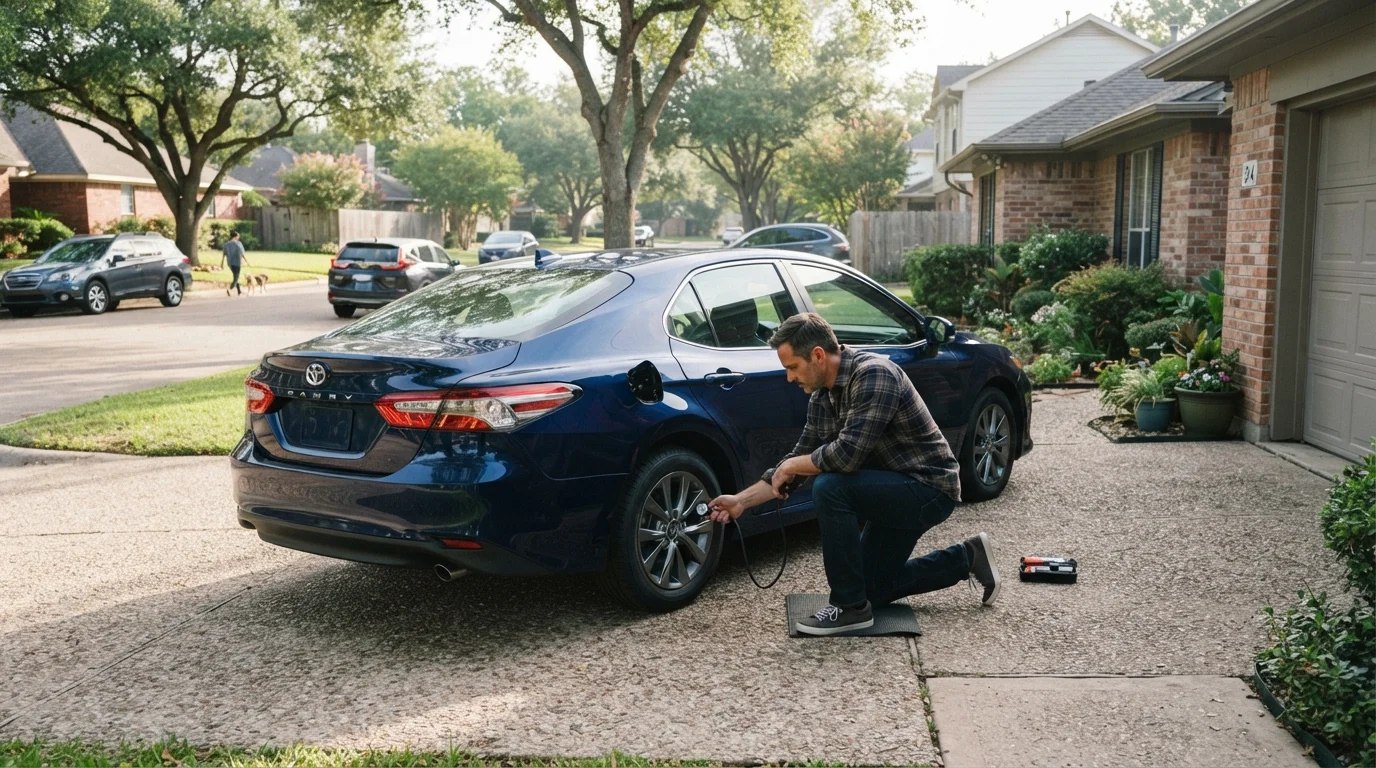
Why a Pre-Trip Checklist Matters
Most breakdowns on long drives are preventable. According to AAA, tyre-related failures and running out of fuel remain among the leading causes of roadside assistance calls - both issues a brief pre-trip inspection would catch. Yet the majority of drivers skip systematic checks entirely, relying on dashboard warning lights that often illuminate after a problem has already developed.
This checklist is designed to close that gap. It covers the vehicle itself, your planned route, and your own readiness as a driver - because all three contribute to a safe arrival. Whether you're heading out on a weekend trip or a cross-country drive, working through these items the evening before departure gives you time to address anything that needs attention without rushing.
If you're also preparing for your first extended motorway stint, see our motorway driving guide for first-timers for lane discipline and merging technique. For a broader look at keeping your car reliable year-round, seasonal car maintenance covers how temperature shifts affect key systems.
Tyre Pressure Gauge
Used to accurately measure PSI in all four tyres and the spare before departure.
Tread Depth Gauge or Coin
Allows quick, reliable measurement of remaining tyre tread depth to confirm highway safety.
Flashlight or Headlamp
Essential for inspecting under the hood, checking tyre sidewalls, and roadside emergencies in low light.
Roadside Emergency Kit
Contains jumper cables, warning triangles, first-aid supplies, and basic tools for common breakdown scenarios.
Portable Phone Charger
Keeps navigation, emergency contacts, and roadside assistance apps available for the full journey.
Navigation App with Offline Maps
Provides turn-by-turn routing and live traffic alerts, with offline capability for areas with poor signal.
The Checklist
Work through each group in order. Items marked must are non-negotiable safety checks. Should items are strongly recommended for any drive over two hours. Nice to have items add resilience and comfort.
Tyre Condition
Fluid Levels
Lights and Visibility
Under the Hood and Brakes
Emergency Kit and In-Car Essentials
Route and Driver Readiness
Don't Ignore Active Warning Lights
A check engine light, oil pressure warning, or brake system alert on your dashboard should never be dismissed before a long drive. These indicators signal that a vehicle system requires attention. Driving hundreds of miles with an undiagnosed fault can escalate a minor issue into a major - and potentially dangerous - mechanical failure. Have the vehicle inspected by a qualified mechanic before departing if any critical warning light is on.
Planning Your Drive and Managing Fatigue
Vehicle readiness is only half of safe long-distance driving. Driver fatigue is a contributing factor in a significant share of fatal highway crashes, yet it's routinely underestimated - largely because drowsiness impairs the judgment needed to recognise it. The National Highway Traffic Safety Administration (NHTSA) recommends planning a rest stop at least every two hours or every 100 miles, whichever comes first.
Before departure, check live traffic conditions and weather forecasts along your entire route - not just your origin and destination. Build buffer time so that an unexpected delay doesn't pressure you into skipping a rest stop. If you'll be driving after dark, review our night driving safety guide for how reduced visibility and fatigue interact.
Also take a moment to check that your documents are in order - license, registration, and proof of insurance should be in the vehicle before you leave. For a broader trip-readiness review covering bookings, finances, and travel documents, see our comprehensive pre-trip checklist.
Fatigue Is a Safety-Critical Factor
Driver drowsiness significantly impairs reaction time, lane-keeping, and hazard recognition - comparable in effect to certain levels of alcohol impairment. If you feel sleepy during a journey, pulling off at the next safe location and resting is the correct response. Stimulants like caffeine provide only a temporary mask and are not a substitute for genuine rest. Schedule adequate sleep the night before any long drive, and never attempt to 'push through' severe fatigue.