A comprehensive checklist covering documents, bookings, finances, health prep, and home security before any trip.
Key Takeaways
Sorting documents, finances, and home security at least two weeks out prevents day-of crises.
Notifying your bank and checking foreign transaction fees can save you significant money abroad.
Health prep - prescriptions, vaccinations, and insurance - often requires lead time you can't shortcut.
Simple home-security steps take under an hour but dramatically reduce risk while you're away.
Always verify visa and entry requirements directly with official government sources before traveling.
Why a Pre-Trip Checklist Pays Off
Most travel stress is preventable. Missed documents, frozen cards, and unforwarded mail are rookie mistakes - but they happen to experienced travelers too, usually because preparation got squeezed into the final 24 hours. This checklist is designed to be worked through at least two weeks before departure, giving you time to fix anything that surfaces.
Check your passport expiration date - many countries require at least six months of validity beyond your travel dates.Must
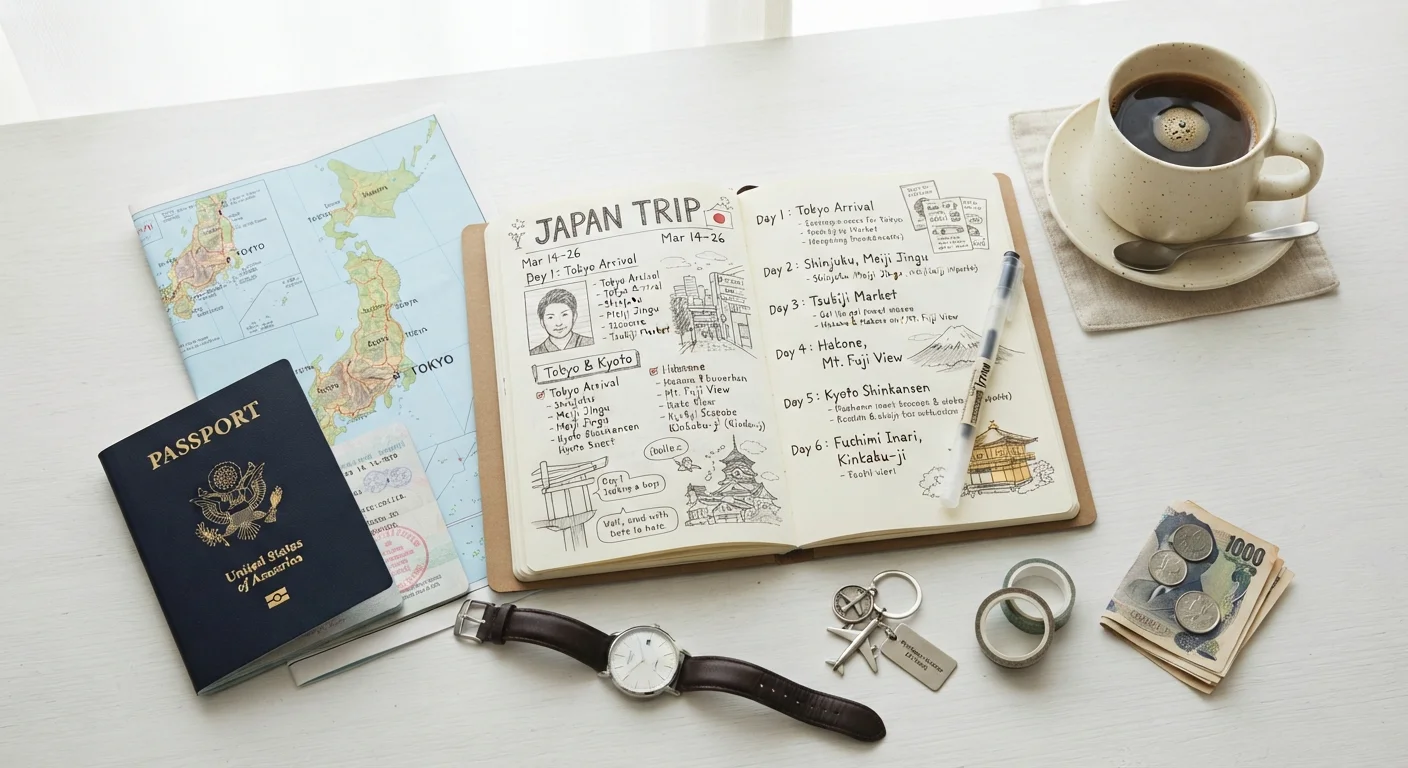
Research and confirm visa requirements for every country on your itinerary through official government sources.Must
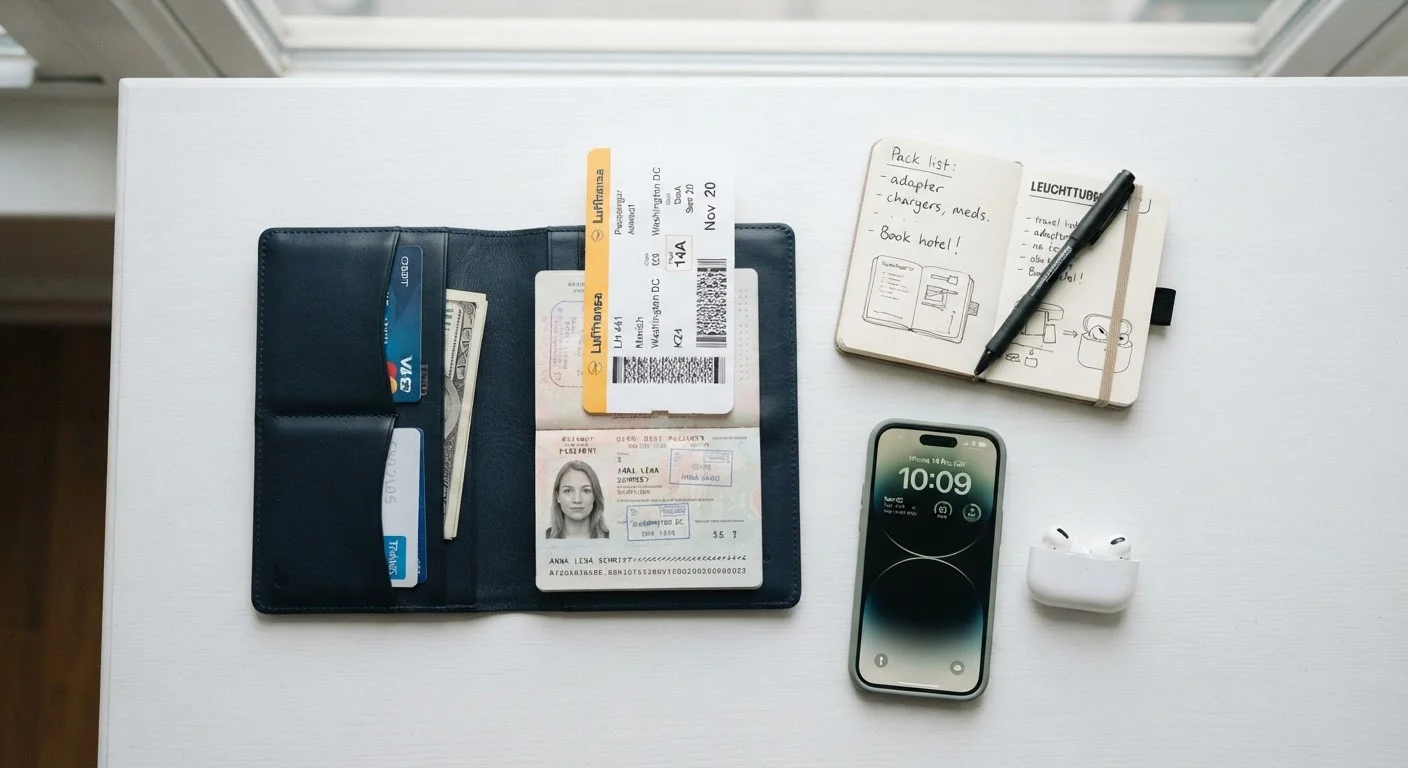
Make digital and physical copies of your passport, visa, travel insurance, and bookings - store them separately from originals.Must
Add your emergency contacts and travel itinerary details to a shared document a trusted person at home can access.Should
Check whether your destination requires an International Driving Permit if you plan to rent or drive a vehicle.Nice to have
Flights, Accommodation & Bookings
Reconfirm all flight bookings and save your e-tickets or booking references in an offline-accessible format.Must
Confirm accommodation check-in times, cancellation policies, and any special access instructions.Must
Check airline baggage allowances and carry-on size restrictions to avoid gate fees.Should
Research ground transportation from your arrival airport to your accommodation so you're not deciding on arrival.Should
Review your destination's infrastructure - connectivity, transport links, and local healthcare access - before finalizing plans.Nice to have
Finances & Banking
Notify your bank and credit card providers of your travel dates and destinations to prevent fraud blocks on your cards.Must
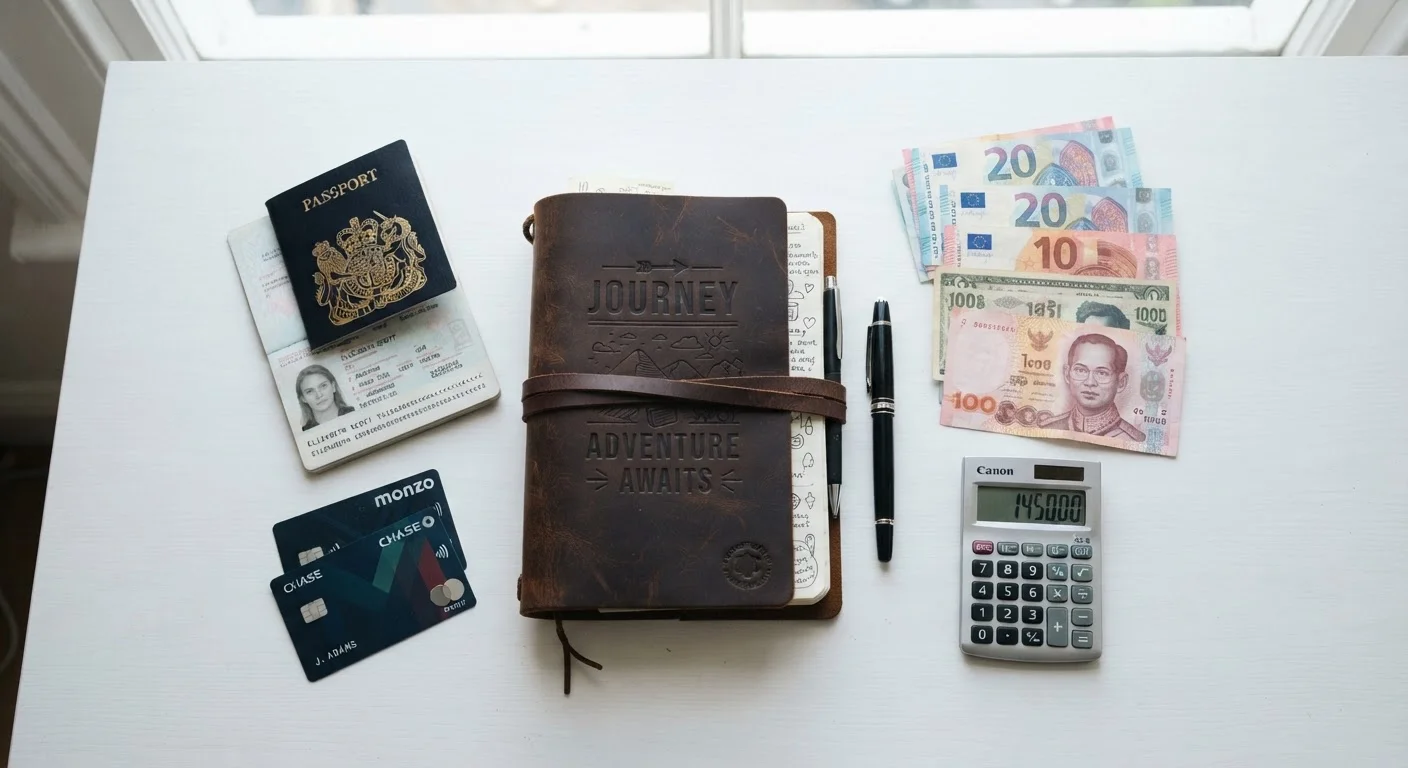
Identify which cards have no foreign transaction fees and plan to use those as your primary payment method abroad.Must
Carry a small amount of local currency for arrival - enough for transport, tips, or situations where cards aren't accepted.Should
Confirm your travel insurance coverage - medical limits, cancellation terms, and how to make a claim while abroad.Must
Set a daily spend estimate and ensure your budget travel buffer can absorb at least one unexpected expense.Should
Health & Medications
Consult a healthcare provider or travel health clinic about recommended vaccinations or preventive medications for your destination - do this well in advance, as some vaccines require multiple doses over several weeks.Must
Ensure you have enough prescription medication to cover your entire trip, plus a buffer for delays.Must
Pack a basic first-aid kit including pain relief, antidiarrheal medication, blister treatment, and any personal medical supplies.Should
Check whether your destination has specific health advisories or entry health requirements (e.g., proof of vaccination) via official government sources.Must
Home Security & While-Away Logistics
Arrange for someone trusted to collect mail, water plants, and check on your home periodically.Should
Set lights on timers or activate smart home settings to make your property appear occupied.Nice to have
Unplug non-essential appliances and check that all windows, doors, and garage entries are secured before leaving.Must
Pause or redirect regular deliveries - packages left on a doorstep signal an empty home.Should
Tech, Connectivity & Packing
Check plug adapter and voltage requirements for your destination and pack accordingly.Must
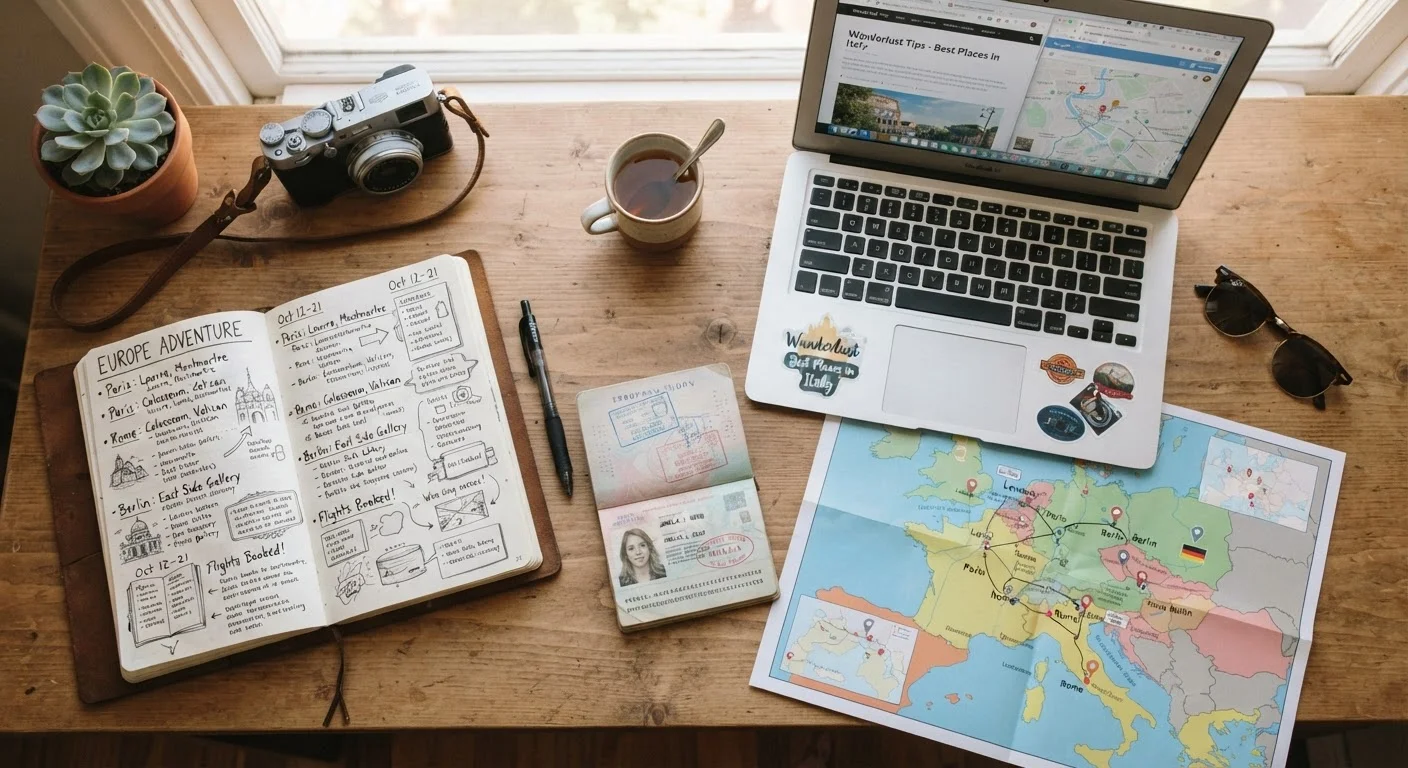
Download offline maps, translation apps, and any documents you'll need without reliable internet access.Should
Arrange an international SIM, local eSIM, or international roaming plan before departure - don't rely on airport options.Should
Charge all devices the night before and back up your phone data in case of loss or theft.Should
Tools You'll Need to Work Through This List
You don't need much - but having the right resources open before you start will save backtracking.
Required
Official government travel advisory site (e.g., travel.state.gov for US travelers)
Verify visa requirements, entry conditions, and current safety advisories for your destination.
Required
Travel health clinic or your primary care provider
Get destination-specific vaccination advice and prescription top-ups well before departure.
Required
Cloud storage or password manager
Store encrypted digital copies of travel documents accessible from any device.
Optional
Offline maps app (such as a maps app with offline download capability)
Navigate without relying on data connectivity in areas with poor or expensive coverage.
Optional
International eSIM or travel SIM provider
Secure affordable data connectivity abroad without paying full carrier roaming rates.
Financial Prep: Don't Skip This Section
Never Leave Travel Insurance to Chance
Travel insurance isn't optional - it's the financial backstop that covers medical evacuation, trip cancellation, and lost luggage when things go sideways. Read your policy carefully before you travel: know the claims number, what's excluded, and what documentation you'll need if something goes wrong. Buying coverage at the last minute often means reduced options and higher premiums.
Finance prep is the most skipped and most consequential category on this list. A blocked card abroad or an unexpected foreign transaction fee can derail a trip faster than bad weather. Work through the financial items well ahead of departure - ideally at the same time you finalize bookings.
Currency Exchange at Airports Is Rarely a Good Deal
Airport currency exchange desks and hotel exchanges typically apply unfavorable rates and fees. Research your options before you travel - many travelers use fee-free cards for most purchases and withdraw local currency from ATMs at the destination. Verify your bank's international ATM policy in advance so you're not caught off-guard by fees.
Before You Lock the Door
The home security and contingency category is easy to rush. Block 30 minutes the day before departure specifically for these items - don't try to do them in the cab to the airport. For a thorough look at what can go wrong once you're away and how to prepare, see Contingency Planning: What to Prepare for When Things Go Wrong Abroad.
This article provides general travel preparation guidance. Always verify visa requirements, health advisories, and entry conditions with official government sources before traveling, as these details change and individual circumstances vary.
Travel Smarter Editorial Team is the collective byline for our editorial team and contributor network. Articles published under this byline or an editorial pen name are researched, written, and reviewed according to our editorial standards for clarity, consistency, and independence before publication.
The content provided on our blog site traverses numerous categories, offering readers valuable and practical information. Readers can use the editorial team’s research and data to gain more insights into their topics of interest. However, they are requested not to treat the articles as conclusive. The website team cannot be held responsible for differences in data or inaccuracies found across other platforms. Please also note that the site might also miss out on various schemes and offers available that the readers may find more beneficial than the ones we cover.