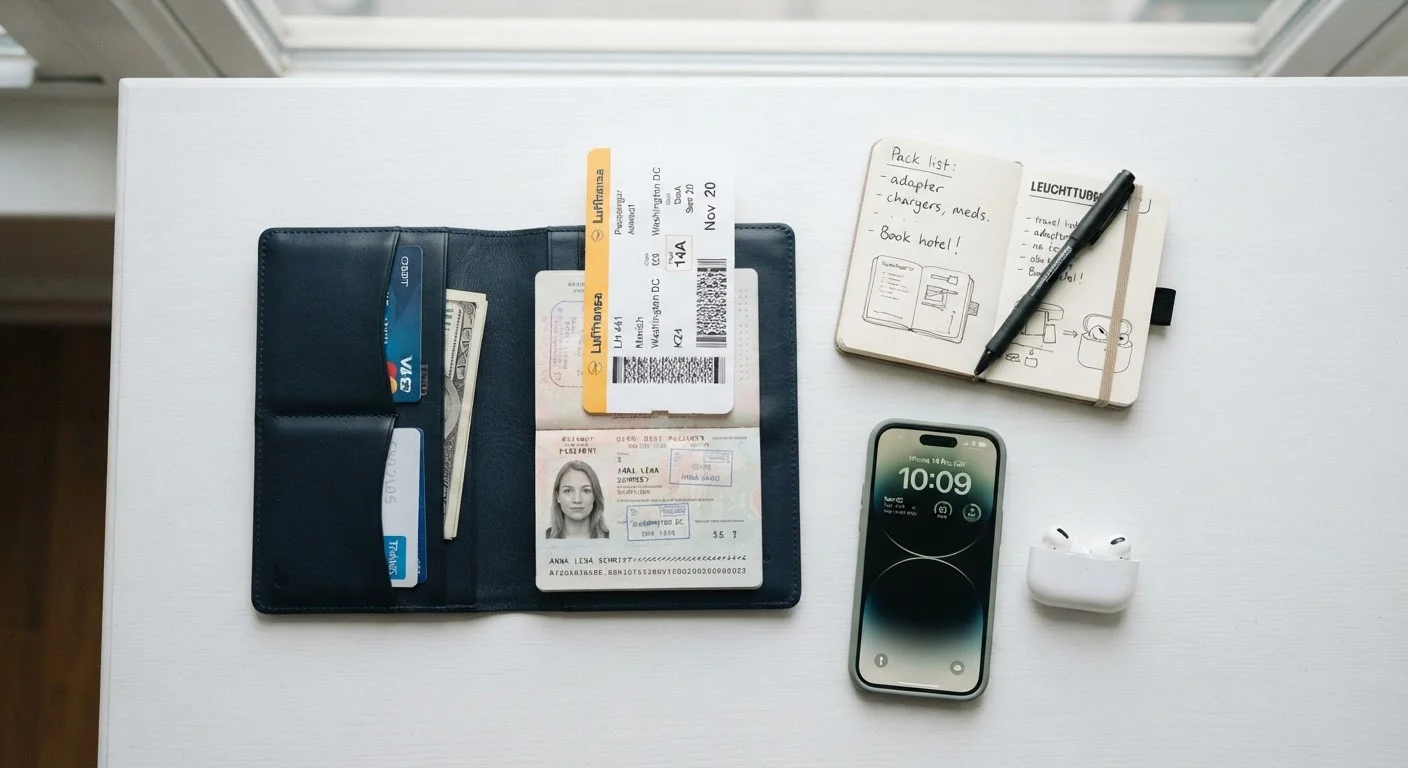
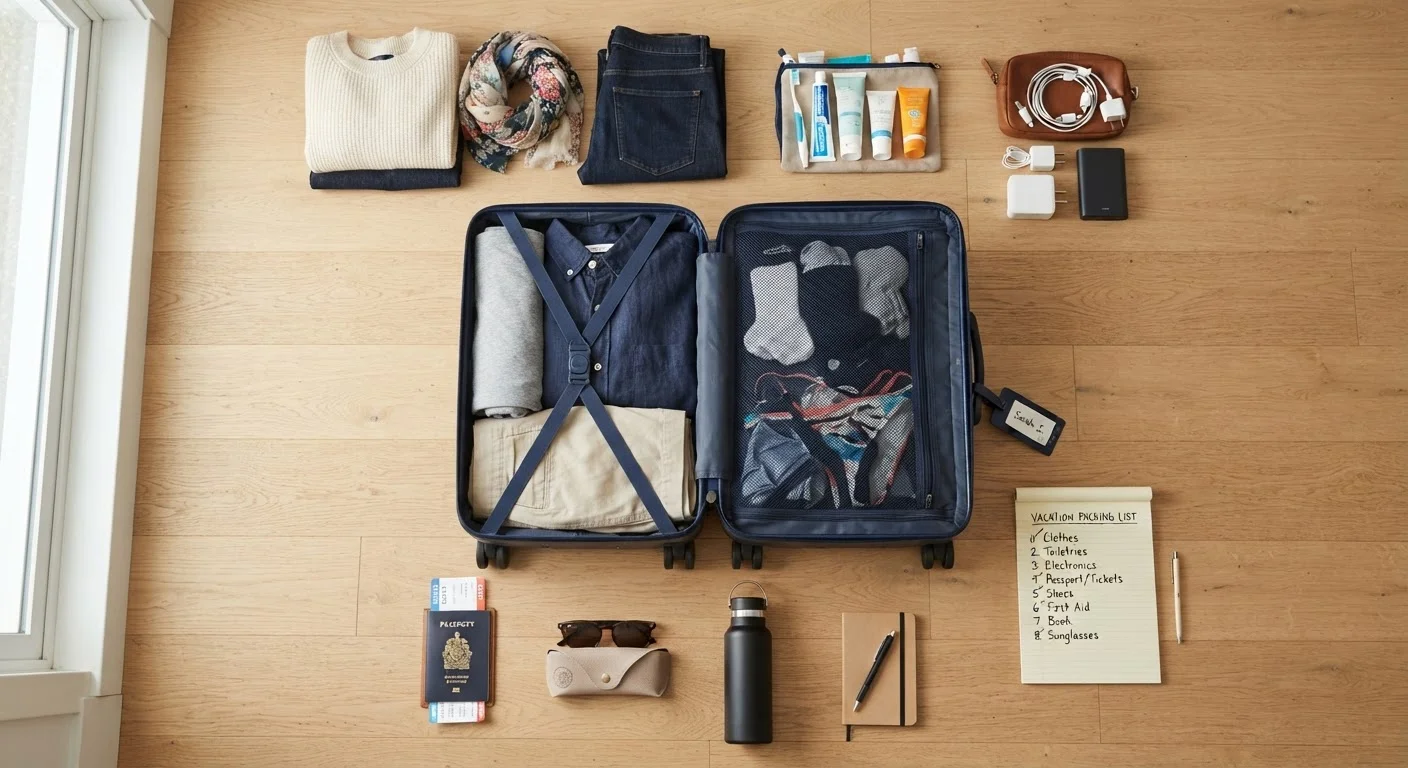
Why Most Packing Advice Fails You
Generic packing lists are built for a hypothetical traveler going on an average trip - which describes almost no one. They default to maximum coverage, which is why they reliably produce overpacked bags. The better mental model is that packing is a constraint problem: your bag has finite space, your trip has specific demands, and your job is to match one to the other with as little guesswork as possible.
This process fits into the broader work of trip planning. If you haven't yet mapped out what your trip actually involves, the anatomy of a well-planned trip is worth reviewing first - your itinerary is the foundation everything else, including packing, is built on.
Your confirmed itinerary
Drives every category decision - what activities, climates, and dress codes you're actually packing for.
Airline baggage policy (checked and carry-on)
Sets hard constraints on bag size, weight, and what's permitted before you start filling anything.
Packing cubes or compression bags
Organize and compress clothing so you can fit more into less space without wrinkling.
A digital or paper master packing list
Saves time on future trips and prevents the repeat mistake of forgetting the same item twice.
Luggage scale
Confirms your checked bag meets weight limits before you reach the airport.
The Decision Framework, Step by Step
The steps below replace guesswork with a repeatable process. Each step has a specific job: narrowing the universe of possible items down to what actually belongs in your bag for this trip.
What you will need
Audit your itinerary by activity type
Before you touch a single item of clothing, open your itinerary and list every category of activity: hiking, business meetings, beach days, city walking, a wedding, long flights. These categories - not a generic packing list - are your actual packing brief. If your trip has no formal dinner, you do not need formal shoes. This step alone eliminates a significant portion of what most people pack by default.
Set your bag constraint first
Decide whether you're carrying on or checking before you pack a single item. That decision is governed by trip length, your airline's policy, and whether you're willing to pay checked-bag fees. Carry-on forces useful discipline; checking opens capacity but adds cost, time at baggage claim, and loss risk. Whichever you choose, treat the bag's physical limits as fixed - not something you'll work around by sitting on it.
[important_callout]
Apply the decision filter to each item
Run every candidate item through three questions: Will I actually use this on a scheduled activity? Can I buy or borrow it easily if I need it? What's the realistic cost of not having it? Items that fail the first question and pass the second stay home. Items that fail the first but carry a high cost of absence - prescription medication, a specific adapter for your destination - come regardless.
Plan clothing by outfit, not by piece
Lay out complete outfits for each activity type, then count how many times each piece recurs across outfits. High-recurrence pieces earn their place; single-use pieces need a stronger justification. A neutral base layer that works for a city walk, a cooler evening, and a casual dinner is worth three items you'd otherwise need. Aim for every piece of clothing to serve at least two outfit combinations.
Pack, then remove 10-15%
Once you've packed what you think you need, close the bag and step away for an hour. Return and remove roughly 10-15% of the contents - typically the 'just in case' items that crept in. If the bag still feels heavy or difficult to manage comfortably, that's feedback. A bag you can't move easily through a train station at 6 a.m. is a bad packing decision made in a comfortable bedroom.
[warning_callout]
Document what you packed and what you used
When you return, spend five minutes reviewing what came home unused. Note it. This is how packing lists improve: through actual evidence from your own trips, not from what a generic template says. Over several trips, your personal list will become highly calibrated to your travel style, destination types, and trip lengths.
[tip_callout]
For a broader pre-departure review that covers documents, finances, and home security alongside packing, see the pre-trip checklist - it picks up where this guide leaves off.
Packing as Part of a Smarter Travel System
Packing doesn't happen in isolation. A lighter, more deliberate bag is easier to manage against a tight itinerary - and overpacking often signals an overpacked schedule. If you're also trying to plan daily activities without overcommitting, the travel itinerary guide covers how to structure days with appropriate breathing room.
If you're traveling as a group, coordinating who brings shared items (a universal power strip, a first-aid kit, a travel umbrella) can meaningfully reduce what each person needs to carry individually. The group trip logistics guide addresses this and related coordination challenges.
Packing lighter also has a direct relationship with travel costs. Avoiding checked-bag fees consistently adds up across multiple trips - for more on keeping overall travel costs in check, the budget travel hub covers the full picture.