The Real Numbers Behind Night Driving Risk
Most drivers understand night driving is riskier, but few appreciate the scale of that risk. According to the National Highway Traffic Safety Administration (NHTSA), roughly half of all traffic fatalities in the US occur in the dark - despite nighttime accounting for a much smaller share of total miles driven. That disparity isn't coincidence. It reflects a systematic degradation of the sensory inputs and cognitive performance that safe driving depends on.
The human eye is not designed for high-speed low-light tasks. Peripheral vision narrows, depth perception becomes less reliable, and the ability to judge color and contrast - all critical for reading the road - diminishes significantly after sunset. Even healthy eyes take time to adjust from a lit interior to darkness, a process known as dark adaptation, which can take several minutes.
Understanding these physiological limits is the first step toward compensating for them. Drivers who treat night conditions as simply "daytime with the lights on" are misjudging the challenge. See our guide to defensive vs. reactive driving for more on anticipating hazards before they develop.
Best Practices for Driving Safely After Dark
The following practices are grounded in traffic safety research and standard driver education. Each addresses one of the core risk factors that makes night driving distinctly more demanding.
Reduce speed to match your actual sight distance, not the posted limit
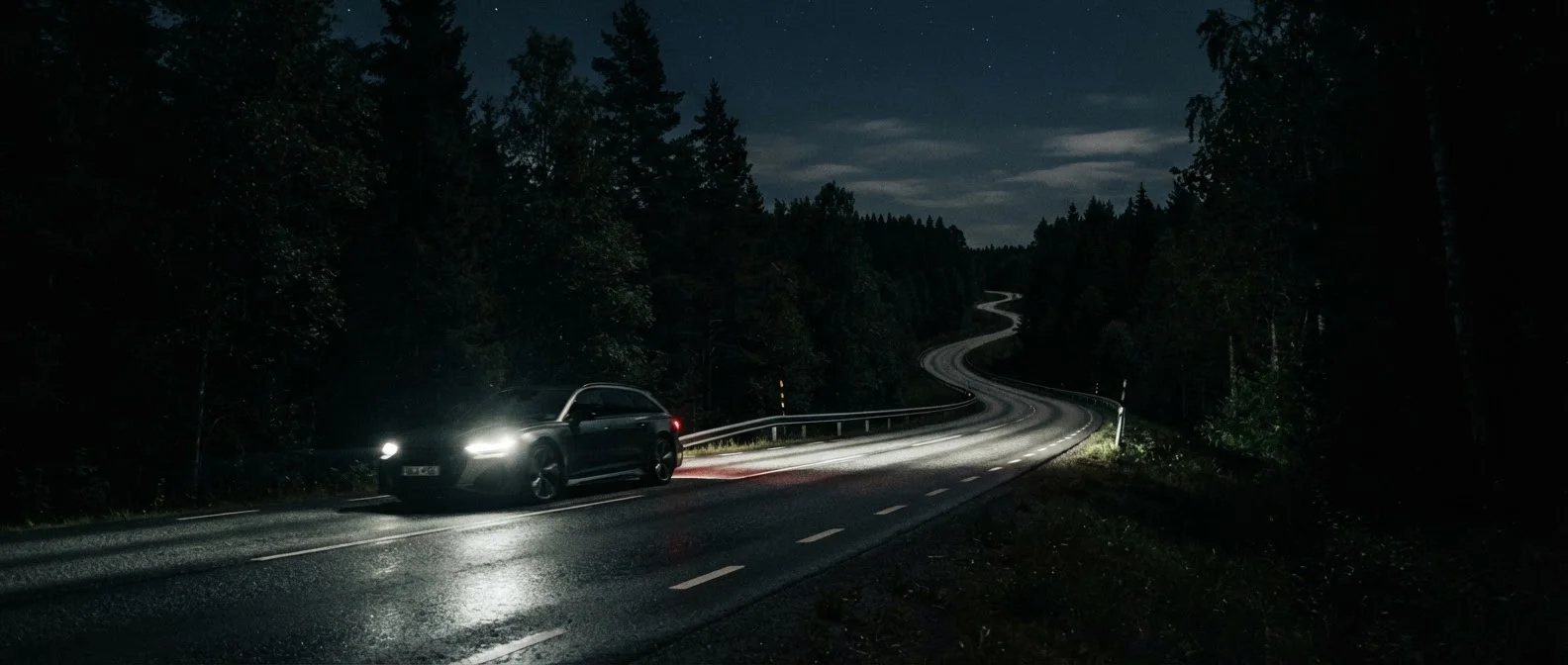
Headlights on low beam typically illuminate 160-200 feet ahead, while at highway speeds a car can need 300+ feet to stop. Driving at a speed where you can stop within your visible range - called 'driving within your headlights' - is a foundational night safety principle. The posted limit is a legal maximum, not a recommendation for low-visibility conditions.
Increase your following distance to at least four seconds after dark
The standard two-second following distance assumes daylight conditions and full alertness. At night, reaction time is typically slower, road surface hazards are harder to see ahead of the vehicle in front, and brake lights may be your only warning of a problem. Adding buffer time is one of the simplest and most effective adjustments available. See also: why tailgating is more dangerous than most drivers realise.
Use high beams strategically and switch down promptly for oncoming traffic
High beams roughly double your sight distance, which is a substantial safety benefit on unlit rural roads. But failing to dip them for oncoming drivers creates a glare that can cause temporary blindness lasting several seconds - enough time to miss a hazard entirely. The correct habit is to use high beams when conditions allow and switch to low beams early, around 500 feet from an approaching vehicle.
Dim your dashboard and instrument cluster to reduce cockpit glare
Bright interior lighting reduces your eyes' dark adaptation, making the road ahead appear darker by contrast. Most vehicles have a dashboard brightness control; setting it to the lowest comfortable level helps your eyes adjust to the low-light environment outside rather than the lit environment inside the cabin.
Keep your windshield and headlight lenses clean and inspect them regularly
Even a thin film of grime on a windshield scatters incoming light into diffuse glare, creating visual noise that obscures detail. Oxidized or yellowed headlight lenses (a common issue on vehicles over five years old) can reduce light output by a significant margin. Both issues are fixable with routine maintenance and have an outsized effect on nighttime visibility.
Fatigue: The Hidden Multiplier
Of all the risks that compound after dark, fatigue is the most treacherous because it impairs the very faculties you'd use to detect it. Drowsy drivers consistently overestimate their own alertness. The circadian dip - a natural drop in alertness that occurs between midnight and 6 a.m. - affects all drivers regardless of how much sleep they've had.
Recognise Fatigue Before It Takes Over
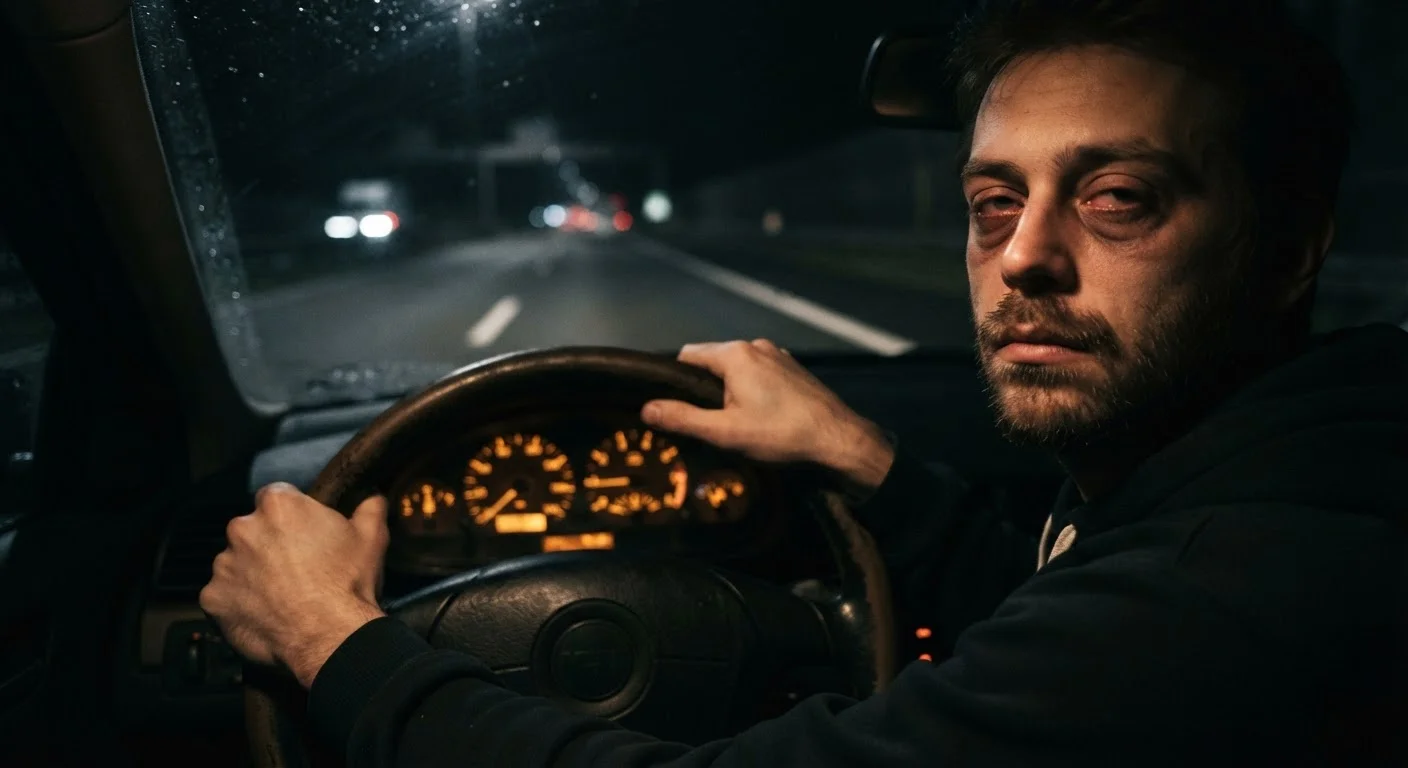
Classic warning signs include heavy eyelids, difficulty maintaining lane position, missing exits or signs you just passed, and head nodding. If you notice any of these, treat them as urgent - not as something to push through. Pull off safely at the next rest area or well-lit public location and take a short rest. Driving with acute fatigue is comparable in its effects to driving with a measurable blood alcohol level.
Critically, stopping distances increase when reaction time slows, and reaction time slows measurably with fatigue. Our breakdown of stopping distance science explains how speed and reaction time combine into the space your car needs to halt. Add fatigue, and that calculation shifts significantly against you.
For a deeper look at how sleep deprivation affects driving performance, see our article on driver fatigue and its effects. Planning rest stops before you need them - not after - is one of the most underused safety strategies on long night drives. Review the pre-journey preparation checklist to build fatigue planning into your routine.
~50%
Of US traffic fatalities occurring in darkness
According to NHTSA data, approximately half of all fatal crashes in the US occur at night or in low-light conditions, despite significantly lower traffic volumes after dark.
3x
Higher fatal crash rate per mile driven at night
Traffic safety research consistently shows night driving carries roughly three times the fatal crash risk per mile compared to daytime driving, largely due to visibility and fatigue factors.
Vehicle Condition Matters More at Night
Night driving puts a hard stress test on components you might overlook during the day. Headlights are the most obvious: a headlight that's dim, misaligned, or coated with yellowed plastic throws far less light than its rated output suggests. The car maintenance hub covers inspections that are worth running before any extended night driving.
A dirty windshield that looks passable by day becomes a serious visibility hazard at night, scattering oncoming light into glare streaks across your field of view. Wiper blades that leave smears, cracked or pitted glass, and interior fogging all subtract from the already limited information your eyes can gather. These are not minor inconveniences - they're genuine risk factors. Keeping your vehicle in good condition is among the habits that separate safe drivers from lucky ones.