Why a Maintenance Log Is Worth the Effort
Most drivers keep their car's title and registration in the glove box but give little thought to service records. That's a missed opportunity. A documented maintenance history does two important things: it helps the mechanics who work on your car understand what's already been done, and it gives future buyers verifiable proof that the vehicle was cared for.
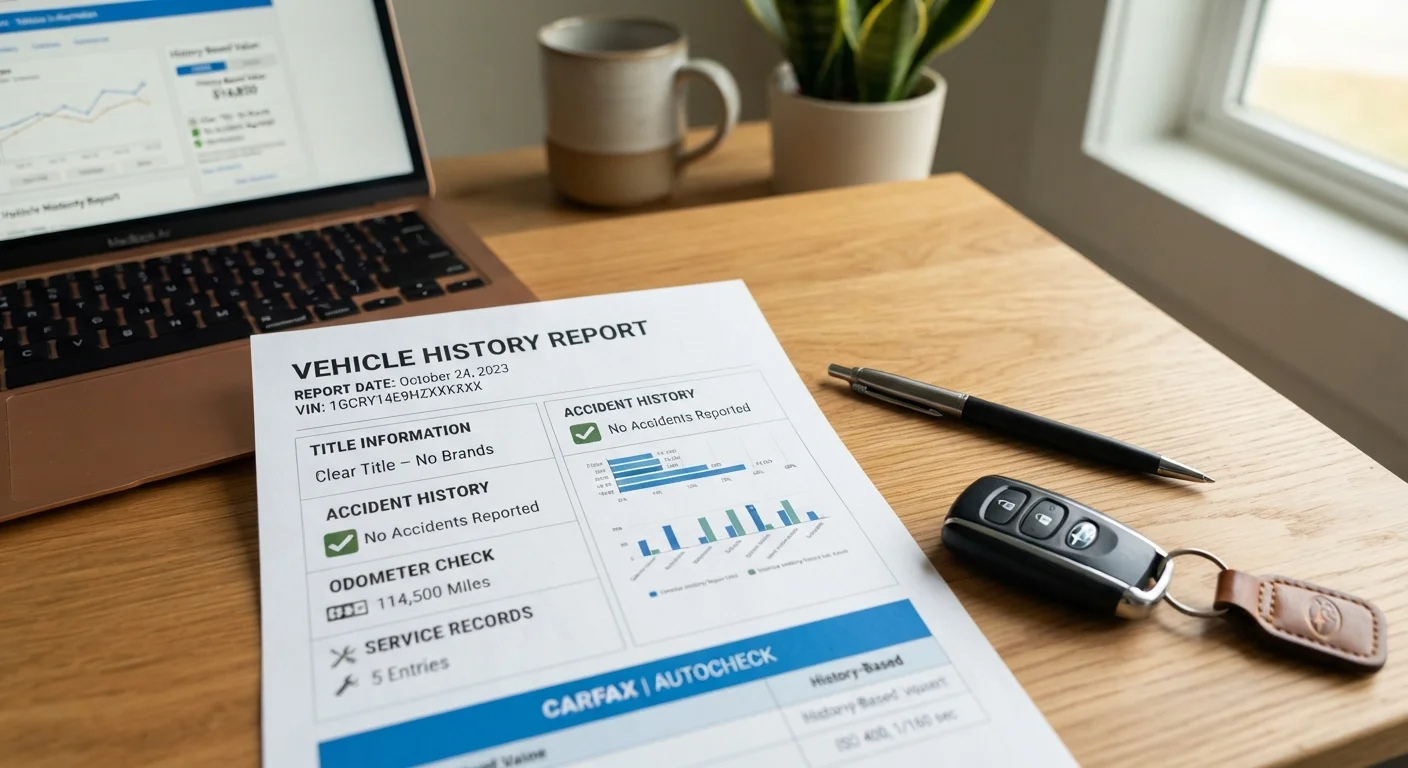
Third-party vehicle history reports - like the kind covered in our guide to reading vehicle history reports - capture accidents, title changes, and odometer readings, but they rarely reflect routine maintenance. Your personal records fill that critical gap.
As our editorial on the real cost of skipping service makes clear, deferred maintenance compounds quickly. A log makes it easy to spot when something is overdue before it becomes expensive.
Up to $500+
Potential resale value gain from documented service history
Automotive industry data consistently shows that complete, verifiable service records improve buyer confidence and can support higher asking prices at private sale.
1 in 3
Used-car buyers who cite missing records as a dealbreaker
Consumer surveys on used-car purchasing behavior regularly find that undocumented maintenance history is a top reason buyers walk away or negotiate the price down.
What to Record - and How Often
A useful maintenance record captures four things for every service event: the date, the current odometer reading, what was done, and who did it (shop name or "self" for DIY work). That's it. You don't need a spreadsheet with formulas or a custom binder system.
Log every event, not just major ones. That means:
- Oil and filter changes
- Tire rotations and pressure checks
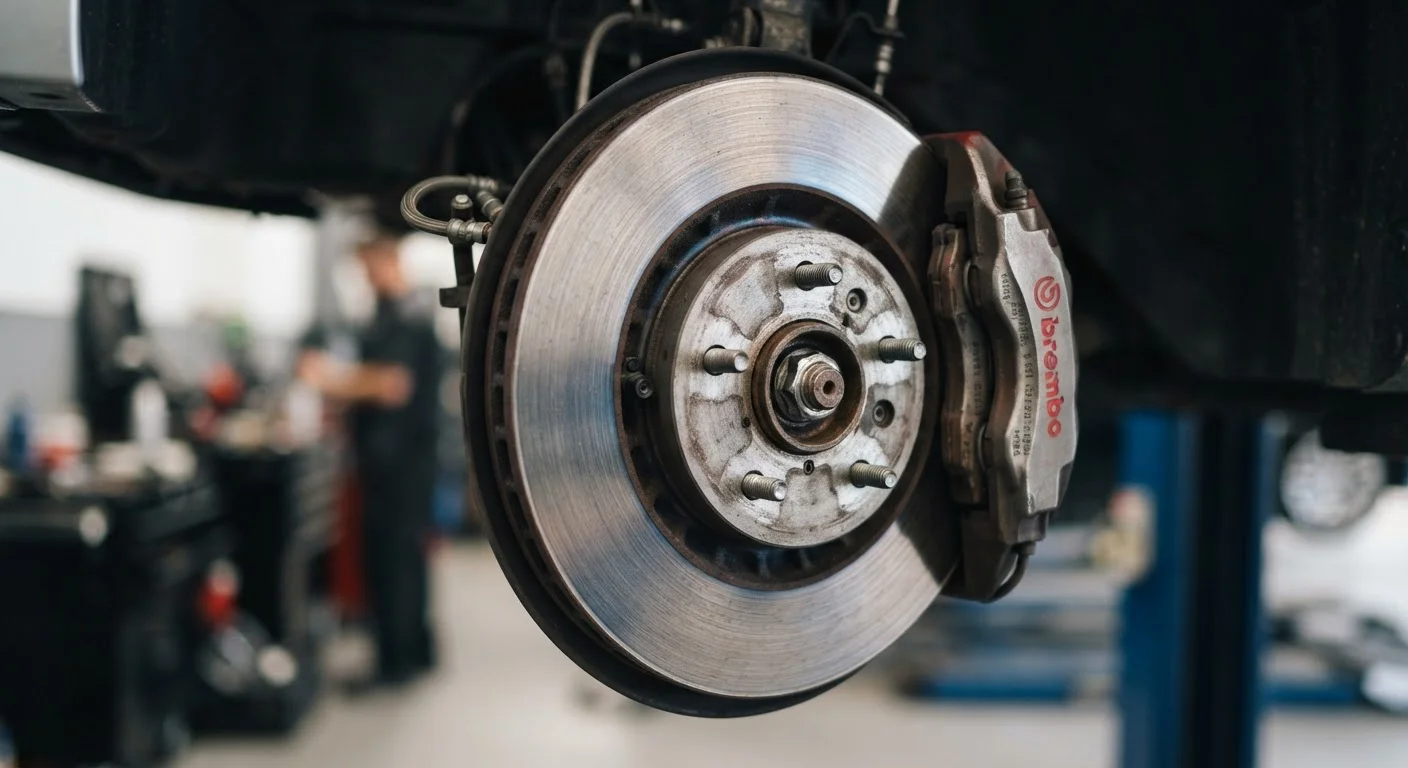
- Brake inspections and pad replacements - see our brake maintenance guide for what to watch for
- Fluid top-offs and flushes (coolant, transmission, brake fluid)
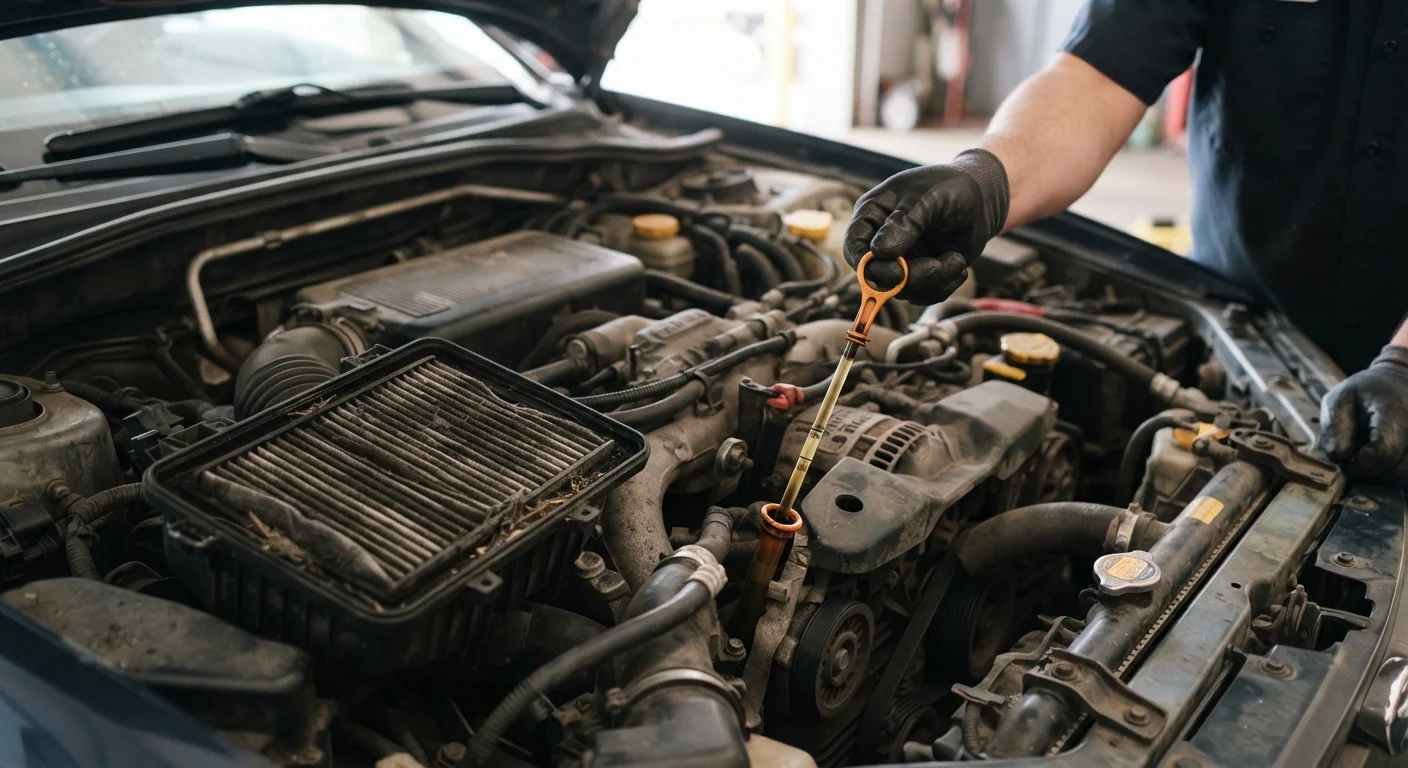
- Air filter, cabin filter, and spark plug replacements
- Battery tests and replacements
- Any warning light diagnosis or repair
Keep the original receipts whenever a shop does the work. They serve as independent corroboration - something a handwritten log alone cannot provide.
Ask the Shop to Stamp or Sign Your Log
Many service advisors are willing to initial a maintenance log or stamp a date when you bring your car in. This costs nothing and turns your personal record into something approaching a verified document. It takes about 10 seconds to ask.
Choosing a Format That You'll Actually Use
The best record-keeping system is the one you'll stick with. Here are three approaches, each with real merit:
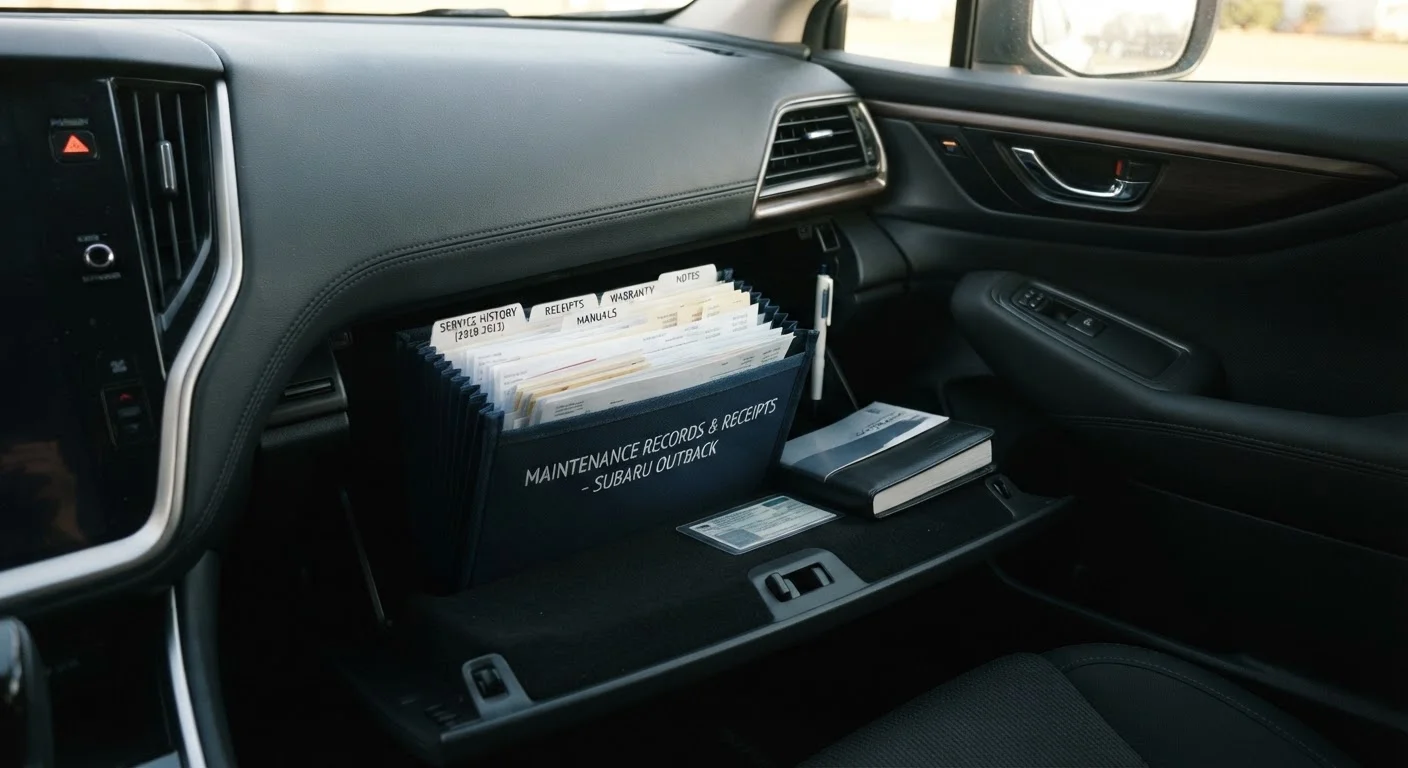
- Physical folder in the car
- Simple and universally accessible. A manila folder or small binder in the glove box holds receipts and a single log sheet. Works well for drivers who rarely lose paper.
- Dedicated smartphone app
- Apps designed for vehicle maintenance logging (search your phone's app store for "car maintenance log") let you photograph receipts and set service reminders. The backup is automatic if cloud-synced.
- Spreadsheet or notes app
- A basic spreadsheet with columns for date, mileage, service type, cost, and provider is surprisingly powerful. Store it in a cloud folder so it's never tied to one device.
Building this habit early connects directly to broader financial preparedness. Our saving and emergency funds hub covers how to set aside money for predictable maintenance costs - a complementary habit to logging them.
Using Your Records When It Matters Most
Your maintenance log earns its keep in three situations: at a mechanic's shop, at inspection time, and when you sell.
At the shop: Handing a mechanic a concise service history - especially for a new shop - saves diagnostic time. Patterns that might otherwise require testing (e.g., a coolant issue recurring every 18 months) become immediately visible.
At inspection: Some states require emissions or safety inspections at regular intervals. A log showing consistent maintenance can support your case if a borderline result is disputed, and it gives inspectors helpful context.
At sale: Buyers doing a pre-purchase inspection will ask for service records. A complete, legible history - especially one backed by receipts - is a tangible negotiating asset. Gaps raise questions that tend to favor the buyer.
For drivers just building these habits, our car maintenance guide for new drivers offers a solid foundation of what to track and when.
Log every service event within 24 hours of it happening.
Memory fades quickly, and gaps in a log are hard to reconstruct accurately after the fact. Logging immediately keeps your record complete and trustworthy.
Store at least one backup copy of your records outside the car.
A folder left in a stolen or totaled car is gone. A digital backup - in email, cloud storage, or a phone app - survives vehicle loss and is accessible anywhere.
Note the next recommended service interval at the time of each visit.
Writing "Next oil change at 46,500 miles" on the log entry turns your history into a forward-looking schedule, not just a backward-looking record.
Keep original receipts from professional service visits.
Handwritten logs are useful but self-generated. Receipts from a licensed shop are third-party verification that carries more weight with buyers and insurers.
Record DIY maintenance with the same discipline as professional work.
Work you do yourself won't appear on any shop receipt, so if it goes unlogged, it effectively didn't happen as far as future buyers or mechanics are concerned.