
What a Vehicle History Report Actually Contains
A vehicle history report is a compiled record drawn from multiple data sources: state DMV title records, insurance claims databases, auto auction records, fleet and rental registrations, and sometimes repair shop entries. These sources are aggregated by third-party providers and organized around a vehicle's VIN - the unique 17-character code stamped on every car.
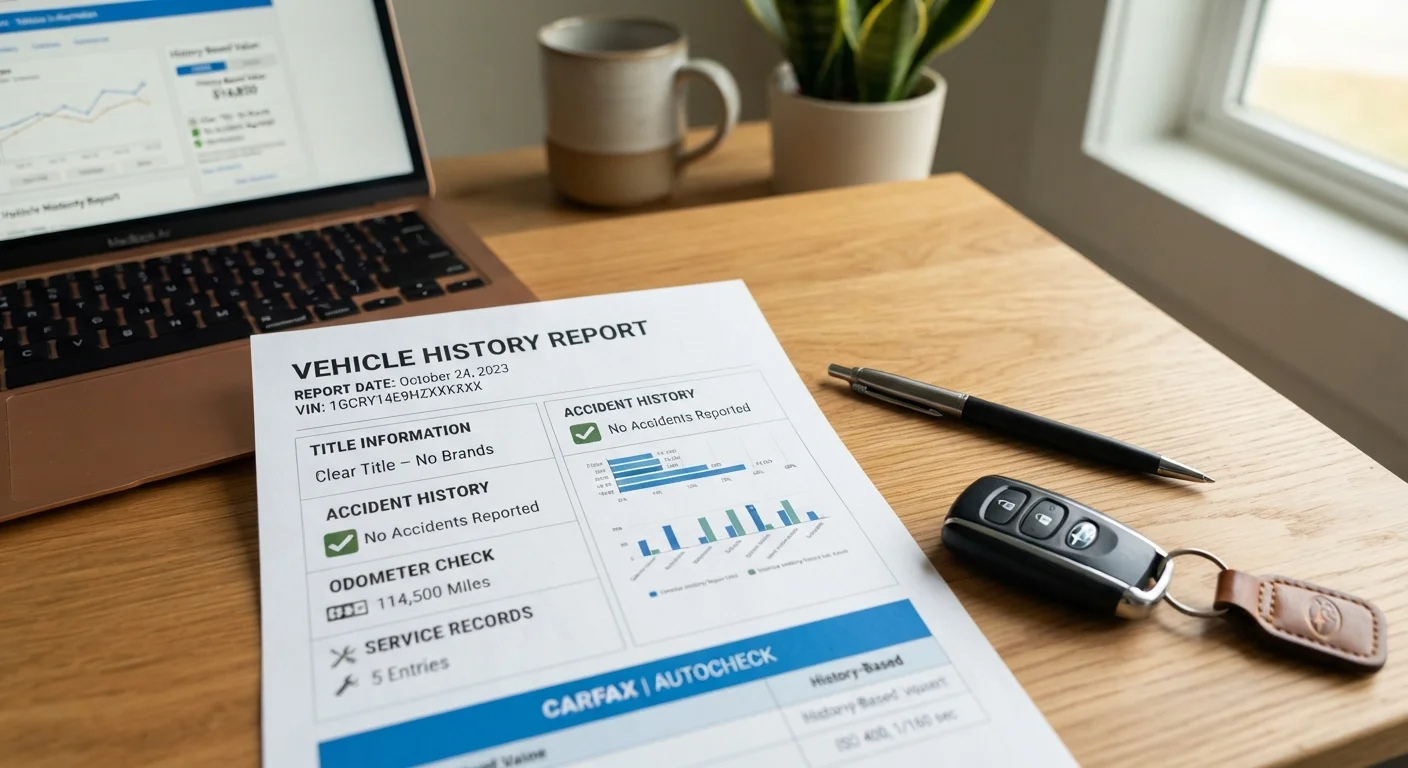
The report is typically organized into several key sections: title history, accident and damage records, odometer readings, ownership history, and use type (personal, rental, fleet, taxi, etc.). Understanding what each section is actually measuring - and where the data comes from - is essential before you draw conclusions. This process fits into the larger car-buying journey and should be treated as one layer of due diligence, not the final word.
What you will need
The Five Sections That Matter Most
Work through the report systematically rather than scanning for a clean bill of health. Here's what each core section is actually telling you:
1. Title History
This is your most important stop. Look for designations such as salvage (the insurer declared the vehicle a total loss), rebuilt/reconstructed (it was repaired after a salvage title), flood/water damage, lemon law buyback, or junk. A salvage or rebuilt title has permanent implications for insurability, resale value, and structural integrity. A clean title is not a guarantee - it simply means none of these events were formally recorded.
2. Accident and Damage Records
Each entry should note the severity and, crucially, whether structural or airbag damage was reported. Minor fender-bender entries matter far less than frame damage. Be aware that only accidents involving insurance claims or police reports typically appear here; private-party cash repairs are invisible to these systems.
3. Odometer Readings
Reports plot odometer readings at each recorded ownership or inspection event. Look for anomalies - a reading that is lower than a previous entry is a rollback flag and potential fraud indicator. Unusually low mileage for the vehicle's age can also warrant scrutiny.
4. Ownership and Use History
Multiple owners in a short time can indicate recurring problems. Use-type records (rental, fleet, rideshare, taxi) signal higher-cycle wear that mileage alone won't capture.
5. Service and Recall Records
Where available, service entries give a sense of maintenance consistency. Cross-reference open recall notices - the NHTSA's public database is the authoritative source for U.S. recalls - to confirm any outstanding safety issues were addressed.
Cross-Check Multiple Report Sources
Different report providers draw from overlapping but not identical data sources. If you are considering a higher-value purchase, running reports from two separate providers can surface entries that one may have missed. The additional cost is typically modest relative to the stakes of the decision.
What Reports Won't Tell You - and How to Fill the Gaps
Every vehicle history report carries explicit disclaimers that its data is incomplete, and that limitation is real. The most common blind spots include:
- Cash or unreported repairs: If the owner paid out of pocket without involving insurance, there is no record.
- Pre-report-era events: Older vehicles may have ownership or accident history that predates digital records.
- Quality of repairs: A report can note that damage was repaired; it cannot tell you whether the repair was done correctly.
- Mechanical condition: Engine wear, transmission health, suspension fatigue - none of these appear on any history report.
This is why a history report is a starting point, not a finish line. Pair it with a thorough pre-purchase physical inspection, and seriously consider an independent pre-purchase inspection (PPI) by a qualified mechanic for any vehicle you are close to buying. Ongoing car maintenance records kept by a previous owner can also fill narrative gaps that the report cannot.
A Clean Report Is Not a Guarantee
Industry estimates consistently suggest that a significant proportion of vehicle damage goes unreported to insurance companies or government agencies. Treat a clean report as an encouraging signal, not a guarantee of problem-free history. Always follow up with a physical inspection before finalizing any purchase.