Why a Systematic Inspection Matters
Used cars rarely come with guarantees of perfect condition, and sellers - whether private individuals or dealerships - may not volunteer every flaw. A structured, methodical inspection before you agree to buy puts you in control. It helps you spot issues that affect safety, estimate repair costs, and negotiate from an informed position rather than guessing.
This checklist is designed for the in-person viewing stage of the buying process. If you're still weighing whether to buy used at all, our comparison of new, used, and CPO vehicles covers the broader tradeoffs. And if you haven't yet sorted your financing, review your financial groundwork before committing to any price.
Work through each category below in order. Bring a flashlight, an old towel or blanket to kneel on, and a phone for photos. Take your time - a seller who pressures you to rush is itself a warning sign.
Flashlight or phone torch
Illuminates dark areas under the hood, inside wheel arches, and beneath the vehicle where surface issues are easy to miss.
VIN lookup / vehicle history service
Checks the car's reported accident history, title status, odometer readings, and any open safety recalls before you commit.
Tire tread depth gauge
Gives an accurate measurement of remaining tread depth to assess whether tires need near-term replacement.
OBD-II diagnostic scanner
Reads stored fault codes from the car's on-board diagnostic system, which can reveal hidden issues even when no warning light is showing.
Independent qualified mechanic
Performs a comprehensive pre-purchase inspection, including a lift inspection, that goes well beyond what a layperson can assess visually.
The Pre-Purchase Inspection Checklist
Move through these checks systematically. Photograph anything that concerns you so you have a reference point for follow-up questions or mechanic review.
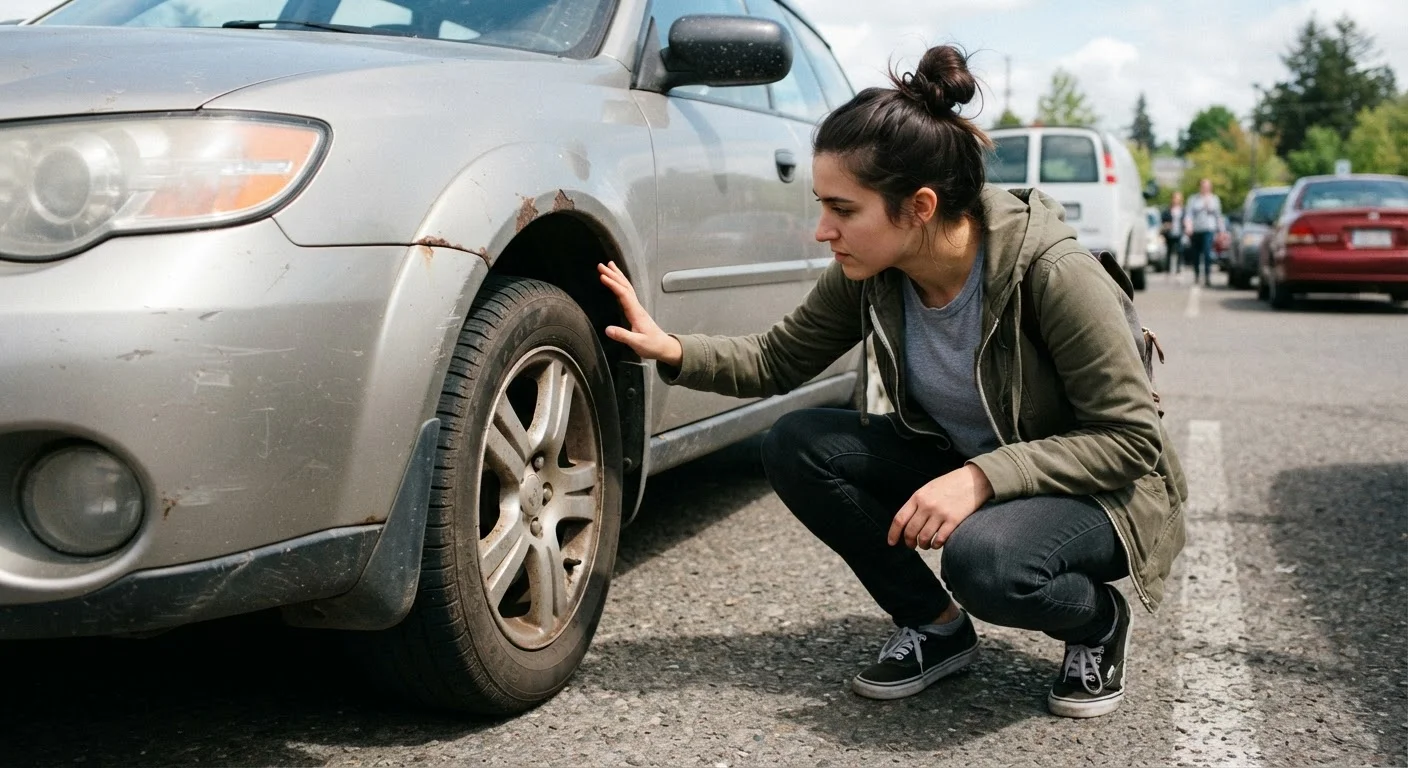
Exterior Condition
Interior and Electrical
Under the Hood
Test Drive
Documentation and History
Never Skip the Title and VIN Check
Buying a car with a salvage title, a lien still attached, or a VIN that doesn't match across all points on the vehicle can create serious legal and financial consequences. Confirm the VIN on the dashboard, door jamb, and title document all match before proceeding. If there's any inconsistency, walk away and consult a qualified professional before taking further action.
When to Bring in a Professional
Even if a car passes your visual and test-drive checks, an independent pre-purchase inspection (PPI) by a qualified mechanic is strongly advisable - especially for higher-mileage vehicles or any car you plan to rely on daily. A mechanic can put the car on a lift to inspect the undercarriage properly, read diagnostic trouble codes, and spot wear patterns invisible to the untrained eye.
Expect a PPI to cost roughly $100-$200 at an independent shop, depending on your area. That investment is modest compared to an unexpected transmission or suspension repair. For private sales in particular - where there is no dealer warranty or return policy - this step is especially valuable. Our guide to buying a car privately outlines what else to expect in that process.
Don't Rely on a Seller's Own Mechanic
Some sellers will offer to have the car checked by 'their mechanic' as a gesture of goodwill. While this isn't always dishonest, it doesn't give you an independent assessment. Always choose your own mechanic - ideally one with no prior relationship to the seller - and arrange the inspection yourself. This is the only way to ensure the findings are unbiased.
Once the inspection is complete and you're satisfied, make sure you understand what comes next. The full car-buying journey guide walks through negotiation, paperwork, and transfer of ownership so nothing catches you off guard at the finish line.