Why a Shared Flat Demands a Different Approach
Setting up a home office when you live alone is primarily a spatial puzzle. Setting one up in a shared flat is that - plus a social and organizational challenge. Your workspace affects common areas, noise levels, and the daily rhythms of people who didn't sign up to cohabit with a home office.
The good news is that the constraints of shared living often produce better, more disciplined setups than unlimited space would. When you can't sprawl, you're forced to be intentional. That intentionality - about what you need, where things live, and how your work habits interact with household life - is exactly what makes a small office functional rather than just physically present.
For broader context on small-space organization principles, it's worth understanding the spatial and behavioral frameworks before diving into the specifics below.
Check Your Tenancy Agreement First
Before drilling shelves, attaching wall hooks, or making any modifications, review your lease. Many standard tenancy agreements restrict wall damage or structural changes. Prioritize removable, freestanding, and adhesive solutions to protect your deposit. When in doubt, ask your landlord in writing.
What you will need
Tools and Materials You'll Need
You don't need to spend a lot to set up a functional workspace in a shared flat - but having the right items on hand before you start saves multiple trips and false starts. Prioritize freestanding and adhesive solutions over anything that requires drilling.
Measuring tape
Accurately measure your available floor area and wall space before purchasing any furniture.
Freestanding bookshelf or shelving unit
Provides vertical storage for work materials without requiring wall fixings.
Room divider or folding screen
Creates visual separation between your workspace and sleeping or living area without permanent changes.
Adhesive cable management clips
Keeps charging cables and monitor leads tidy without drilling or leaving permanent marks.
Desk organizer or letter tray
Keeps active work documents and stationery contained to the desk surface itself.
Noise-canceling headphones
Manages ambient flatshare noise during focused work or calls without requiring physical soundproofing.
Don't Let Work Creep Into Shared Spaces
Spreading work materials across the kitchen table or living room sofa creates friction with flatmates and undermines your own ability to mentally switch off. Even if your dedicated zone is small, keeping work physically contained to it makes a significant difference to everyone's quality of life at home.
Step-by-Step: Building Your Workspace
Work through these steps in order. The earlier steps - auditing space and defining your zone - inform every decision that follows, so don't skip them in the rush to buy furniture.
Audit your space and define your non-negotiables
Before moving a single piece of furniture, take measurements and make a list of your actual work requirements. How many hours per day do you work from home? Do you take regular video calls? Do you store physical files or equipment? Answering these questions determines whether you need a full desk setup or can work from a compact wall-mounted surface.
Map the room on paper, noting windows (for natural light), outlets (for power), and door swing arcs (for circulation). This step prevents the common mistake of choosing a desk before knowing where it can realistically go.
Claim a defined zone - even a small one
The single most effective thing you can do is give your workspace a clear physical boundary. This doesn't require a separate room. A corner of your bedroom, a section of a larger shared room, or even a closet converted into a desk nook all work - provided the boundary is consistent and respected.
Use a rug, a change in furniture orientation, or a freestanding divider to signal the edge of your work zone. For rental-safe separation ideas, see our guide on rental-friendly room division.
Choose the right desk footprint for your workflow
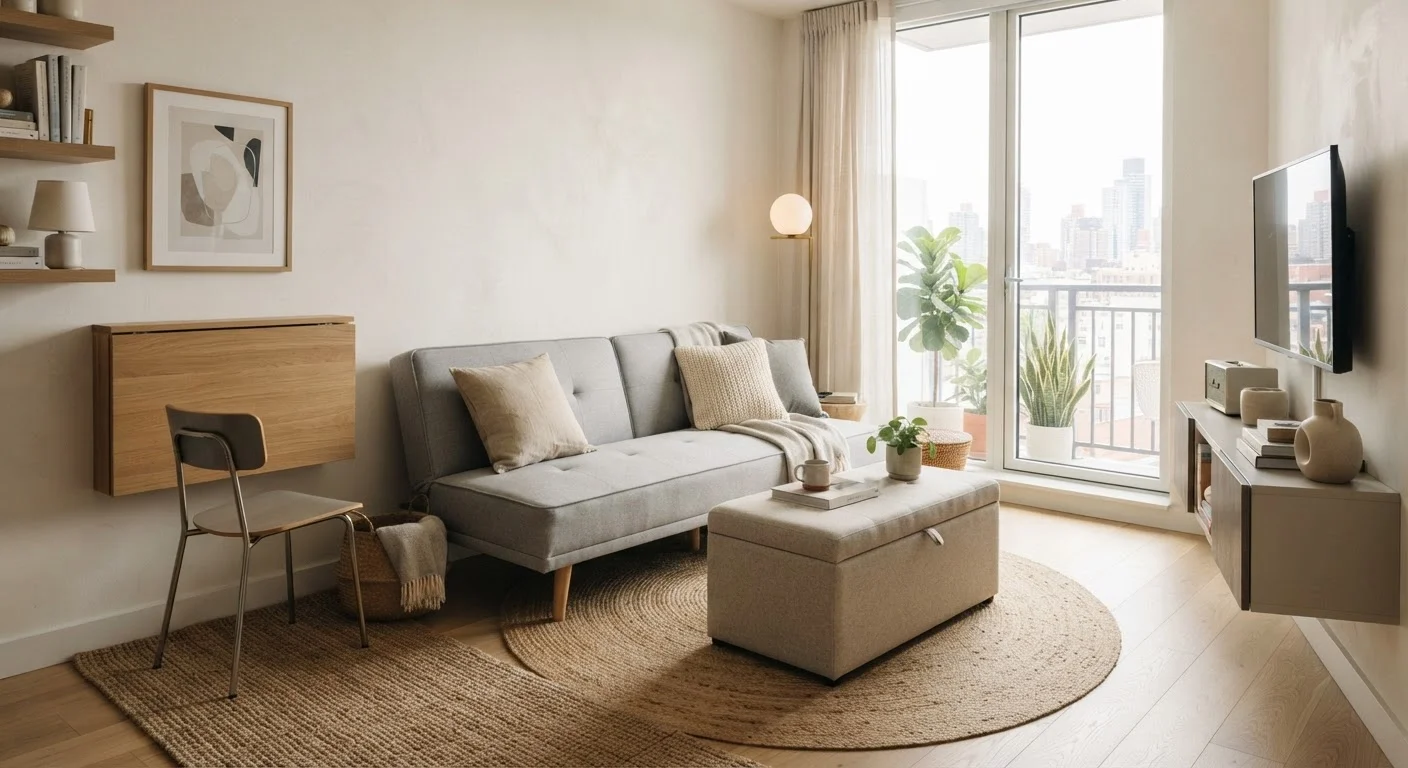
A large desk is not always a better desk. In a shared flat, a desk that takes up 60 inches of wall space but sits half-empty most of the day is wasted real estate. Consider a compact writing desk (roughly 40-48 inches wide) for laptop-based work, or a wall-mounted fold-down surface if the zone is used only part-time.
If you regularly use dual monitors, external keyboards, or drawing tablets, factor those dimensions in explicitly. Our article on multifunctional furniture trade-offs is worth reading before committing to a fold-out desk solution.
Go vertical with storage
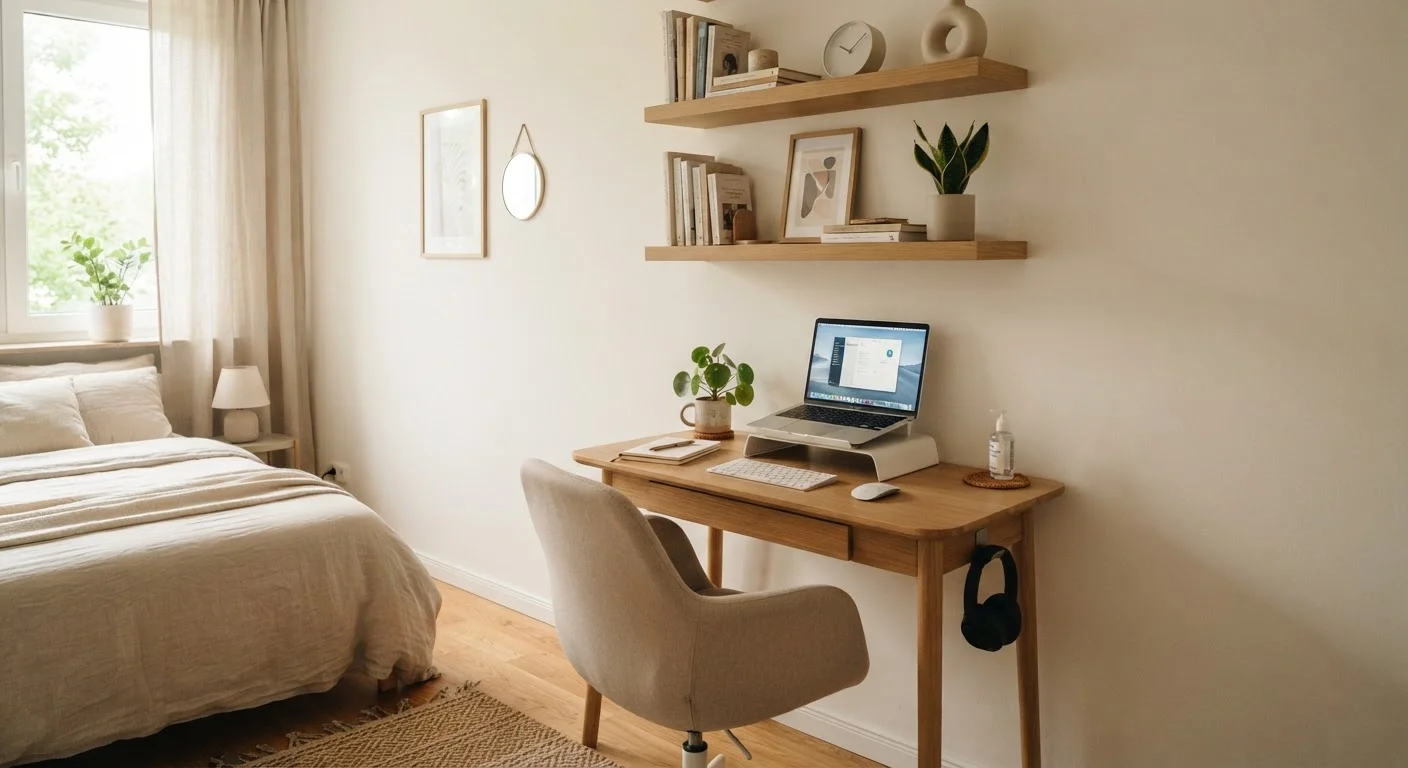
Floor space in a shared flat is shared space. Wall height is usually yours alone. Use freestanding shelving above or beside your desk to store work materials, reference books, and equipment. Shelf risers on the desk surface itself add a second tier without expanding the desk footprint.
Keep active work items - the things you use daily - at eye level or within arm's reach. Archive materials and rarely used equipment should go higher or be stored elsewhere. For a deeper breakdown, our vertical vs. horizontal storage guide covers when each approach works best.
Manage cables and visual clutter proactively
Cable clutter is one of the fastest ways to make a small workspace feel chaotic - and chaotic workspaces leak into the visual field of flatmates who share the room. Use adhesive cable clips along desk edges, a cable box to hide power strips, and velcro ties to bundle cords running to the floor.
Keep your desk surface to a working minimum: laptop or monitor, one notepad, one pen cup. Everything else lives in a drawer or on a shelf. The discipline of a clear desk surface applies especially in shared spaces where your setup is visible to others.
Set social boundaries with flatmates
Physical setup is only half the equation. Agree on quiet hours, expectations around noise in adjacent rooms during calls, and a shared understanding of when the workspace is in active use. This doesn't need to be a formal negotiation - a brief, practical conversation early on prevents the resentment that builds when assumptions go unstated.
If your work bleeds into truly shared areas (a kitchen table for overflow, for example), establish clear rituals for clearing those surfaces at the end of each session. For more on building routines that fit your actual environment, the productivity habits guide for remote and hybrid workers offers practical framing.
Use Visual Cues to Signal Work Mode
A small desk lamp switched on, headphones worn, or a simple 'Do Not Disturb' sign on your door can communicate focus time to flatmates without an awkward conversation every morning. Consistent visual cues reduce interruptions naturally over time.
Making It Last: Habits That Protect the Setup
A well-designed workspace degrades quickly without supporting habits. In a shared flat, entropy moves faster because the space is subject to multiple people's needs and routines.
- End-of-day reset: Spend two minutes clearing your desk surface and returning items to their designated storage. This single habit prevents the slow accumulation of clutter that makes workspaces unusable.
- Weekly audit: Once a week, remove anything from the workspace that doesn't belong there - mail, personal items, flatmate belongings that have migrated in.
- Seasonal reassessment: Every few months, check whether your storage is still matched to your actual workflow. Archive what you're no longer using actively.
If you're still building out the broader feel of the flat alongside your workspace, making a first flat feel like home covers the organizational and aesthetic groundwork from the beginning.