Why Multifunctional Furniture Has a Real Moment Right Now
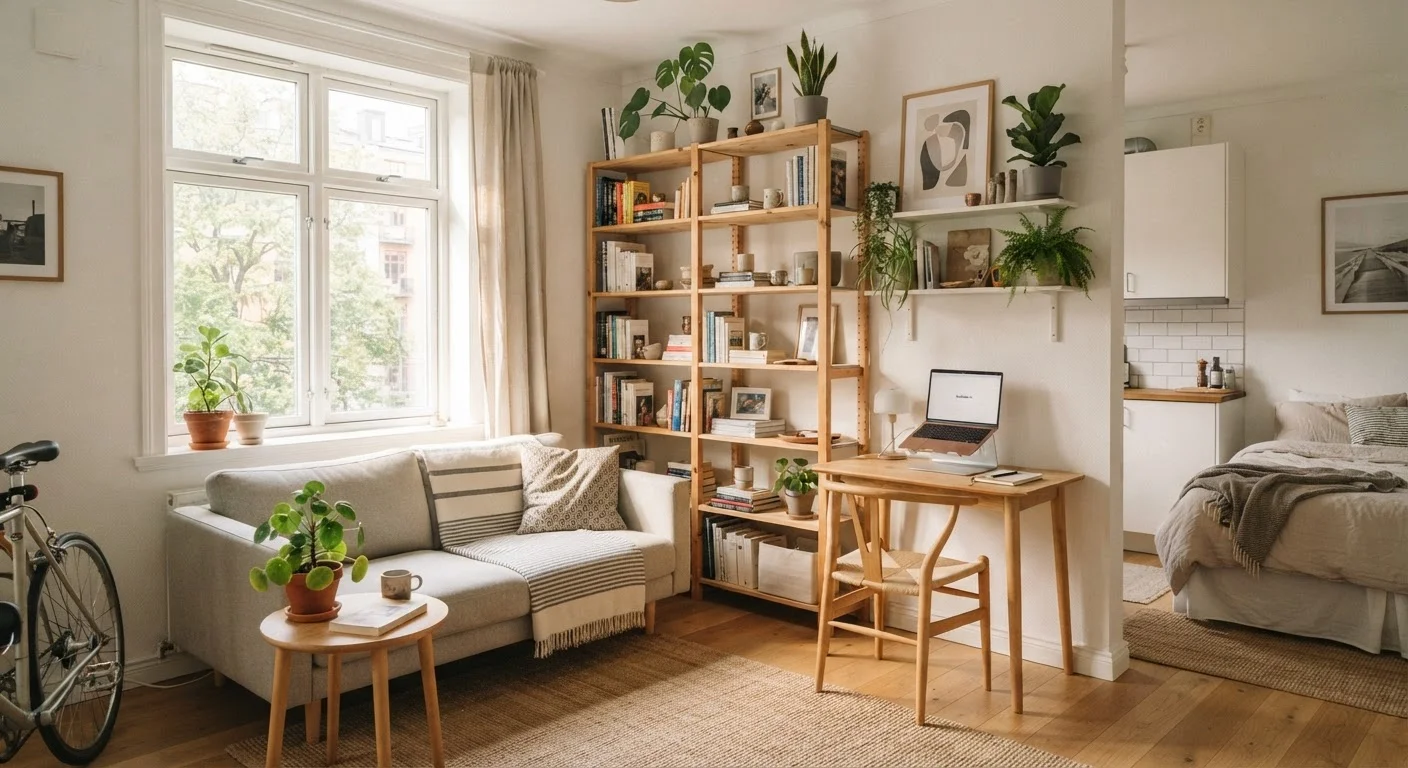
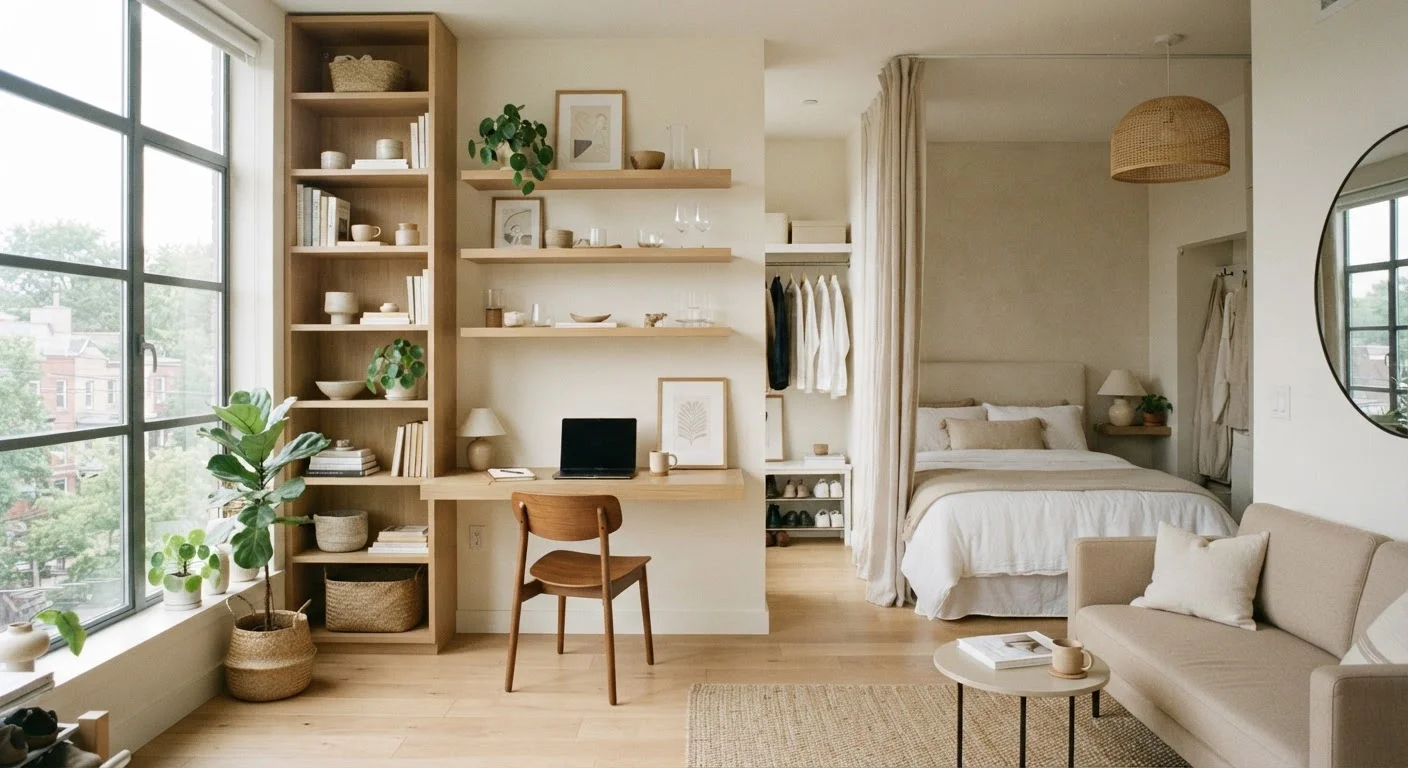
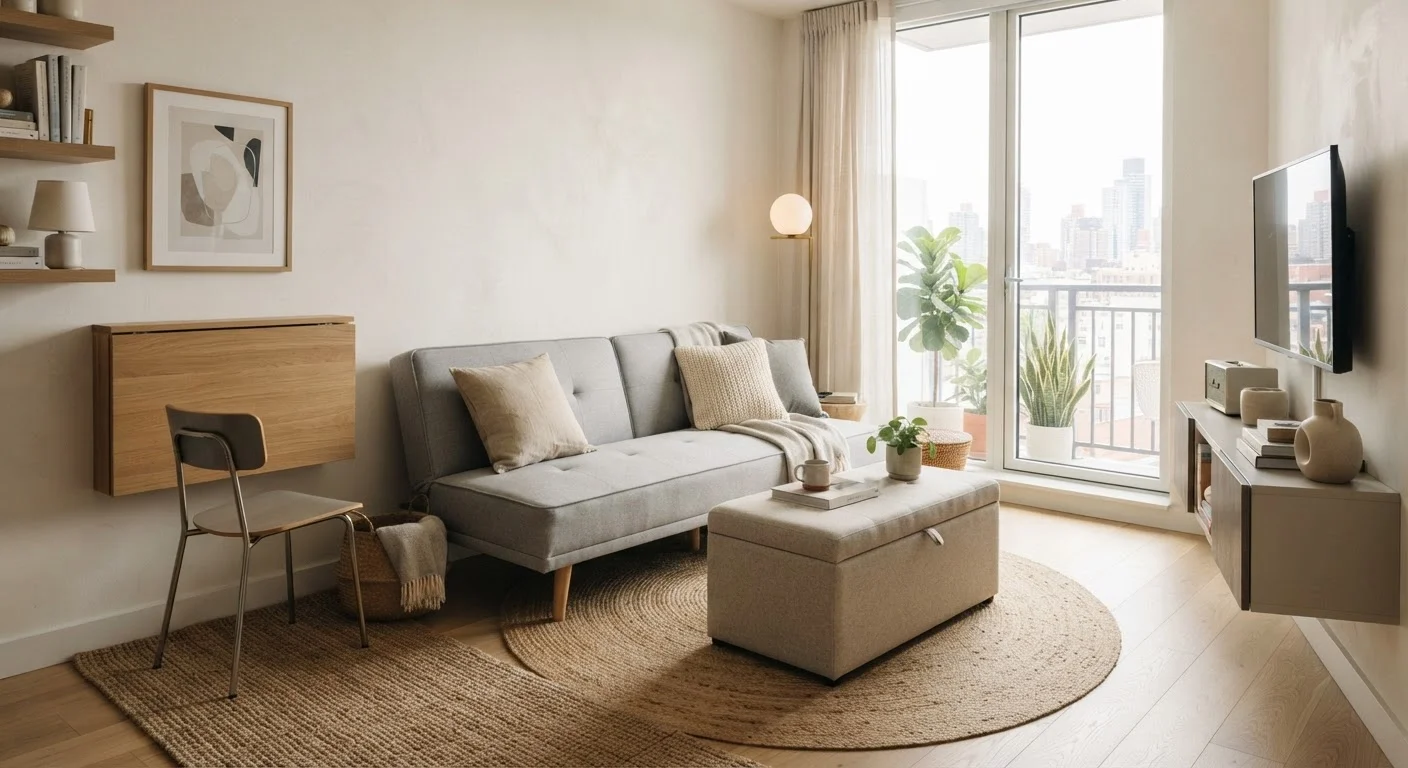
Average apartment sizes in US cities have been shrinking while rent costs have risen - a combination that puts pressure on young renters to do more with less floor space. Multifunctional furniture - pieces that serve two or more distinct purposes - has become a practical response to that squeeze. Think storage ottomans that double as coffee tables, murphy beds that fold into desk units, or dining tables that collapse to a console against the wall.
These aren't novelty items. When they work, they genuinely reduce clutter, eliminate redundant furniture, and make a room feel more intentional. The key word is when. Understanding both sides of the equation helps you invest wisely rather than accumulate awkward compromises.
If you're starting from scratch in a new place, the guide to making a first flat feel like home covers how multifunctional thinking fits into a broader setup strategy.
The Real Advantages Worth Knowing
Multifunctional furniture's strongest argument is spatial efficiency. A sofa bed eliminates the need for a dedicated guest bedroom - a luxury most urban one-bedrooms simply can't offer. A storage bench at the foot of a bed replaces both a separate storage unit and wasted decorative space. These aren't small wins in tight square footage.
Maximizes usable floor space in small rooms
In apartments under 600 square feet, eliminating even one single-purpose piece can meaningfully open up a room. A storage ottoman as a coffee table, for example, removes the need for a separate storage unit.
Can reduce total furniture spend
One dual-purpose piece at a moderate price often costs less than two separate items of comparable quality. The savings are real when the piece genuinely delivers on both functions.
Reduces visual clutter and improves room cohesion
Fewer pieces in a room tend to look more deliberate. Multifunctional furniture supports a cleaner aesthetic without sacrificing utility.
Ideal for hosting in spaces without a guest room
A quality sofa bed or fold-out daybed allows renters to accommodate overnight guests without dedicating permanent square footage to a guest bedroom.
Supports flexible room use over time
As living situations change - a new roommate, a work-from-home arrangement, a hobby that needs space - multifunctional pieces can adapt more easily than fixed, purpose-built furniture.
Beyond space, there's a legitimate financial case. Buying one well-built piece that performs two functions can cost less than buying two mediocre single-purpose items separately. That math only holds if the dual-purpose item is genuinely good at both jobs - which is why build quality matters so much in this category.
Aesthetically, thoughtful multifunctional pieces can also reduce visual noise. Fewer objects in a room, each pulling more weight, tends to read as intentional rather than sparse. That's especially relevant if you're working with the core principles of small-space organization, where visual clutter is as disruptive as physical clutter.
~500 sq ft
Average US studio apartment size
According to RentCafe data, the average US studio apartment is roughly 500 square feet, underscoring why space efficiency is a pressing concern for urban renters.
2-in-1
Functions replaced per piece
Even a single well-chosen multifunctional item can eliminate one redundant furniture purchase, directly reducing both clutter and upfront cost.
Where Multifunctional Furniture Falls Short
The most honest critique of multifunctional furniture is this: it often does two things adequately rather than one thing well. A sofa bed is almost never as comfortable as either a dedicated sofa or a proper bed. A fold-out desk is rarely as stable or spacious as a real desk. For occasional use, that trade-off is acceptable. For daily use, it accumulates as frustration.
Compromised performance on both primary functions
Most dual-purpose pieces perform each function at a level below a dedicated equivalent. A sofa bed mattress is typically thinner and less supportive than a standalone mattress of the same price point.
Mechanical parts add long-term failure risk
Hinges, sliders, and folding frames introduce components that wear out. Lower-cost models in particular often have hardware that degrades faster than the surrounding structure.
Switching between functions adds daily friction
If converting a piece from one use to another is cumbersome, it will stop being used in its secondary role within weeks. Friction is the silent killer of multifunctional furniture's value proposition.
Some pieces need more space to operate than they save
Murphy beds, fold-out dining tables, and convertible sofas can require significant clearance to deploy safely - potentially eliminating the spatial advantage they were bought to create.
Harder to find pieces that look high-quality in both states
A sofa that reads as a stylish piece of furniture when closed may look utilitarian or dated when unfolded. Aesthetic consistency across both modes is rare at accessible price points.
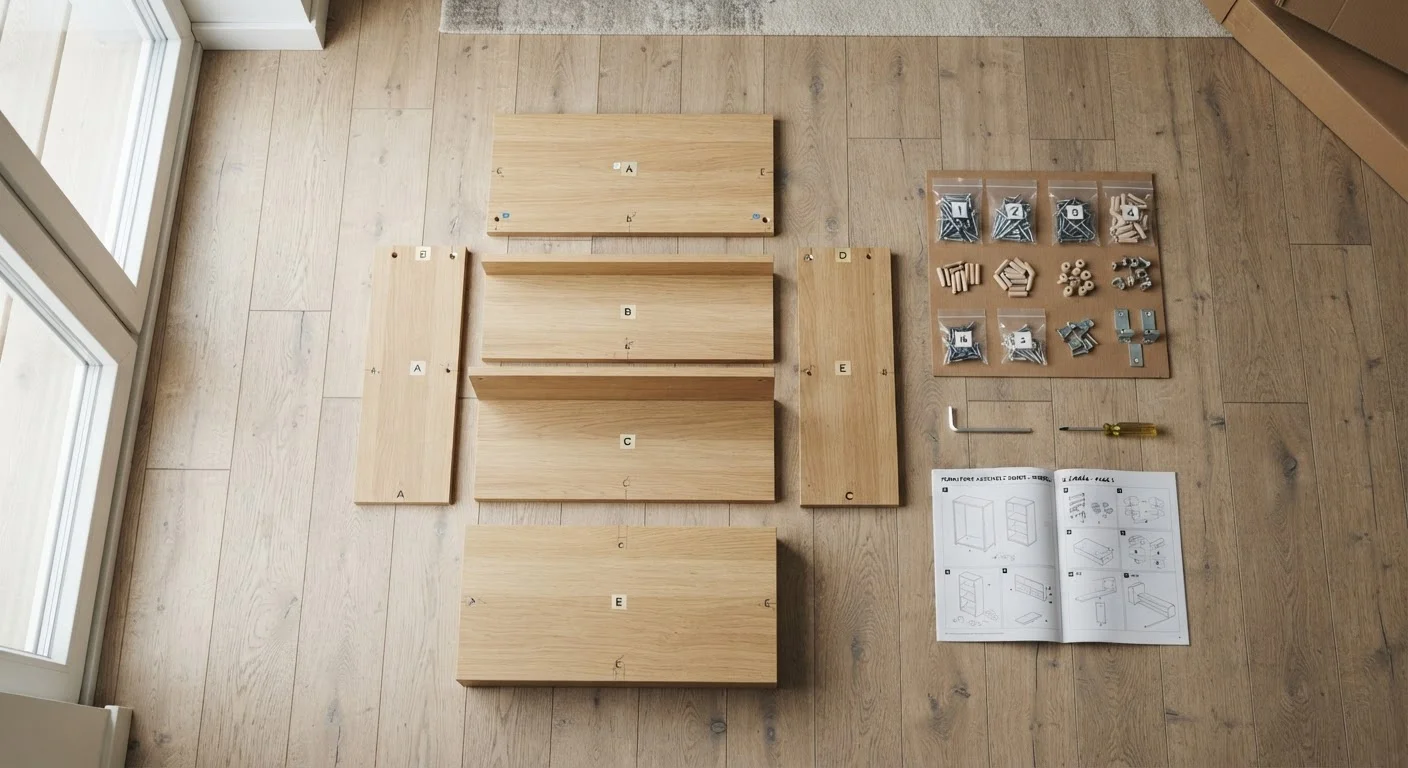
Mechanical complexity is another underappreciated issue. Hinges, folding frames, and locking mechanisms add parts that can fail - and often do outside of warranty. This is especially true for lower-cost versions where the hardware doesn't match the ambition of the design. For a closer look at how assembly quality affects furniture longevity, the guide to flat-pack furniture durability covers reinforcement techniques that apply here too.
There's also a spatial irony: some multifunctional pieces require more room to operate than they save. A murphy bed that needs three feet of clearance to unfold, in a room that can barely provide it, becomes a daily choreography problem rather than a solution.
When to Prioritize Build Quality
For any multifunctional piece you'll use daily - a desk, a sofa, a bed - treat build quality as non-negotiable. Examine the mechanism in person if possible: open and close it multiple times, check for wobble, and look at how the hardware is attached. A piece that feels solid at first use but develops play in its joints within six months will cost more in frustration than it saved on purchase. Spending more upfront on a mechanically sound piece is usually the better long-term calculation.
Choosing the Right Pieces for Your Actual Situation
The decision framework is simpler than the marketing suggests. Ask three questions before committing: How often will I use the secondary function? Is the switching mechanism something I'll actually tolerate every time? And does using it require rearranging other things in the room?
High-frequency secondary use - like a desk you use daily or a storage ottoman you open every other day - demands higher build quality and more ergonomic design. Low-frequency use, like a sofa bed for quarterly guests, allows for more compromise on comfort without real daily cost.
Also consider where multifunctional furniture fits versus pure storage approaches. Sometimes a well-placed shelving unit or vertical storage system outperforms any dual-purpose piece. The comparison of vertical versus horizontal storage is worth reading alongside this one if you're still mapping out a room. And if you're working from home in a shared space, a fold-out desk may genuinely be the right call - see setting up a home office in a shared flat for guidance on making that work practically.