The Core Difference: What Each Approach Actually Does
Vertical storage means organizing upward - tall shelving units, wall-mounted racks, pegboards, and stacked storage that prioritizes height over footprint. Horizontal storage spreads across a room's width at a lower level - think dressers, low bookshelves, under-bed drawers, and storage benches.
Neither approach is inherently superior. The right choice depends on your room's geometry, your daily habits, and any constraints your living situation imposes. For a deeper look at the principles that underpin both, see our guide to small-space organization principles that apply across every room.
| Criterion | Vertical Storage | Horizontal Storage |
|---|---|---|
| Floor space used | Minimal footprint | Wider footprint required |
| Accessibility | Upper sections harder to reach | Items easily accessible |
| Visual effect | Draws eye upward, adds height | Grounds room, lower visual weight |
| Rental suitability | May require wall anchoring | Freestanding, no drilling needed |
| Best storage type | Seasonal or infrequent items | Daily-use essentials |
| Room type match | Rooms with high ceilings | Rooms with limited wall height |
When Vertical Storage Works Best
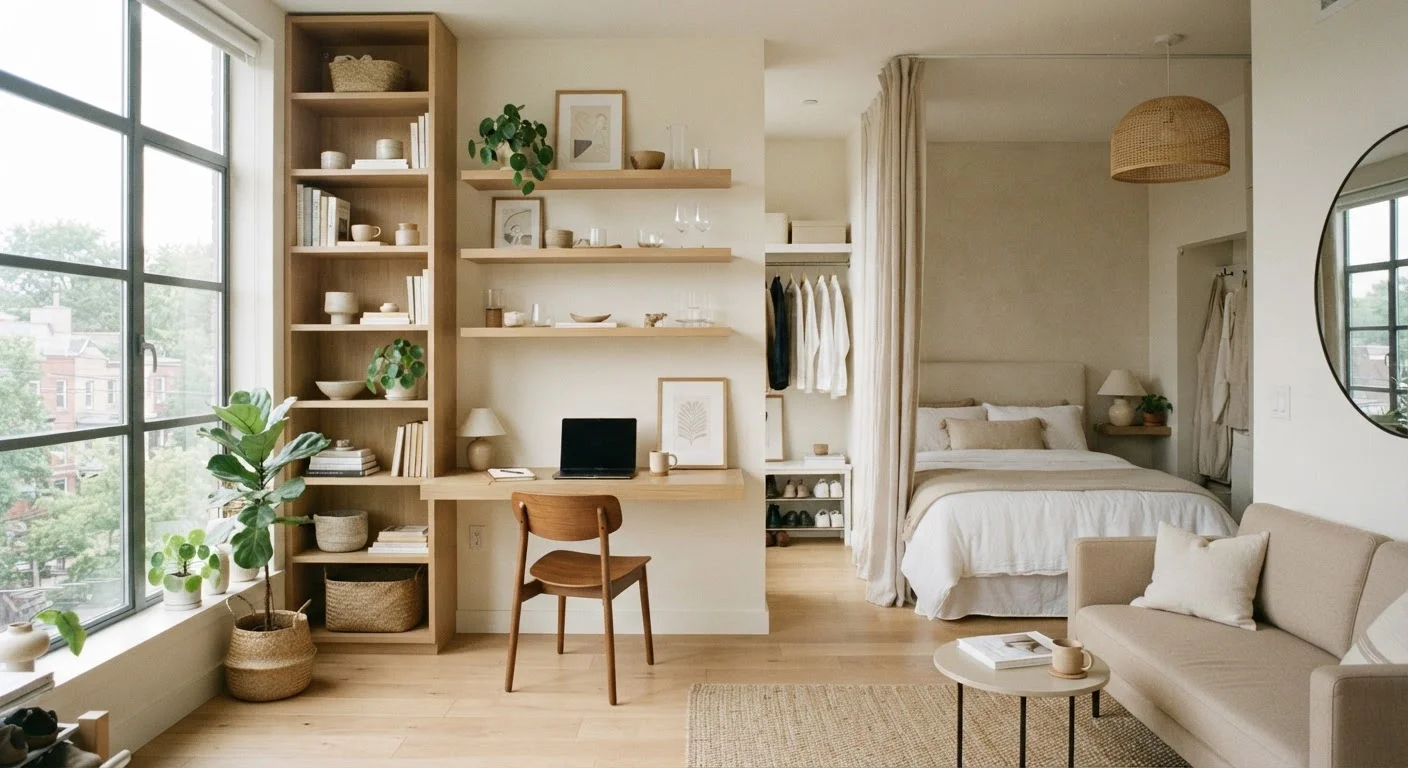
Vertical storage earns its keep in rooms where ceiling height exceeds 8 feet and floor space is genuinely scarce - common in studio apartments and urban rentals. A floor-to-ceiling bookshelf or a set of wall-mounted shelves can hold significantly more than a comparable low-profile unit while occupying a fraction of the floor area.
There's also a visual benefit: height draws the eye upward, making a compact room feel taller and less boxed-in. This is why interior designers often recommend tall storage as a first move in a cramped bedroom or narrow living room.
The tradeoff is accessibility. Items stored above eye level require more effort to retrieve and are easy to forget about, making upper sections better suited for seasonal or infrequently used items. There's also a stability consideration - tall, top-heavy units should always be anchored to a wall stud. If your lease prohibits wall drilling, this can be a real constraint. Rental-friendly room solutions can help you navigate this without risking your deposit.
~80%
Of vertical wall space left unused in typical apartments
Interior organization research consistently notes that most renters store items only from floor to mid-wall height, leaving substantial overhead space untapped.
12-18 in.
Typical depth of low horizontal storage units
Most standard dressers and credenzas range from 12 to 18 inches deep - enough for folded clothing or office supplies without dramatically reducing walkable floor space.
When Horizontal Storage Holds Its Own
Horizontal storage shines where accessibility and visual calm are priorities. A low dresser, a storage bench at the foot of a bed, or a credenza beneath a window keeps items within arm's reach and anchors the room's visual weight near the floor - a grounding quality that can feel reassuring in already-busy spaces.
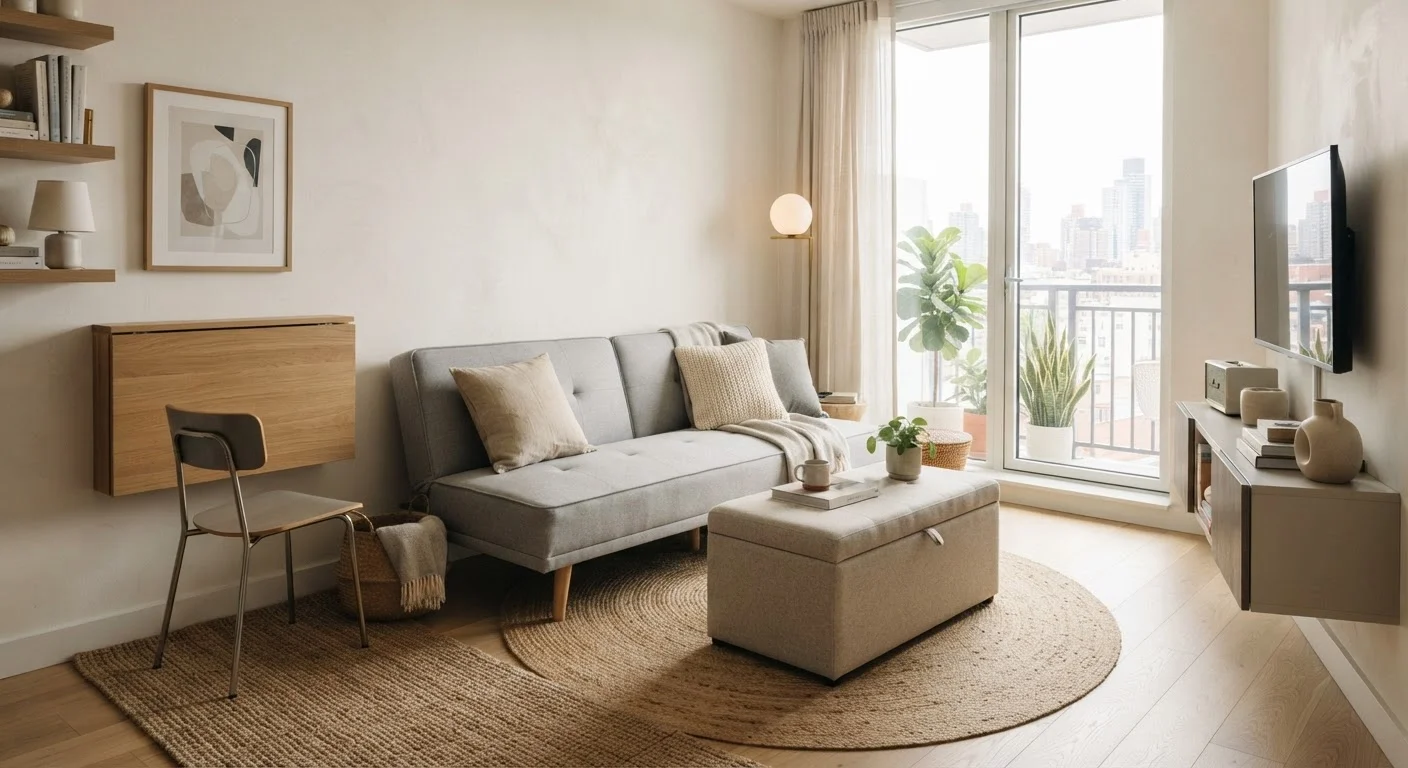
Low-profile storage also tends to be more versatile. Many horizontal pieces serve dual purposes: an ottoman with an interior compartment, a bed frame with built-in drawers, or a window seat with a hinged lid. This overlap with multifunctional furniture is worth exploring - our piece on multifunctional furniture is an honest look at where these pieces deliver and where they fall short.
The limitation is straightforward: horizontal units consume floor space. In a very small room, lining the walls with low furniture can make the space feel cluttered rather than organized, especially if it interrupts natural traffic flow.
Combining Both Approaches Deliberately
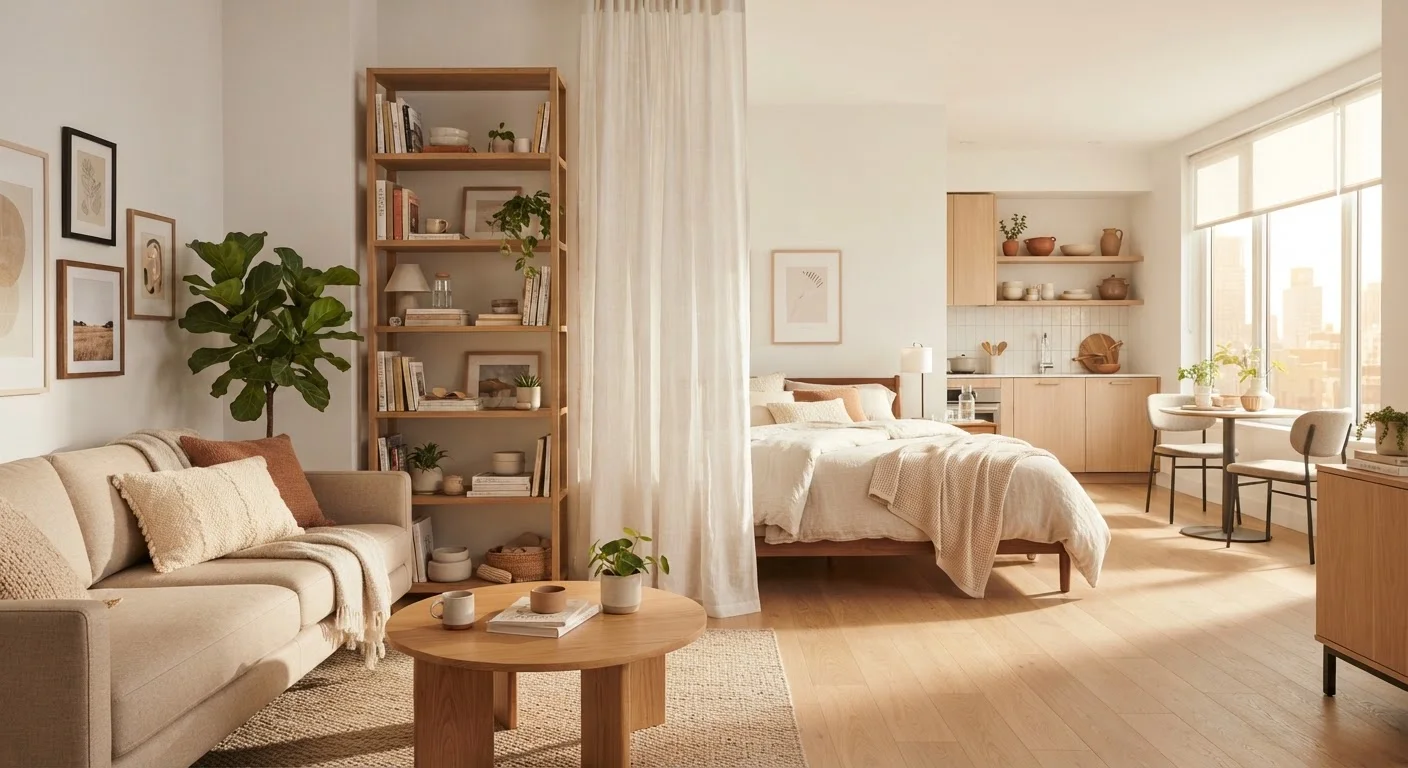
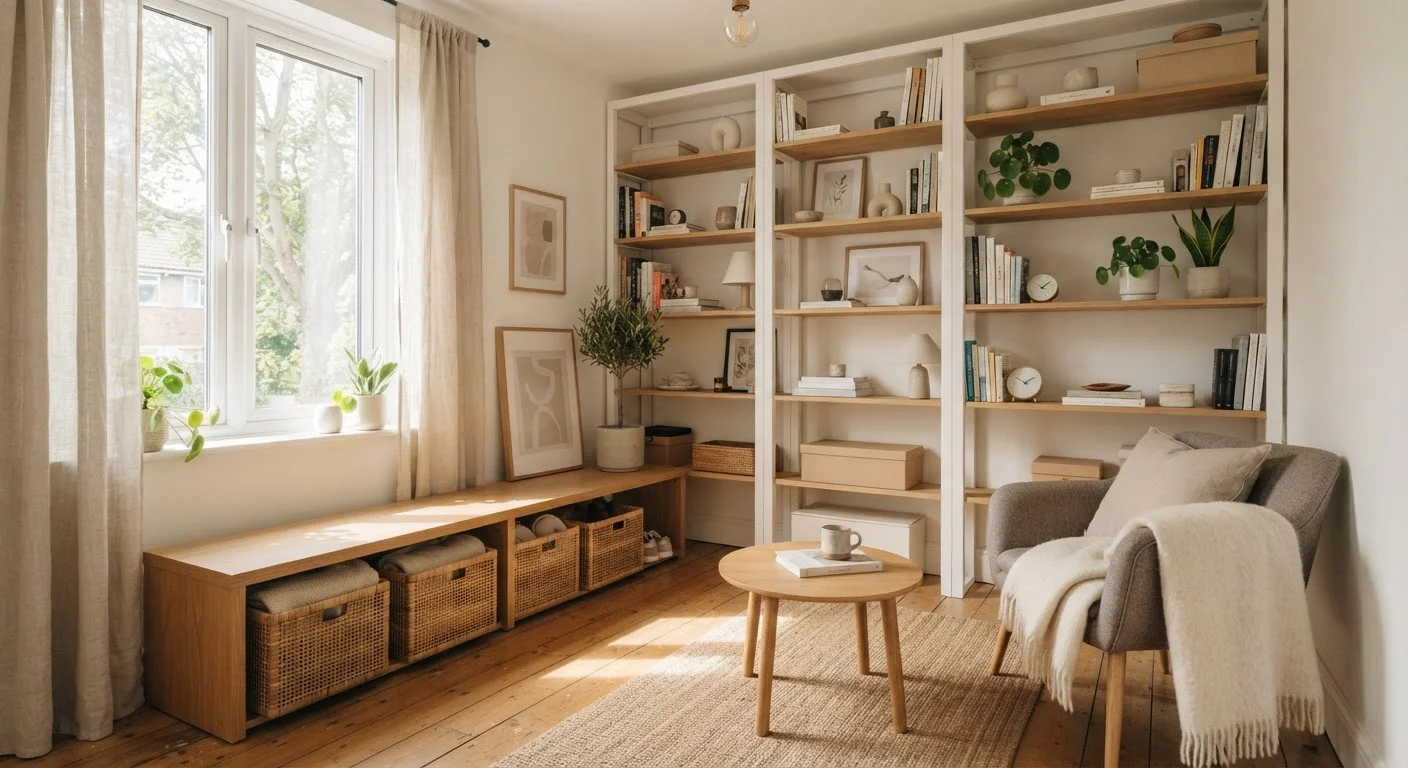
The most functional small rooms rarely rely exclusively on one strategy. A common and effective layout places taller storage along one or two walls - maximizing capacity - while keeping lower furniture on the remaining walls and in the center of the room to preserve openness and ease of movement.
A practical framework: assign vertical storage to items you use less frequently (seasonal clothing, reference books, spare linens) and horizontal storage to daily-use items (work supplies, everyday clothing, frequently accessed pantry goods). This way, form follows function rather than being imposed on it.
Visual balance matters too. Tall shelving looks intentional when it's styled rather than simply filled. If you find your shelves perpetually looking overcrowded, the issue is often arrangement rather than quantity - our editorial on why shelves look cluttered and how styling principles help breaks down the visual rules that make a real difference.
Check Your Lease Before Mounting Anything
Many rental agreements restrict or prohibit wall anchoring, stud drilling, or permanent fixtures. Before investing in wall-mounted vertical storage, review your lease terms and, if unclear, check with your landlord in writing. Freestanding tall units are a viable alternative in most cases, though safety anchoring - where permitted - is still strongly advisable for stability.
If you're setting up storage from scratch in your first place, organizing and styling a first flat from scratch is a practical starting point before investing in any major pieces.