Why Your Brain Notices Everything in the Room
Your brain's visual processing system doesn't switch off because you're focused on a screen. It continuously scans the environment for information, flagging anything that might require attention. In a cluttered room, that scan returns dozens of competing signals - an unopened letter, a pile of clothes, a coffee mug from two days ago. Each one doesn't demand your full attention, but each one takes a small slice of it.
This is the mechanism behind what cognitive researchers call attentional competition: multiple stimuli vying for the same limited pool of mental resources. The result isn't distraction in the obvious sense - you won't necessarily stop working - but your available processing capacity is quietly reduced. Decisions feel harder, concentration fragments more easily, and mental fatigue arrives sooner.
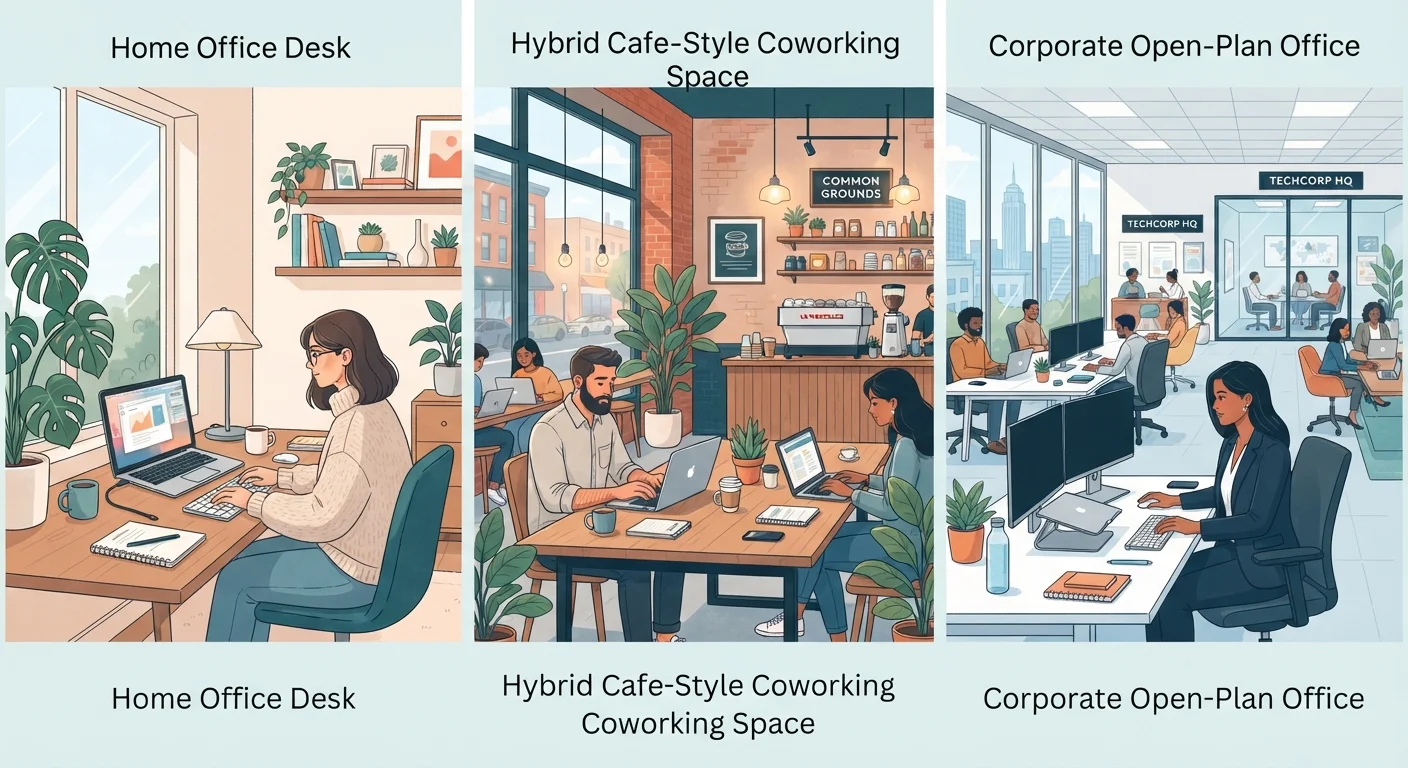
For remote and hybrid workers, this matters especially. Without a commute to mark the boundary between home and work mode, the visual environment of your space plays a larger role in signaling to your brain which state you're in. A workspace that looks indistinguishable from your living space sends mixed signals - and your focus takes the hit.
Individual Differences Are Real
Not everyone responds to visual complexity the same way. Some people genuinely focus better with ambient visual stimulation, and creative work sometimes benefits from richer environmental cues. The goal isn't to impose a single ideal setup but to understand the mechanism - then observe how your own attention responds to your space and adjust accordingly.
The Relationship Between Order, Control, and Mental State
Tidying a space isn't purely about aesthetics - it's a form of environmental agency. When you organize your desk before starting work, you're making a series of small, low-stakes decisions that exercise your sense of control. Psychologists studying perceived control have found that environments where people feel agency tend to support better mood regulation and sustained effort.
There's also a ritual function worth taking seriously. The act of clearing your workspace creates a behavioral boundary - a physical transition that tells your nervous system work is beginning. This is part of why home workers benefit from deliberate pre-work routines that simulate the environmental shift a commute used to provide.
Clutter, by contrast, tends to signal incompleteness. Unfinished tasks left visibly on a desk - papers to file, items to return, things mid-project - register in working memory as open loops. Research by psychologist Bluma Zeigarnik gave early form to this idea: the mind allocates ongoing attention to uncompleted tasks. Visible reminders of those tasks keep that background processing running, even when you're trying to focus on something else.
Build a Five-Minute End-of-Day Reset
Before you close your laptop, spend five minutes returning your workspace to a neutral baseline: clear the surface, close browser tabs, and remove any items that don't belong. This small routine prevents clutter accumulation and means you start each session in a low-load environment - not one that requires clearing before you can begin.
What 'Intentional' Actually Looks Like in Practice
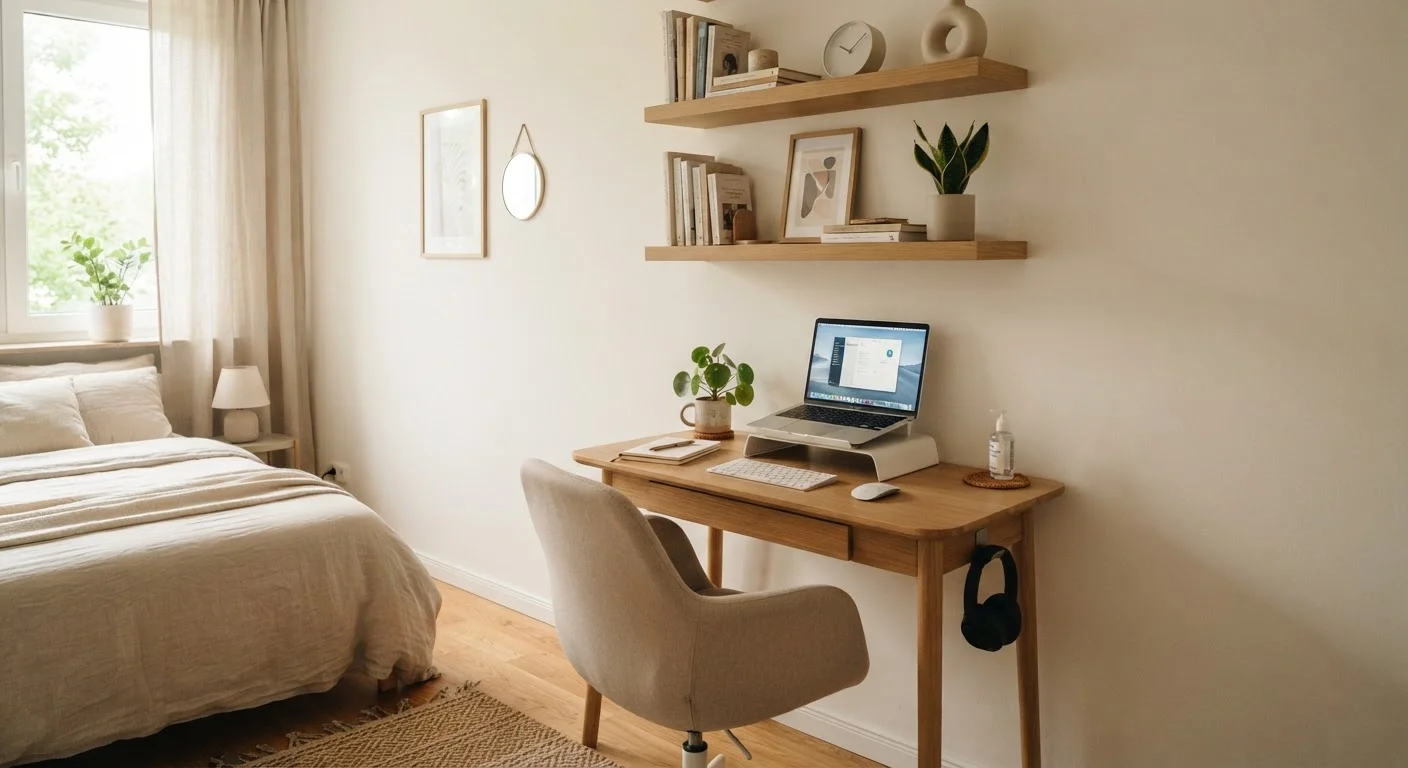
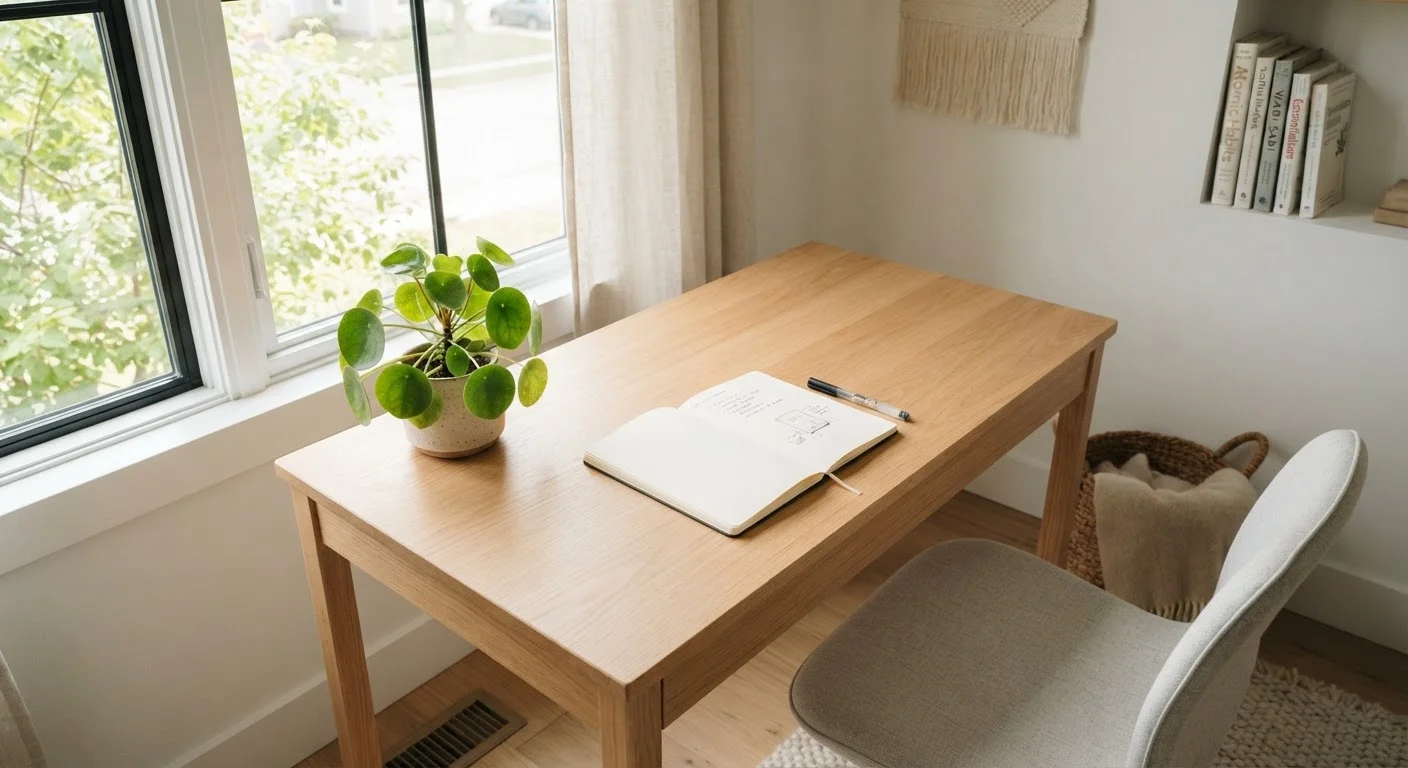
A tidy space doesn't mean a blank or sterile one. It means a purposeful one - where the objects present are there by choice and serve a function within your work context. A plant, a lamp positioned for good light, a notebook for capturing thoughts: these don't add cognitive noise because they're integrated into the purpose of the space.
The practical principle is line-of-sight relevance. What you can see from your working position should, as much as possible, relate to what you're doing. Items that don't belong in that zone - household objects, unrelated projects, shopping bags - are better stored out of sightline, even if they're in the same room. For ideas on how to apply this across different room types, organizational principles for small spaces offer a useful structural framework.
Consistency matters more than perfection. A five-minute reset at the end of each workday - clearing surfaces, returning items to their places, closing down visual open loops - does more for sustained focus than an occasional deep reorganization. Think of it as maintaining a low cognitive baseline rather than chasing an ideal state.
If your workspace is in a shared home, the challenge is partly spatial and partly social - setting clear workspace boundaries in a flatshare becomes as important as organizing the desk itself. And once your environment is working for you, pairing it with single-tasking strategies compounds the benefit significantly.
77%
Workers who say clutter reduces their productivity
According to a survey by Princeton Neuroscience Institute researchers examining workplace environment and attention.
~1 in 3
Remote workers who report home environment as a focus barrier
Cited in occupational health research examining the specific challenges of home-based work environments post-2020.