Why Organizing Doesn't Have to Mean Buying More Bins
The tidying industrial complex has a quiet environmental cost: millions of plastic storage bins purchased, used briefly, and eventually landfilled. For young professionals trying to build a home that's both functional and values-aligned, the instinct to reach for a cart full of matching containers deserves a second look.
Sustainable organization starts with a reframe - from what should I buy to contain this? to what do I already have, and what actually needs a container at all? The most effective organizing systems aren't built from new products. They're built from honest decisions about what you keep, where it lives, and how you access it daily.
For more on building functional systems from the ground up, see our guide to organizing a first flat - it covers where to start when both space and budget are limited.
Declutter before sourcing any container
The single biggest driver of over-purchasing storage is trying to organize too much stuff. Reducing volume before introducing containers means you need far fewer of them - and what you do need becomes clearer. Skipping this step leads to buying bins that simply relocate clutter.
Audit what you already own before buying anything
Most homes already contain viable containers: shoeboxes, tins, jars, baskets, and trays that are underused or stored away. A full audit often surfaces enough organizational material to handle multiple spaces without spending anything.
Assign every item a fixed zone and stick to it
Containers without clear location logic drift - things get moved, mixed, and lost. Zoning means designating specific areas for specific categories of items, so that returning something to its place becomes automatic rather than a decision.
Label everything, even when it seems obvious
Labels dramatically reduce how long a system takes to maintain. They also help other household members or guests respect the organization without being briefed every time. Handwritten labels on kraft tape are free and easy to update.
Replace plastic containers only as they wear out, not all at once
A full replacement purge of existing plastic is itself wasteful - discarding functional items prematurely doesn't help the environment. The more sustainable approach is to phase in natural-material alternatives gradually, as old containers fail or are no longer needed.
Material Alternatives Worth Using
When you do need a container, material matters. The alternatives to plastic are more accessible than many people assume - and often more attractive in a home setting.
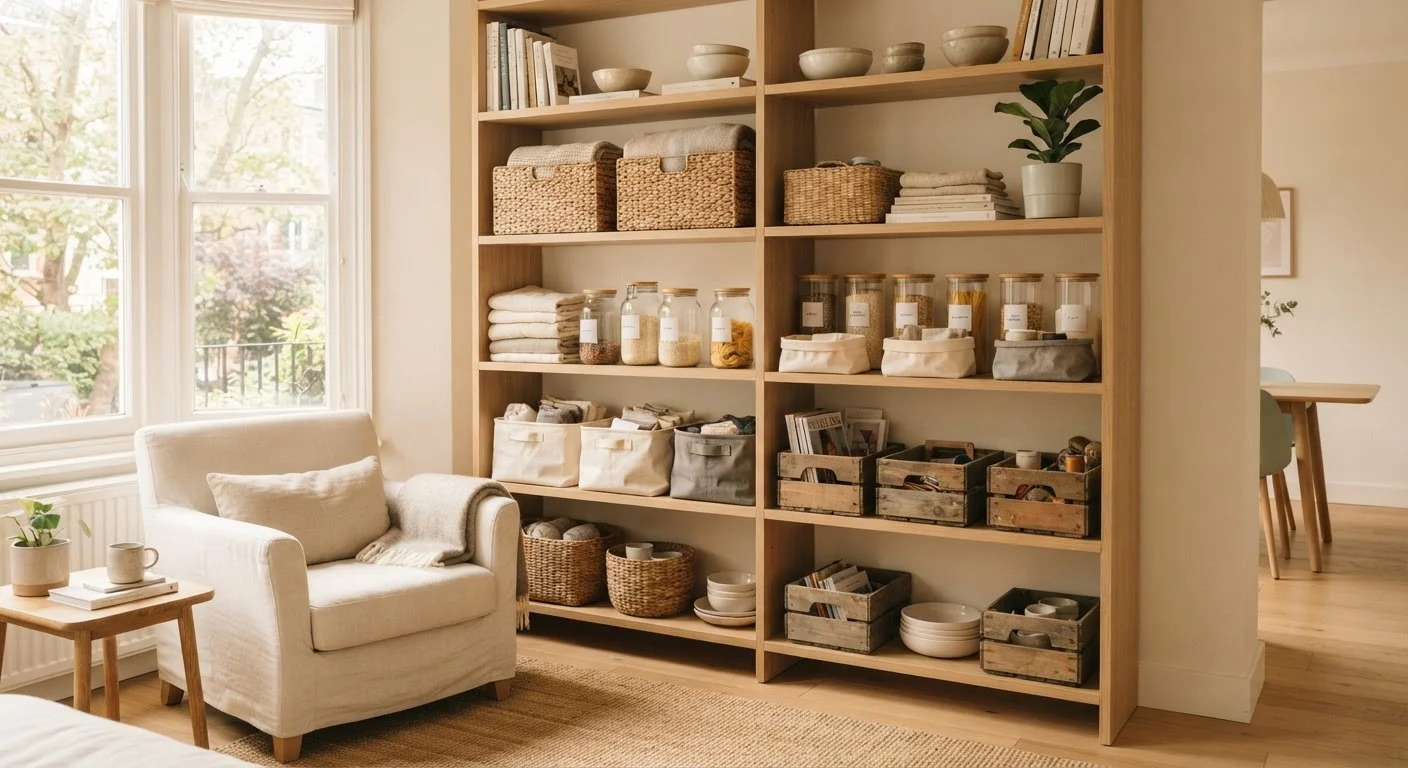
- Glass jars are among the most versatile organizers available. Pasta jars, sauce jars, and mason-style jars work for pantry staples, bathroom supplies, desk accessories, and craft materials. They're durable, washable, and transparent - meaning you see contents without rummaging.
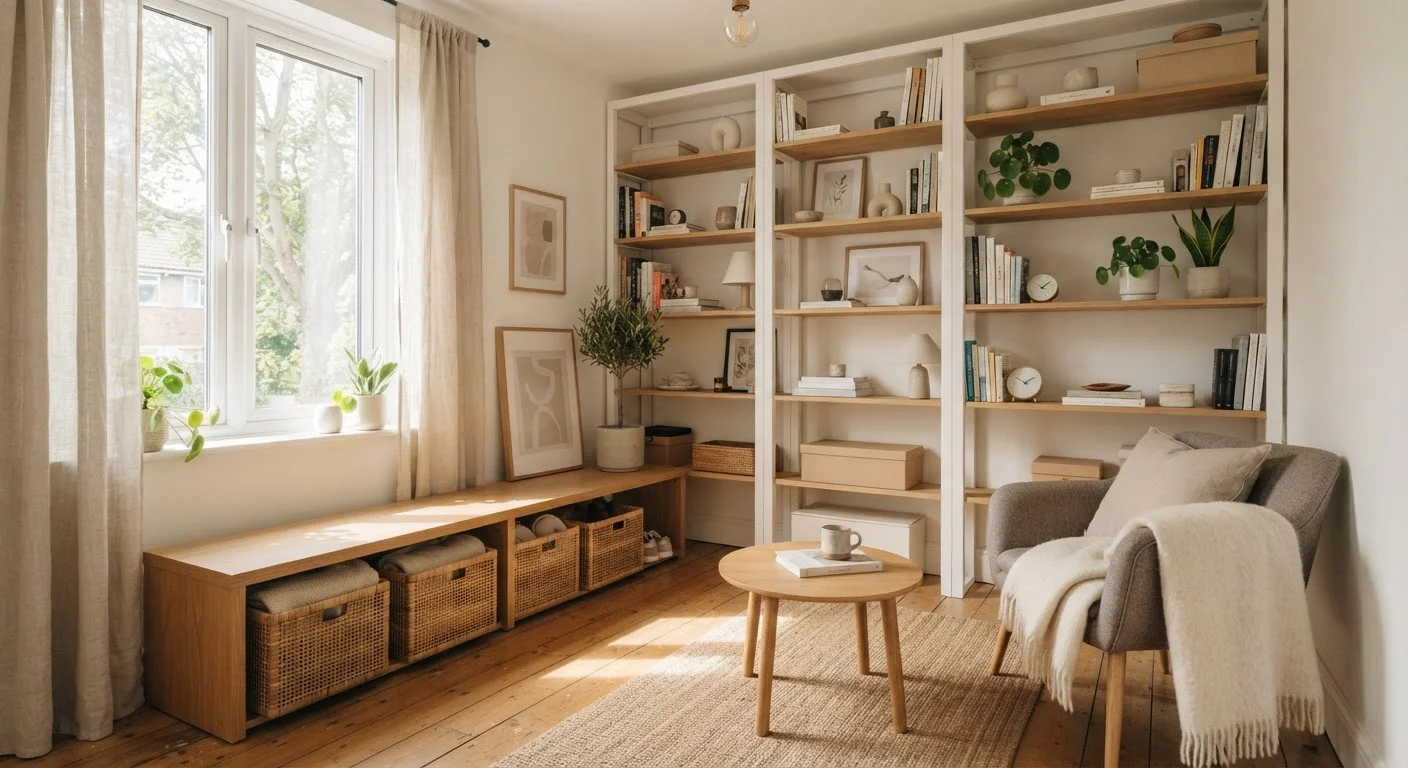
- Wicker and rattan baskets are widely available secondhand and hold up well for years. They suit linen closets, under-sink storage, entryway catch-alls, and open shelving where aesthetic coherence matters.
- Wooden crates and trays - whether repurposed from produce or picked up at flea markets - can be stacked, mounted, or used on countertops to create zones without rigid plastic structures.
- Cotton and canvas pouches work well for grouping small items: charging cables, travel toiletries, craft supplies. Unlike plastic zip bags, they last for years and compress flat when not in use.
- Cardboard and paper boxes from deliveries or shoe purchases, reinforced with a bit of kraft paper or lining fabric, make surprisingly sturdy drawer dividers.
For a broader look at how material choices intersect with style on a limited budget, our budget decorating strategies piece covers material swaps alongside other low-cost approaches.
Secondhand First, New Last
Before purchasing any new container - even one made from natural materials - check local thrift stores, community buy-nothing groups, or marketplace apps for baskets, trays, and tins. Natural-material organizers in good condition are commonly available secondhand and often cost a fraction of new equivalents. This approach adds character to a space while keeping items out of the waste stream.
Practices That Make Systems Stick
Choosing the right container is only part of the equation. The behavioral habits around a system determine whether it stays organized beyond the first week.
Thinking about how your available space shapes your storage options? Our guide to vertical vs. horizontal storage offers a practical breakdown for compact rooms.
Starting Without Overwhelming Yourself
Sustainable organizing works best as an incremental practice rather than a weekend overhaul. Pick one area - a kitchen drawer, a bathroom shelf, a closet section - and work through it with the principles above before moving on.
The goal isn't a perfectly curated home photographed for a lifestyle blog. It's a space that supports your daily routines without accumulating waste in the process. Every glass jar repurposed, every cardboard box drafted into service, and every plastic bin replaced when worn out (rather than preemptively) adds up to a genuinely more sustainable home over time.
For principles that scale across every room in a small home, the small-space organization principles article is a useful companion to what's covered here.
Not All Plastic-Free Options Are Equal
Natural materials aren't automatically low-impact. Wicker and rattan can involve long supply chains, and some 'eco' packaging is neither recyclable nor compostable in standard US facilities. The most genuinely sustainable choice is usually the one you already own, already have access to secondhand, or can repurpose from something else in your home. Buying new natural-material products is a step up from plastic, but still carries a footprint worth being honest about.