Why Paint Finish Matters More Than You Think
Most first-time painters spend hours agonizing over color, then grab whatever finish is on the shelf without a second thought. That's a common mistake - paint sheen affects durability, cleanability, light reflection, and how forgiving a surface looks once the job is done. The right finish can make a textured wall look smoother; the wrong one can highlight every imperfection.
| Finish types | 5 main options: flat, eggshell, satin, semi-gloss, high-gloss |
| Most versatile finish | Eggshell - works in most living areas |
| Best for trim & doors | Semi-gloss or high-gloss |
| Best for ceilings | Flat or matte |
| Moisture-resistant finishes | Satin, semi-gloss, high-gloss |
| Key trade-off | Higher sheen = more durable, less forgiving of imperfections |
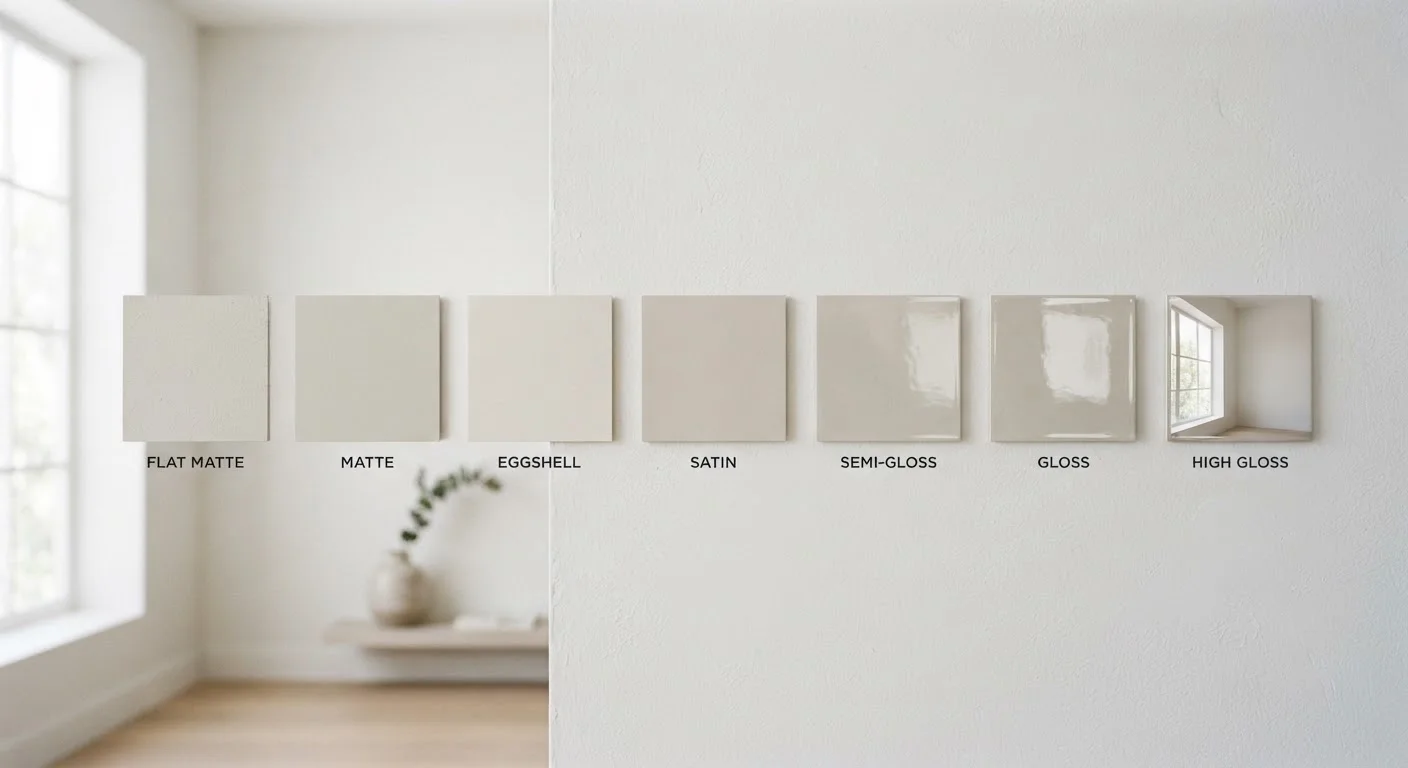
Each finish sits on a spectrum from completely flat (zero reflectivity) to highly glossy. As sheen increases, so does the paint's ability to repel moisture and withstand scrubbing - but imperfections in the wall become more visible. Understanding this trade-off is the foundation of making good finish decisions room by room.
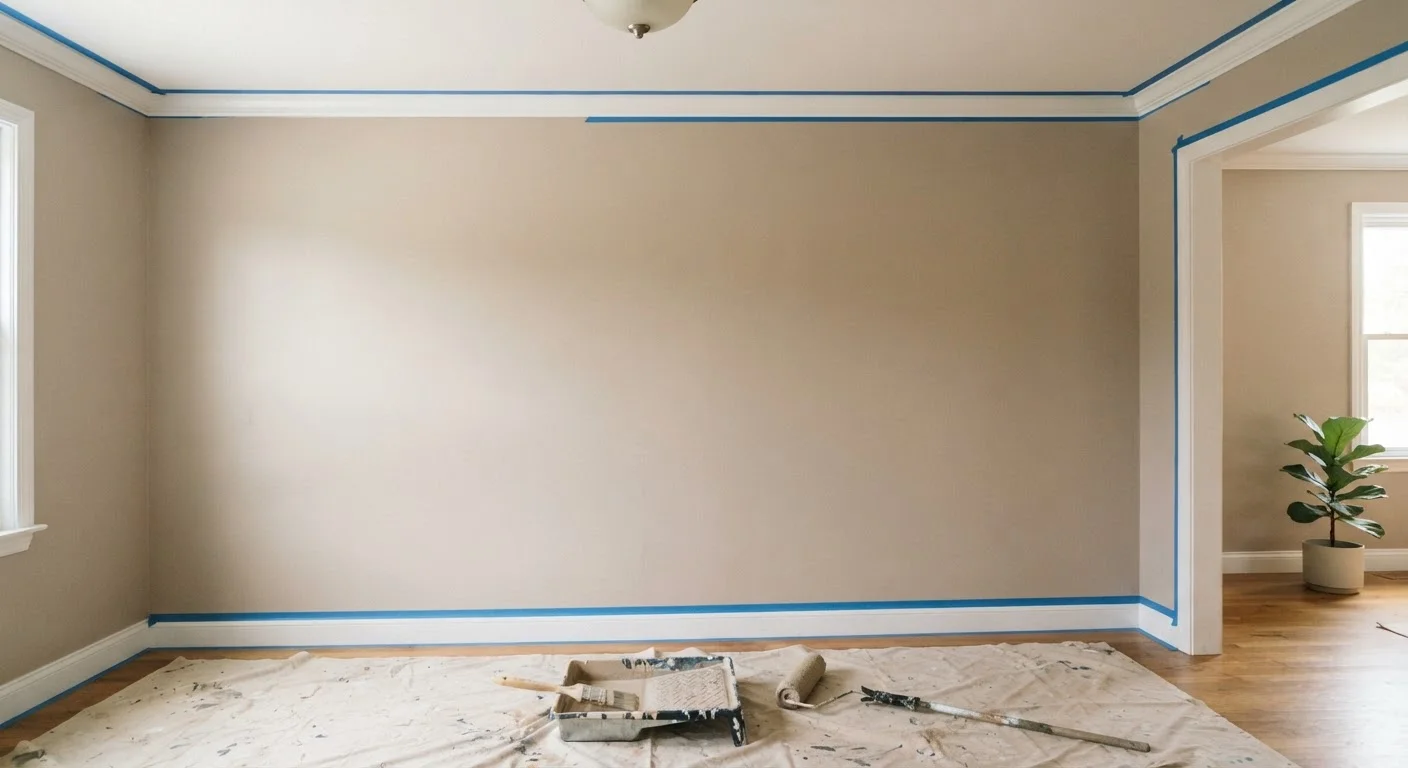
Before picking up a brush, it also helps to think about surface prep. Even the best finish looks poor on a wall that hasn't been properly primed or patched. See our guide to painting a room that looks professional for a full walkthrough of preparation and technique.
The Five Main Finishes Explained
Here's how each finish behaves in practice - and where it belongs.
Sheen
The degree of light reflectivity in a dried paint film. Higher sheen means more light bounces off the surface, making it look glossier and more durable but also more revealing of surface flaws.
Flat / Matte finish
A paint finish with no reflectivity. It hides surface imperfections well but is difficult to clean without damaging the paint film.
Eggshell finish
A low-sheen finish with subtle warmth. More washable than flat paint and well-suited to general living areas.
Satin finish
A mid-range sheen that balances durability with a soft luster. Suitable for higher-traffic areas and surfaces that need regular wiping.
Semi-gloss finish
A clearly reflective finish that resists moisture and scrubbing. Standard for trim, bathrooms, and kitchens.
High-gloss finish
The most reflective and hardest paint finish available. Typically used on cabinetry, doors, and furniture rather than interior walls.
Flat / Matte
Zero reflectivity. Excellent for hiding wall imperfections, which makes it popular for ceilings and low-traffic adult bedrooms. The downside: it absorbs stains rather than repelling them, so scrubbing can remove the paint itself. Reserve it for surfaces that won't need frequent wiping.
Eggshell
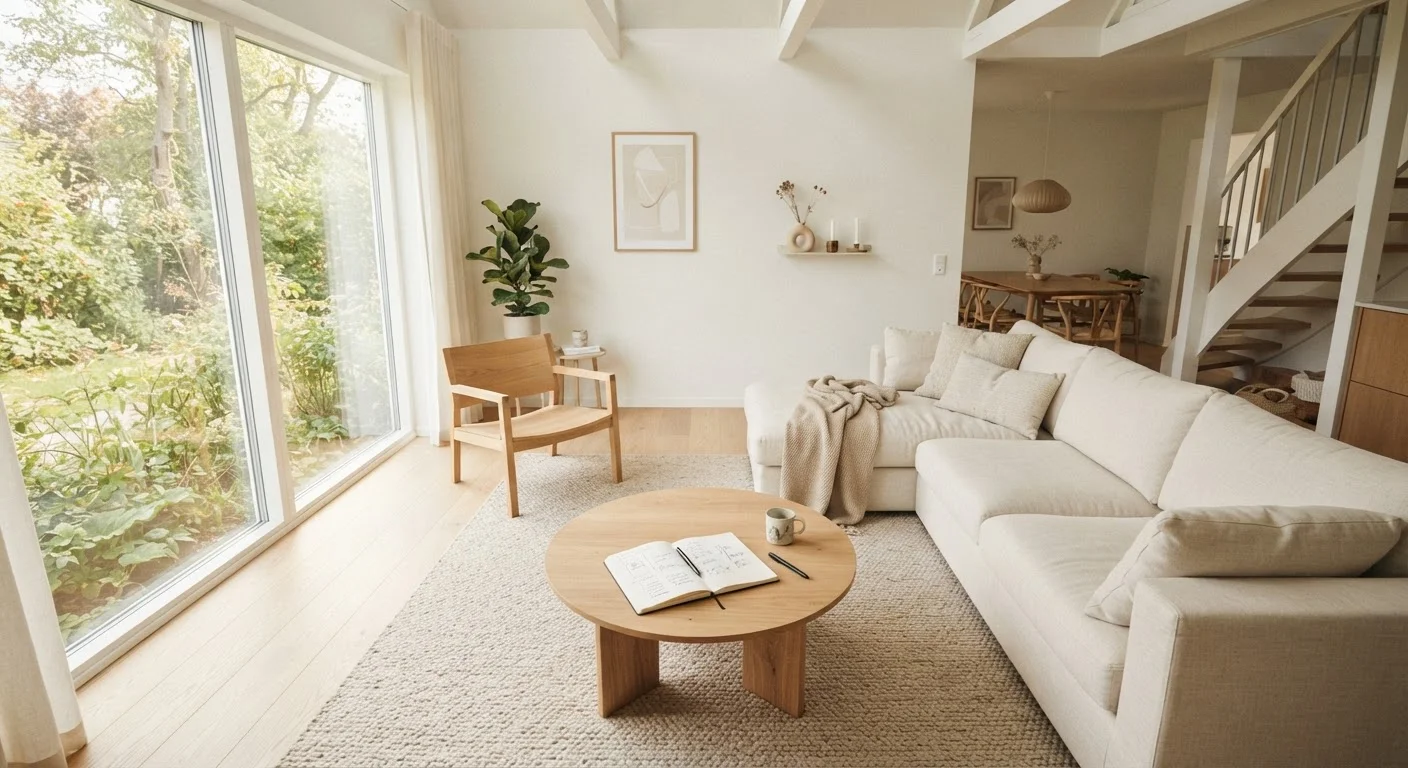
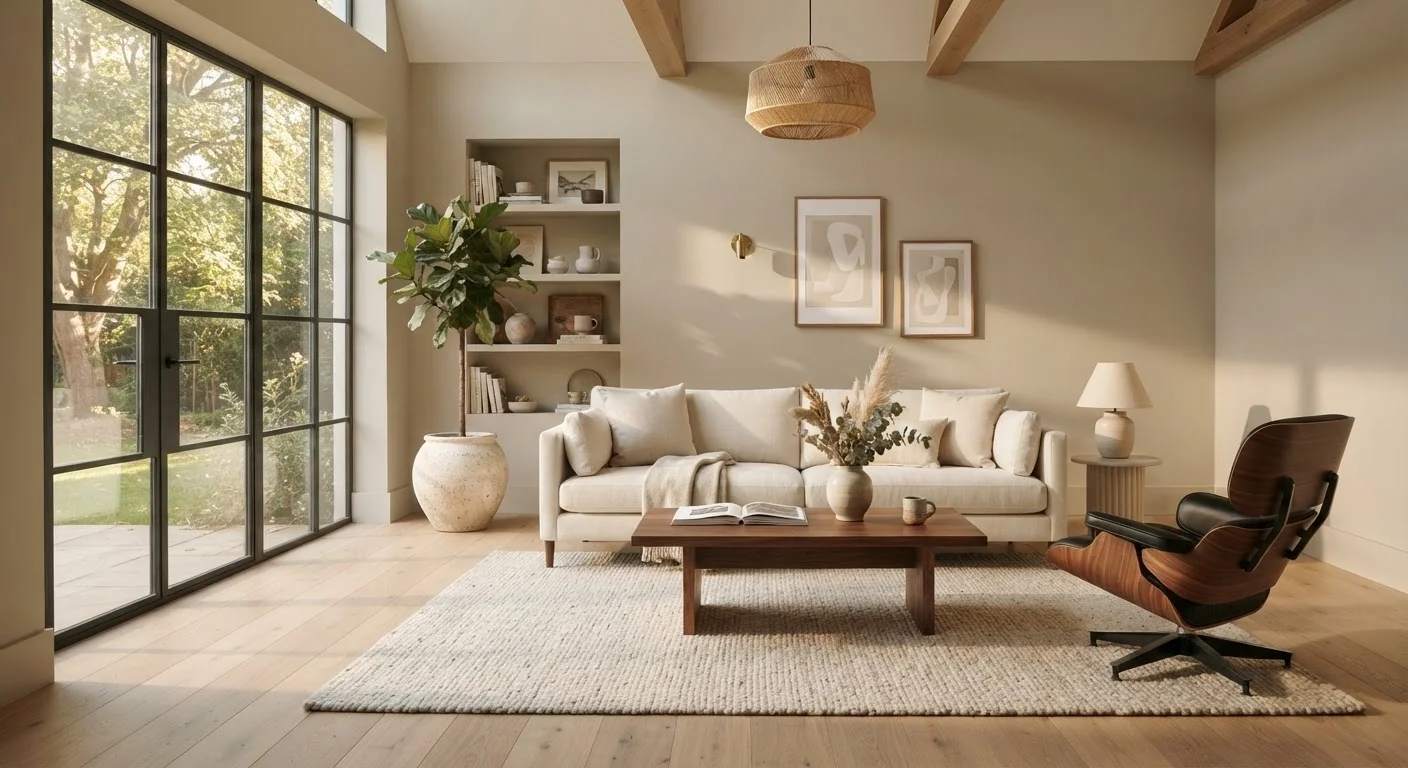
A very subtle sheen - roughly the texture of an eggshell. It holds up to light cleaning and adds a touch of warmth to living rooms and dining areas. This is arguably the most versatile finish for general living spaces. It's forgiving on slightly uneven walls and much easier to maintain than flat paint.
Satin
Noticeably smoother and slightly lustrous. Satin strikes the balance between durability and aesthetics - it can handle kids' rooms, hallways, and kitchen walls where occasional wiping is needed. It also works well on trim in rooms where you don't want the contrast of a full gloss.
Semi-Gloss
A clearly reflective finish that holds up to moisture and repeated cleaning. It's the standard choice for trim, baseboards, window frames, bathroom walls, and kitchens. The higher sheen means wall texture and patching work will show - proper prep matters more here.
High-Gloss
The hardest, most reflective finish available. Typically reserved for cabinetry, front doors, and furniture rather than interior walls. It amplifies light beautifully but is unforgiving - every brush mark and surface flaw becomes visible. High-gloss work usually requires sanding between coats and a skilled hand.
A Room-by-Room Reference
5
Distinct finish levels from flat to high-gloss
Each finish level serves different functional and aesthetic roles depending on the room and surface.
~20%
Typical sheen increase from eggshell to satin
This incremental step in reflectivity meaningfully changes how durable and washable a surface is in daily use.
Use this as a quick lookup when planning each space:
- Ceilings: Flat or matte - reflects less light so the eye reads the ceiling as receding, which suits most rooms.
- Living rooms & bedrooms: Eggshell - washable enough for general use, soft enough to look relaxed.
- Hallways & kids' rooms: Satin - can take scuffs and wipe-downs without deteriorating quickly.
- Kitchens & bathrooms: Satin to semi-gloss - moisture resistance becomes important here.
- Trim, doors & baseboards: Semi-gloss or high-gloss - creates clean definition and handles contact wear.
Mixing Finishes in One Room Is Fine
It's common - and often advisable - to use different finishes within a single room. Walls in eggshell with trim in semi-gloss is a classic combination that adds definition without requiring contrasting colors. The only rule: make sure each surface gets the finish appropriate to how it will be used and how often it will be touched or cleaned.
If you're working through a broader room refresh, it's worth doing a quick audit of the whole space before committing to colors and finishes. Our room-by-room audit checklist can help you catch functional gaps before you spend on paint. And once you're thinking about how paint color interacts with light, don't miss how colour, light, and scale affect a room's feel.