Understanding Your Space
Before buying a single pot or seed packet, spend time honestly assessing what you're working with. Urban growing spaces vary enormously - a south-facing 10th-floor balcony behaves nothing like a shaded courtyard or a north-facing windowsill. The variables that matter most are light, wind exposure, weight limits (for rooftops and balconies), and access to water.
Light is the foundation. Most edible plants need 6-8 hours of direct sun daily, while many herbs tolerate 4 hours. Learn how to evaluate your space across the day and across seasons before you commit to a plant list. Our guide on reading your garden's light walks through this process in practical detail.
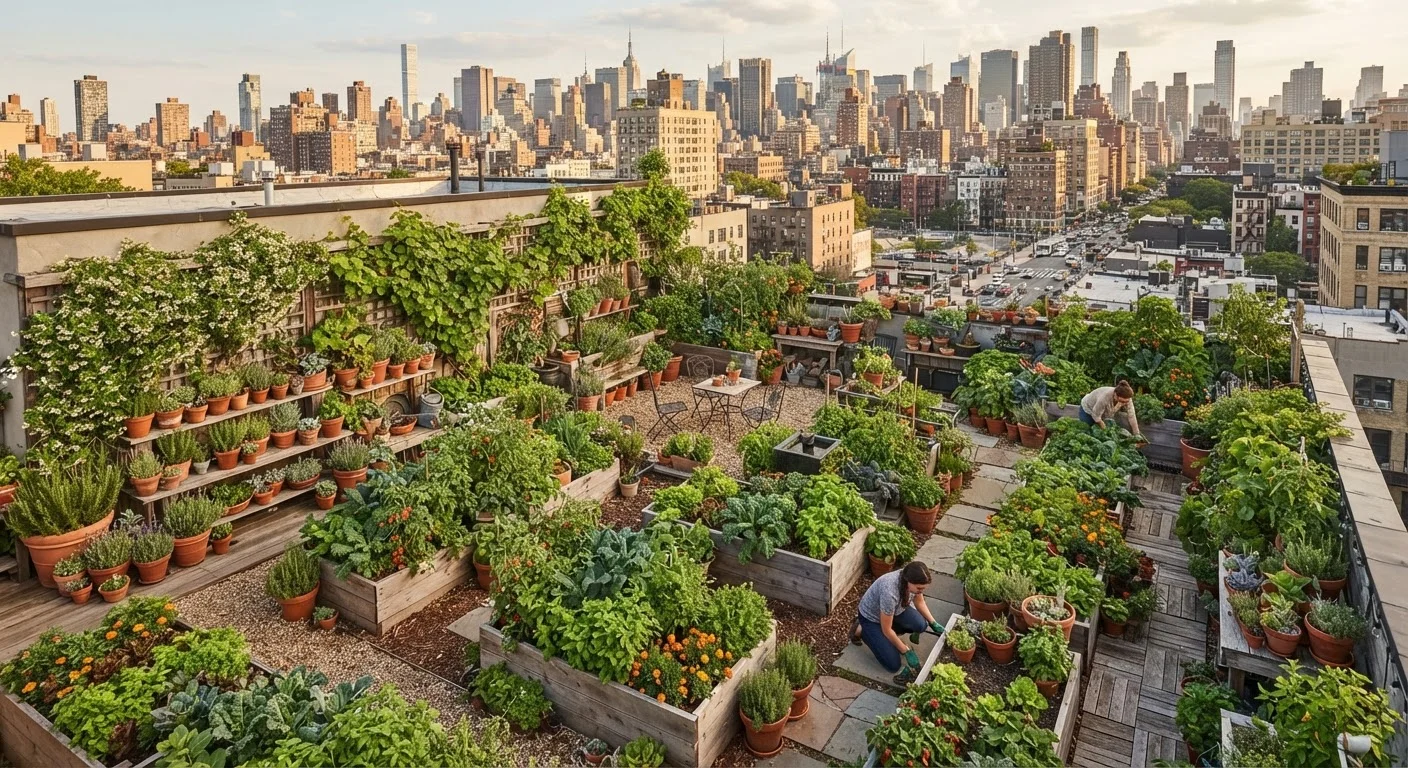
For rooftop gardens, always verify load-bearing capacity with your building's management or a structural engineer before adding soil and planters. Wet soil is significantly heavier than dry - lightweight growing media and shallow-rooted crops become practical priorities at height.
Track Sun Hours Before You Plant
Spend one full day noting when direct sunlight hits your growing area and for how long. Do this in each season if possible, since urban sun angles shift significantly between summer and winter. This single exercise will save you from planting sun-lovers in shade and vice versa.
Choosing the Right Containers
Containers are your primary growing infrastructure in urban settings. The right choice affects drainage, root development, water retention, and even temperature regulation.
- Material: Terracotta breathes well but dries quickly - useful in humid climates, challenging on hot rooftops. Lightweight plastic retains moisture and suits balcony weight limits. Fabric grow bags promote air pruning of roots and prevent waterlogging.
- Size: Bigger is almost always better. Shallow pots restrict root depth and dry out rapidly. Tomatoes and peppers need at least 5-gallon containers; herbs can work in smaller 1-2 gallon pots.
- Drainage: Every container must have drainage holes. Sitting water at the root zone causes rot faster than any other single factor.
For a deeper look at how drainage, soil choice, and watering habits interact, see our resource on container gardening habits.
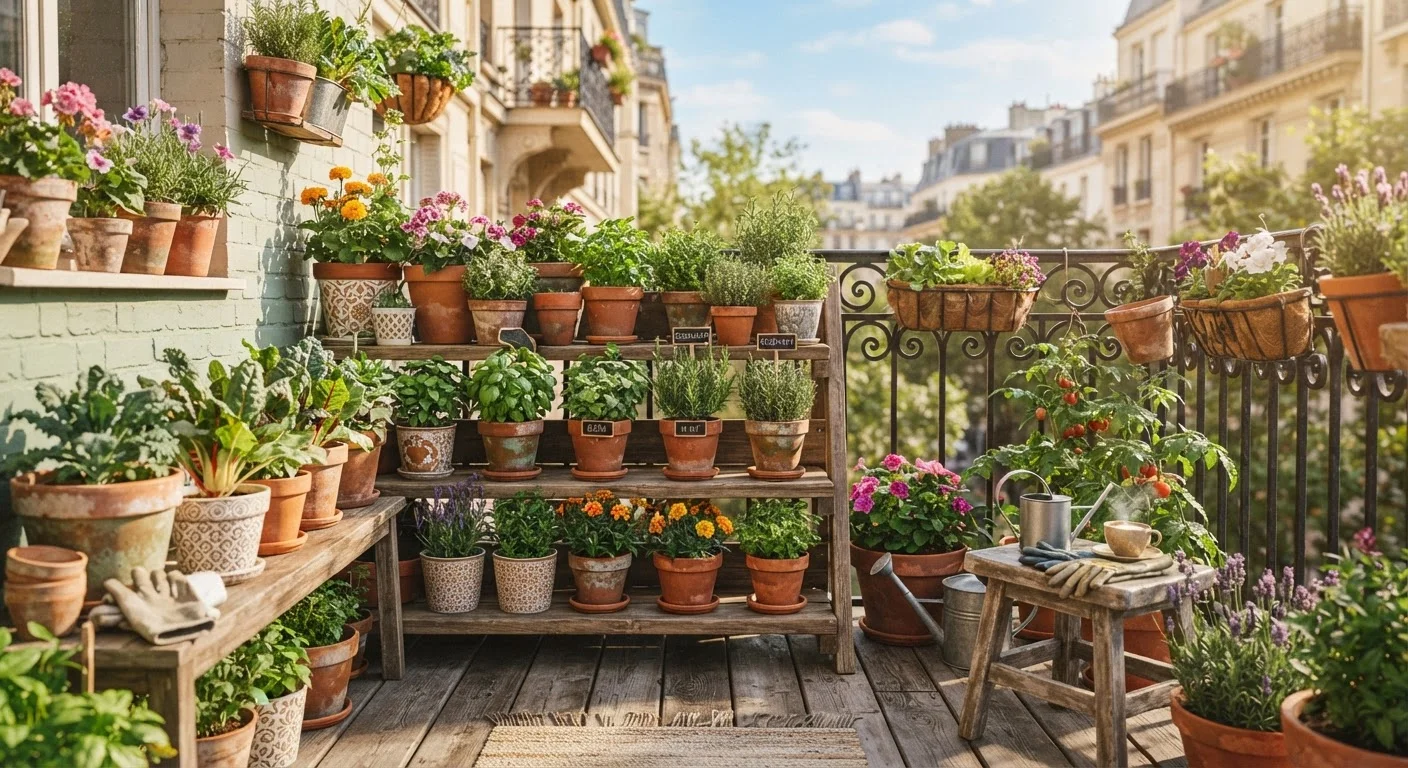
Group containers together to create a microclimate - clustered pots retain moisture longer and buffer temperature swings better than isolated ones.
Plants lose water through leaves (transpiration), and grouped containers raise local humidity slightly, reducing stress in hot or windy urban locations.
Use saucers under containers in summer to act as a small water reserve, but remove them in cooler months to prevent root rot from pooled water.
This simple seasonal adjustment accounts for the shift in evaporation rates as temperatures drop, protecting roots during the wetter, cooler months when drainage matters most.
Soil, Water, and Feeding
Garden soil from the ground is unsuitable for containers - it compacts, drains poorly, and introduces pests. Use a quality potting mix formulated for containers, or blend your own from compost, perlite, and coco coir. A good urban potting mix holds moisture while still draining freely within 30-60 seconds of watering.
Watering rhythm is where most urban gardeners struggle. Container plants dry out faster than in-ground beds, especially in summer and on windy rooftops. Finger-test soil 2 inches deep daily during growing season: water when it feels dry. Consistent underwatering stresses plants more than occasional overwatering.
Nutrients in potting mix deplete within 4-6 weeks of active growth. Supplement with a balanced slow-release granular fertilizer at planting, then liquid-feed every 2-3 weeks during the growing season. Leafy greens prefer nitrogen-forward feeding; fruiting plants like tomatoes and peppers need more phosphorus and potassium once flowering begins.
6-8 hrs
Daily sun most edibles require
A widely cited guideline in horticultural extension resources for fruiting vegetables and most herbs.
4-6 weeks
Before potting mix nutrients deplete
Container gardening guides from cooperative extension programs note that nutrients in commercial potting mix exhaust quickly under regular watering.
7-14 days
Microgreen harvest window
Microgreens grown on a sunny windowsill or under a grow light reach harvest stage within two weeks, making them one of the fastest food crops available.
Selecting Plants for Urban Conditions
Match plants to your actual conditions, not to what you wish you had. The most productive urban gardens succeed because the grower is honest about light, space, and time commitment.
High-performers for constrained spaces
- Herbs: Basil, mint, chives, and parsley adapt to windowsill growing. Mint spreads aggressively - always grow it in its own container.
- Leafy greens: Lettuce, spinach, and chard tolerate partial shade and grow fast enough for cut-and-come-again harvesting.
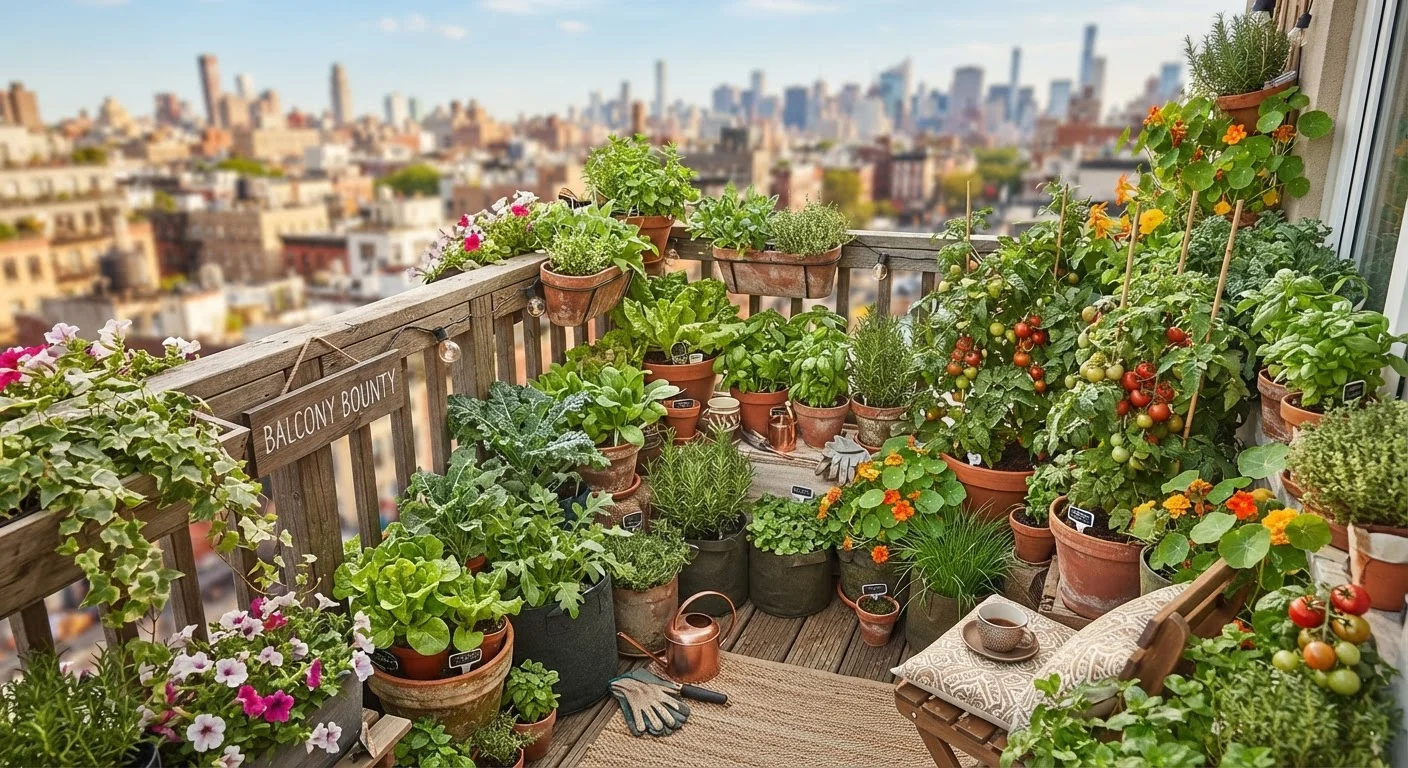
- Compact fruiting plants: Dwarf tomato cultivars, chili peppers, and strawberries produce well in 5-gallon containers on sunny balconies.
- Microgreens: Ready in 7-14 days on a windowsill, requiring no outdoor space at all.
If you're working specifically from a balcony, our guide on growing food on a balcony covers crop selection and container layout in detail.
“The difference between a thriving urban garden and a disappointing one almost always comes down to matching the plant to the actual conditions - not the conditions you hope to have.”
— Home & Living Editorial Team, Gardening & Home Improvement Editors
Managing Pests and Problems
Urban gardens aren't pest-free - aphids, fungus gnats, spider mites, and whiteflies all find their way to container plants. The good news is that early detection almost always prevents serious damage.
Check the undersides of leaves weekly. Most infestations are visible to the naked eye before they escalate. Integrated pest management (IPM) means starting with the least disruptive intervention: remove pests by hand, rinse plants with water, or introduce beneficial insects where practical. Sticky yellow traps catch fungus gnats without chemicals. Neem-based sprays address a range of soft-bodied insects when mechanical methods aren't enough.
Avoid Pesticides Near Edibles
Broad-spectrum chemical pesticides applied to food crops can leave residues that are difficult to remove at harvest. If you're growing edibles, exhaust physical and biological control options first. Always read label instructions thoroughly before applying any spray product, and keep treated plants away from areas where children or pets spend time.
Overwatering is the most common non-pest problem in urban gardens, and it mimics many pest symptoms - yellowing leaves, stunted growth, wilting despite wet soil. Before treating for pests, always rule out watering issues first.
Seasonal Planning and Year-Round Growth
One of the advantages of container gardening is flexibility. Unlike in-ground beds, you can move containers to follow seasonal sun angles, shelter them from early frost, and swap out summer crops for cool-season varieties in autumn.
A simple seasonal rotation for most US urban growers:
- Spring: Start cool-season crops - lettuce, peas, spinach, kale. Sow seeds indoors 4-6 weeks before last frost.
- Summer: Transition to heat-lovers - tomatoes, basil, peppers, beans.
- Autumn: Return to cool-season greens; extend the season with a simple cold frame or row cover over containers.
- Winter: Focus on indoor herbs and microgreens near windows; use the off-season for planning and soil amendment.
Before your first planting season, it's worth working through the essentials of garden setup - from soil testing to spacing - so you avoid common first-year pitfalls. And if you're weighing whether to add raised beds to a rooftop or terrace, our overview of raised beds vs. in-ground planting lays out the practical trade-offs clearly.
Growing Food on a Balcony: A Practical Starting Point
A focused guide to turning a balcony into a productive food-growing space using containers, smart crop selection, and condition-matching.
Reading Your Garden's Light
Learn how to accurately assess full sun, partial shade, and dappled light in your urban space - the most critical pre-planting skill for any grower.
Before You Plant Your First Garden: A Setup Checklist
A pre-planting checklist covering soil testing, tool selection, and spacing plans to help first-time growers avoid common setup mistakes.
Local Cooperative Extension Service
US land-grant universities run free cooperative extension programs with region-specific planting calendars, pest identification tools, and soil testing guidance.