Assess Your Balcony Before You Buy Anything
The single biggest mistake first-time balcony growers make is purchasing pots and seeds before understanding what their space actually offers. Three factors govern everything: light, load capacity, and exposure.
Light is non-negotiable for edible crops. Before choosing what to grow, track how many hours of direct sun your balcony receives on a typical day. A south- or west-facing balcony in full sun opens up the widest range of crops. A north-facing or partially shaded space still has options - leafy greens and herbs like mint and parsley tolerate lower light well. Read our guide to reading garden light before you commit to any planting plan.
Load capacity matters more than most beginners expect. Wet soil and ceramic pots are heavy. If you're renting, check with your building management about weight limits - most standard apartment balconies are rated for a specific load per square meter. Lightweight containers (fabric grow bags, plastic planters) are a practical solution where load is a concern.
Wind exposure on upper-floor balconies can desiccate soil rapidly and physically damage young plants. Trellises, railing planters, or a simple windbreak screen can reduce this significantly without blocking airflow entirely.
Container mix
A specially formulated growing medium for pots and planters, designed to drain well and resist compaction - different from standard garden or topsoil.
Air pruning
A process where roots that reach the edge of a fabric container are naturally stopped and encouraged to branch, producing a denser, healthier root system.
Cut-and-come-again
A harvesting method where you trim outer leaves from crops like lettuce rather than pulling the whole plant, allowing it to keep producing over many weeks.
Hardening off
Gradually acclimatizing seedlings grown indoors to outdoor conditions - sun, wind, and temperature variation - before leaving them outside permanently.
Perlite
A lightweight volcanic material often mixed into potting compost to improve drainage and prevent the soil from becoming dense and waterlogged.
Choosing Containers That Actually Work
Container choice shapes root health, moisture retention, and how much you'll be watering. The core rule: match container depth to the root depth of your intended crop.
- 6-8 inches deep: Herbs, lettuce, spinach, radishes, and green onions
- 10-12 inches deep: Peppers, bush beans, dwarf peas, and most compact varieties
- 14-18 inches deep: Cherry tomatoes, cucumbers, and larger compact varieties
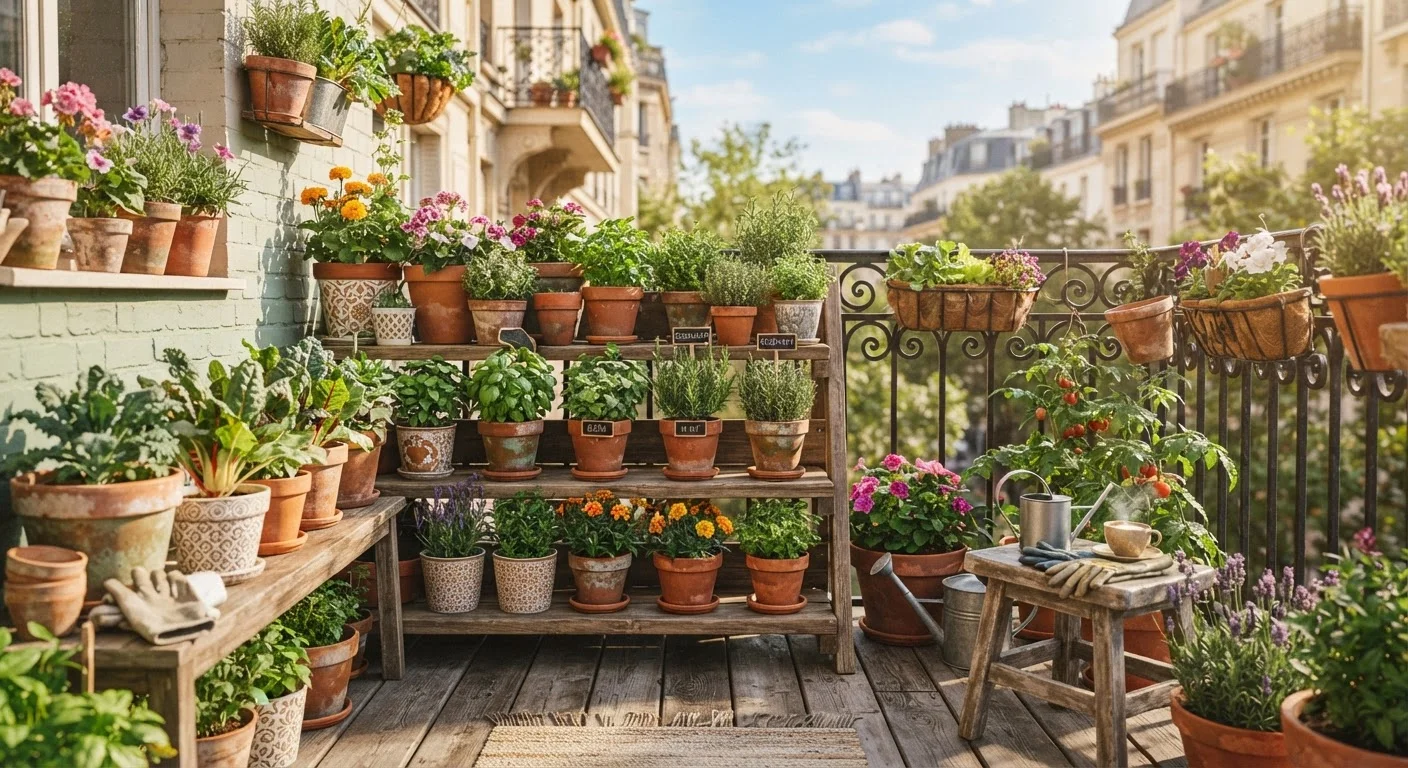
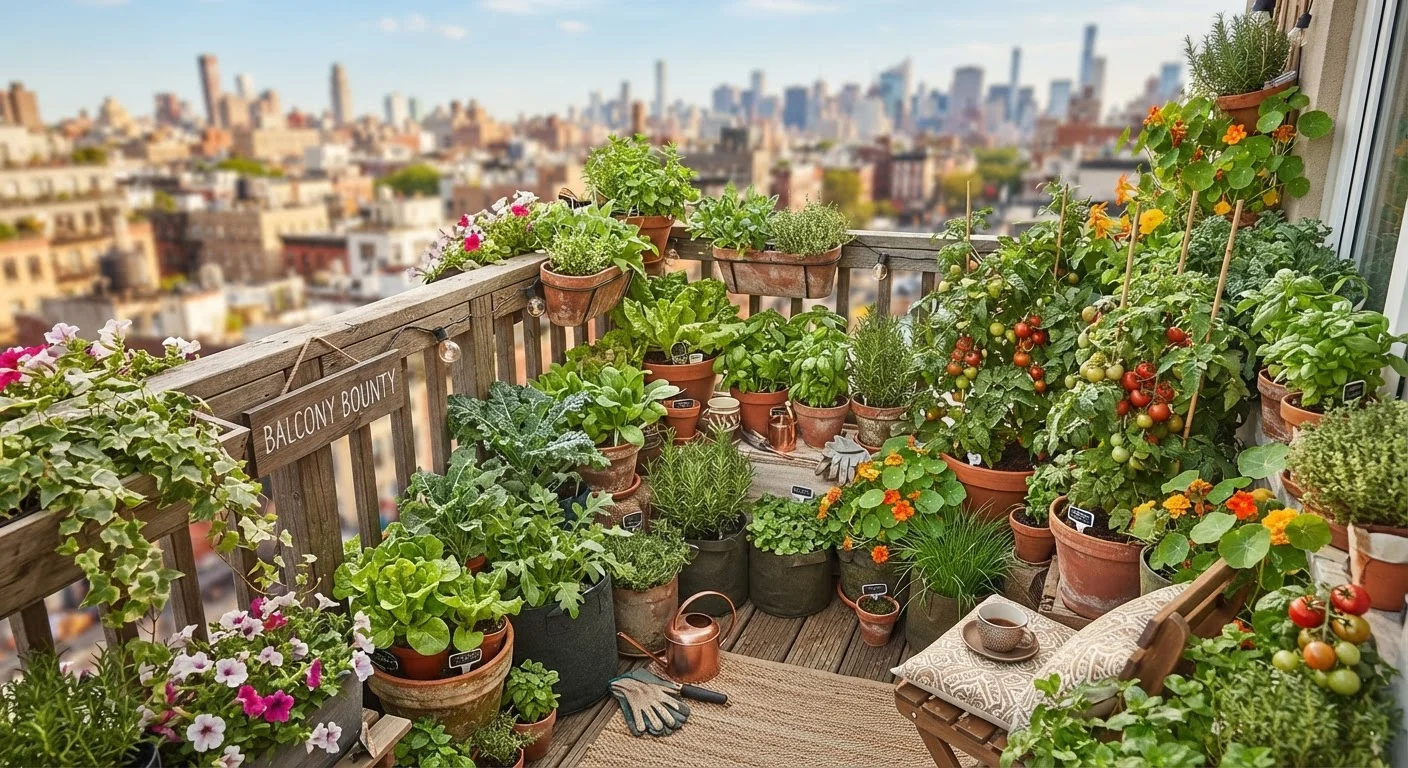
Material matters too. Terracotta looks appealing but dries out quickly and adds weight. Fabric grow bags offer excellent drainage and air pruning of roots, making them a popular choice for edibles. Plastic containers are lightweight and retain moisture well - a practical default.
Whatever the material, drainage holes are essential. Waterlogged roots suffocate quickly. If a pot has no drainage holes, it should not be used for edibles. Our container gardening habits guide covers drainage and soil selection in depth.
Fabric Grow Bags Are Underrated
If you're undecided on container type, fabric grow bags are worth serious consideration for a first balcony setup. They're lightweight, affordable, fold flat for off-season storage, and their breathable walls help prevent overwatering by allowing excess moisture to evaporate through the sides. They perform particularly well for tomatoes, peppers, and potatoes.
Which Crops Suit Balcony Conditions
Start focused. Choosing two or three crops you'll actually eat - and that match your light conditions - will produce more satisfaction than an ambitious mix of competing plants.
Reliable choices for beginners:
- Herbs (basil, chives, parsley, mint): Low maintenance, rewarding returns, and useful year-round in the kitchen. Mint spreads aggressively - keep it in its own pot.
- Lettuce and salad greens: Fast-maturing, cut-and-come-again crops that work well in shallower containers and partial shade.
- Radishes: Germinate quickly (often within a week), mature in around 25-30 days, and need minimal depth. An ideal first crop for confirming your setup works.
- Cherry tomatoes: More demanding in terms of sunlight (at least 6 hours) and support, but highly productive per square foot when conditions are right. Choose a compact or patio variety.
- Dwarf peas or beans: Productive in larger containers with some vertical support. They also fix nitrogen, which benefits nearby plants.
For a broader view of growing in tight urban spaces, see our urban gardening end-to-end guide.
Soil, Watering, and Feeding Essentials
Garden soil compacts in containers, restricting drainage and root growth. Use a quality container or potting mix - ideally one amended with perlite or compost for aeration. Peat-free options are increasingly available and are worth choosing for environmental reasons.
Watering rhythm: Container plants dry out faster than in-ground beds, especially on sunny, windy balconies. Check soil moisture daily during warm months by pressing a finger an inch into the soil - if it's dry at that depth, water thoroughly until it drains from the bottom. Avoid shallow, frequent splashing; deep, less frequent watering encourages roots to grow downward.
Feeding: Potting mixes typically contain nutrients for the first four to six weeks. After that, regular feeding with a balanced liquid fertilizer - or one higher in potassium for fruiting crops like tomatoes - keeps production going. Follow product label instructions; overfeeding causes its own problems.
Fertilizer Timing Matters
Most bagged potting mixes include a slow-release fertilizer that supports plants through their earliest weeks. Starting to feed too early can cause fertilizer burn on young roots. Wait until plants are visibly established and the initial nutrient charge has had time to be used - typically four to six weeks after potting up.
For a full pre-season setup checklist - including soil testing and tool selection - see Before You Plant Your First Garden.
Common Beginner Mistakes to Sidestep
Even a well-planned balcony garden can struggle when a few common patterns creep in. Recognizing them early saves time and frustration.
- Overplanting
- Cramming too many plants into one container creates competition for nutrients, water, and light. Each plant should have enough space for its canopy to develop without shading neighbors.
- Ignoring weight distribution
- Group heavier planters near the structural supports of the balcony (walls, posts) rather than massing them at the outer railing edge.
- Inconsistent watering
- Letting soil alternate between bone-dry and waterlogged stresses roots and contributes to issues like blossom end rot in tomatoes. Steady and moderate beats erratic and heavy.
- Skipping hardening off
- If you start seeds indoors or buy nursery seedlings, introduce them to outdoor conditions gradually over a week before leaving them outside full-time. Abrupt exposure to sun, wind, and temperature swings can set plants back significantly.
Don't Skip the Hardening-Off Step
Nursery seedlings and indoor-started plants have been raised in sheltered, stable conditions. Moving them directly onto a sunny, breezy balcony can cause leaf scorch, wilting, or stunted growth. A seven-to-ten day transition period - starting with a few hours of outdoor exposure per day and gradually increasing - dramatically improves survival and early growth rates.