Why Crop Choice Matters More Than Skill Level
Most first-time gardeners assume they're doing something wrong when a plant fails. Often, though, the issue is simply that the plant had narrow requirements the grower didn't know about. Choosing forgiving crops flips that dynamic - these are plants that genuinely tolerate a range of conditions, bounce back from missed waterings, and produce a harvest even when conditions aren't perfect.
Before you put anything in the ground, it's worth understanding your growing environment. Assessing your garden's light is the single most useful thing you can do before selecting crops, since even the most forgiving plants need roughly the right light exposure to thrive. Once you know what you're working with, the twelve crops below give you a strong, confidence-building foundation.
Radishes
Radishes are arguably the most beginner-friendly vegetable that exists. Most varieties are ready to harvest in as little as three to four weeks from direct sowing, which means you get real feedback fast. They tolerate cooler soil, grow in relatively poor ground, and don't need much space. If you're testing a new bed or growing area, planting radishes first is a practical way to assess conditions before committing to slower crops.
Radishes germinate quickly and give beginners fast, honest feedback on their growing conditions.
Lettuce
Leaf lettuce varieties are cut-and-come-again crops - you harvest outer leaves while the plant keeps producing, extending the harvest window considerably. Lettuce prefers cooler temperatures but tolerates partial shade, making it one of the few edibles that performs well in lower-light urban spots. It also grows well in shallow containers, so balcony and windowsill growers aren't left out.
Leaf lettuce tolerates partial shade and produces repeatedly from a single planting.
Kale
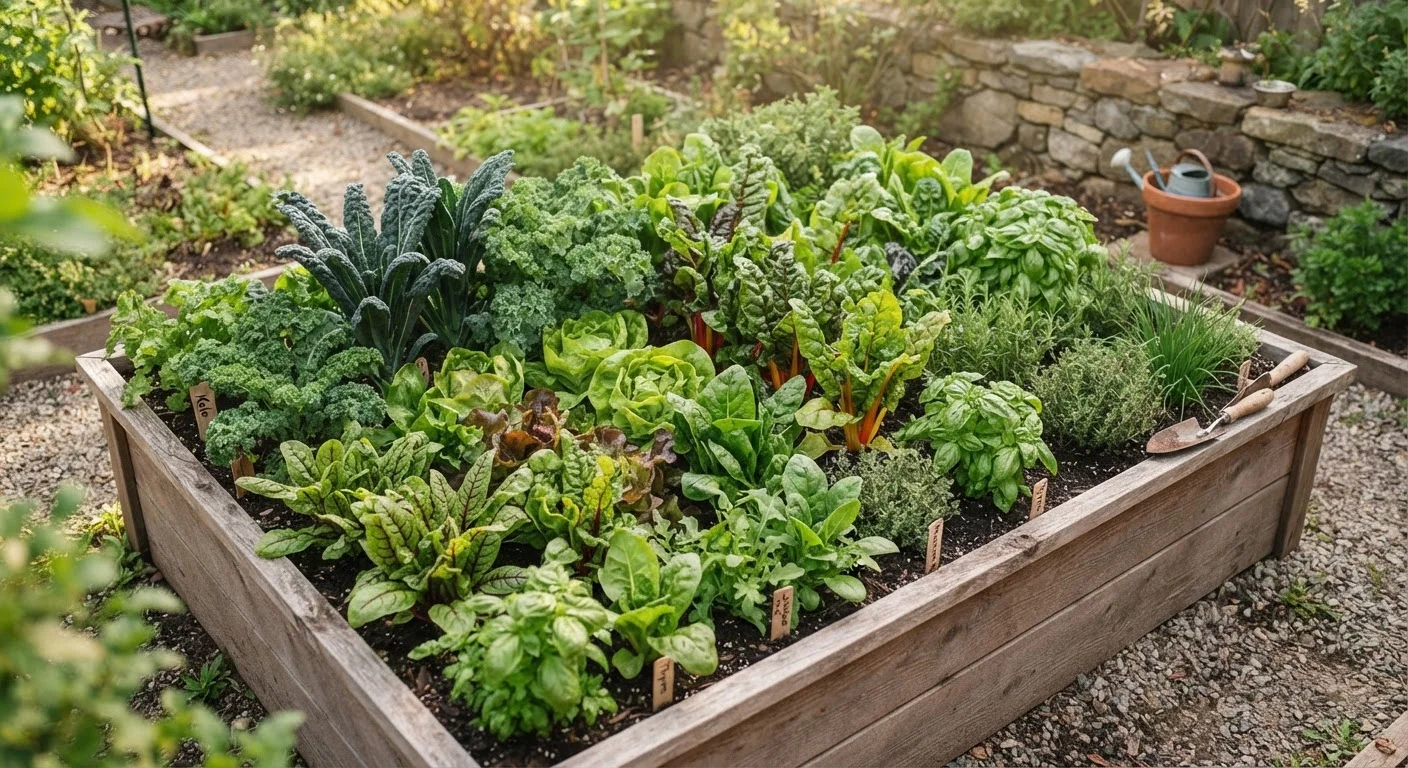
Kale is nutritious, cold-hardy, and remarkably unfussy about soil quality. It withstands light frost - in fact, a frost often improves its flavor - and it bounces back from inconsistent watering better than most leafy greens. Young leaves are tender enough for salads; older leaves work well cooked. It's one of the few crops that bridges warm and cool seasons in many US climates.
Kale tolerates light frost and poor soil, making it one of the most resilient edible plants available.
Zucchini
Zucchini plants are productive almost to a fault - experienced gardeners joke about the surplus. For beginners, that productivity is reassuring. The plants are large, so they need adequate ground space, but they're tolerant of irregular watering once established and they signal stress visibly, making it easy to course-correct. Harvest fruits while they're still small for better flavor and to encourage continued production.
Zucchini's vigorous productivity means beginners almost always see results, even in imperfect conditions.
Green Beans (Bush Varieties)
Bush bean varieties don't need staking or trellising, which removes a common point of frustration. They fix their own nitrogen from the atmosphere (with the help of soil bacteria), reducing fertilizer needs. Direct sow them after your last frost date and they'll establish quickly. Bush beans are also relatively drought-tolerant once they've germinated, giving new growers some flexibility around watering schedules.
Bush beans fix their own nitrogen and need no support structures - ideal for low-intervention beginners.
Cherry Tomatoes
Standard tomatoes can be demanding - sensitive to temperature swings, prone to disease, and slow to ripen. Cherry tomato varieties are considerably more forgiving. They tolerate slightly inconsistent watering (though blossom-end rot remains a risk if watering is very erratic), ripen faster than larger varieties, and tend to produce prolifically even in containers. Start seedlings indoors six to eight weeks before your last frost date for best results.
Cherry tomatoes ripen faster and tolerate more variability than larger tomato varieties.
Spinach
Spinach thrives in cool weather and can be sown early in spring or again in late summer for a fall harvest. It grows quickly, tolerates light shade, and doesn't need rich soil to produce usable leaves. In warmer climates it will bolt (go to seed) in summer heat, but that's predictable and manageable once you know to expect it. For succession harvests, sow small batches every two weeks in spring.
Spinach grows quickly in cool seasons and tolerates the kind of variable conditions beginners often provide.
Basil
Among herbs, basil is beginner-friendly because it grows fast and gives clear visual signals when something is wrong - yellowing leaves usually mean overwatering or cold stress, and wilting in afternoon heat is normal and not cause for alarm. It thrives in containers, pairs well with tomatoes in the garden, and produces abundantly when you pinch back flower heads before they fully open. Basil needs warmth, so don't plant it out until nighttime temperatures stay reliably above 50°F.
Basil communicates its needs visually, making it easy for beginners to learn from and correct.
Mint
Mint is almost aggressive in its willingness to grow - which is worth noting upfront, because in open ground it spreads via underground runners and can take over a bed. For beginners, the practical solution is to grow it in a container. In a pot, it's nearly impossible to kill through neglect, tolerates a range of light conditions, and produces continuously through the growing season. It's a high-reward low-effort crop that builds genuine confidence.
Grown in a container, mint is nearly indestructible and produces throughout the entire growing season.
Sunflowers
Sunflowers aren't edible in the same way as the others on this list, but they serve a real function in a beginner's garden: they're very hard to fail with, they attract pollinators that benefit your other crops, and they provide a powerful confidence boost early in the growing journey. Direct sow them after your last frost, give them full sun, and water moderately. Annual varieties complete their cycle in a single season with minimal intervention.
Sunflowers attract beneficial pollinators and give beginners an easy, visible win in the first season.
Swiss Chard
Swiss chard bridges warm and cool seasons in a way that few vegetables do - it tolerates both light frost and moderate summer heat. Like lettuce, outer leaves can be harvested continuously while the plant keeps growing. It's adaptable to containers, performs well in partial shade, and isn't particularly demanding about soil nutrition. The bright-stemmed varieties also add visual interest to a small space.
Swiss chard tolerates both frost and heat, making it one of the longest-producing beginner crops.
Garlic
Garlic is typically planted in fall (in most US climates) and harvested the following summer - a long timeline that puts it in a different category from the faster crops on this list. Its appeal for beginners is how little management it needs in between: plant the cloves, mulch lightly, and largely leave them alone until harvest. Garlic tolerates imperfect soil, requires minimal watering once established, and the harvest cue (yellowing lower leaves) is easy to read.
Garlic requires almost no mid-season management, making it ideal for beginners who prefer low-maintenance crops.
Putting It All Together
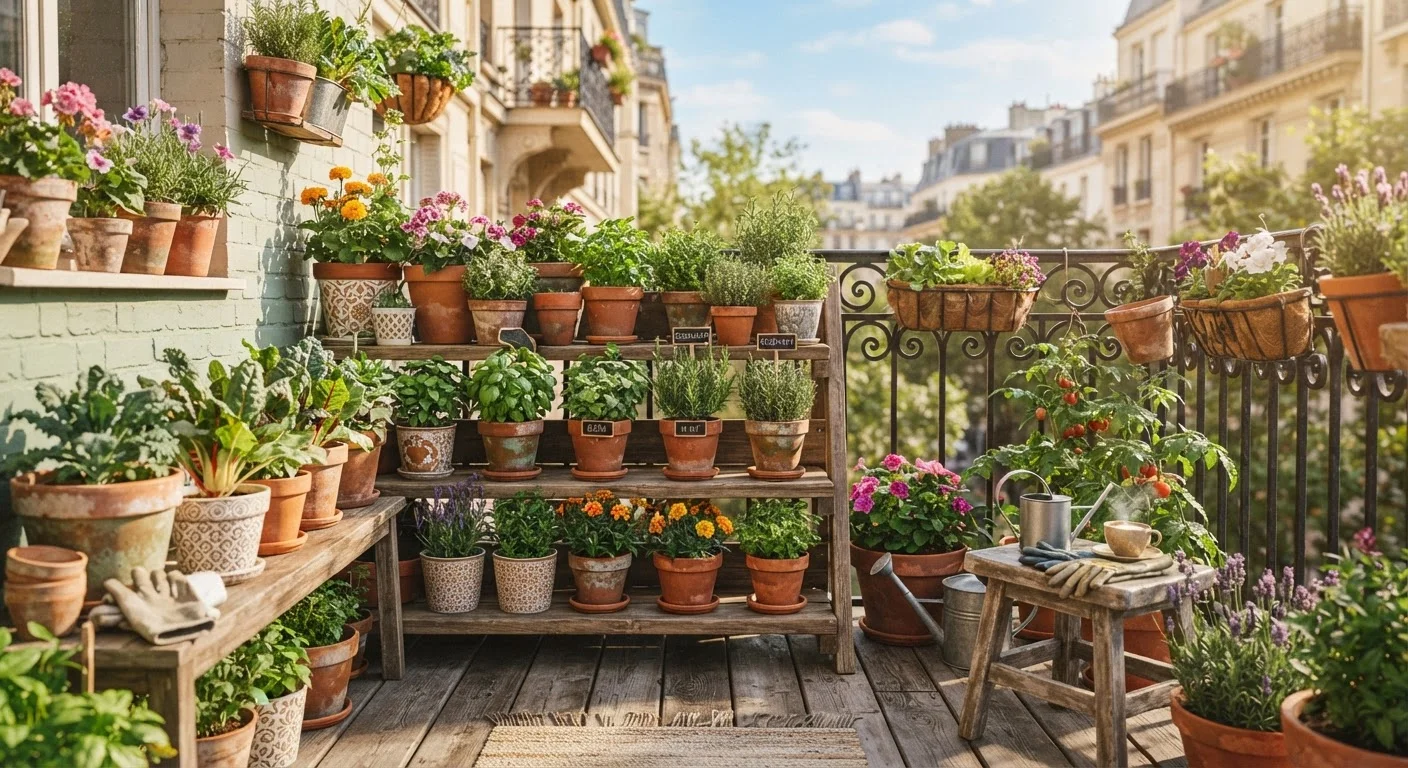
Notice that almost every crop on this list shares a few traits: relatively fast results, tolerance for imperfect soil, and flexibility in how they're grown - many work just as well in containers as in the ground. If you're gardening in an apartment or on a balcony, container gardening habits will help you get consistent results from these plants in pots.
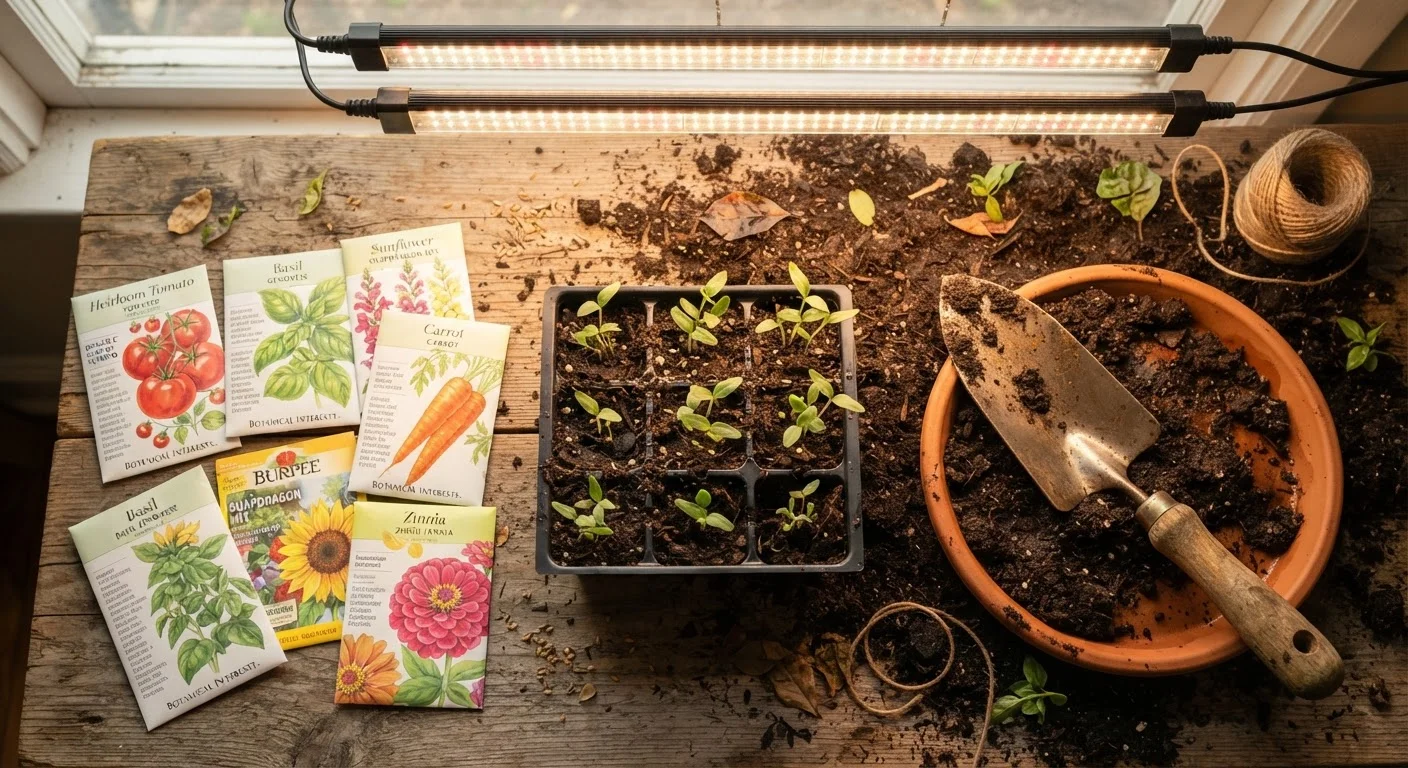
If you're deciding whether to direct sow or start seeds indoors, that choice depends on the specific crop and your local last-frost date. Our guide on direct sowing vs. starting seeds indoors walks through the logic for each scenario. And if you've had seedlings fail before germination fully takes hold, common reasons seedlings die after germination covers the most likely culprits.
Start Small, Then Expand
Resist the temptation to plant everything at once. Starting with three to five crops from this list lets you build genuine skill and observation habits before scaling up. A smaller, well-managed garden nearly always outperforms a large, overwhelmed one in the first season.
When you're ready to expand beyond this list, use the pre-planting setup checklist to make sure your soil, spacing, and tools are in order before adding more demanding crops.