Why Seedlings Die After Germination
Watching seeds sprout is satisfying - until they collapse a week later for no obvious reason. The frustrating truth is that post-germination death is almost always caused by a handful of preventable mistakes. Young seedlings are in one of their most vulnerable growth stages: their root systems are minimal, their stems are soft, and they have little tolerance for environmental stress. Understanding what goes wrong - and why - is the fastest path to getting them to transplant size.
Whether you're growing herbs on an apartment windowsill or starting tomatoes indoors before the last frost, the core problems are consistent. This guide breaks down the most common errors, explains the underlying causes, and gives you concrete fixes to try right away. If you're also reassessing your light conditions, our guide on reading your garden's light will complement what you learn here.
The Most Common Seedling Mistakes
These errors account for the vast majority of seedling losses. Most are easy to correct once you know what to look for.
Overwatering the growing medium, keeping soil perpetually saturated rather than evenly moist.
Why it happens: New growers often equate more water with more care, and it's hard to see when soil is too wet versus just right without checking drainage.
Using garden soil or reused potting mix instead of a sterile seed-starting medium.
Why it happens: Garden soil seems like a natural choice, but it compacts easily and carries fungal spores, bacteria, and weed seeds that overwhelm seedlings.
Placing seedlings in low or indirect light, causing them to stretch and weaken - a condition called etiolation.
Why it happens: A windowsill can look bright but often delivers only a fraction of the light seedlings need, especially in winter months or north-facing rooms.
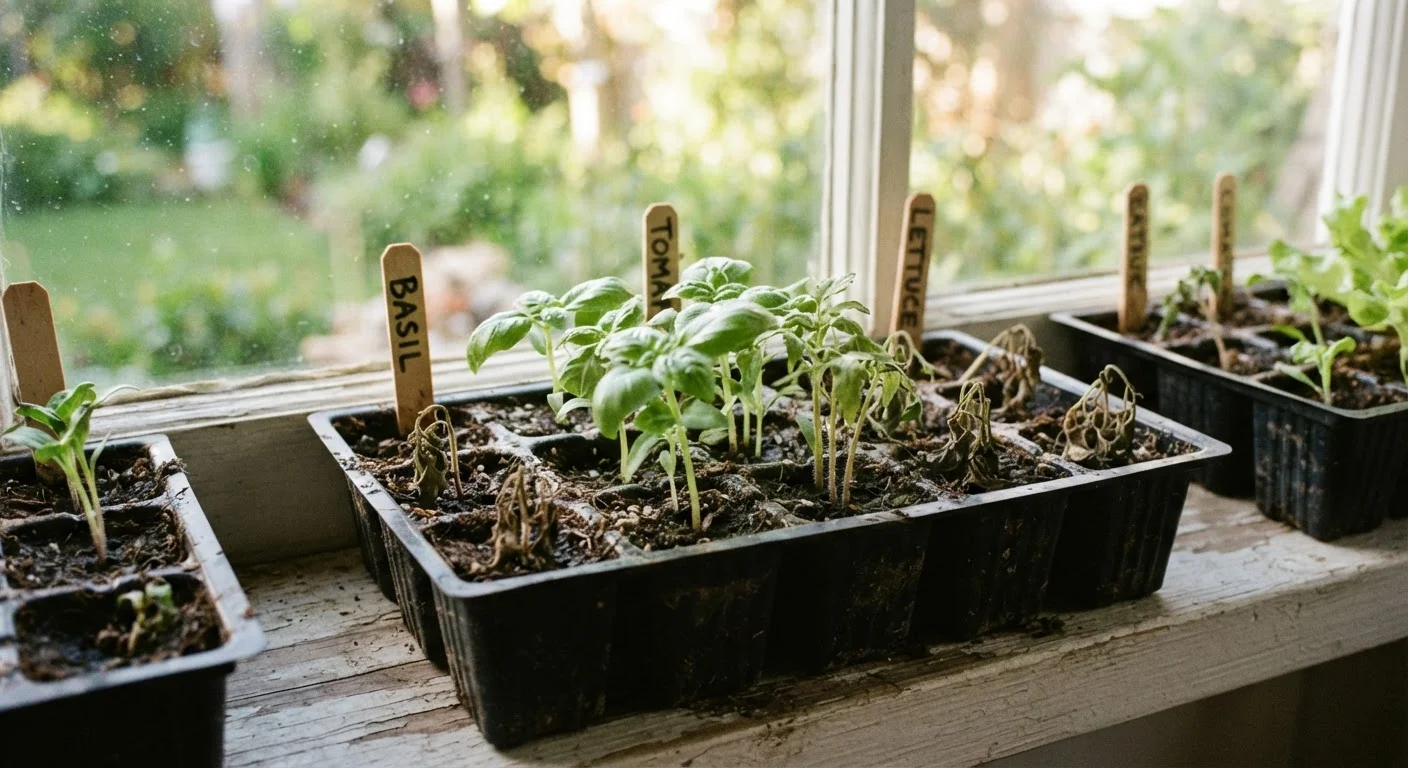
Allowing damping off - a fungal condition that causes stems to rot and pinch at soil level - to take hold undetected.
Why it happens: Damping off thrives in warm, wet, stagnant conditions, precisely the environment many indoor seed trays provide. It spreads quickly and is often mistaken for simple wilting.
Starting seeds in containers that are too large, which leads to excess moisture retention around the root zone.
Why it happens: It feels intuitive to give plants room to grow, but oversized containers hold far more water than a tiny root system can absorb, creating persistently wet conditions.
Creating Conditions Where Seedlings Survive
70-90%
Seedling failures linked to overwatering or poor drainage
Horticultural extension programs consistently cite excess moisture as the primary cause of indoor seedling loss among home growers.
14-16 hrs
Daily light needed by most vegetable seedlings
University cooperative extension guidelines suggest most vegetable starts require significantly more light than a typical indoor window provides unaided.
Beyond avoiding individual mistakes, think of seedling success as a system. Sterile starting mix, appropriately sized containers with drainage holes, and consistent watering habits work together. A spray bottle or a watering can with a fine rose head helps you apply water gently without displacing fragile roots or compacting the soil surface.
If you're growing in containers - which most indoor and urban growers are - apply the same drainage principles that sustain mature plants. Our piece on container gardening done right covers soil choice and watering rhythm in detail. Seedlings started well also make stronger transplants, setting up your edible or ornamental garden for a more productive season. For beginner growers still choosing what to plant, twelve crops that forgive first-time growers lists species that are genuinely resilient to early mistakes.
Don't Rescue Damping-Off Victims
Once a seedling collapses from damping off, it cannot be saved. Attempting to treat it in place risks spreading the fungal pathogen to healthy neighbors. Remove affected seedlings promptly, dispose of them away from your growing area, and assess whether your watering habits or airflow need adjusting before the problem spreads.