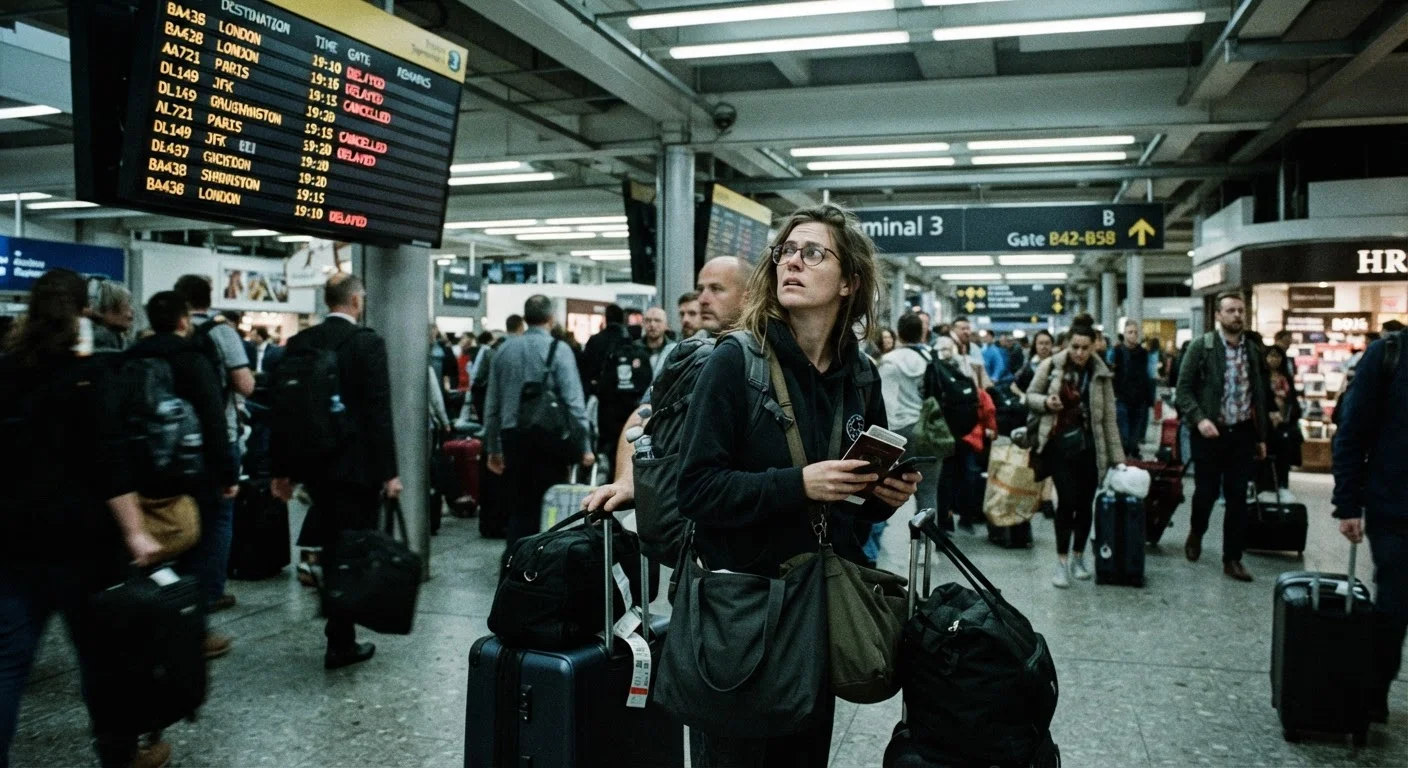

The Case for Arriving Without a Plan
There's a legitimate argument for showing up with nothing booked. The psychological relief of an open itinerary is real - no schedule to defend, no fear of missing a pre-paid experience, no friction between what you planned and what the city is actually offering on that particular day. For experienced travelers, this freedom often translates into more authentic encounters: the neighborhood restaurant found by walking rather than searching, the museum stumbled into rather than budgeted for.
Cities built around high tourist throughput - think major European capitals, well-connected Southeast Asian hubs, or large US metros - generally have the infrastructure to absorb you. Hostels, hotels, and short-term rentals are plentiful enough that same-day bookings rarely leave you stranded. Transit is legible. English-language wayfinding is common. The cost of not planning ahead, in these places, is usually minimal.
Full flexibility to follow the city's lead
Without pre-booked commitments, you can spend an extra morning in a neighborhood that surprises you or skip an attraction that isn't resonating - decisions that locked itineraries rarely allow.
Reduced pre-trip planning burden
For busy professionals, the hours saved not researching and booking every detail in advance is a real benefit, especially on shorter trips where planning time can rival travel time.
Openness to unexpected local recommendations
Conversations with locals, hostel staff, or other travelers often surface better options than pre-trip research - but only if you're not already locked into a schedule.
Lower cognitive load during the trip itself
There's no itinerary to manage or fall behind on, which for some travelers produces a more relaxed, present experience - particularly valuable on trips meant to decompress.
For a deeper look at how to structure the opposite approach, see The Anatomy of a Well-Planned Trip - useful context for knowing exactly what you're opting out of.
When the No-Plan Approach Breaks Down
The appeal of spontaneity runs into hard constraints quickly in certain destinations. Capacity-limited cities - coastal towns with a handful of guesthouses, mountain destinations where trail access is managed through permits, or medinas where quality accommodation fills weeks out during high season - simply don't have the surplus to accommodate last-minute arrivals reliably.
The financial penalty is the other underappreciated factor. Same-day hotel rates in high-demand markets can run significantly above advance-booking prices, and transportation booked at the last minute (domestic flights, trains on popular routes) compounds the cost. Why 'Winging It' Costs More Than You Think breaks down the specific patterns behind these costs if you want the numbers-side of this argument.
Same-day accommodation costs significantly more
In high-demand markets, last-minute hotel or short-term rental rates can be materially higher than advance prices, particularly during peak travel periods or local events.
Booking-required experiences become inaccessible
Popular restaurants, permit-required natural sites, and timed museum entries often book out days or weeks ahead - arriving without reservations means missing them or joining long standby queues.
Logistical friction eats into actual travel time
Time spent finding accommodation, comparing last-minute transport options, and orienting yourself without a plan is time not spent experiencing the destination - a real cost on short trips.
Fails completely in low-supply destinations
Cities and towns with limited accommodation inventory - remote areas, small coastal towns, festival destinations - may have nothing available on short notice, creating a genuine crisis rather than an inconvenience.
Higher stress for less experienced travelers
Travelers still learning to navigate foreign transit, currency, or cultural norms are already absorbing significant cognitive load; adding accommodation uncertainty compounds that stress significantly.
Culturally complex or logistically opaque destinations amplify the problem. Arriving in a city like Fez or Marrakech without a confirmed riad and some orientation research leads to a chaotic first day that can color the whole trip - see Morocco's Imperial Cities: A Practical Framework for Choosing Your Base for a concrete example of what prior orientation delivers there.
The Variables That Actually Determine Your Outcome
Whether unplanned travel succeeds or fails comes down to a handful of destination-specific factors, not a universal rule about spontaneity.
The Destination Does Most of the Work
The single strongest predictor of whether unplanned travel succeeds isn't traveler experience or budget - it's destination infrastructure. A city with deep accommodation supply, legible public transit, and walk-in-friendly attractions will absorb you. One without those features won't, regardless of how experienced you are. Assess the destination before you assess your own flexibility tolerance.
- Accommodation supply depth: A city with thousands of bookable properties absorbs walk-ins. A town with fifteen guesthouses does not.
- Transit legibility: Cities with clear, mapped public transit give you mobility on arrival. Car-dependent destinations or those with opaque bus systems punish the unprepared. Reading a Destination's Infrastructure Before You Book explains what to assess in advance.
- Booking-required experiences: If the thing you actually want to do - a specific restaurant, a national park slot, a guided experience - requires advance reservation, no-plan travel means you won't do it, or you'll pay a premium to someone who can arrange it last-minute.
- Season: The same destination can absorb or reject you entirely depending on when you arrive. Peak season removes most of the no-plan advantage even in high-capacity cities.
- Your own experience level: First-time visitors to a region spend cognitive energy on basics - currency, transit, tipping norms, local etiquette - that experienced travelers handle automatically. That bandwidth matters when you're also navigating without a plan.
If you're considering what a lighter-touch version of planning looks like - not rigid scheduling, but not pure spontaneity either - Rigid Itineraries vs. Open-Ended Travel: Finding the Right Balance makes the framework clear.
2-3x
Same-day vs. advance hotel rate premium
Industry pricing data consistently shows last-minute bookings in high-demand urban markets carrying a significant premium over equivalent rooms booked one to two weeks ahead.
60%+
Travelers who report itinerary regrets
Surveys by travel research organizations suggest the majority of travelers wish they had either planned more or planned less - indicating most default frameworks aren't well-calibrated to destination type.
The Minimum Viable Framework
The practical takeaway isn't to plan everything or plan nothing - it's to identify the two or three decisions that are genuinely hard to reverse on arrival and lock those in. One confirmed bed for the first night eliminates the worst-case scenario. One anchor activity (a walking tour, a restaurant reservation, a museum booking) gives you a starting point without dictating the rest of the trip.
Everything else can remain open. That combination - minimal anchoring, maximum flexibility - captures most of the upside of spontaneous travel while eliminating the failure modes that make it genuinely costly.
For solo travelers especially, having that minimal structure also provides a safety margin. Solo Travel Planning from Scratch covers how to think about contingency and safety when you're navigating a new city alone, which is worth reading alongside this framework. And for when things do go sideways despite preparation, Contingency Planning: What to Prepare for When Things Go Wrong Abroad covers the scenarios most travelers overlook.