Why Your Base City Choice Matters More Than You Think
Most travellers default to Marrakech because it appears most prominently in search results. That's a fine starting point - but it's a framework built on marketing volume, not personal fit. Morocco's four imperial cities - Fez, Marrakech, Meknes, and Rabat - operate at radically different frequencies, and choosing the wrong base can mean spending your entire trip fighting your environment rather than enjoying it.
The decision should be driven by three factors: how much sensory intensity you can sustain, how important transport connectivity is to your wider itinerary, and how much pre-planning you're willing to do before arrival. If you're the kind of traveller who prefers to land and figure it out, read our piece on when unplanned arrivals work - some of these cities are far more forgiving than others.
| Fez | Marrakech | Meknes | Rabat | |
|---|---|---|---|---|
| Medina navigability | Very difficult; guide recommended | Moderate; tourist-friendly zones | Manageable independently | Easy; compact and well-signed |
| Tourist infrastructure | Strong, medina-focused | Highest in Morocco | Limited but functional | Moderate, business-oriented |
| Crowd levels | High in peak season | Very high year-round | Low to moderate | Low |
| Day-trip options | Meknes, Volubilis, Ifrane | Atlas, Essaouira, Ouarzazate | Fez, Volubilis, Moulay Idriss | Casablanca, Chefchaouen |
| Best traveller profile | Culture-focused, unhurried | First-timers, logistics-driven | History seekers, budget-aware | Professionals, calm-pace seekers |
| Airport connectivity | Limited, connect via Casablanca | Strongest; most direct routes | No commercial airport | Good; serves North Africa routes |
Fez: The Most Rewarding - and Most Demanding - Choice
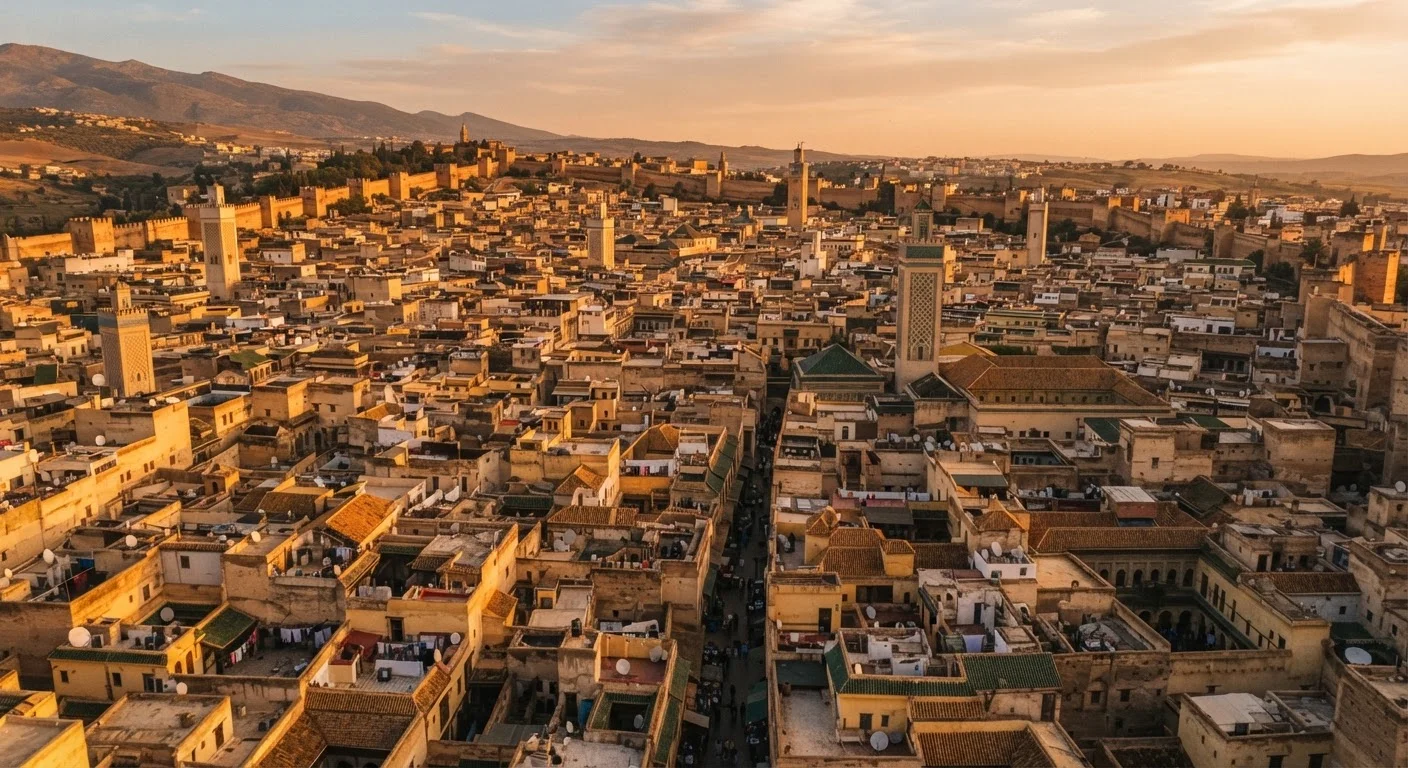
Fez el-Bali, the medina at the city's core, is the largest car-free urban zone in the world. That's not a marketing line - it means every interaction happens on foot, in narrow lanes that disorient even repeat visitors. The payoff is real: tanneries, Quranic schools, and craft workshops operating on centuries-old methods. For anyone genuinely interested in Islamic architecture and traditional Moroccan craft culture, no other city comes close.
The practical catch is that Fez has the steepest learning curve. Getting lost is not atmospheric after hour three. Hiring a licensed local guide for your first full day is the single highest-return investment you can make here. Budget for it. Also note that Fez's airport has fewer direct connections from US hubs than Marrakech - factor a connection through Casablanca into your planning.
Book Your Fez Guide Before You Arrive
Licensed guides in Fez are regulated by the Moroccan Ministry of Tourism and can be booked through your riad or reputable local operators. Rates are standardised, and a full-day orientation tour dramatically reduces the friction of navigating the medina independently. Treat it as essential trip infrastructure, not an optional add-on.
Marrakech: High Infrastructure, High Stimulation
Marrakech is the city that meets you halfway. Riad accommodation is abundant and well-reviewed, the airport handles direct European routes well, and the tourist ecosystem has been refined by decades of high-volume visitors. Djemaa el-Fna is genuinely spectacular at dusk - the square transitions from food stalls to musicians to storytellers in real time - but it's also extremely crowded and can feel performative after repeat visits.
Marrakech's real strength is as a logistics hub. Day trips to the Atlas Mountains, Essaouira on the Atlantic coast, and Ouarzazate are all well-serviced by organised transport. If your Morocco trip is one component of a broader itinerary, Marrakech makes it easiest to slot in, connect, and move on. For help structuring a multi-city Moroccan itinerary without overpacking each day, see our guide to building itineraries that actually work.
Meknes and Rabat: The Strategic Underdogs
Meknes is the imperial city that most travellers see only as a day trip from Fez - which is exactly why it works as a base. Sultan Moulay Ismail's 17th-century gates and granaries are genuinely monumental, the medina is navigable without a guide, and accommodation prices run noticeably lower than Fez or Marrakech. Its central location also makes the Roman ruins of Volubilis easily reachable. The limitation: fewer direct transport links and a thinner tourist infrastructure mean you'll need to be more self-sufficient.
Rabat, Morocco's capital, is the outlier in this group. It functions as a working government city with a compact, walkable medina and one of the country's most intact kasbah districts. The atmosphere is markedly calmer than Fez or Marrakech - less hustle, better urban infrastructure, and Atlantic ocean access within the city limits. For professionals who want to experience Moroccan history without being enveloped by the full intensity of medina life, Rabat is consistently underestimated. Before committing to any base, it's worth reading a destination's infrastructure - connectivity and logistics differ meaningfully across these four cities.
~10,000
Lanes in Fez el-Bali medina
Fez el-Bali is widely documented as one of the world's largest and most complex car-free urban areas, with thousands of interconnecting alleys.
4
UNESCO-listed imperial city medinas
All four imperial cities - Fez, Marrakech, Meknes, and the historic medina of Rabat - hold UNESCO World Heritage status, though each for distinct reasons.