What Companion Planting Actually Means
Companion planting is the practice of growing two or more plant species in close proximity, with the idea that their proximity benefits at least one of them. It draws on centuries of agricultural observation - the Three Sisters planting of corn, beans, and squash by Indigenous farmers of North America being one of the most well-documented and genuinely effective historical examples.
Where people get tripped up is treating the entire practice as a single verified system rather than a broad category of ideas with widely varying levels of evidence. Some combinations are backed by credible research. Others are gardening folklore that has been repeated so often it feels like fact. Understanding that distinction is what separates informed companion planting from wishful thinking.
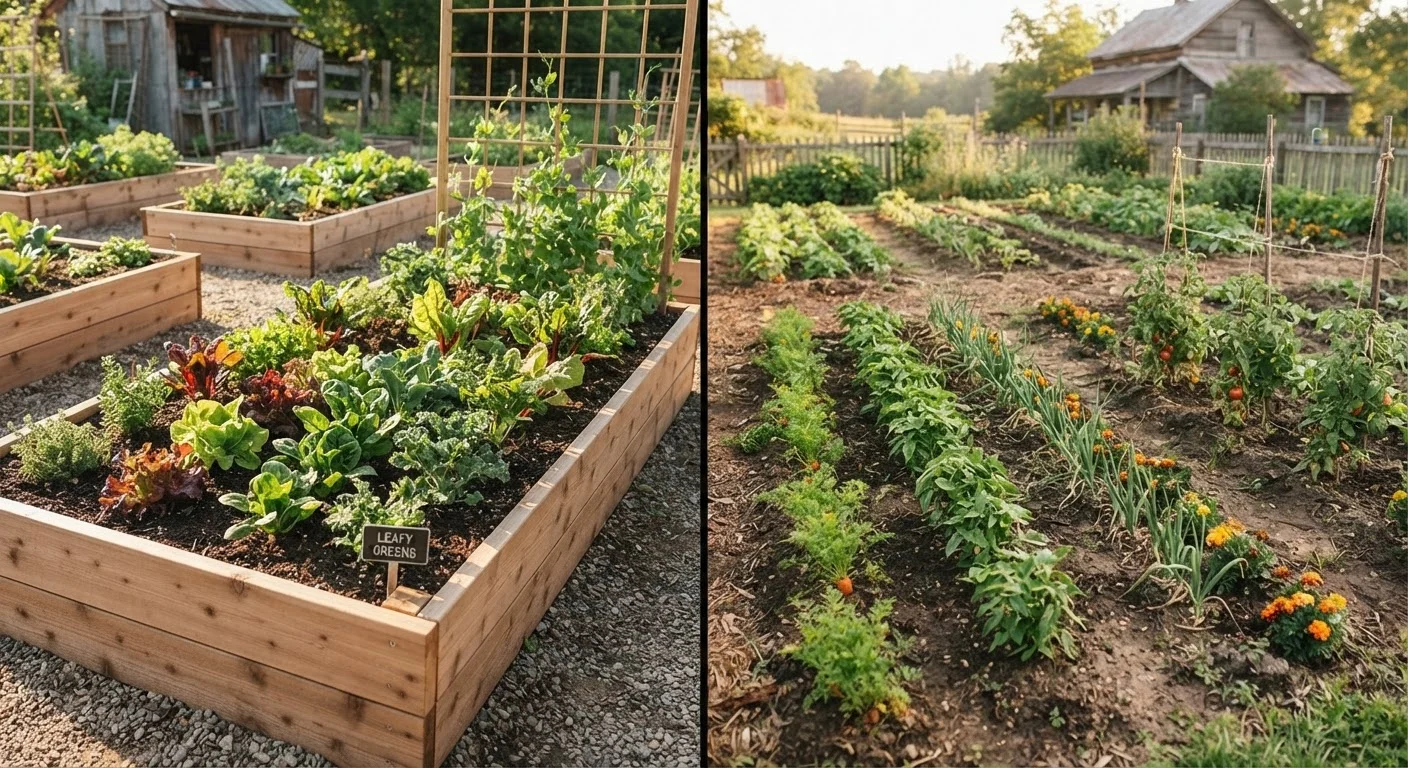
Good companion planting is, at its core, about thoughtful spatial planning - considering which plants share resources well, which might attract beneficial insects, and which could inhibit each other. It connects naturally to decisions about garden layout and planting structure that every grower eventually faces.
Common Myths - and What the Evidence Actually Shows
Much of the confusion around companion planting stems from a handful of persistent myths. The myth-and-fact pairs below address the most common ones directly.
Myth
Planting basil next to tomatoes will repel pests and significantly improve tomato flavor.
Fact
There is limited scientific evidence that basil repels tomato pests or enhances fruit flavor. They do grow well together without competing aggressively.
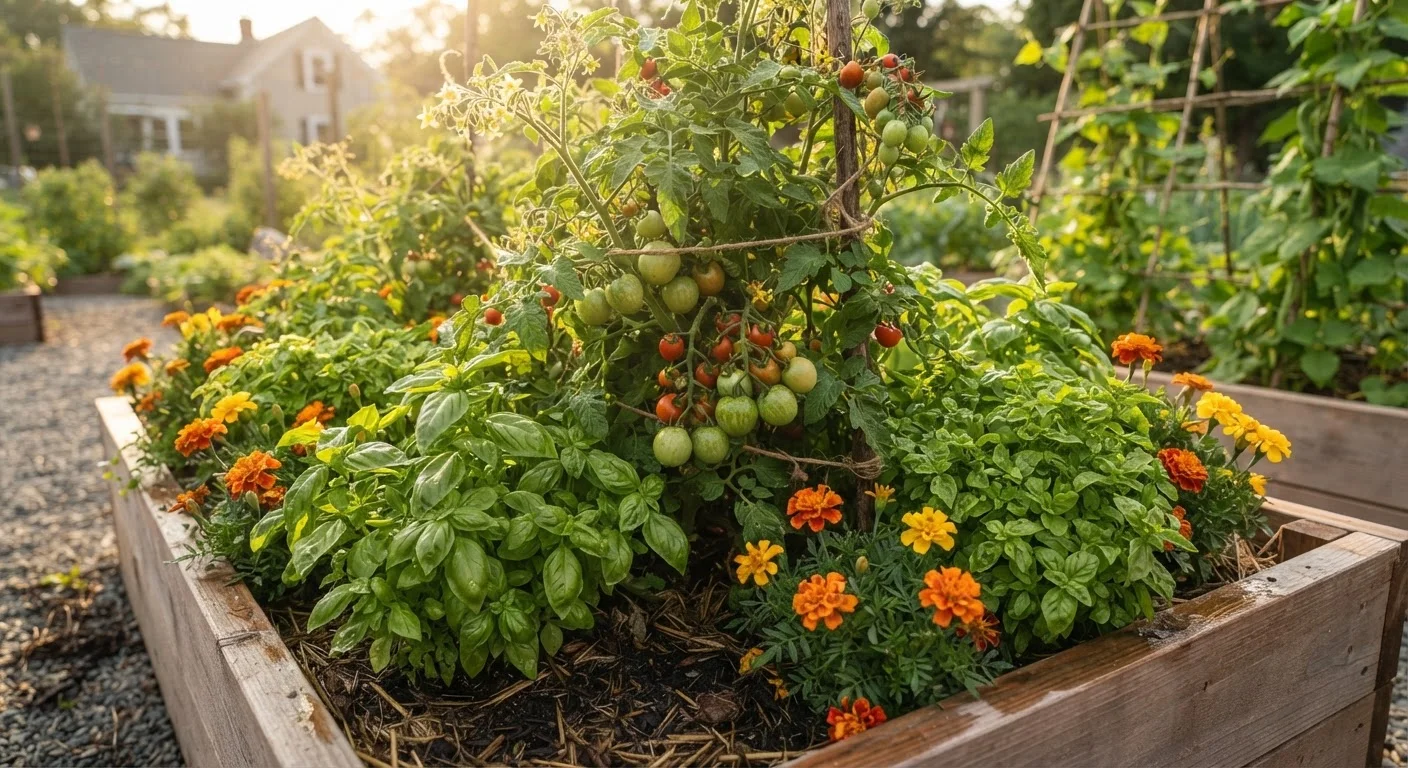
The basil-tomato pairing is perhaps the most repeated companion planting claim, but controlled studies have not consistently demonstrated meaningful pest repulsion or flavor improvement. What is true: both plants prefer similar growing conditions - warm temperatures, good drainage, and full sun - so they are compatible neighbors without being each other's secret weapon. Planting them together is fine; just don't expect it to solve a pest problem on its own.
Myth
Companion planting can replace pesticides entirely in a home garden.
Fact
Companion planting can modestly support pest management as part of a broader strategy, but it is not a reliable standalone replacement for other interventions.
Integrated pest management (IPM) - the approach recommended by most horticultural extension services - treats pest control as a layered system involving physical barriers, monitoring, biological controls, and cultural practices. Companion planting fits within that system but rarely eliminates pest pressure on its own. Expecting it to do so often leads growers to overlook infestations until they become serious problems.
Myth
If two plants grow near each other in nature, they make good garden companions.
Fact
Natural co-occurrence doesn't predict garden compatibility. Cultivated varieties, soil conditions, and spacing differ significantly from wild environments.
Wild plants growing near each other have adapted over long periods to specific soil conditions, moisture levels, and seasonal rhythms. Garden varieties, often bred for yield or appearance rather than ecological resilience, don't always behave the same way. Some plants that co-exist in the wild compete vigorously in the concentrated conditions of a raised bed or container. Proximity in nature is a starting point for curiosity, not a guarantee of garden success.
Myth
Marigolds planted anywhere in the garden will deter all common pests.
Fact
Marigolds have some evidence supporting nematode suppression in soil and attracting beneficial insects, but they don't create a pest-free zone across a garden.
Research does support the use of certain marigold varieties - particularly French marigolds (Tagetes patula) - as a tool for reducing root-knot nematode populations when used as a dense cover crop prior to planting. However, this is a specific, targeted application. The idea that a border of marigolds will broadly deter aphids, whitefly, or other common pests from the whole garden is not well-supported by evidence. Marigolds are still worth growing - they attract pollinators and predatory insects - but with calibrated expectations.
Myth
Companion planting always increases yield.
Fact
Poorly matched companions can reduce yield through competition for light, water, and nutrients - the effect depends entirely on which plants are paired and how.
Yield outcomes from companion planting vary considerably. The Three Sisters combination - corn, beans, and squash - is one of the better-evidenced examples of genuine yield benefit through complementary resource use. But many casual pairings result in one plant shading out another, or root systems competing for the same limited nutrients. In a small garden, a planting combination that looks appealing in theory can quietly undermine the harvest of one or both crops. Spacing and growth habit matter as much as the pairing itself.
Where Companion Planting Genuinely Helps
Set aside the inflated claims and there's still real value here. Flowers like marigolds and nasturtiums are reasonably well-supported as attractors of beneficial insects - including pollinators and predatory insects that feed on aphids. This is sometimes called a "banker plant" strategy in integrated pest management.
Dense plantings that cover soil can suppress weeds by reducing the light available at soil level. Tall plants can provide afternoon shade to heat-sensitive crops. Nitrogen-fixing legumes like beans genuinely do enrich the soil over time, benefiting neighboring plants - though the effect plays out over seasons, not weeks.
3-in-1
Resource sharing in the Three Sisters system
The Three Sisters combination (corn, beans, squash) demonstrates documented mutual benefit: corn provides structure, beans fix nitrogen, and squash suppresses weeds with ground cover.
~30%
Potential nematode reduction with marigold cover cropping
Studies on French marigolds used as dense pre-season cover crops have shown measurable reductions in root-knot nematode populations in subsequent plantings, though results vary by soil conditions.
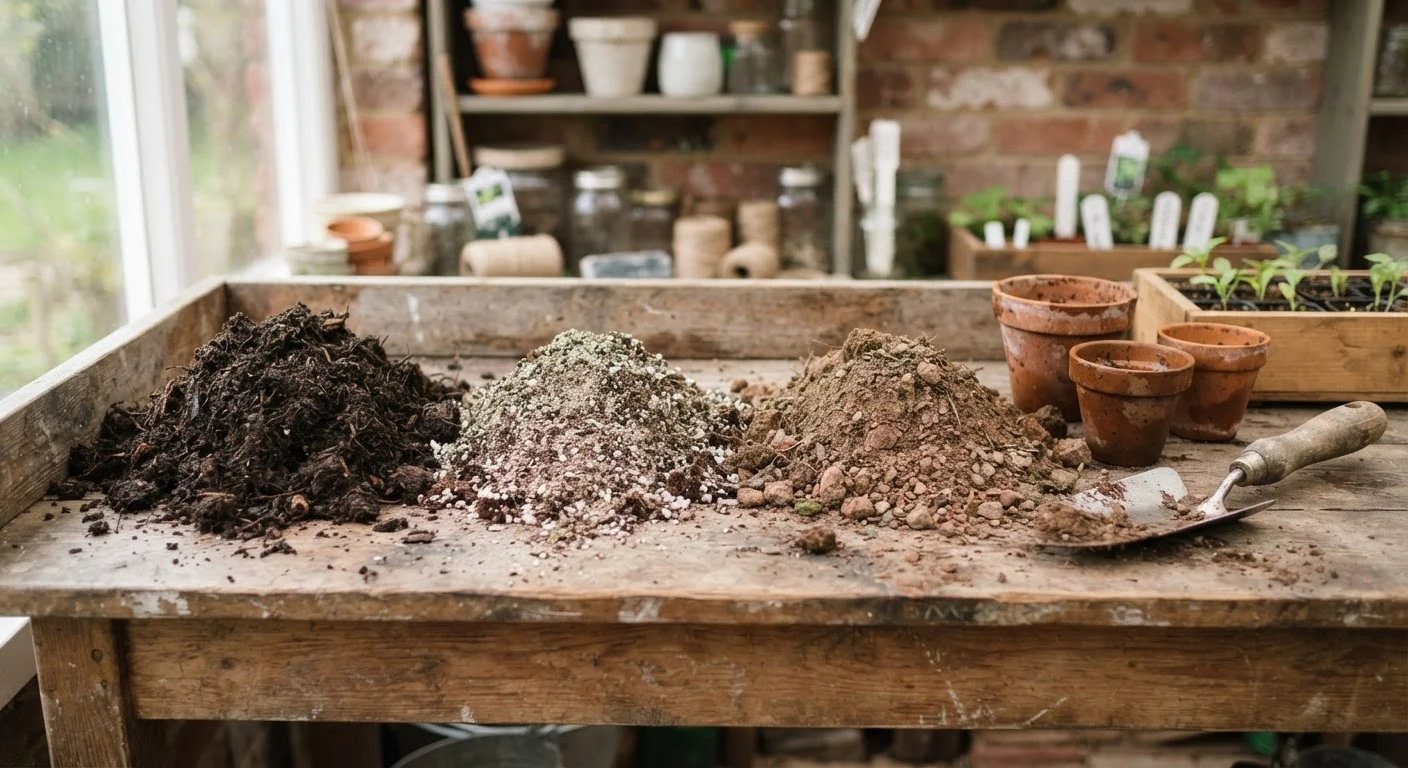
Equally important: companion planting works better when the fundamentals are solid. Pairing basil with tomatoes won't compensate for nutrient-depleted soil or waterlogged roots. Understanding what soil, compost, and potting mix each do is foundational to any planting strategy, companion or otherwise.
Using Companion Planting Sensibly in a Small or Urban Garden
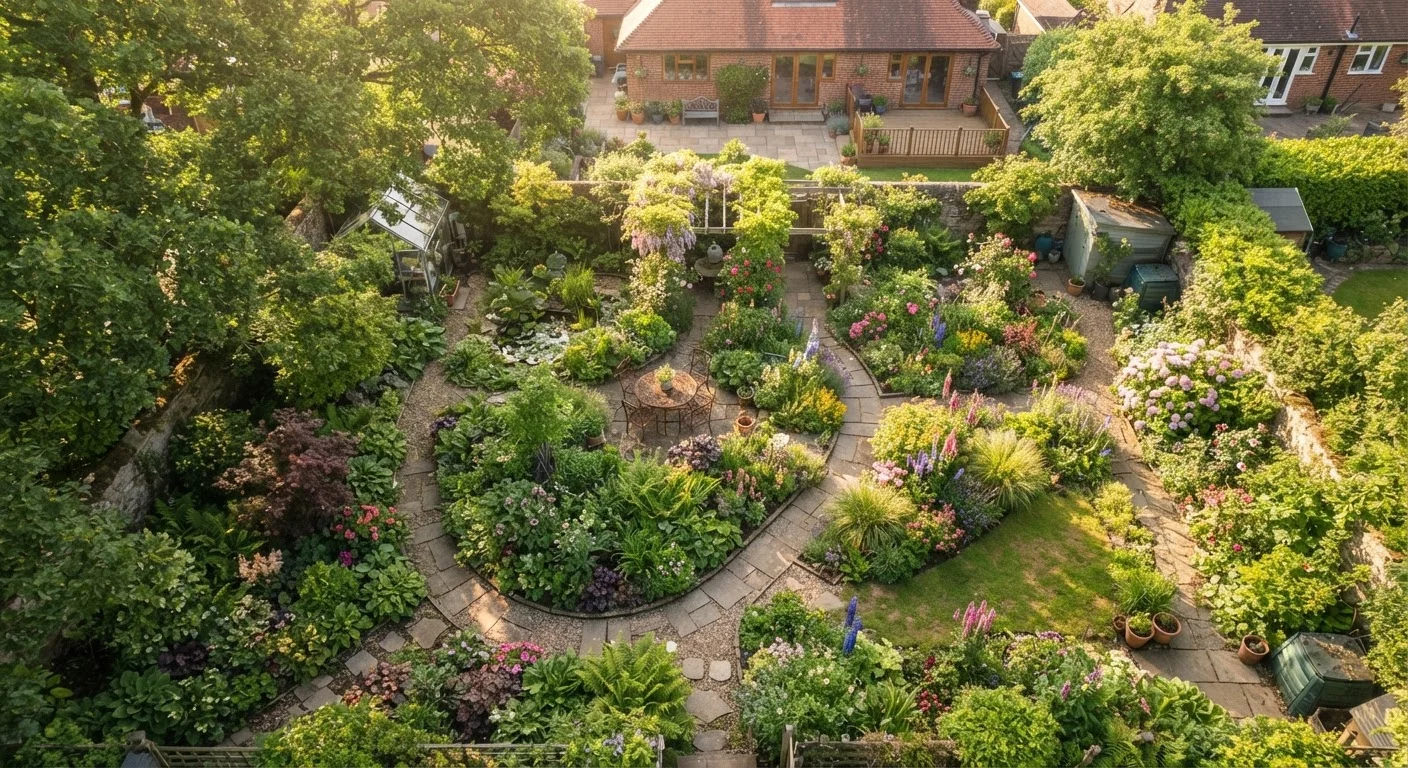
For urban growers working with containers or small raised beds, companion planting is worth experimenting with - but keep scale in mind. Overcrowding is one of the most common beginner mistakes, and well-intentioned companion pairings can make it worse. Every plant needs adequate light, and understanding your garden's light conditions before you plan your combinations will help you avoid shading problems.
In containers specifically, root competition is a real constraint. Pairing plants with very different water needs in the same pot creates a losing situation for at least one of them. Review the basics of container gardening best practices before doubling up in small pots.
Overcrowding Is the Most Common Companion Planting Mistake
Enthusiastic companion planting in small spaces often leads to overcrowded beds where plants compete more than they cooperate. Before adding a companion, check the mature spacing requirements for both plants. Crowded plants are more vulnerable to fungal disease, less productive, and harder to water and harvest effectively.
The most productive mindset is to treat companion planting as one variable among many - interesting, worth trying, and occasionally genuinely helpful - rather than as the secret to a thriving garden. Observe what works in your specific space, keep notes across seasons, and let your own evidence guide you.