Why Winter Is Hard on Houseplants
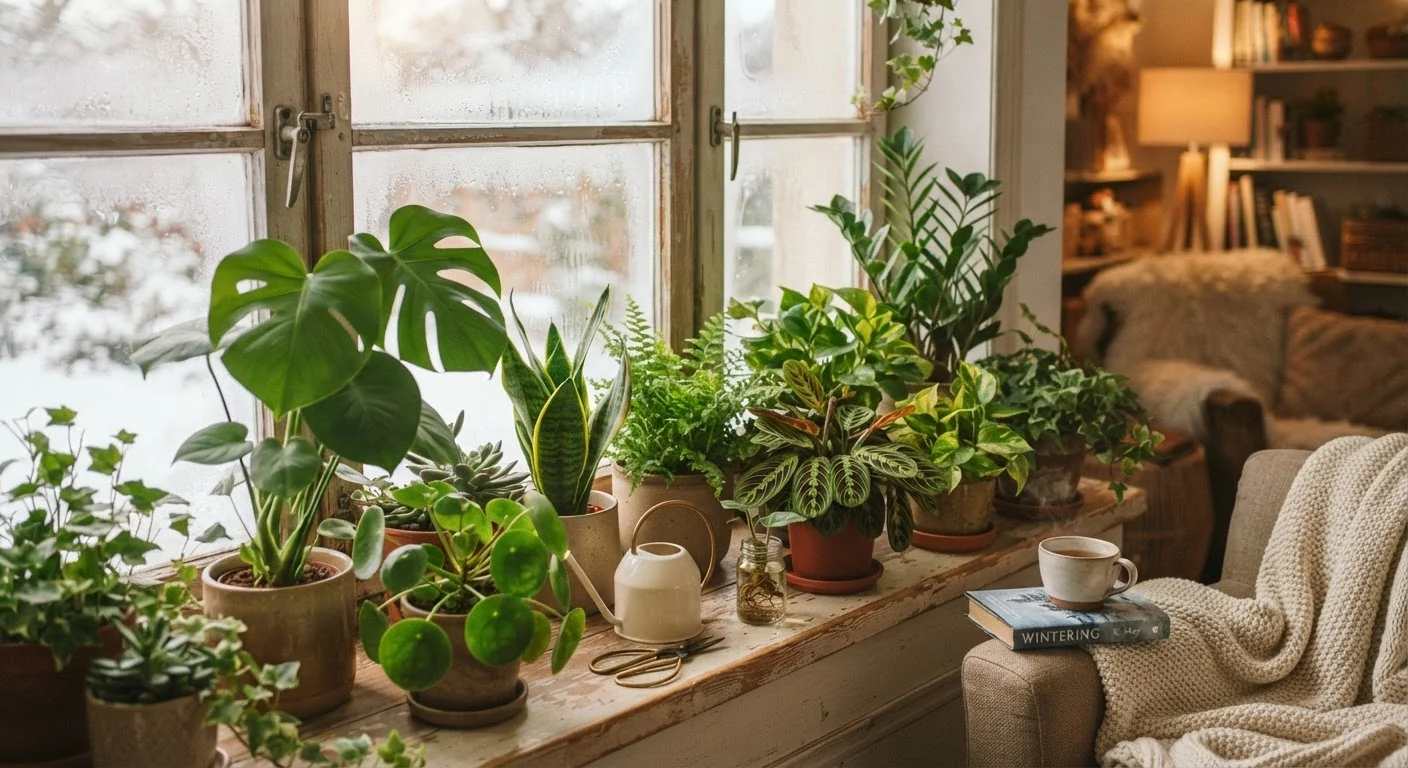
From the outside, your living room may look the same year-round - but from a plant's perspective, winter indoors is a challenging environment. Day length shortens, light intensity drops, and central heating strips moisture from the air. These conditions don't kill most houseplants outright, but they create a slow accumulation of stress that makes plants vulnerable to overwatering, root rot, pests, and leaf drop.
Understanding what actually changes - rather than just reacting to symptoms - lets you make targeted adjustments that keep your plants stable rather than just barely surviving. The good news is that most common houseplants are resilient if given a few basic accommodations.
What you will need
What to Adjust and How
The following steps address the four most common winter stressors in sequence: light, water, humidity, and temperature. Work through them in order - light and water changes have the broadest impact and are worth addressing first.
Humidity tray with pebbles
Placed under pots, a water-filled pebble tray raises ambient humidity around plants without waterlogging the roots.
Moisture meter
Removes guesswork from watering decisions by measuring soil moisture at root depth.
Grow light or full-spectrum bulb
Supplements reduced natural light in rooms that receive fewer than four hours of indirect winter sun.
Spray bottle
Used for light misting of humidity-loving plants like ferns, calatheas, and air plants.
Audit your light situation
Winter sun sits lower in the sky and delivers noticeably fewer hours of usable light - even south-facing windows can lose 30-50% of their summer intensity. Walk through your home on a clear winter day and note where direct or bright indirect light actually falls. Reading your space's light conditions is the foundation of any successful winter plant strategy.
Move light-hungry plants - succulents, herbs, and most flowering species - as close to your brightest windows as possible. Rotate pots a quarter turn weekly so all sides receive even exposure.
Dial back your watering frequency
Cooler temperatures and reduced light slow plant metabolism significantly. Soil dries out more slowly, and roots sitting in damp conditions for too long are prone to rot. A plant that needed water every five days in summer may only need it every ten to fourteen days in January.
Switch from a schedule-based approach to a soil-based one. Use the finger test or a moisture meter to check before you water. Matching your watering rhythm to each plant type and season is one of the simplest ways to prevent winter losses.
Address dry indoor air
Forced-air heating systems can drop indoor humidity to 20-30%, well below the 40-60% range that most tropical houseplants prefer. Signs of low humidity include brown leaf tips, curling edges, and increased pest activity - spider mites thrive in dry conditions.
Group plants together to create a shared humidity microclimate. Add a pebble tray filled with water under pots (ensuring the pot base sits above the waterline), or run a small humidifier nearby. Misting is a temporary fix - it evaporates quickly - but it works as a supplement for ferns, orchids, and calatheas.
Check and correct plant placement
Scan each plant's immediate surroundings. Cold air pooling near single-pane windows, heat radiating from radiators, or dry blasts from ceiling vents can all cause more damage than reduced light alone. Move plants at least 12 inches away from heat sources and glass that drops below 50°F overnight.
If a plant has been struggling despite good watering habits, placement is usually the next thing to investigate. Even a foot or two of repositioning can stabilize a plant that's been dropping leaves.
Pause feeding and repotting until spring
Winter is a rest phase for most houseplants, not a growth phase. Fertilizing during dormancy can push weak, leggy new growth that's susceptible to pests, or cause fertilizer salts to accumulate in the soil without being processed. Similarly, repotting stresses root systems - reserve this task for when active growth resumes in late winter or early spring.
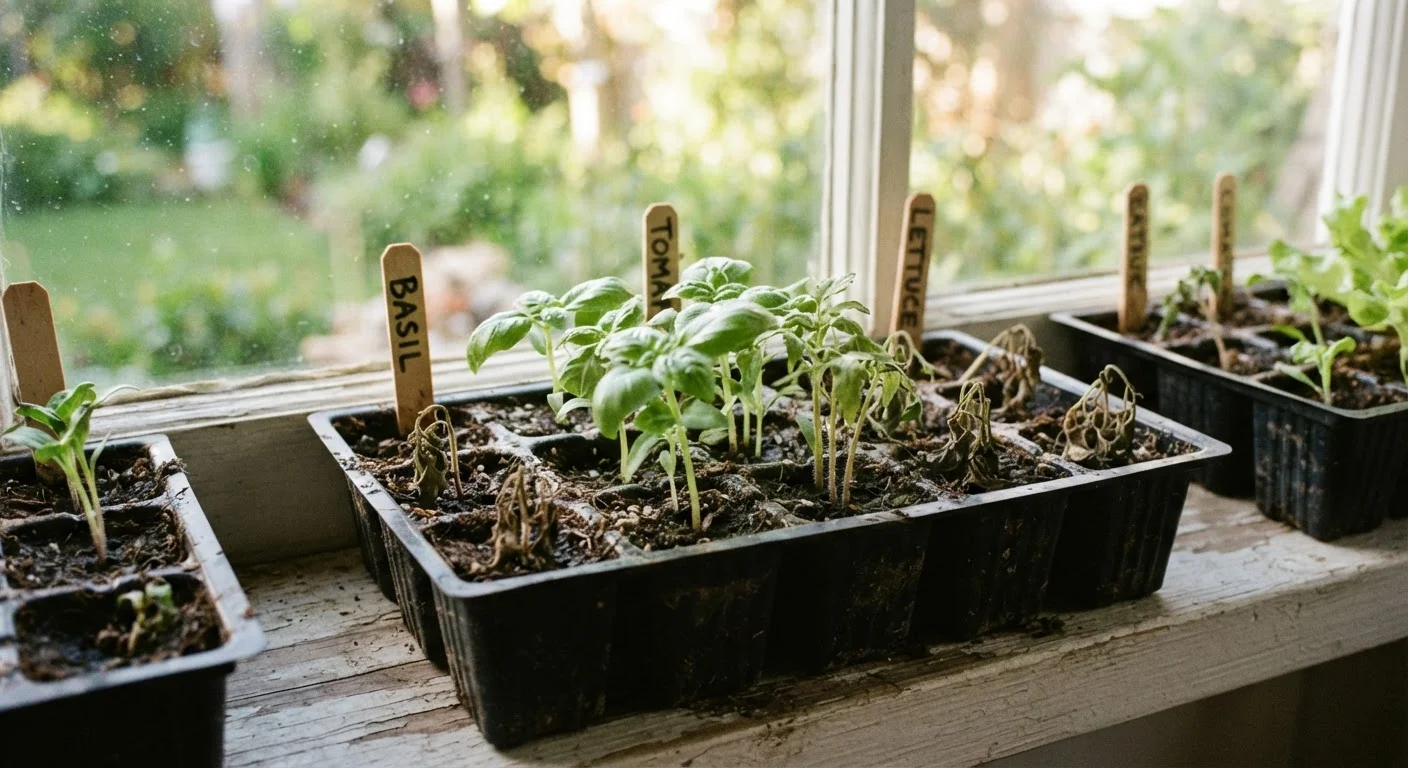
If a plant is genuinely struggling - yellowing lower leaves, visible root rot, or severe pest infestation - address the underlying problem directly rather than stimulating growth as a fix. Understanding what stresses young plants can also sharpen your instincts for diagnosing what's going wrong with established ones.
The Finger Test Still Works Best
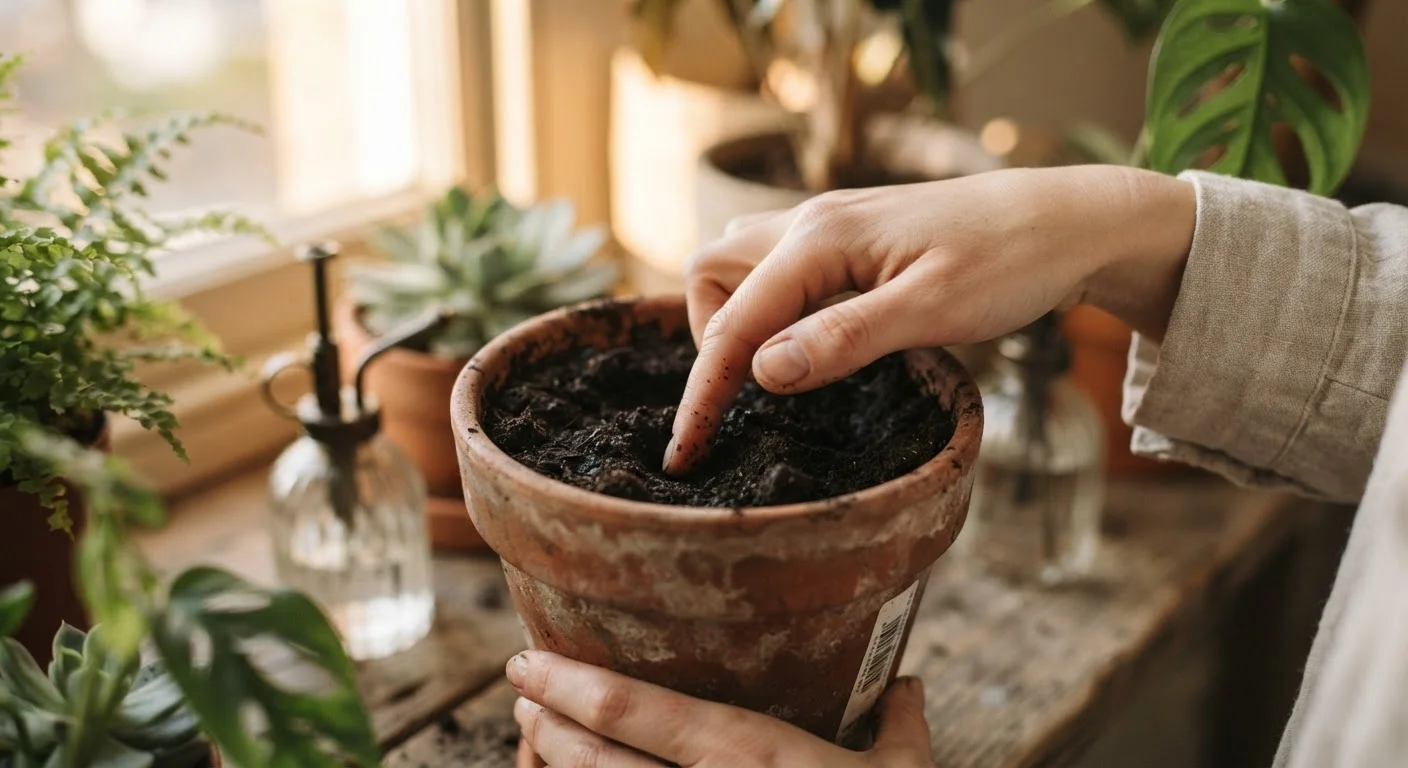
Before watering any plant in winter, push your finger about an inch into the soil. If it feels damp, wait. Most overwatering happens when gardeners stick to a fixed summer schedule year-round. Adjusting your watering rhythm by season is one of the highest-impact skills you can build.
Cold Drafts and Heat Vents Are Equally Damaging
Placing plants directly on a cold windowsill or near a radiator or forced-air heating vent creates temperature extremes that stress even hardy varieties. Check the microclimate around each plant's location - a few inches in either direction can make a real difference. Tropical houseplants are especially sensitive to sudden temperature swings below 50°F (10°C).
Don't Fertilize Dormant Plants
Applying fertilizer during winter when most houseplants are in a rest phase can burn roots and trigger weak, spindly growth that's vulnerable to pests. Hold off on feeding until you see new growth returning in late winter or early spring. Resume your fertilizing schedule gradually - at half strength - once the plant shows active signs of growth.
Consistent container care habits make winter management easier overall. If you want a stronger foundation in general potted plant care, container gardening fundamentals covers the year-round practices that support plant health across every season.