What Is Operant Conditioning?
Operant conditioning is the learning framework that underlies nearly every effective pet training technique practiced today. First systematized by psychologist B.F. Skinner in the mid-20th century, the concept is straightforward: animals - including humans - modify their behavior based on the consequences that follow it. Behaviors that produce favorable outcomes tend to increase; behaviors that produce unfavorable outcomes tend to decrease.
Understanding this framework matters because it shifts training from a guessing game into a deliberate, evidence-based process. Rather than reacting to unwanted behavior with frustration, you gain a mental model for why your pet does what it does - and how to change it constructively. To explore the psychology behind why reward-based approaches are so effective, see the science behind positive reinforcement.
Operant conditioning
A type of learning where an animal's behavior is influenced by the consequences that follow it - pleasant consequences increase a behavior, unpleasant ones decrease it.
Reinforcement
Any consequence that makes a behavior more likely to occur again in the future.
Punishment
In behavioral science, any consequence that makes a behavior less likely - not necessarily physical; it simply means something that reduces a behavior.
Shaping
A training technique that rewards small, progressive steps toward a desired behavior rather than waiting for the complete behavior to appear.
Reinforcement schedule
The pattern or frequency with which rewards are delivered after a behavior, affecting how quickly and durably the behavior is learned.
Successive approximations
The incremental steps used in shaping - each one a little closer to the final target behavior than the last.
The Four Quadrants Explained
Operant conditioning is organized into four quadrants defined by two variables: whether something is added or removed, and whether the result increases or decreases behavior.
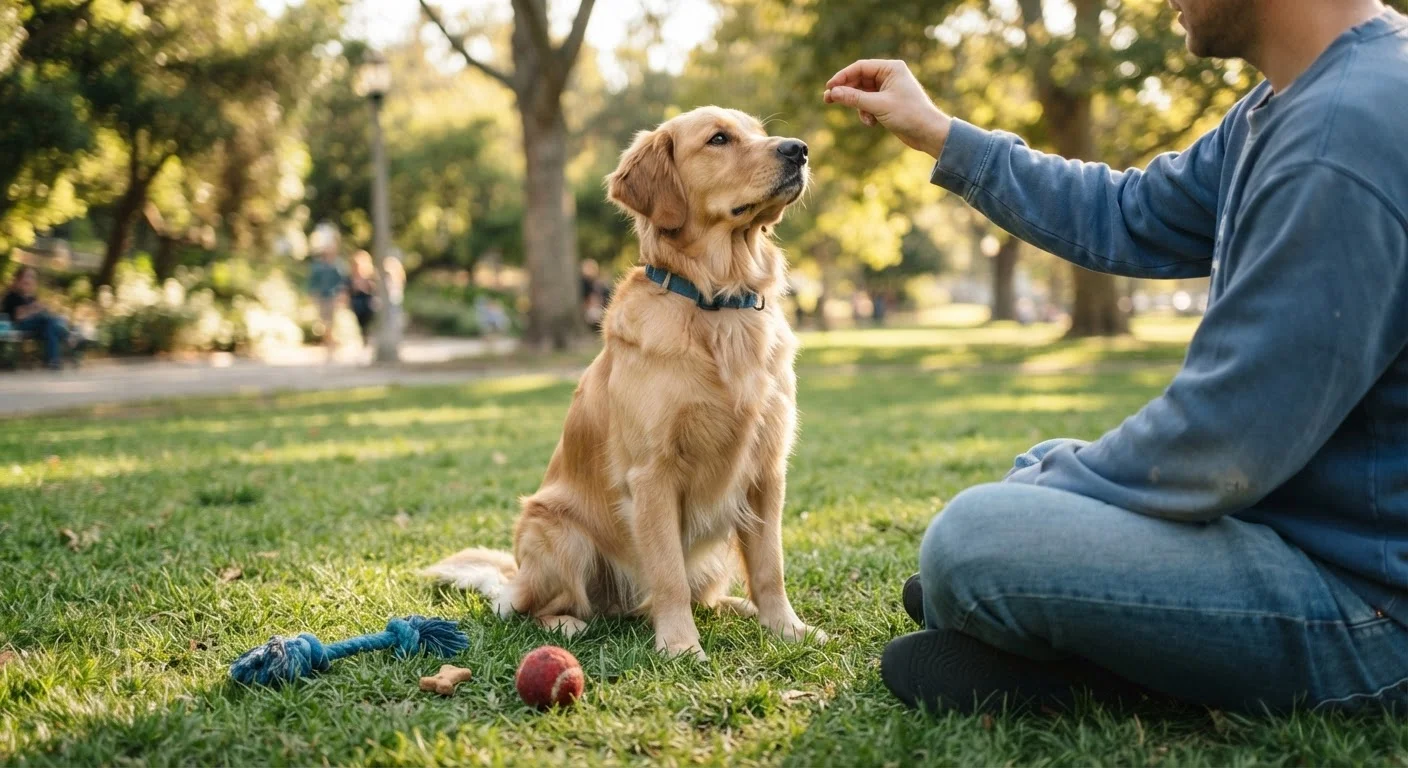
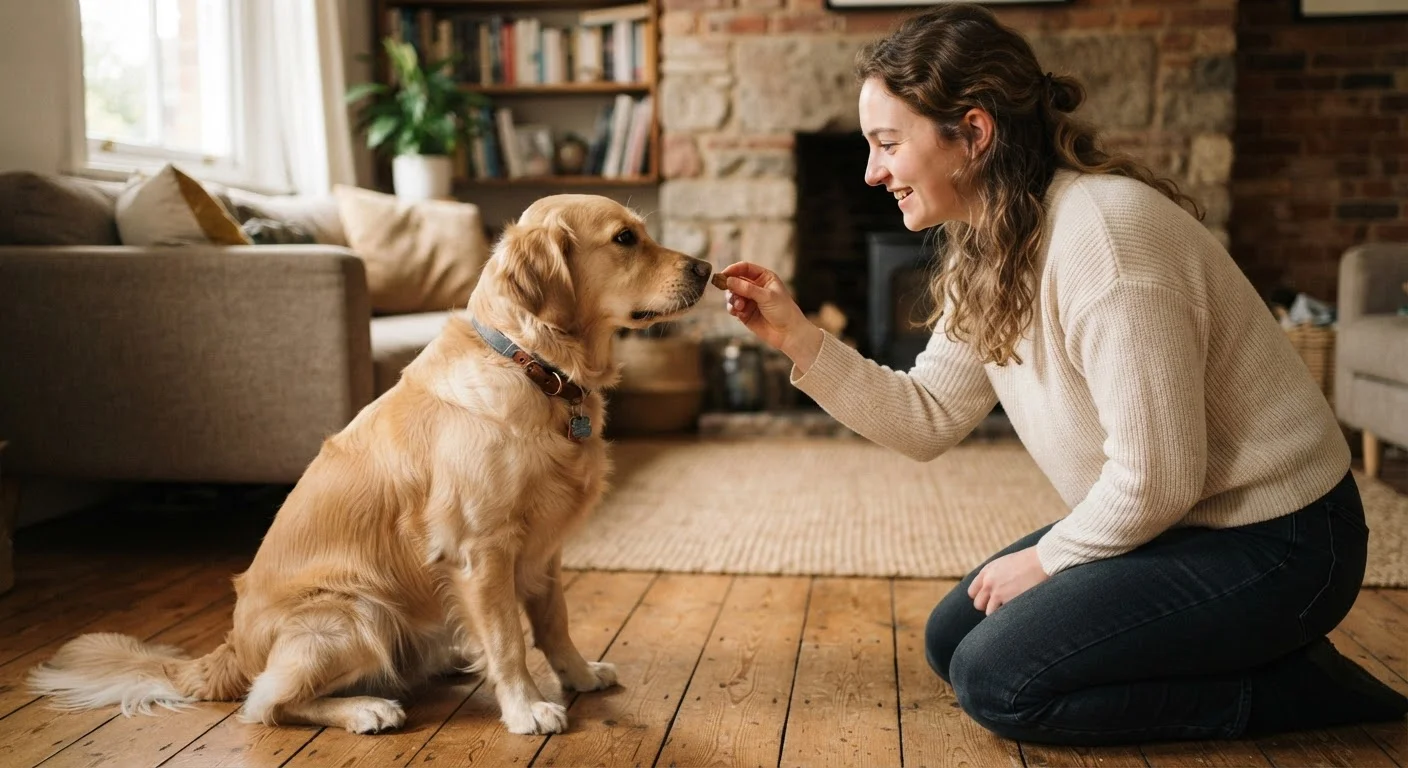
- Positive reinforcement: Something desirable is added after a behavior, making that behavior more likely. Example: your dog sits; you give a treat. The sit becomes more frequent.
- Negative reinforcement: Something unpleasant is removed after a behavior, making that behavior more likely. Example: a horse learns to move forward to stop a leg-pressure cue. The pressure relief increases forward movement.
- Positive punishment: Something unpleasant is added after a behavior, making it less likely. This includes verbal corrections and physical aversives.
- Negative punishment: Something desirable is removed after a behavior, making it less likely. Example: turning away and withholding attention when a dog jumps up.
Most contemporary, science-aligned trainers concentrate on positive reinforcement and, when needed, negative punishment - the two quadrants that carry the least risk of producing fear, avoidance, or aggression. It's worth understanding all four, however, because every training interaction falls into one of them, whether intentional or not.
Aversive Techniques Carry Real Risks
Research in animal behavior consistently links aversive training methods - particularly those involving pain or fear - to increased stress, avoidance, and aggression in pets. Even well-intentioned punitive approaches can damage the trust you're working to build. If you're unsure about a technique, consult a certified applied animal behaviorist or credentialed trainer before proceeding.
Reinforcement Schedules: Timing Your Rewards
When and how often you deliver reinforcement shapes not just whether a behavior is learned, but how resilient it becomes. There are two broad schedule types:
- Continuous reinforcement
- Every correct response earns a reward. This is the fastest way to teach a new behavior - high reward frequency helps the animal make the connection quickly.
- Intermittent reinforcement
- Rewards are delivered some, but not all, of the time. This mirrors how slot machines work: unpredictable rewards produce remarkably persistent behavior. Once a behavior is established, shifting to an intermittent schedule makes it much more resistant to fading.
The practical takeaway: start new behaviors on a continuous schedule, then gradually thin the reward frequency as the behavior becomes reliable. Skipping this transition is one of the most common reasons trained behaviors fall apart. For a broader look at how rewards beyond food factor in, see the full spectrum of reinforcement.
Transition Rewards Gradually, Not Abruptly
When shifting from continuous to intermittent reinforcement, do it in stages - for example, reward roughly 8 out of 10 correct responses before dropping to 5 out of 10. An abrupt cutoff can cause the behavior to extinguish quickly. Gradual thinning preserves the behavior's strength while reducing your treat budget.
Shaping Behavior Step by Step
Most owners think of training as an all-or-nothing transaction: the pet either does the behavior or doesn't. Shaping reframes this entirely. It's the process of reinforcing successive approximations - small, incremental steps toward a final target behavior - so your pet is set up to succeed at every stage.
Suppose you want your cat to walk into a carrier voluntarily. Shaping might look like: reward for looking at the carrier → reward for approaching it → reward for sniffing it → reward for touching it with a paw → reward for placing one foot inside → and so on. Each step is only introduced when the previous one is reliable.
This method prevents frustration for both pet and owner, and it's applicable to virtually any behavior you want to teach. For a detailed breakdown of the three main teaching techniques - shaping, luring, and capturing - see three routes to teaching any behavior.
Putting It Into Practice
Knowing the theory is only useful if it changes what happens in your living room. A few principles to keep front of mind:
- Timing is everything. Reinforcement must arrive within roughly one to two seconds of the behavior to be associated with it. A clicker or verbal marker like "yes" can bridge the gap when you can't deliver a treat instantly.
- Keep sessions short. Five to ten minutes of focused training is typically more productive than a lengthy session where attention drifts.
- Manage the environment. Reduce distractions when introducing new behaviors. Complexity can be added gradually as the behavior solidifies.
- Track what works. If a behavior isn't improving after several sessions, change one variable - your timing, your reward value, or your criteria - before assuming the animal can't learn it.
If your pet shows signs of anxiety or fear during training, that's a signal to revisit your approach. See training a fearful or anxious pet for humane, evidence-based strategies. Training needs also change as pets age - how learning changes across a lifetime provides a useful roadmap. For foundational context on pet care basics and understanding animal behavior, those hubs are a solid starting point.