The Predatory Instinct Behind the Paw
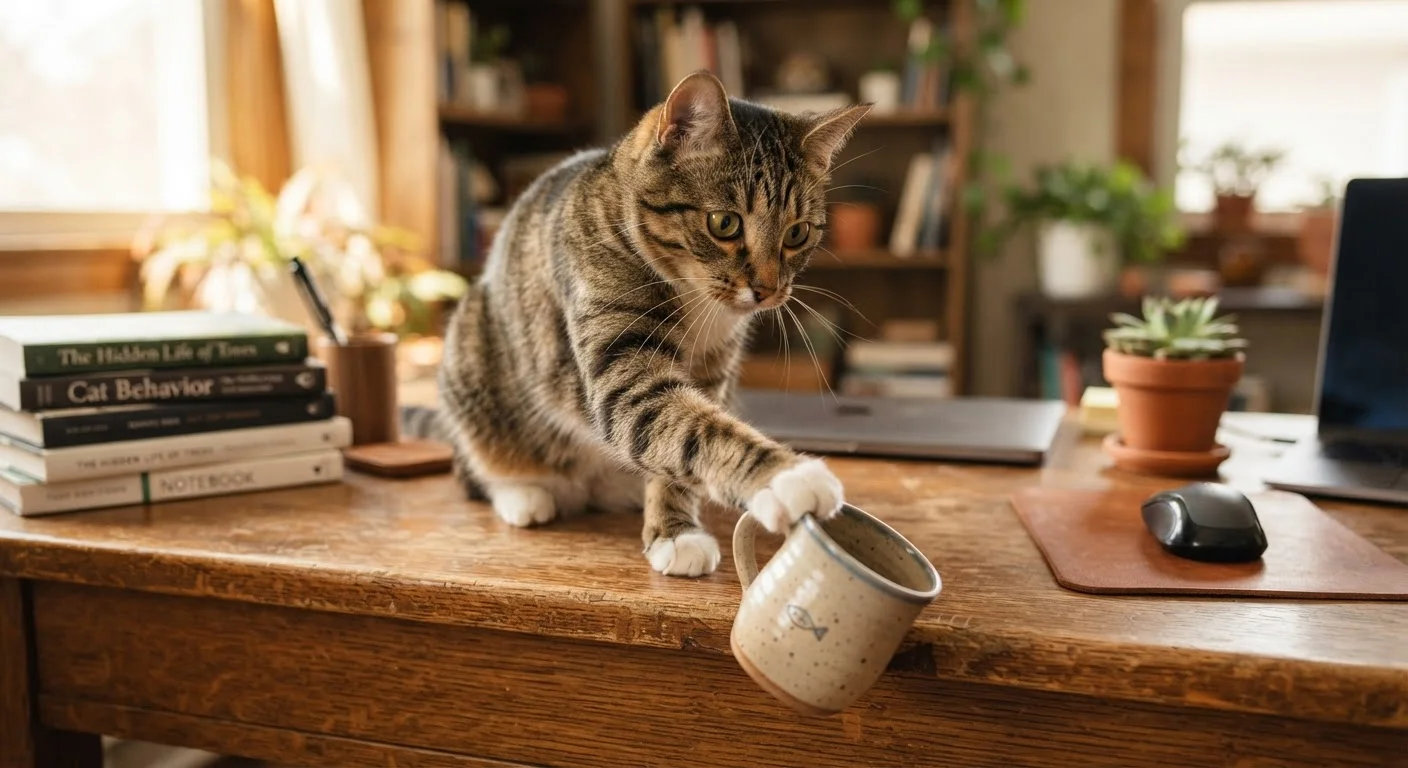
Watch a cat before it knocks something over and you'll usually see a ritual: slow approach, cautious paw-pat, then the push. That sequence isn't random. It's a compressed version of the stalk-and-strike pattern hardwired into obligate carnivores through millions of years of evolution.
Domestic cats retain the full predatory behavioural repertoire of their wild ancestors, even when their food arrives in a bowl. When a cat taps an object on a table, it's running a quick assessment - checking for movement, resistance, and the kind of unpredictable behaviour that prey animals display. A pen that rolls, a phone that vibrates, or a glass that wobbles all register as potentially interesting targets. The knock that follows is, in functional terms, a finishing strike.
This is why the behaviour is far more common in cats that don't have regular outlets for hunting-style play. Indoor cats have limited access to live prey, so the predatory sequence gets redirected toward whatever's available on the nearest flat surface.
~2-6 hrs
Daily predatory play time wild cats spend hunting
Behavioural research on feral and wild felids suggests domestic cats retain the same motivational drive even when hunt success is unnecessary for survival.
24+
Mechanoreceptor types found in cat paw pads
Studies in feline neuroanatomy document the high density of sensory nerve endings in cat paws, supporting their role as primary tactile investigation tools.
Sensory Curiosity: What Their Paws Are Actually Doing
Cat paws are remarkable sensory instruments. The pads and surrounding tissue contain a dense network of mechanoreceptors - nerve endings that detect pressure, texture, and vibration with high precision. When a cat prods an unfamiliar object, it's extracting detailed physical data that its eyes alone can't provide.
This explains why cats often seem most drawn to objects with irregular shapes, smooth surfaces, or unpredictable responses. The tactile feedback from tapping a glass that wobbles is genuinely informative to them. Knocking it off the edge is, in part, an extension of that inquiry - observing what happens when the object moves through space.
From this angle, the behaviour is less about destruction and more about a highly mobile, sensory-driven animal doing what comes naturally in a static human environment. It's the same investigative impulse that leads cats to sit inside open boxes, bat at dangling cords, or obsessively inspect anything new brought into the home.
Channel the Instinct, Don't Suppress It
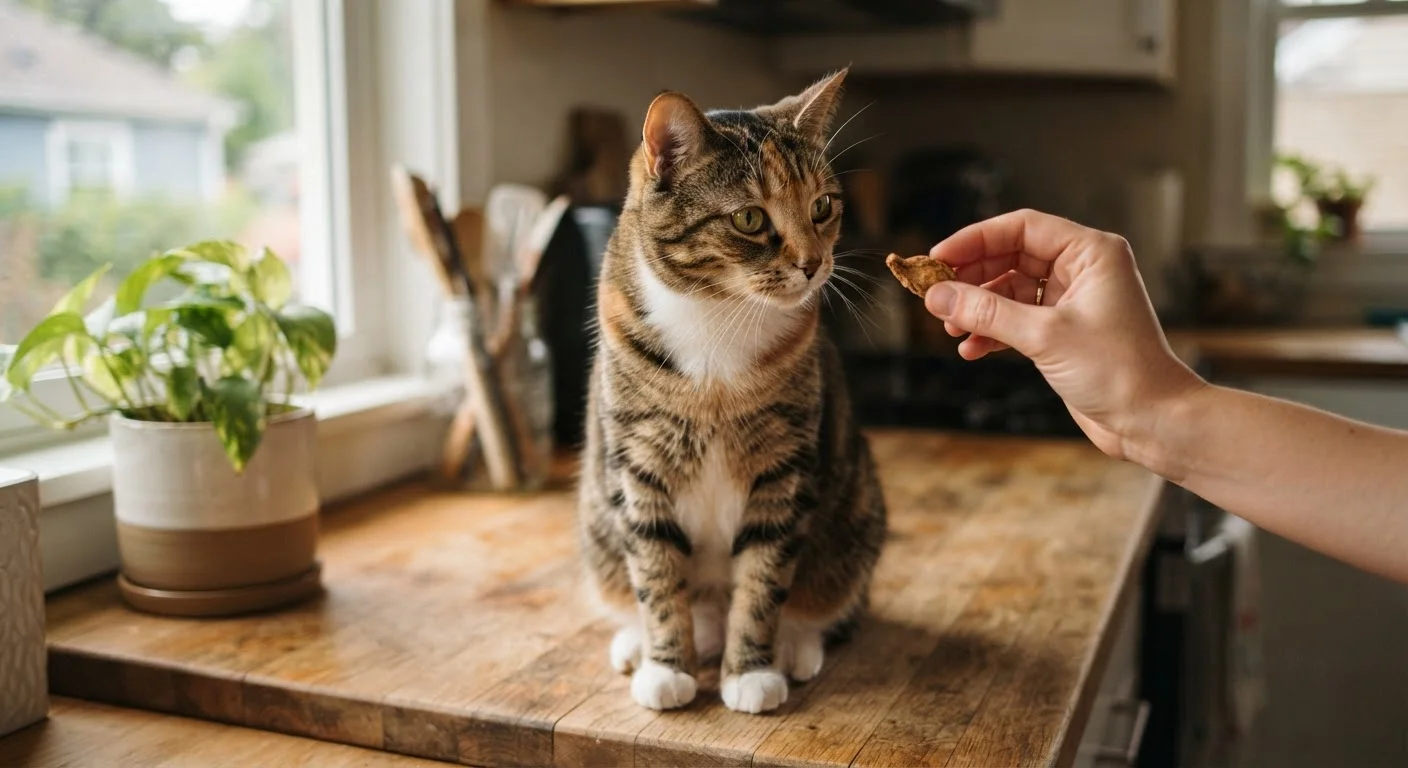
Instead of clearing all surfaces as a deterrent, try providing designated "cat-approved" objects to interact with - textured toys, crinkle balls, or puzzle feeders placed at cat height. This gives the same tactile and predatory satisfaction without the risk to your belongings. Interactive wand-toy sessions for 10-15 minutes twice daily are among the most evidence-supported ways to reduce displacement behaviour in indoor cats.
When Attention-Seeking Enters the Picture
Predatory instinct and sensory curiosity explain the origin of the behaviour, but learning shapes how often it happens. Cats are operant learners - they repeat behaviours that produce rewarding outcomes. And in many households, knocking something off a shelf produces an immediate, dramatic human response.
Even a frustrated "No!" or a lunge to catch a falling object counts as engagement from the cat's perspective. If the behaviour consistently delivers interaction - especially when a cat is hungry, bored, or simply wants company - it gets reinforced. Over time, object displacement can shift from instinctive exploration to a reliable attention-getting strategy.
This dynamic is worth understanding before responding. Reacting loudly or repeatedly retrieving objects can inadvertently train the behaviour to persist. A more effective approach involves understanding how cats learn and redirecting the behaviour toward appropriate outlets rather than simply reacting to each episode.
Negative Attention Is Still Attention
Cats don't distinguish between positive and negative reactions the way humans do - what matters is whether a behaviour produced engagement. Shouting, rushing over, or repeatedly repositioning knocked-off objects can all reinforce the cycle. If attention-seeking is the driver, a calm, non-reactive response combined with proactive enrichment tends to be more effective than correction.
What This Behaviour Reveals - and How to Respond
Frequent object displacement is most usefully read as information. It typically signals that a cat's predatory and exploratory needs aren't being met within its current environment. Before treating it as a nuisance to suppress, it's worth asking: how much structured interactive play does this cat get daily? Does it have access to vertical space, window perches, or puzzle feeders?
Increasing interactive play sessions - using wand toys, feather lures, or anything that mimics prey movement - addresses the root predatory drive more effectively than any deterrent. Auditing your home environment for enrichment opportunities is a practical next step for owners dealing with persistent surface-clearing.
If the behaviour appears compulsive, escalates suddenly, or accompanies other repetitive actions, it may be worth consulting a veterinarian. In rare cases, anxiety or neurological factors can amplify otherwise normal behaviours - a distinction explored in depth in our look at compulsive habits in pets. For most cats, though, the solution is straightforward: more outlets, more stimulation, and a little less precious crockery left unattended.