Why This Choice Matters More Than It Seems
Kitchen storage is one of the most consequential design decisions in a home - not because it's permanent, but because it shapes how you interact with the space every single day. Open shelving has surged in popularity thanks to social media kitchens that look effortlessly styled. But those images rarely capture Tuesday morning after a rushed dinner. Closed cabinets, meanwhile, are the default for good reason, yet they're often dismissed as boring without a fair evaluation.
If you're setting up a first apartment or rethinking an existing kitchen layout, this comparison gives you a realistic framework - not a trend-driven nudge in either direction. For a broader look at how storage decisions ripple through an entire home, see our guide to small-space organization principles.
| Open Shelving | Closed Cabinets | |
|---|---|---|
| Visual effect | Open, airy, personalized | Neat, enclosed, neutral |
| Maintenance demand | High - weekly dusting/wiping | Low - items stay cleaner behind doors |
| Clutter tolerance | Low - everything is visible | High - hides mismatched items |
| Accessibility | Immediate - no doors to open | Slightly slower - door operation required |
| Installation cost | Often lower for basic brackets | Higher for full cabinetry units |
| Renter suitability | Depends on drilling/wall rules | Standard - usually already installed |
| Resale/rental neutrality | Can polarize opinion | Generally neutral and expected |
The Real Costs of Open Shelving
Open shelving's primary appeal is visual: it makes a kitchen feel larger, lighter, and more personalized. When executed well, it communicates intentionality. But the maintenance reality is significant.
- Grease and dust accumulation: Kitchens generate airborne grease particles and fine dust. Items on open shelves - especially those near the stove - need wiping down at least weekly to avoid a sticky film building up on dishes and jars.
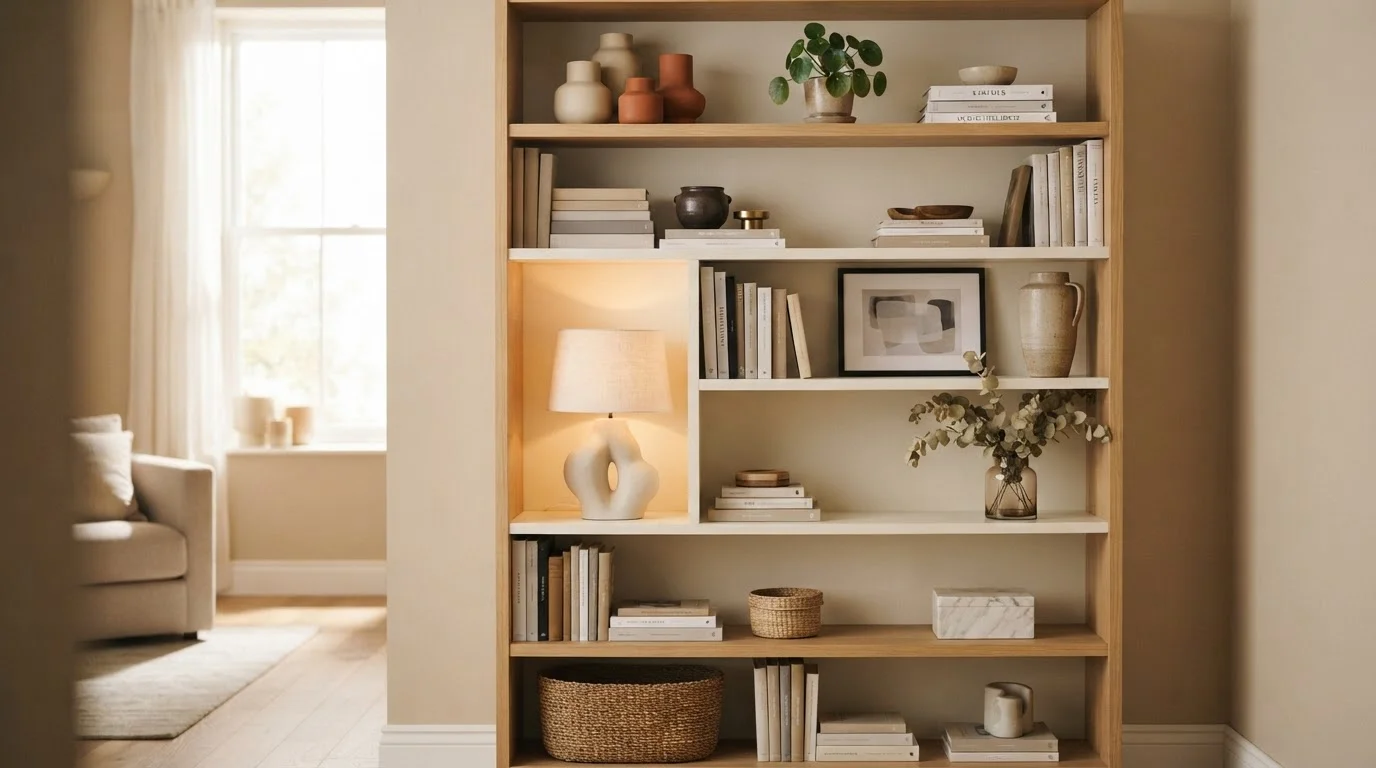
- Visual noise: Open shelves expose everything. Mismatched mugs, a half-empty box of crackers, and a stack of takeout containers will all be on display. If your kitchenware isn't cohesive, the result can feel chaotic rather than curated. Our guide to shelf styling principles covers the visual balance rules that make a real difference.
- Item accessibility: Frequently used items are genuinely easier to grab from an open shelf - no opening and closing doors. This is a meaningful day-to-day win for a well-organized setup.
Test Before You Commit
Before removing cabinet doors or installing permanent open shelving, try a temporary version first. Remove one cabinet door for a month and live with what's behind it on full display. If you find yourself regularly tidying that area, that's useful data about whether open shelving suits your actual habits rather than your aspirational ones.
What Closed Cabinets Actually Offer
Closed cabinets remain the dominant kitchen storage solution for practical reasons that go beyond aesthetics. They conceal imperfection, reduce cleaning frequency, and offer flexibility that open shelves don't.
- Clutter tolerance: Cabinets allow you to store a realistic range of items - mismatched containers, bulk purchases, appliances you use twice a year - without visual consequence.
- Dust and grease protection: Dishes stored behind doors stay clean between uses, which matters when you're storing items you don't reach for daily.
- Resale and rental appeal: Closed cabinetry is generally neutral in appeal. Landlords and future buyers are rarely put off by standard cabinets; heavily modified open-shelf kitchens can polarize opinion.
The main drawback is psychological enclosure. In smaller kitchens, a full wall of upper cabinets can feel oppressive. Removing one or two upper cabinet doors - or choosing glass-front panels - can break that up without fully committing to open shelving. This kind of targeted modification is explored in our home improvement hub.
Renters: Check Before You Modify
Removing cabinet doors or mounting wall-mounted shelving may violate your lease agreement or require landlord approval. Unreturned damage deposits are a common outcome of unauthorized modifications. Always review your lease and get written permission for any structural or cosmetic changes before proceeding.
Making the Hybrid Approach Work
For most young professionals living in apartments or starter homes, a hybrid layout offers the most practical path. The principle is straightforward: use open shelving where you have attractive, consistent items you reach for daily, and closed cabinets for everything else.
Common hybrid configurations include:
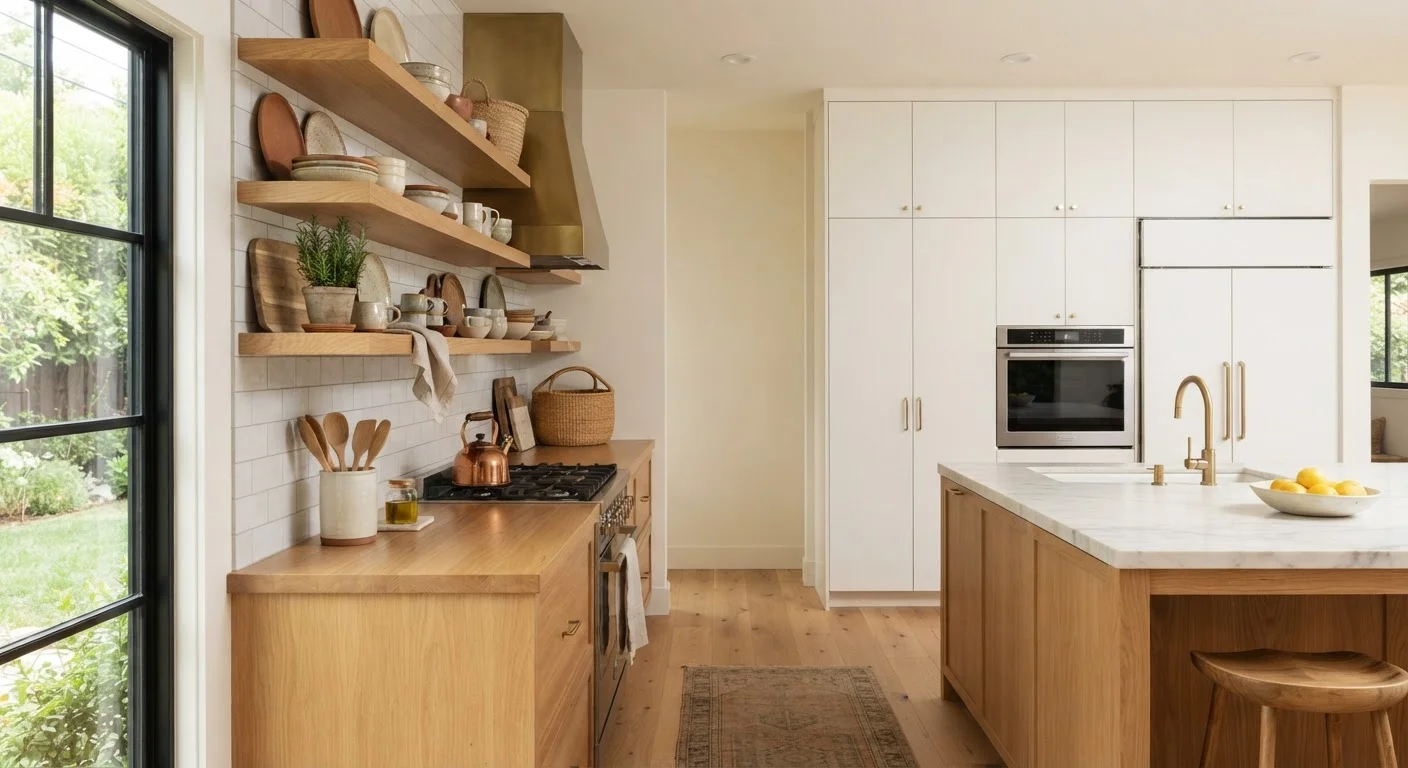
- Open lower shelves for cookbooks or a small collection of uniform canisters; closed upper cabinets for dishes and dry goods.
- One open-shelf wall section framing a window or backsplash; closed cabinetry on all other walls.
- A mix of solid and glass-front cabinet doors, which gives the appearance of openness while keeping items protected.
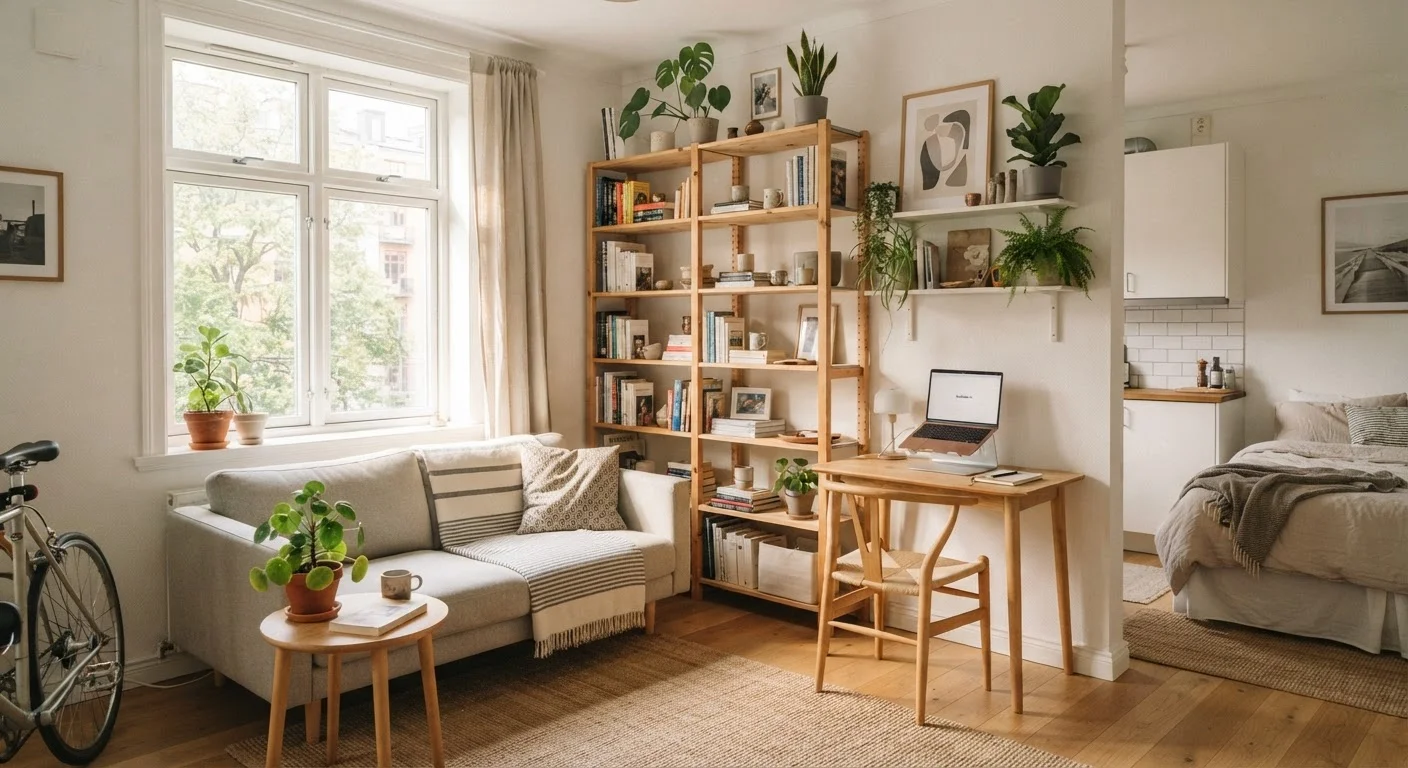
If you're starting from scratch in a new place, the first flat organization guide walks through how to layer storage decisions alongside decor choices. For renters, freestanding shelf units offer a reversible way to test open shelving without drilling or modifying existing cabinetry - just verify your lease terms before any permanent wall work.
Ultimately, the kitchen that functions best is the one designed around your actual habits, not an idealized version of them. Honest self-assessment - how often you cook, how consistent your kitchenware is, how much time you'll spend maintaining surfaces - is the most reliable guide to the right choice.