
Why Diet Pattern Comparisons Matter
Nutrition headlines cycle through trends fast enough to induce whiplash. One week low-fat is back; the next, carnivore diets are trending. The problem isn't a lack of information - it's an overabundance of it, often stripped of context. Understanding established dietary patterns rather than isolated rules gives young professionals a more durable framework for decision-making.
This article covers four widely studied eating patterns - Mediterranean, whole-food plant-based, low-carb, and intermittent fasting - focusing on what peer-reviewed evidence actually says, where each falls short, and who each tends to suit. For a deeper look at claims that don't hold up under scrutiny, see common nutrition myths debunked.
| Mediterranean | Whole-Food Plant-Based | Low-Carb / Keto | Intermittent Fasting | |
|---|---|---|---|---|
| Primary evidence base | Cardiovascular & longevity | Cancer & heart disease | Blood sugar & weight loss | Metabolic & weight outcomes |
| Restrictiveness | Low - flexible proportions | Moderate - limits animal products | High - limits carbohydrates | Moderate - limits eating window |
| Long-term adherence | Strong - culturally adaptable | Moderate - requires planning | Challenging for many | Variable by lifestyle |
| Key nutrient considerations | Generally complete | B12, D, iron, zinc | Fiber, electrolytes | Meal timing with medications |
| Environmental impact | Moderate - lower than Western diet | Low - least environmental footprint | High if meat-heavy | Neutral - depends on food choices |
| Suits busy schedules | Well - no rigid rules | Moderate - meal prep helpful | Moderate - label reading needed | Well - simplifies meal frequency |
Mediterranean Diet: The Research Benchmark
The Mediterranean diet - characterized by abundant vegetables, legumes, whole grains, olive oil, fish, and moderate dairy - has arguably the deepest evidence base of any dietary pattern. Large cohort studies and randomized controlled trials, including the landmark PREDIMED trial, have associated it with reduced risk of cardiovascular disease, type 2 diabetes, and cognitive decline.
Its core strength is flexibility. It's not structured around eliminating entire food groups; instead, it shifts proportions toward minimally processed, nutrient-dense foods. This makes it more sustainable across culturally diverse lifestyles than more restrictive approaches.
Adopt the Pattern, Not Just the Ingredients
Research on the Mediterranean diet often emphasizes that it's a lifestyle pattern - not a shopping list. Eating together, cooking at home, and pacing meals are part of what makes it sustainable. Even partial adoption, such as increasing vegetable variety and swapping refined grains for whole grains, tends to move health markers in the right direction.
What it leaves out: the traditional Mediterranean diet was also shaped by physical activity, social eating, and food culture - factors that don't travel easily into a meal plan. Simply adding olive oil to an otherwise poor diet won't replicate the studied benefits.
Whole-Food Plant-Based: Broad Benefits, Real Trade-offs
A whole-food plant-based (WFPB) diet emphasizes vegetables, fruits, legumes, whole grains, nuts, and seeds while minimizing or eliminating animal products and ultra-processed foods. Research consistently links higher plant food intake with lower rates of heart disease, certain cancers, and all-cause mortality.
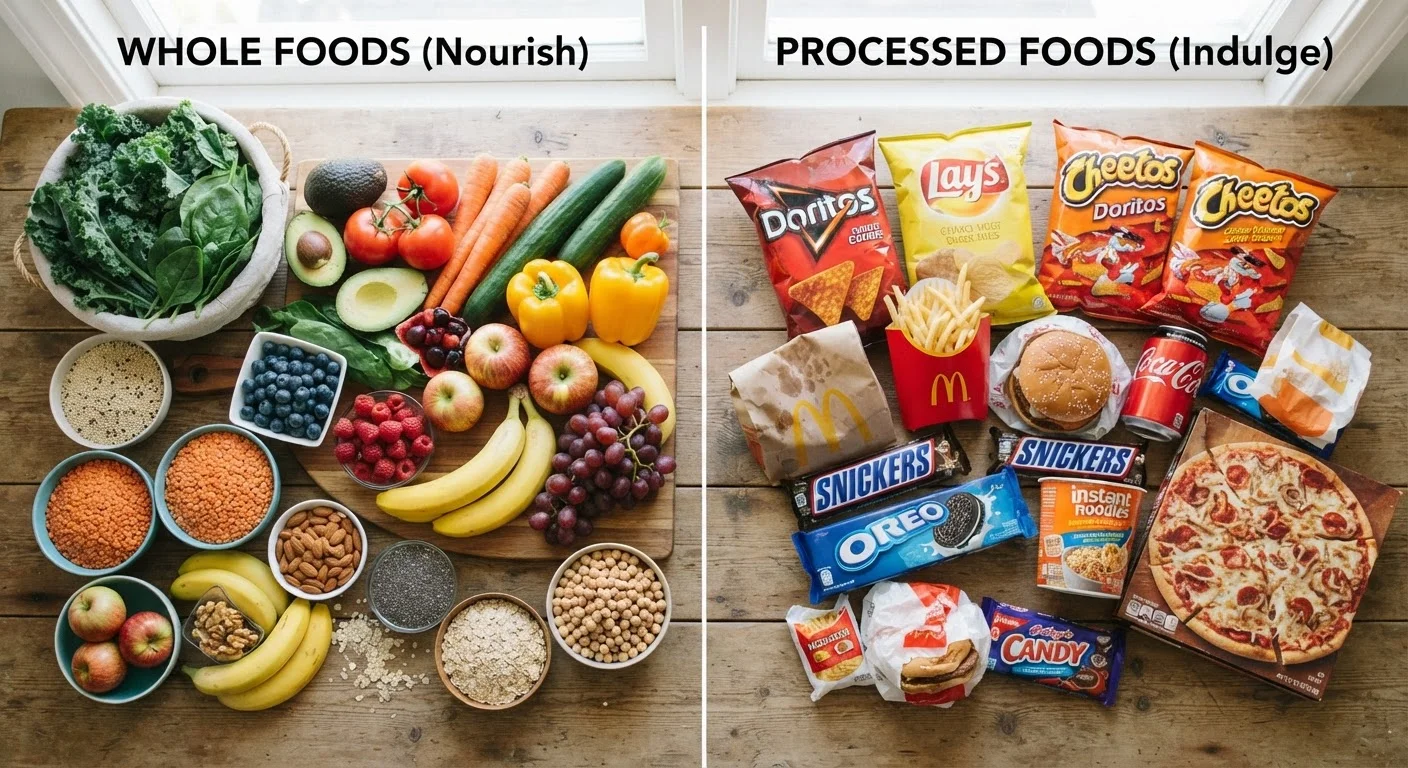
The distinction between WFPB and simply "vegan" matters: a vegan diet can still be heavily processed. The whole-food qualifier is what drives most of the studied health outcomes. Understanding the difference between whole and ultra-processed foods is essential context here.
Key nutritional gaps to plan for include vitamin B12 (supplementation is generally recommended), vitamin D, omega-3 fatty acids, iron, and zinc. For a detailed look at how plant and animal proteins compare, see protein sources compared side by side.
~30%
Reduced cardiovascular risk
The PREDIMED trial found a Mediterranean diet supplemented with olive oil or nuts reduced major cardiovascular events by roughly 30% compared to a low-fat control diet.
16%
Lower all-cause mortality
A large review published in JAMA Internal Medicine linked higher adherence to plant-based dietary patterns with a 16% reduction in all-cause mortality risk.
Low-Carb and Ketogenic: Effective but Context-Dependent
Low-carb diets reduce total carbohydrate intake - typically below 130g per day - while ketogenic diets push further, restricting carbs to under 50g to induce ketosis (a metabolic state where the body primarily burns fat for fuel). Both show meaningful short-term benefits for weight loss and blood sugar control, particularly in people with type 2 diabetes or insulin resistance.
However, long-term adherence is a well-documented challenge, and studies on cardiovascular outcomes beyond two years remain mixed. Food quality still matters: a low-carb diet built around processed meats and saturated fat differs substantially from one centered on non-starchy vegetables, nuts, and lean proteins.
Low-Carb Is Not Risk-Free for Everyone
Severely restricting carbohydrates can cause short-term side effects including fatigue, headaches, and digestive changes - sometimes called the 'keto flu.' More importantly, the long-term cardiovascular effects of very high saturated fat intakes remain debated in the research literature. Anyone managing a chronic condition should seek professional guidance before adopting a ketogenic protocol.
These approaches are not universally appropriate. Those with kidney disease, a history of disordered eating, or certain metabolic conditions should consult a physician or registered dietitian before reducing carbohydrates significantly.
Intermittent Fasting: Timing Over Restriction
Intermittent fasting (IF) restructures when you eat rather than prescribing what you eat. Common formats include 16:8 (eating within an 8-hour window) and 5:2 (two days of significant calorie reduction per week). Research suggests IF can support weight management and metabolic health markers, though most studies show outcomes comparable to continuous calorie restriction when total intake is matched.
For busy professionals who find meal timing easier to manage than food-category rules, IF may offer a practical entry point. However, it's not suitable for everyone - particularly those who are pregnant, have a history of disordered eating, or take medications that require food. Always check with a healthcare provider first.
Whichever pattern interests you, the practical challenge of implementation matters as much as the science. Eating well on a busy schedule covers how to build sustainable habits regardless of the pattern you follow.
What the Patterns Share - and What That Tells You
Despite their differences, the eating patterns with the strongest evidence share a few core principles: they prioritize whole, minimally processed foods; they include abundant vegetables and fiber; and they de-emphasize added sugars and refined carbohydrates. These overlapping features may explain much of the observed benefit across patterns.
This also means the heated debate between diet camps is often less meaningful in practice than the shared fundamentals. Moving from a diet heavy in ultra-processed foods toward any of these patterns is likely to produce measurable improvements. Building a nutritionally balanced plate offers a flexible framework that works regardless of which pattern you lean toward.
This article is for general informational and educational purposes only and does not constitute medical or dietary advice. Individual nutritional needs vary. Consult a qualified healthcare professional or registered dietitian before making significant changes to your diet, especially if you have an existing health condition.