Why Busy Schedules and Good Nutrition Feel Incompatible
For most young professionals, nutrition falls apart not because of ignorance but because of friction. Long days, unpredictable hours, and limited kitchen time create conditions where the easiest option wins - and the easiest option is rarely the most nourishing one.
The fix isn't willpower or a stricter meal plan. It's reducing the number of decisions you have to make when you're already tired. Research in behavioral science consistently shows that default choices - what's already prepared, visible, or convenient - drive eating behavior far more than intention alone.
If you're looking to start from foundational concepts, our beginner's nutrition guide covers the core principles without the overwhelm. This article builds on that foundation with practical systems for real workday constraints.
Anchor every meal around a protein source
Protein has the highest satiety value per calorie of any macronutrient and supports muscle maintenance, which matters more as sedentary desk work becomes the norm. Adequate protein intake also helps stabilize blood glucose, reducing the energy crashes that drive afternoon snacking on less nutritious options.
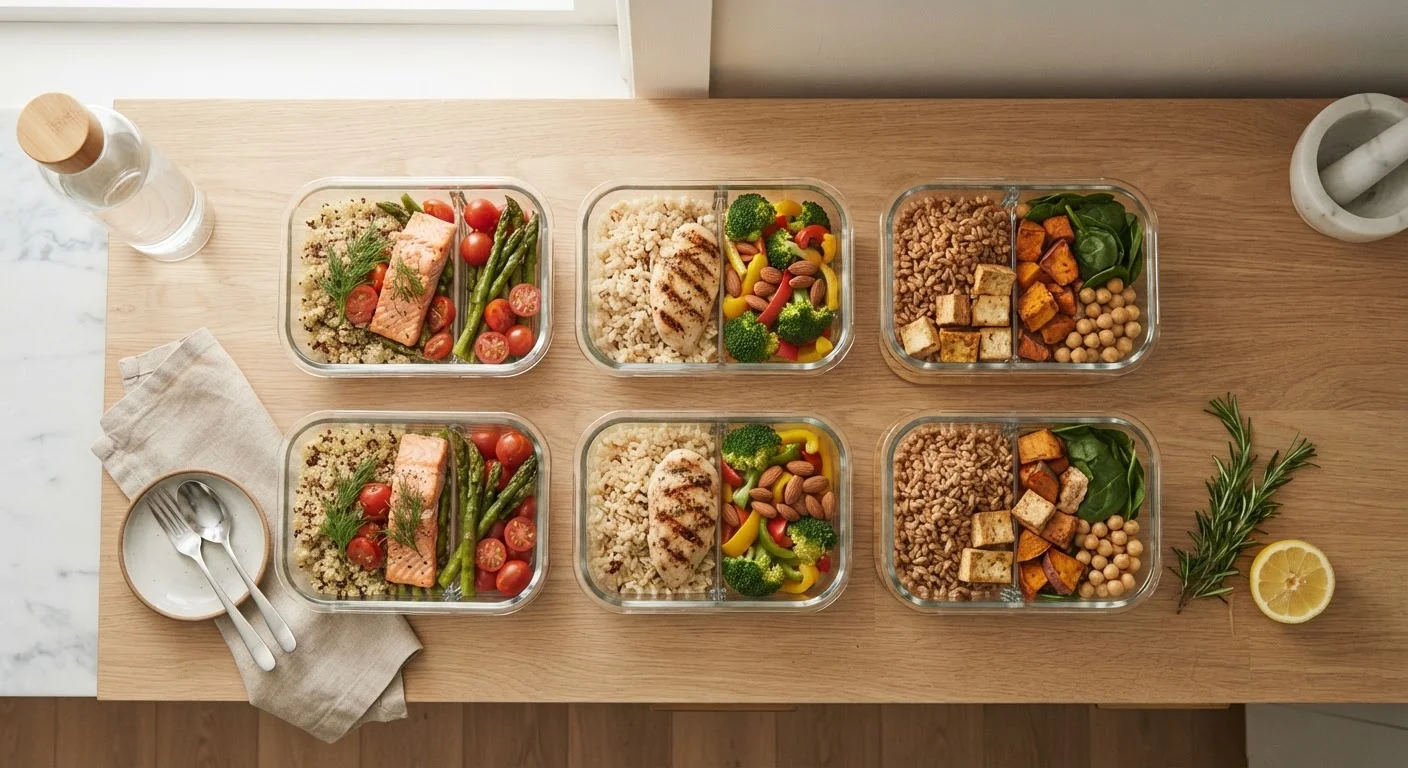
Batch one or two staple ingredients per week, not entire meals
Full meal prep systems are difficult to sustain because they require significant upfront time and produce food that can feel monotonous by mid-week. Preparing individual components - a cooked grain, a roasted vegetable, a protein - allows for recombination across different meals without repetition fatigue.
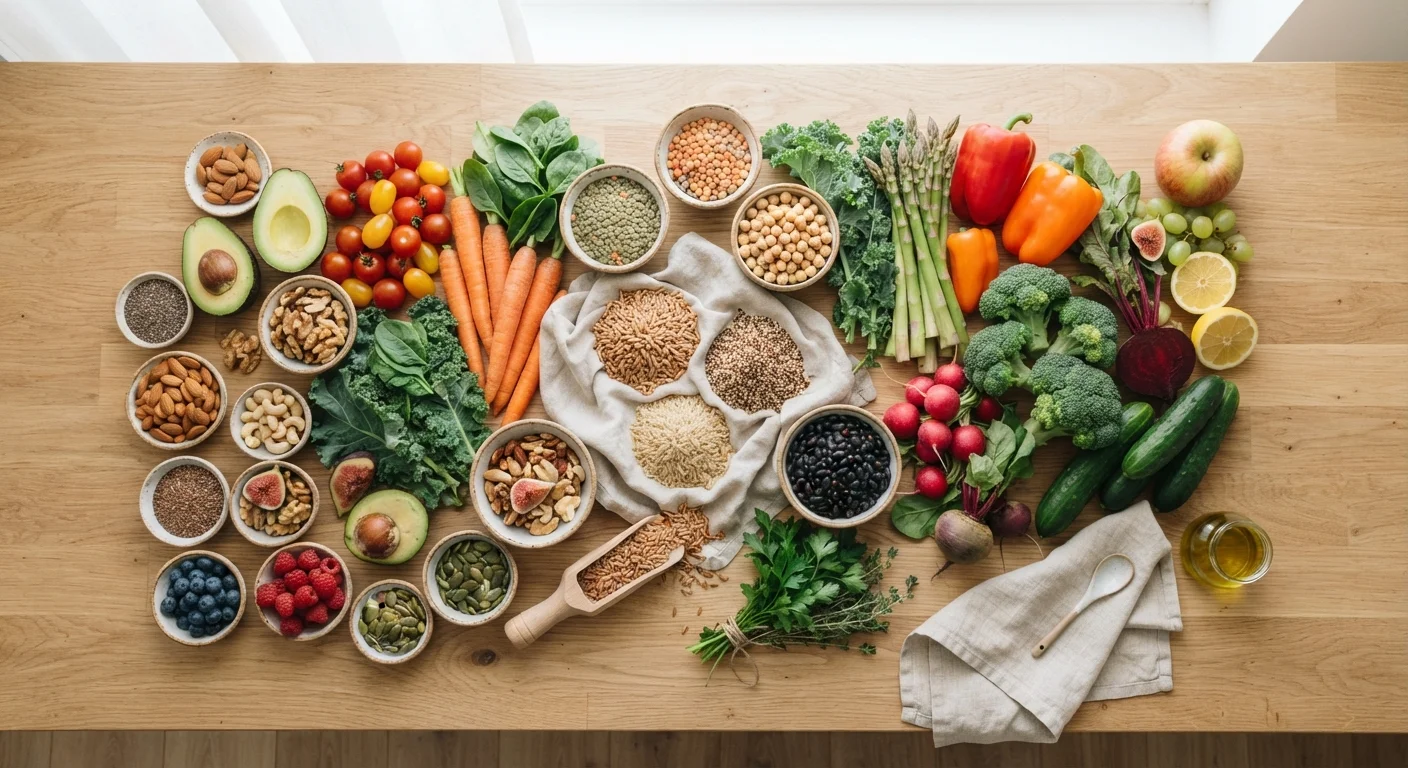
Make whole foods the default, not the effort
A large body of observational and mechanistic research links diets high in ultra-processed foods - those with extensive industrial ingredients, additives, and little whole-food content - to increased risks of metabolic and cardiovascular disease. The most effective strategy isn't avoiding ultra-processed foods through restraint but making whole foods the path of least resistance at home.
Treat hydration as a nutritional non-negotiable
Even mild dehydration impairs cognitive performance and is frequently misread as hunger, leading to unnecessary snacking. Many professionals reach afternoon exhaustion and attribute it to sleep or workload when chronic under-hydration is a contributing factor.
Use a simple mental template for eating out
Without a default framework, restaurant meals often become either an exercise in over-restriction or an abandonment of any nutritional intention. A practical heuristic removes the decision load and makes consistent choices easier across varied environments.
The Practical Principles Worth Actually Following
Nutrition advice is everywhere, but most of it either oversimplifies or prescribes a level of structure that working adults can't sustain. The principles below are grounded in established nutrition science and designed to work within the reality of a demanding schedule - not around it.
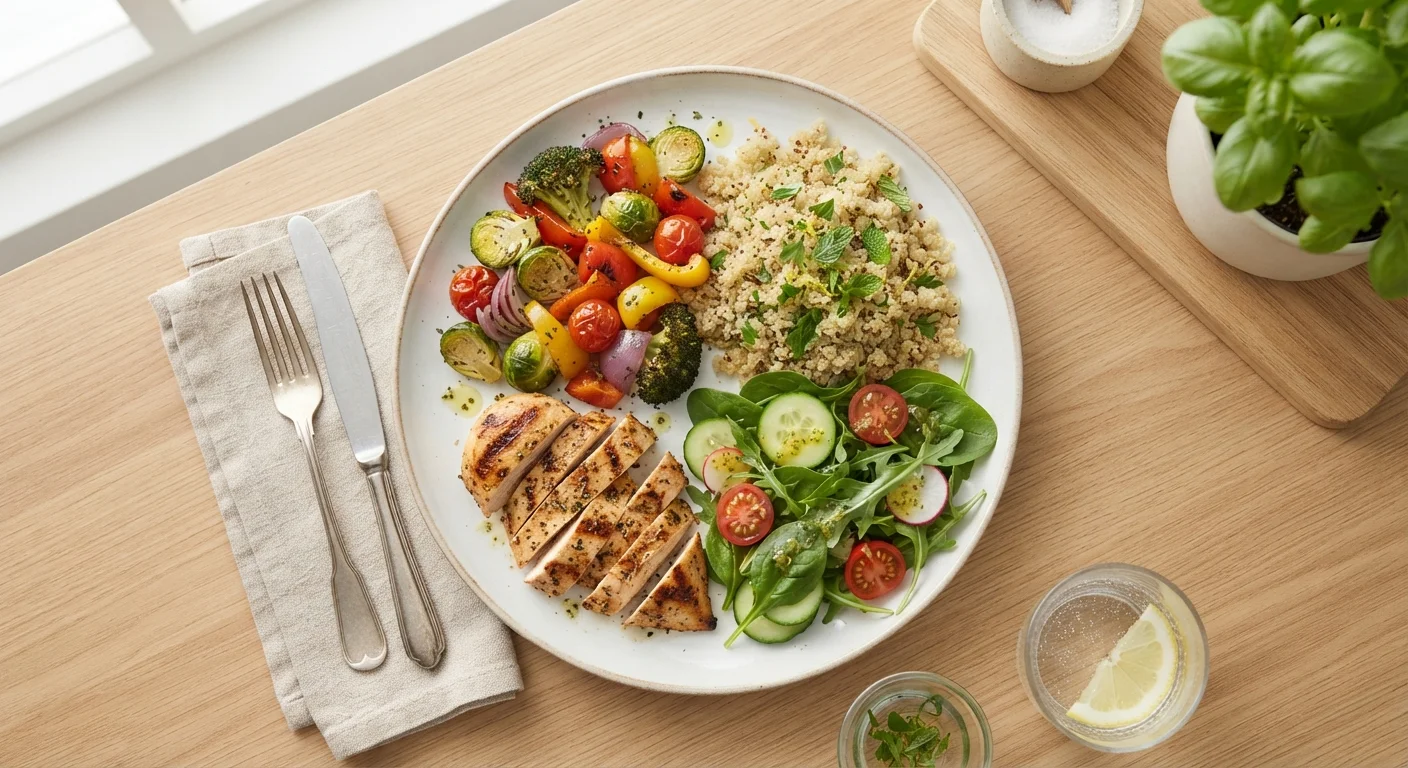
For a straightforward framework on assembling individual meals, see building a nutritionally balanced plate without overthinking it. The practices outlined here operate at the habit and system level above individual meals.
Eating Well Beyond the Kitchen
Office lunches, client dinners, and on-the-go situations are where nutrition habits get genuinely tested. The goal isn't perfection - it's having a default mental model that requires minimal active thinking.
When ordering out, a useful heuristic is to look for a protein anchor (chicken, fish, legumes, eggs), a vegetable component, and a minimally processed carbohydrate. Most cuisines offer this combination somewhere on the menu. The same logic applies when traveling - for strategies specific to that context, eating well while traveling offers a practical parallel framework.
One Missed Meal Doesn't Undo Your Habits
Nutrition quality is determined by patterns over days and weeks, not individual meals. Skipping a vegetable at one dinner or eating a less nutritious lunch during a packed workday has negligible impact on overall diet quality. What matters is what your default choices look like most of the time. If you find yourself in an all-or-nothing mindset around food, that framing itself is worth examining - consistency and flexibility together produce better long-term outcomes than rigid adherence followed by abandonment.
Nutrition doesn't operate in isolation from the rest of your daily structure. How you sleep, move, and manage stress all influence hunger signals and food choices. For a broader look at physical health habits, the working professional's fitness reference is a useful companion resource.
This article is for general informational and educational purposes only and does not constitute medical or dietary advice. Consult a qualified healthcare professional or registered dietitian for guidance tailored to your individual health needs.