Why You Keep Ending Up in Tourist Restaurants
The pattern is predictable: you arrive somewhere new, you're hungry by evening, you haven't scouted anything, and the nearest restaurant with an English menu and photos of the food becomes dinner. Nothing catastrophic happens - you eat, you pay more than you should have, the food is forgettable. Repeat for five nights and you've spent significantly more than you needed to while missing the most interesting part of a destination's food culture.
Tourist restaurants exist to solve one problem: reducing friction for visitors who don't know where else to go. That's a reasonable service, but it's a passive default, not a choice. The fix is not complex - it's a small amount of pre-trip intention and a willingness to walk 10 minutes further than feels obvious.
For context on how food fits into broader travel planning, see our guide to planning a complete trip from research through return.
What you will need
Tools That Make This Easier
You don't need specialized gear to eat well on the road - but a few practical tools remove friction at key moments. An offline map gets you to a neighborhood market when you have no data. A translation app with camera mode makes an entirely hand-lettered menu navigable. Kitchen access in your lodging turns market visits into actual meals rather than just snacks.
Offline maps app (e.g., Maps.me or Google Maps offline)
Pre-download neighborhood maps to locate markets, local canteens, and non-tourist dining areas without relying on data.
Translation app with camera mode
Translate handwritten or printed menus in real time to understand dishes before ordering.
Small reusable container or bag
Useful for carrying market purchases, takeaway items, or picnic components back to your accommodation.
Accommodation with kitchen or kitchenette
Enables self-catering for at least one meal per day, which significantly reduces total food spend on longer trips.
Translation Apps Have Limits in Menus
Automated menu translation can produce misleading results, especially with regional dialects or handwritten boards. Use translation as a starting point, not a definitive guide. When uncertain about ingredients - particularly if you have allergies - confirm directly with staff before ordering.
How to Eat Well: Step by Step
The following steps work as a framework for any destination. You don't need to execute all of them on every trip - even two or three will meaningfully shift the quality and cost of what you eat. Adapt based on how much flexibility your itinerary structure allows.
Do a focused 30-minute food research session before you leave
Before you open any restaurant app, search for the destination's food culture basics: What are the staple dishes? What does a typical local breakfast look like? Are there specific market days or neighborhood food streets worth knowing about?
Food blogs written by expats or long-term residents often surface practical details - which neighborhoods have the best street food, what to order at a canteen, which dishes are tourist-trap versions of something better found elsewhere. This single session will frame everything you eat on the trip more usefully than any crowd-sourced review platform.
Orient yourself around markets on arrival day
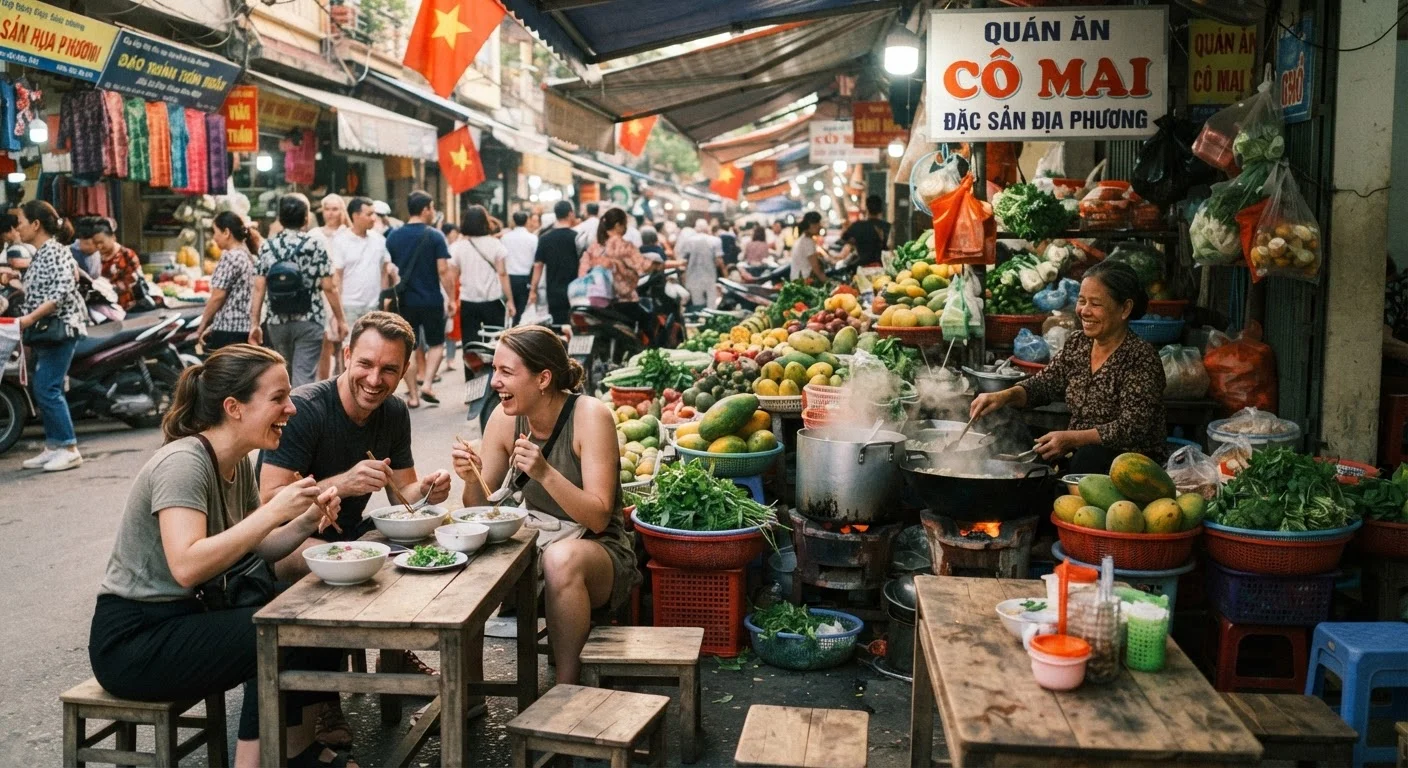
On your first full day, locate the nearest local market - not a tourist market selling crafts, but a food market where residents shop. These are reliable sources of fresh produce, prepared snacks, cooked food stalls, and a fast read on what the local diet actually looks like.
Even if you are not self-catering, walking a food market calibrates your sense of portion sizes, price norms, and ingredient patterns for the rest of the trip. It also gives you something to eat right now, cheaply and well.
Identify one neighborhood that locals actually use
Tourist restaurants cluster around sights, transit hubs, and hotel districts. Move 10-15 minutes on foot away from those areas and the price-to-quality ratio shifts noticeably. Look for streets with office workers eating lunch, neighborhood bakeries, or canteen-style spots with handwritten menus and no photographs on the wall.
If your itinerary includes multiple neighborhoods, note the local dining options in each rather than defaulting to whatever is nearest your hotel.
Ask staff at your accommodation for a specific recommendation
Skip the generic 'where should I eat?' question. Instead, ask: "Where do you personally eat lunch on a workday?" or "What's a good spot nearby that isn't in any guidebook?" Specific questions produce specific answers. Front desk staff, guesthouse hosts, and short-term rental hosts who live locally are consistently the most reliable food intelligence source available.
If you are staying in accommodation worth visiting - see budget accommodation options for a range of choices - the people staffing it often have genuinely useful local knowledge.
Use kitchen access strategically, not constantly
If your accommodation has a kitchen, the goal is not to cook every meal - that defeats the point of traveling. The goal is to handle low-stakes meals yourself: a market breakfast, a simple lunch assembled from what you bought the day before, or a late-night snack that would otherwise cost three times more from room service or a tourist strip café.
Reserve restaurant meals for when they are worth the experience: a well-regarded local spot, a lunch set menu at a restaurant you genuinely want to try, or a meal that is clearly part of the cultural experience of that destination.
Eat the tourist restaurant meal deliberately, not by default
Tourist restaurants are not inherently bad - some are genuinely good. The problem is landing in one by accident when you were hungry, tired, and standing outside a mediocre place with an English menu and pictures of food. If you are going to eat at a tourist-facing restaurant, choose it on purpose: because the reviews are specific, because a local recommended it, or because it represents something you actually want to experience.
The broader discipline of eating intentionally while traveling connects to how you plan the whole trip. A well-planned trip builds in enough flexibility that you are not making all your food decisions under duress.
Lunch Is Your Leverage at Good Restaurants
Many well-regarded local restaurants offer a fixed lunch menu - sometimes called a 'prix fixe,' 'menu del día,' or 'set lunch' - at a fraction of their dinner prices. This is the same kitchen, same sourcing, smaller bill. Scheduling your one indulgent meal at midday rather than evening is one of the most consistent money-saving moves in travel.
Verify Food Safety Before Eating Street Food
Street food quality varies significantly by destination. Before eating from roadside stalls or markets, research destination-specific food safety guidance from official sources such as the CDC or your government's travel health portal. High turnover at a stall is generally a positive signal, but it is not a guarantee. When in doubt, choose cooked-to-order items served hot.
Keeping Food Costs in Check Without Sacrificing Quality
Eating well and spending less are not in tension when you shift away from tourist-facing dining. Local canteens and market stalls typically offer food that is both more authentic and considerably more affordable. The financial discipline here is the same as the experiential one: be deliberate rather than reactive.
If you're actively working on travel savings more broadly, the principles in our guide to building savings habits apply just as well to a dedicated travel fund as to an emergency buffer.
Food decisions accumulate across a trip. Handling two of three daily meals inexpensively - a market breakfast, a canteen lunch - gives you the budget margin to eat somewhere genuinely worth the price when it counts. That's a better outcome than uniform mediocrity spread across every meal.
This article provides general travel information for educational purposes. Food safety conditions, prices, and market availability vary by destination and change over time. Always verify local conditions and consult official travel health resources before your trip.