Why Label Literacy Is a Foundational Skill
Packaged foods line most grocery carts, yet the information printed on every box, bag, and bottle remains confusing to a surprising number of shoppers. If you've ever stood in an aisle comparing two products and felt more confused after looking at the labels, you're not alone - and it's not a knowledge problem so much as a framing one.
The Nutrition Facts panel is a regulatory document designed to enable comparison, not to tell you what to eat. Once you understand the logic behind its structure, it becomes genuinely useful rather than overwhelming. This guide treats labels as a tool for informed decision-making, not a scorecard. If you're newer to the broader topic, our nutrition basics primer covers foundational concepts worth reading first.
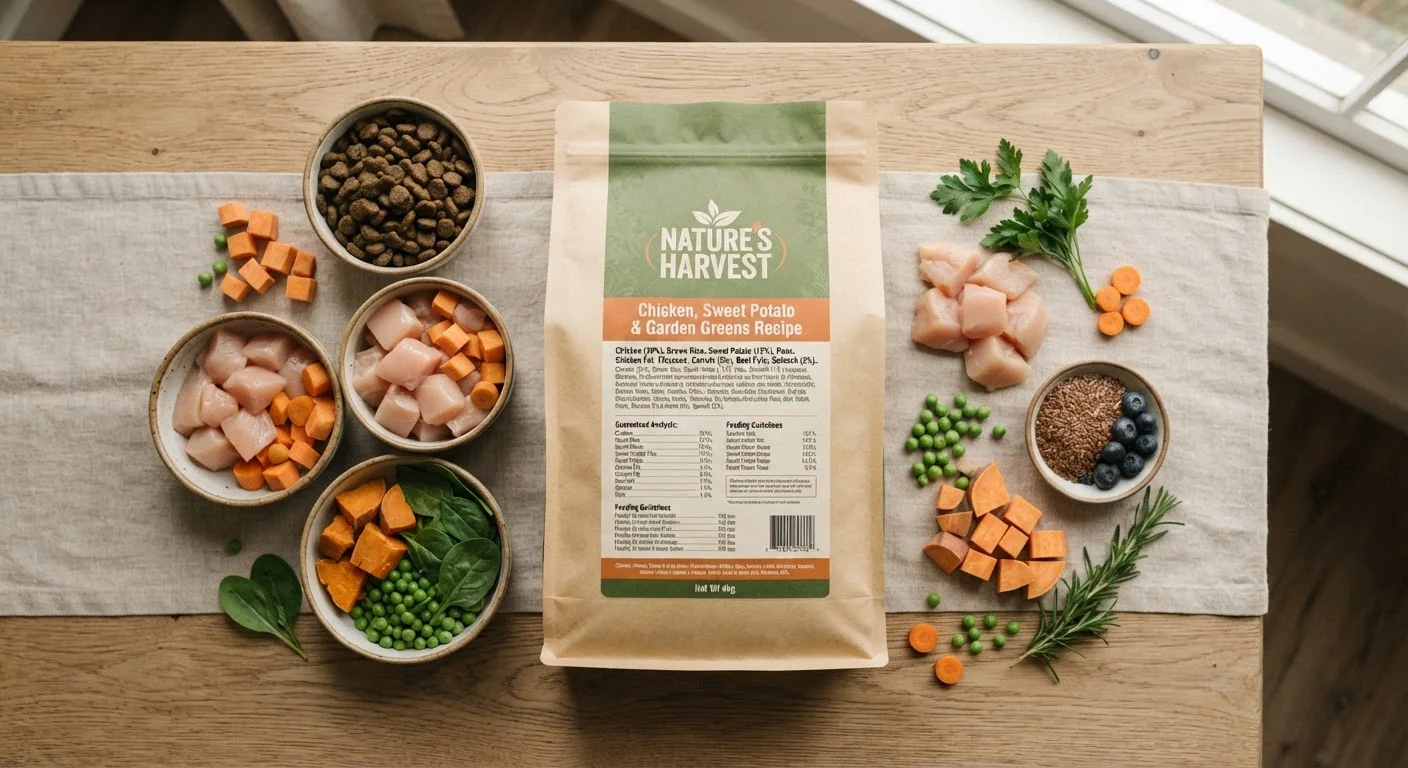
Interestingly, the skill of parsing a dense information document applies across contexts - from reading a fund factsheet to understanding what's on your pet's food label. In each case, the strategy is the same: identify what matters, ignore the noise.
What the Nutrition Facts Panel Is Actually Showing You
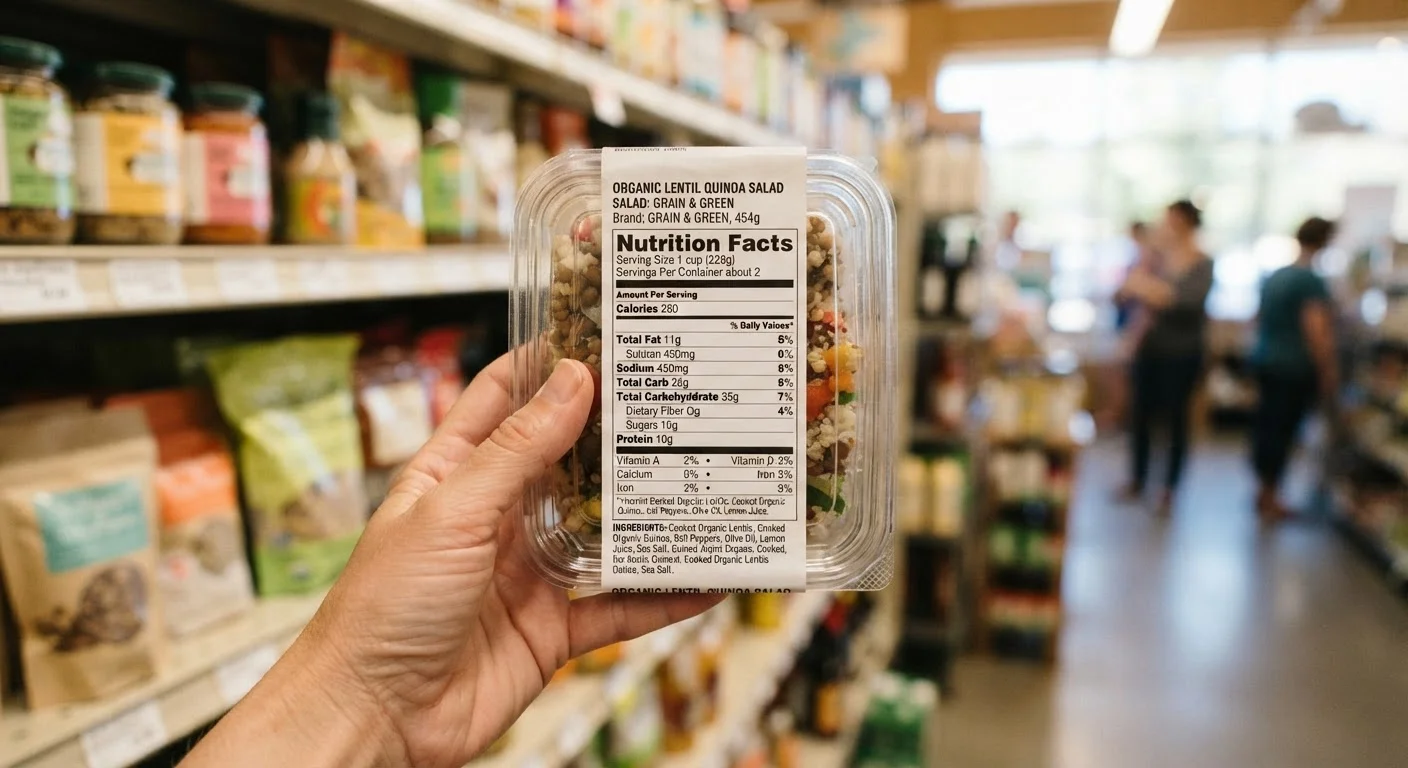
The US Nutrition Facts label follows an FDA-mandated format, updated most recently in 2020. Every panel shares the same structure, which makes cross-product comparison straightforward once you know the hierarchy.
Use Serving Size as Your Starting Anchor
Every number on the Nutrition Facts panel is only meaningful relative to the listed serving size. Before reading any other value, confirm how that serving size compares to what you'd actually eat. This single step prevents the most common label misreading errors and takes under five seconds.
Serving Size: The Variable That Changes Everything
Serving size appears at the top of the panel because it anchors every value below it. If a bag of chips lists a serving as 28g (about 11 chips) but you typically eat twice that, every number on the label doubles for your purposes. Serving sizes are set to reflect amounts people commonly eat, according to FDA reference data - they are descriptive, not prescriptive.
Calories
The large calorie figure reflects energy per listed serving. Calories from fat are no longer broken out separately on updated labels, reflecting a shift in nutrition science away from total dietary fat as a primary concern.
The % Daily Value Column
The %DV column is your fastest comparison tool. It's calculated against a 2,000-calorie reference diet - a benchmark, not a universal target. Use the rule of thumb: 5% DV or less is considered low; 20% DV or more is considered high. This makes scanning quick: you can look for high %DV for fiber, vitamins, and minerals, and low %DV for sodium, saturated fat, and added sugars.
Added Sugars vs. Total Sugars
The 2020 label update separated added sugars from total sugars - a meaningful distinction. Total sugars include naturally occurring ones (like lactose in dairy or fructose in fruit), while added sugars are introduced during processing. Dietary guidance generally focuses attention on added sugars as the more useful number to watch. For a deeper look at how fiber interacts with sugar metabolism and blood sugar, see our guide on dietary fibre.
Decoding the Ingredient List
Ingredients are listed in descending order by weight - the ingredient present in the largest amount appears first. This single rule does a lot of work. A product listing whole oats, almonds, and honey in the first three positions is nutritionally very different from one that leads with refined flour, sugar, and palm oil, regardless of what the front of the package claims.
A few practical flags worth knowing:
- Multiple forms of sugar: Manufacturers sometimes use several different sweeteners (cane syrup, dextrose, maltose, fruit juice concentrate) so that each appears lower on the list individually, even though their combined contribution is substantial.
- Hydrogenated or partially hydrogenated oils: These indicate the presence of trans fats. A product can legally list 0g of trans fat per serving if the amount is below 0.5g - check the ingredient list if this matters to you.
- Ingredient list length: Length alone isn't a perfect proxy for quality, but a very long list dominated by unfamiliar chemical names often signals a highly processed product. For context on what distinguishes processed from less-processed foods, see our explainer on whole vs. ultra-processed foods.
Multiple Sugar Names Can Obscure Total Content
Manufacturers may use several distinct sweeteners - dextrose, maltose, cane syrup, fruit juice concentrate - so each appears separately and lower on the ingredient list. The added sugars line on the Nutrition Facts panel captures these collectively and is the more reliable figure. When in doubt, cross-reference both the ingredient list and the added sugars %DV.
Front-of-Pack Claims: Marketing vs. Regulated Language
Front-of-pack language is where the greatest consumer confusion lives. Some terms carry legal definitions; many do not.
| Term | Regulatory status | What it actually means |
|---|---|---|
| Low sodium | FDA-defined | 140mg or less per serving |
| Reduced fat | FDA-defined | At least 25% less fat than the standard version |
| Natural | Not strictly defined | No consistent regulatory meaning for most foods |
| Light | Context-dependent | Can refer to calories, fat, or even color/texture |
| Multigrain | Not a whole-grain claim | Contains multiple grains, which may all be refined |
The discipline here is to treat the front of the package as advertising, and the Nutrition Facts panel and ingredient list as the source of truth. Once you build that habit, the label-reading process becomes much faster and more reliable.
Putting this skill into practice alongside a broader approach to eating makes it even more powerful. Our guide on building a nutritionally balanced plate offers a flexible framework for using this knowledge without turning every meal into an analysis exercise.
This article is for general informational and educational purposes only and does not constitute medical or dietary advice. Consult a qualified healthcare professional or registered dietitian for guidance specific to your health needs.