Why Tyres Are Your Car's Most Safety-Critical Component
Every braking, steering, and acceleration input your vehicle makes is transmitted to the road through four contact patches - each roughly the size of a human hand. Tyre condition determines how effectively those patches do their job. Advanced driver-assistance systems, anti-lock brakes, and stability control all depend on the tyres beneath them performing as designed. No electronic system can compensate for rubber that is worn, under-inflated, or structurally compromised.
This guide covers the tyre factors that most directly affect grip, braking, and handling in everyday driving - from tread depth and inflation pressure to age degradation and damage assessment. Whether you're a new driver building good habits or an experienced one who hasn't thought much about tyres since the last rotation, the information here is practical and actionable.
2/32"
US legal minimum tread depth
Per federal safety standards; wear indicators in most tyres sit at this depth as a built-in warning.
4/32"
Recommended wet-road replacement threshold
Independent safety testing consistently shows measurable stopping distance increases below this depth on wet surfaces.
6-10 years
Recommended maximum tyre service life
Most tyre manufacturers and NHTSA advise replacement within this window regardless of visual tread depth.
Tread Depth: The Legal Minimum vs. the Safe Minimum
In the United States, the federal legal minimum tread depth is 2/32 of an inch. At this point, the wear indicators molded into the tyre grooves sit flush with the tread surface - a clear signal the tyre must be replaced. However, the critical safety threshold is higher than the law requires.
Research from the National Highway Traffic Safety Administration (NHTSA) and independent testing by consumer safety organizations has consistently shown that wet-road stopping distances increase significantly as tread depth falls below 4/32". At 2/32", a vehicle traveling at highway speed on a wet road can require substantially more distance to stop than the same vehicle with new tyres. The practical implication: plan for replacement before you reach the legal limit, not at it.
A quick field check: insert a quarter into a tread groove with Washington's head pointing down. If you can see the top of his head, you're below 4/32" and should be planning for replacement. The penny test (Lincoln's head) marks the 2/32" legal threshold.
For a deeper look at how wear patterns can reveal more than just depth, see Reading Your Tyres: Wear Patterns That Signal Bigger Problems.
Use the quarter test rather than the penny test as your personal replacement trigger. Replacing tyres at 4/32" rather than the legal 2/32" provides a meaningful safety buffer, especially for wet-weather driving.
Wet-road stopping distances increase substantially as tread wears from 4/32" toward the legal minimum; acting earlier reduces this risk without unnecessary cost.
Check tyre pressure first thing in the morning before the car has been driven, especially in seasonal temperature swings. Pressure drops roughly 1 PSI for every 10°F decrease in ambient temperature.
Cold-check readings are the only accurate baseline; heat from driving inflates the measurement and can lead to under-correction of a genuinely low tyre.
Inflation Pressure and What It Does to Grip and Handling
Tyre pressure affects the shape of that contact patch. An under-inflated tyre deforms more than intended, increasing rolling resistance and heat buildup while reducing steering precision. An over-inflated tyre reduces the contact patch size, making the ride harsher and reducing grip on uneven surfaces. Both states increase braking distances compared to properly inflated tyres.
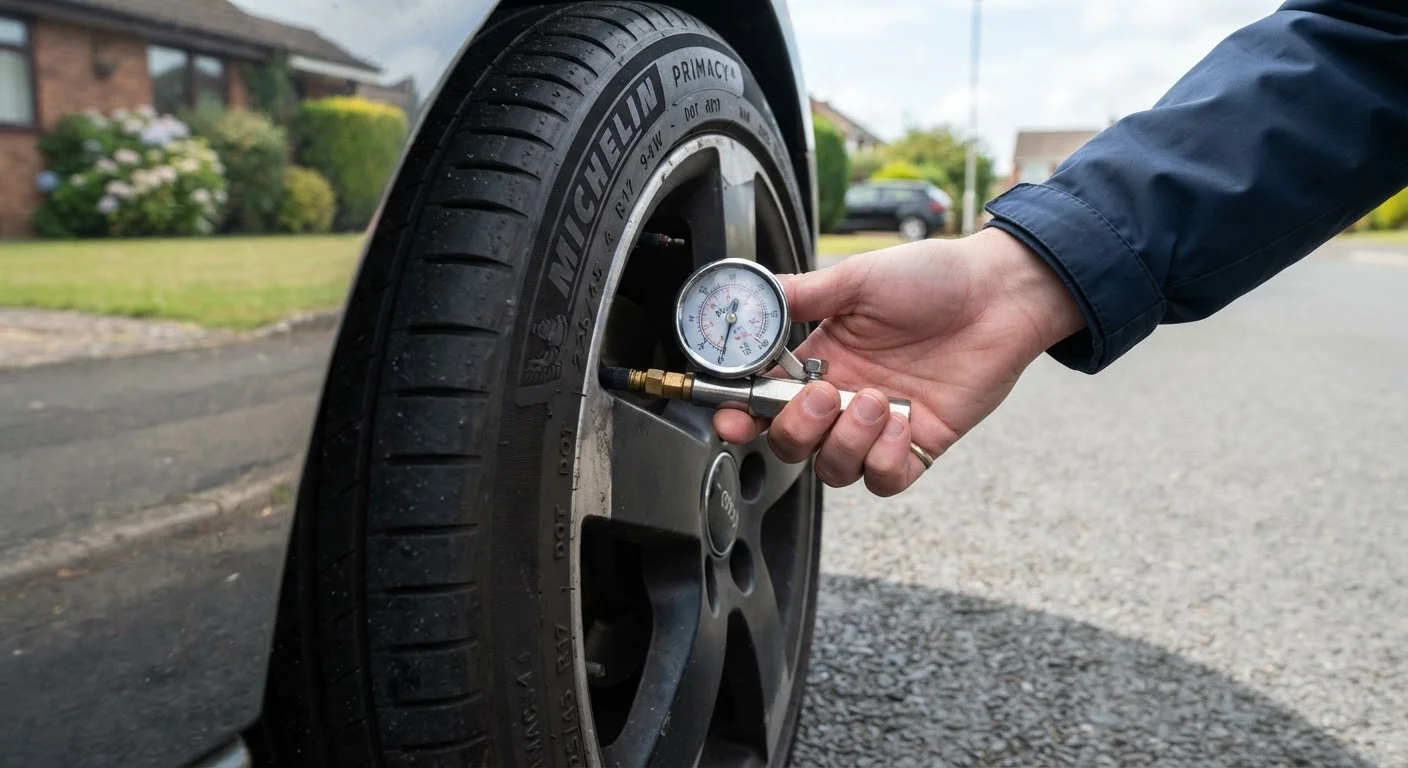
Your vehicle's correct inflation pressure is found on the door placard (driver's side door jamb) or in the owner's manual - not on the tyre sidewall, which shows the maximum pressure the tyre can hold, not the recommended operating pressure. Check pressure when tyres are cold (driven less than one mile), since heat from driving increases pressure readings.
Check Pressure Monthly - Not Just Seasonally
Tyre pressure can drop 1-2 PSI per month through normal permeation, even without a slow leak. Monthly cold checks are the minimum recommended interval. Make it a habit to check all four tyres plus the spare at the start of each month.
For a full breakdown of how pressure affects fuel economy, wear, and braking - and how to read your placard correctly - see Tyre Pressure and Why Getting It Wrong Costs You More Than You Think.
Tyre Age and Structural Degradation
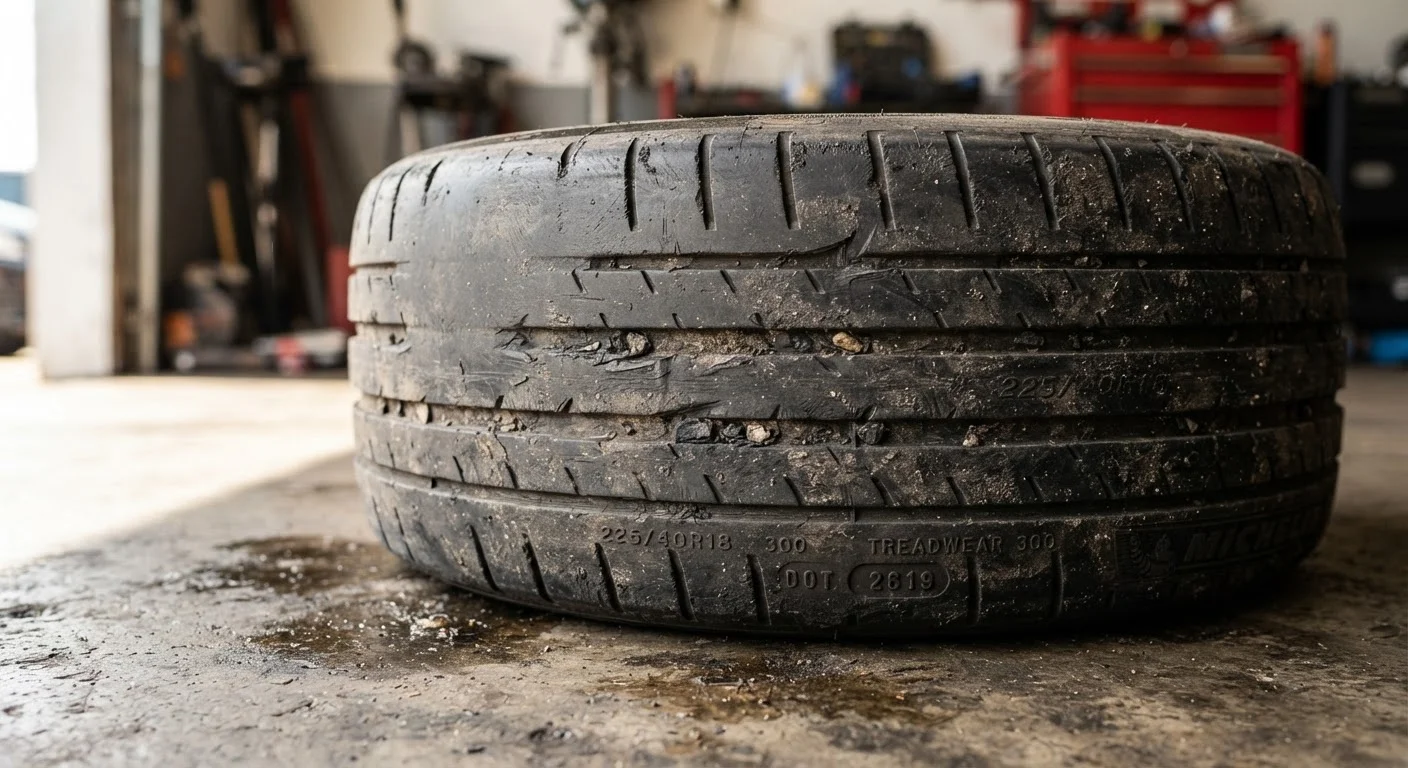
Rubber compounds degrade over time regardless of how much the tyre has been driven. UV exposure, heat cycles, and oxidation cause the rubber to harden and develop micro-cracks - a process called ozone cracking. A tyre with plenty of tread depth can still be structurally unsound if it's old enough.
Most major tyre manufacturers and the NHTSA recommend that tyres be inspected annually once they reach five years old, and that replacement be considered by six to ten years from the manufacture date - even if the tyre appears visually acceptable. You can find a tyre's manufacture date in the DOT code on the sidewall: the last four digits indicate the week and year of manufacture (e.g., 2419 = 24th week of 2019).
Old Tyres Can Look Fine and Still Be Unsafe
A tyre with 6/32" of remaining tread but manufactured ten years ago may be more dangerous than a newer tyre at 3/32". Internal cord degradation and rubber hardening are not visible to the naked eye. Always check the DOT manufacture date before concluding a tyre is serviceable based on tread depth alone.
Driving habits that generate excessive heat - hard cornering, frequent heavy braking, or chronic under-inflation - accelerate this chemical aging process. See Habits That Accelerate Wear on Your Car Without You Realising for a broader look at behaviors that quietly shorten component life.
Damage, Repairs, and When a Tyre Cannot Be Saved
Not all tyre damage can be repaired safely. Industry standards (following guidelines from organizations such as the RMA) specify that a puncture is only repairable if it is located within the central tread area, is no larger than 1/4 inch in diameter, and the tyre has not been driven while significantly flat. Punctures in the shoulder or sidewall, or those caused by a run-flat situation, generally require full replacement.
Sidewall bulges are particularly dangerous: they indicate internal structural damage to the tyre's cords and mean the tyre could fail without warning. A tyre with a visible bulge should be treated as out of service immediately. Similarly, deep cuts, cracking around the bead (where the tyre meets the rim), or visible cord should prompt immediate professional assessment.
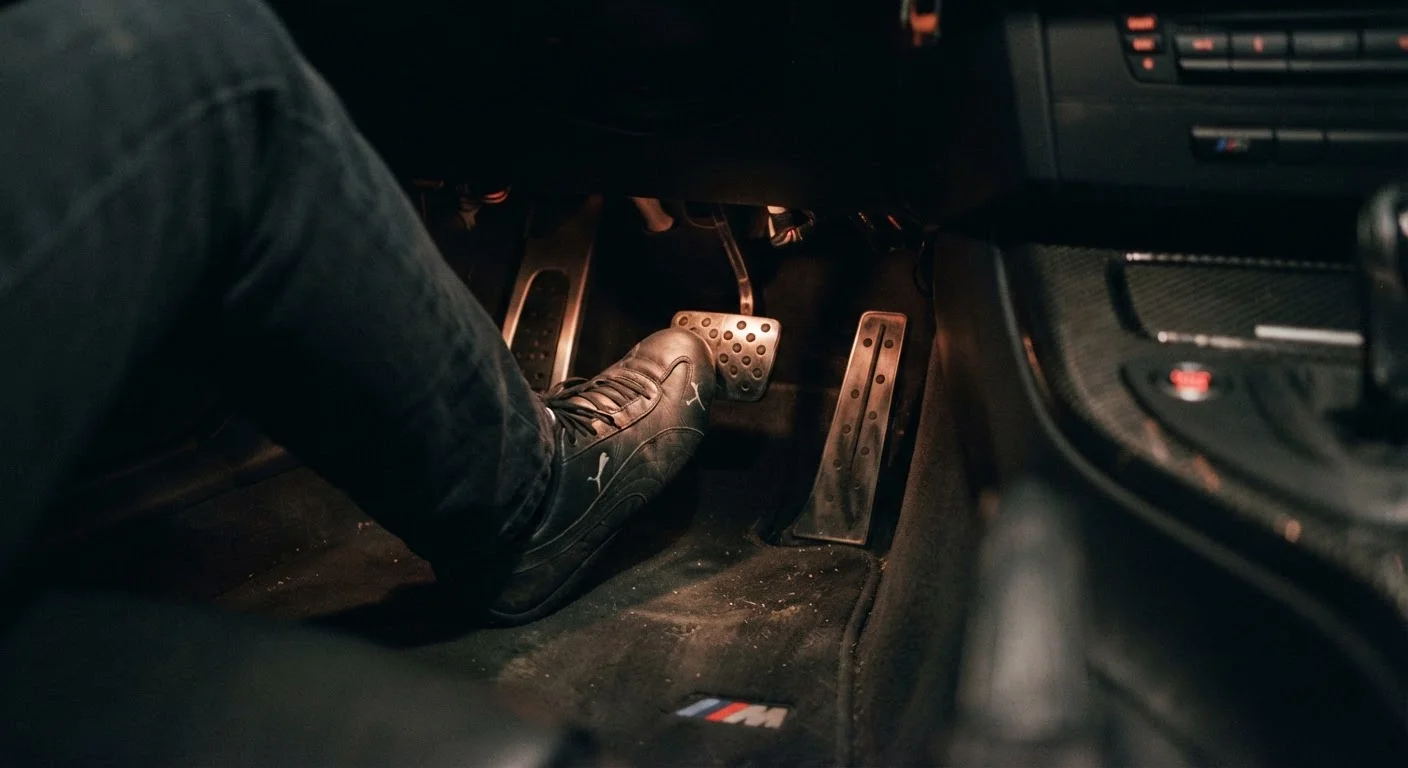
Tyre condition directly affects how your braking system performs. A worn or damaged tyre undermines even a well-maintained braking setup - for context on the full stopping-distance equation, see Brake Maintenance From a Driver's Perspective.
Never Drive on a Visibly Bulging Tyre
A sidewall bulge indicates that the internal cord structure has been compromised. The tyre can fail suddenly and without further warning, leading to a blowout. Pull over safely and arrange a replacement or tow - do not continue driving on the damaged tyre.
Building a Tyre Inspection Habit
A monthly visual check and pressure check takes under five minutes and catches the most common problems before they become dangerous. Here's a practical routine:
- Check pressure cold - use a reliable gauge and compare to the door placard specification.
- Inspect the tread visually - look for uneven wear, low tread depth, or embedded objects.
- Check the sidewalls - look for bulges, cuts, cracking, or any deformation.
- Inspect the valve stems - cracked or missing valve caps allow moisture in and should be replaced.
- Check the spare - a flat spare at the roadside is a common and avoidable problem.
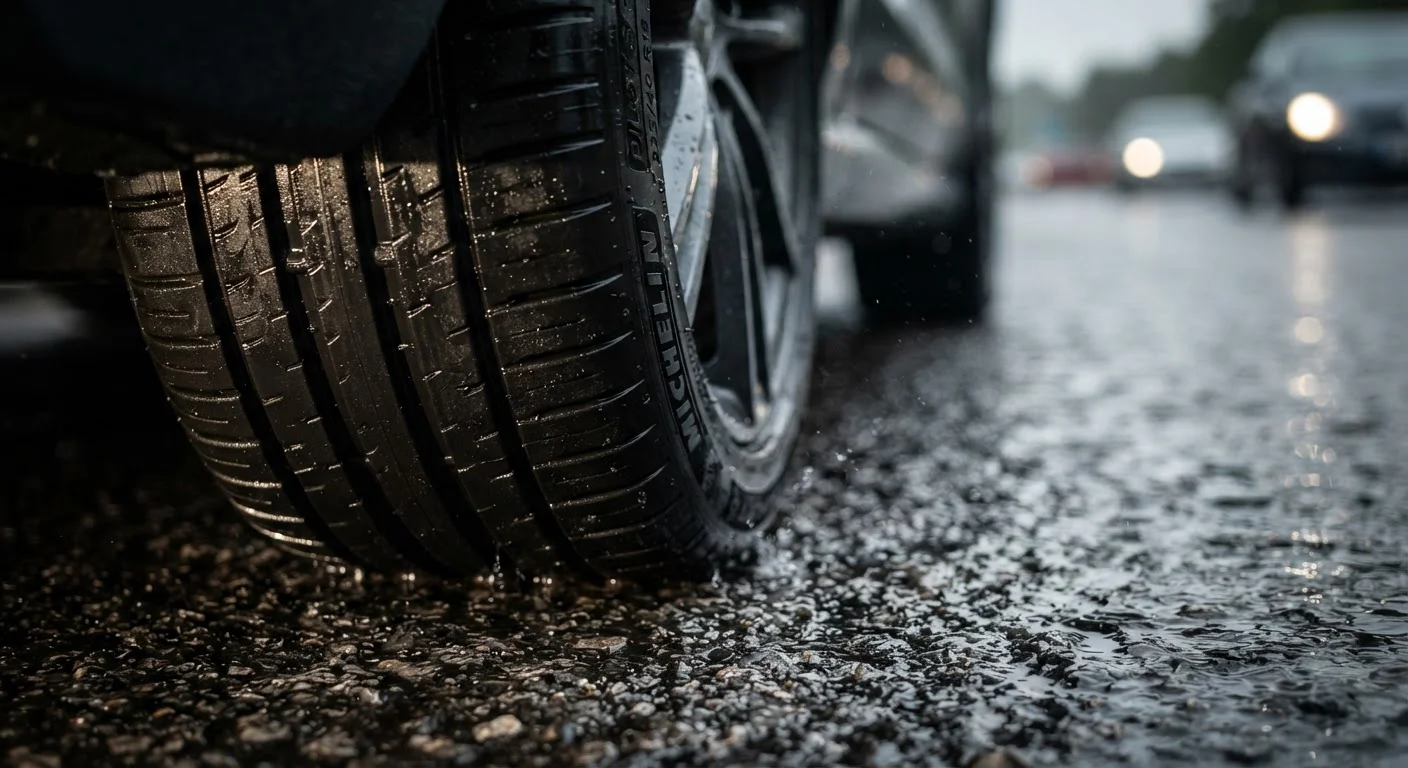
Wet weather is when tyre condition matters most. If you regularly drive in rain, understand that tread depth and inflation pressure determine whether water is displaced efficiently from the contact patch - the mechanism behind aquaplaning. For practical wet-weather driving adjustments, see Driving in Heavy Rain Without Losing Confidence.
For all routine maintenance context, the Car Maintenance hub covers the full spectrum of upkeep tasks that keep a vehicle safe and reliable.
“Tyres are the single point where everything the car does - accelerating, braking, turning - has to happen. Everything else in the vehicle depends on that interface working correctly.”
— NHTSA Vehicle Safety Research Division, National Highway Traffic Safety Administration