Why Rain Changes the Rules
Water on a road surface does more than make it slippery. It creates a wedge between your tyre and the asphalt that, at sufficient speed or depth, can separate them entirely. This is aquaplaning - and it removes your ability to steer or brake effectively until the tyres regain contact. Understanding the mechanics helps you make better decisions rather than simply reacting with anxiety.
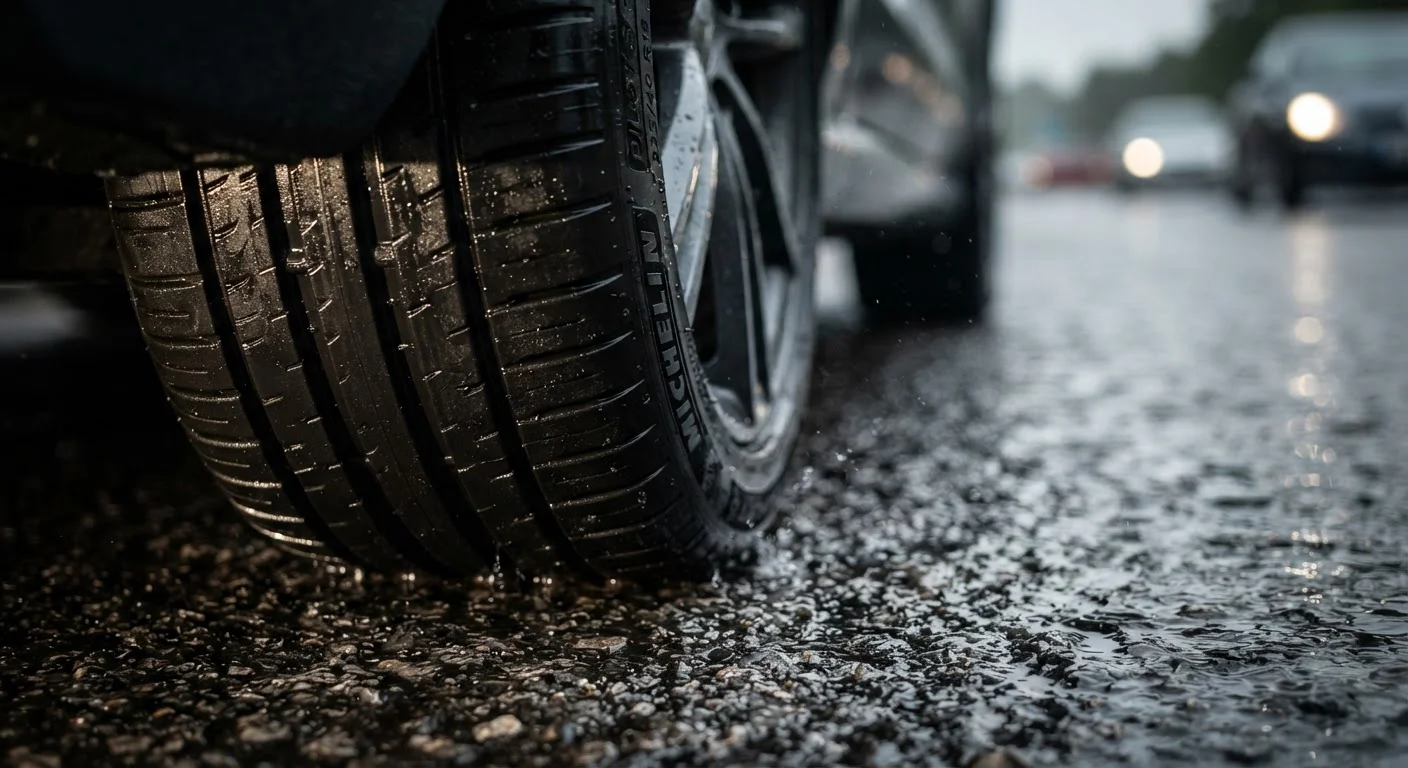
The two key factors governing wet-road grip are tyre condition and speed. Tyre tread channels exist specifically to push water out from under the contact patch. When tread is worn or speed is too high, those channels are overwhelmed. This is why tyre condition directly affects your safety in wet weather - not just your tyre's lifespan.
Braking behaviour also changes substantially. On wet roads, the friction coefficient between tyre and road drops. Stopping distances that feel comfortable on dry pavement become dangerously short in reality when it rains. Drivers who treat wet roads like dry ones are relying on a safety margin that no longer exists.
Use Previous Tyre Tracks When Safe
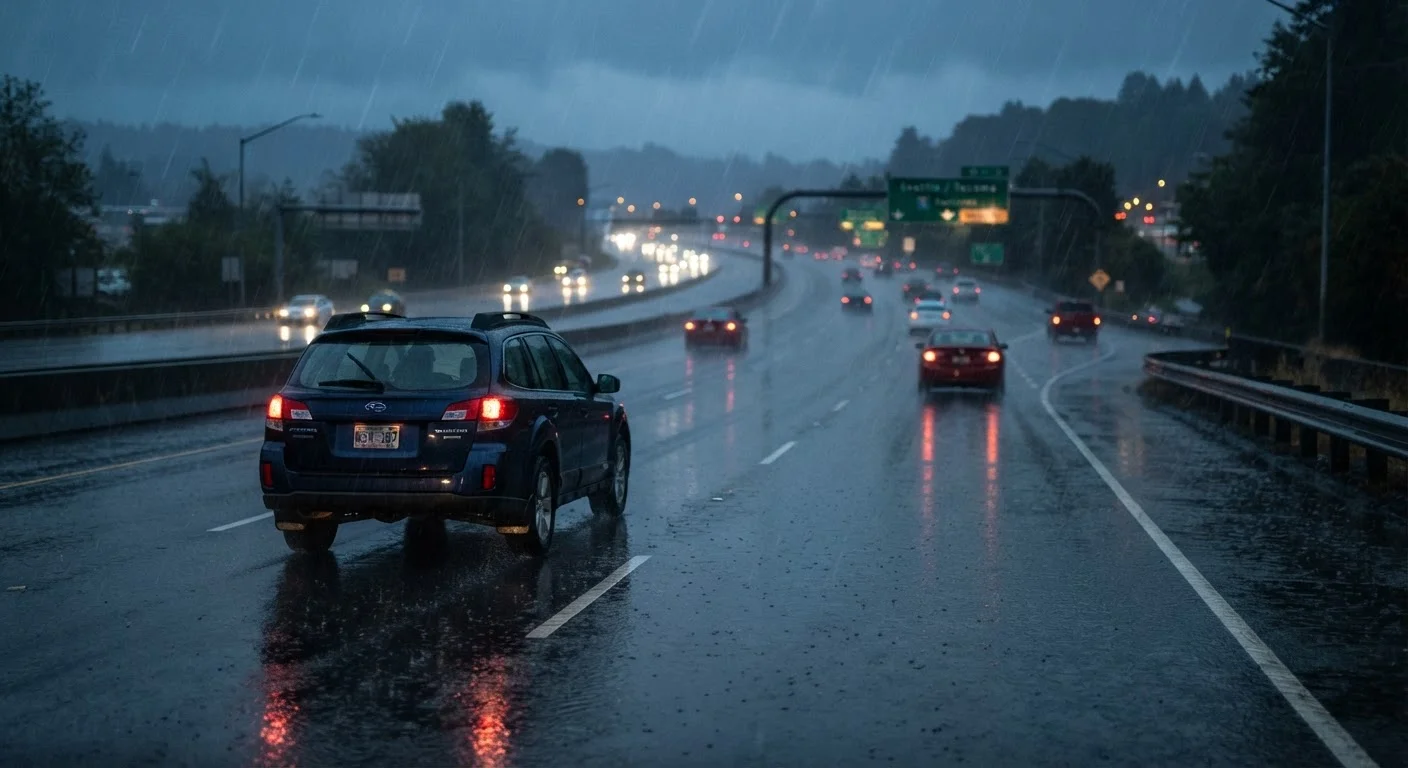
On a multi-lane road in heavy rain, following in the wheel tracks left by vehicles ahead can help reduce the depth of water your tyres must displace. This is especially useful on roads prone to pooling. Keep a safe following distance - don't tailor your gap to the tracks alone.
Heavy rain driving shares some characteristics with other challenging conditions. The same principle of anticipating hazards rather than reacting applies equally - see how defensive driving differs from reactive driving for a deeper look at building that mental model. For contrast, night driving presents a different but overlapping set of challenges.
Step-by-Step: Driving Through Heavy Rain
What you will need
Tread Depth Gauge
Measures tyre tread depth accurately so you can confirm your tyres are safe for wet-road driving before you set out.
Tyre Pressure Gauge
Verifies tyre inflation is at the manufacturer's recommended level, which directly affects wet-road grip and aquaplaning resistance.
Rain-Sensing Wiper Setting (if equipped)
Automatically adjusts wiper speed to rainfall intensity, keeping your windscreen clear with no manual distraction.
Check your vehicle before driving in rain
Before a journey in wet conditions, spend two minutes on basic checks. Confirm wiper blades clear water cleanly without streaking - worn blades reduce visibility sharply. Check that your rear demister and front defroster work. Verify tyre pressures match the placard value found on your driver's door jamb, and do a visual inspection of tread depth. Underinflated or worn tyres are a primary contributor to aquaplaning.
Reduce your speed meaningfully
The relationship between speed and aquaplaning risk is not linear - doubling your speed roughly quadruples the force your tyres must manage to displace water. At highway speeds in heavy rain, tread that would normally be adequate may fail to channel water away quickly enough. Dropping from 65 mph to 50 mph is not a minor adjustment; it meaningfully reduces your risk of losing contact with the road. Slow down before you reach standing water, not while you're in it.
Increase your following distance
On dry roads, a three-second following gap is a standard minimum. In heavy rain, extend this to at least six seconds. Your braking distance increases significantly on wet asphalt - in some conditions it can more than double. A larger gap also gives you more time to respond to sudden brake lights ahead without needing to brake harshly, which reduces skid risk on your part.
Use smooth, deliberate inputs
Wet roads reduce the grip available for every manoeuvre - braking, steering, and accelerating all draw from the same limited traction budget. Harsh braking can lock wheels on a slippery surface; sharp steering inputs can cause the rear to step out. Brake early and gradually, steer with deliberate smoothness, and accelerate gently out of turns. Vehicles without ABS require particular care - threshold braking (firm pressure just before lock-up) rather than maximum force gives the shortest stopping distance.
Respond correctly if aquaplaning occurs
Aquaplaning (also called hydroplaning) is the sensation of the steering becoming light and unresponsive - it means your tyres are riding on a film of water rather than the road surface. The instinct to brake hard must be resisted. Instead, ease off the accelerator smoothly, keep the steering wheel straight, and wait for the tyres to re-engage with the road. Once traction returns, you can steer and brake normally. Steering into a skid rather than against it helps maintain directional control.
[important_callout]Manage visibility - yours and others'
Heavy rain reduces how far you can see and how visible you are to other drivers. Turn on your headlights - in most US states this is legally required when conditions require wiper use. Avoid using hazard lights while moving on a highway unless you are stationary; in many states it is illegal to drive with them on in motion as they obscure your turn signals. Keep your windscreen clear using both the front defroster and climate control to prevent fogging from inside.
Flood Water Depth Is Deceptive
Even 12 inches of fast-moving water can move a small car, and flooded roads often hide damaged road surfaces underneath. If standing water ahead looks deeper than a few inches, find an alternative route. Never attempt to judge depth by watching other vehicles - their clearance may differ significantly from yours.
These steps build on each other. Vehicle preparation removes preventable risk before you start. Speed reduction and following distance give you time and space to respond. Smooth inputs keep the car stable. And knowing how to handle aquaplaning means that if it does occur, you respond correctly rather than making it worse. For high-speed scenarios - such as a sudden downpour on the highway - understanding motorway driving fundamentals provides additional context on managing space at speed.