The National Speed Limit Isn't One Number
Many drivers assume the national speed limit is a single, universal figure - it isn't. In the United States, speed limits are set by individual states and localities, not by a single federal standard. The federal government can influence limits through highway funding policy, but each state sets its own maximums for different road types.
On rural interstate highways, most states permit speeds between 65 and 80 mph, with some Western states allowing up to 85 mph on specific corridors. Urban interstates typically carry lower limits - commonly 55 to 65 mph - reflecting higher pedestrian and intersection density. Undivided state highways, local roads, and residential streets each carry their own applicable limits, which vary widely by jurisdiction.
A common misconception is that driving at the posted limit is always safe. Posted limits represent the legal maximum under ideal conditions - dry roads, daylight, normal visibility. Drivers are legally and practically required to adjust speed for conditions below that threshold. Stopping distance increases sharply with speed, meaning even a few mph over the limit in poor conditions can dramatically extend the distance needed to stop safely.
Where Drivers Routinely Misread the Rules
Several specific road situations cause widespread confusion - even among experienced drivers.
School and Work Zones
Reduced speed limits in school zones are often time-restricted, applying only during specific hours (typically when children are arriving or leaving). Many drivers don't realize the reduced limit remains in effect even when no children are visibly present if the posted hours are active. Work zone limits, similarly, often apply whether or not workers are physically present on-site.
Unmarked Roads
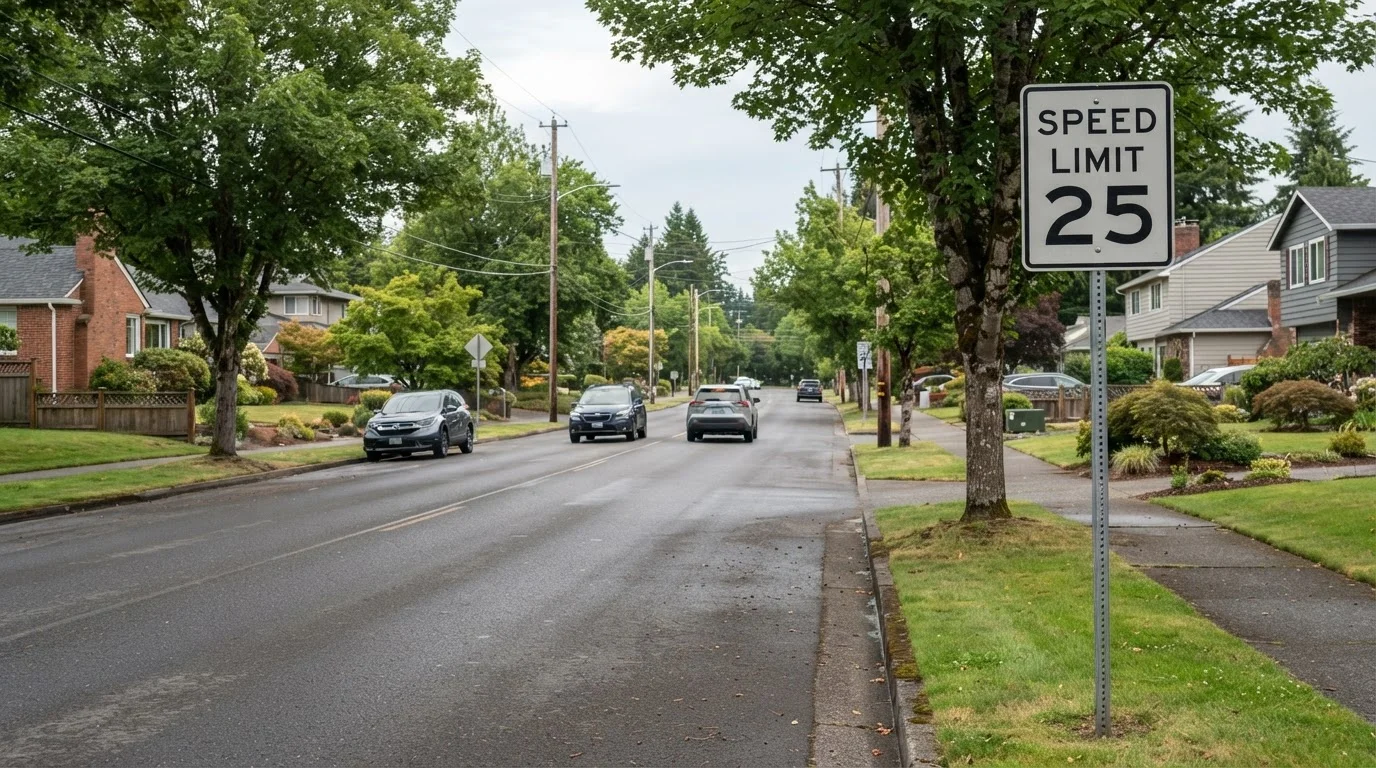
When no speed limit sign is posted, many drivers guess. Most states set a default urban road limit - typically 25 or 30 mph - for local streets without explicit signage. State law governs the applicable default, and ignorance of that law is not a legal defense.
Transitioning Between Zones
A speed limit sign takes effect at the point where it is posted, not once you've fully passed it. Drivers who gradually slow down after the sign - rather than at it - may be technically speeding through the transition zone. This is a particularly common issue entering residential areas from higher-speed arterials.
When No Sign Is Posted
The absence of a speed limit sign does not mean there is no limit. Every state establishes default speed limits by road classification - typically 25 mph in urban areas, 55 mph on undivided rural highways. Always check your state's DMV or driver handbook for the defaults that apply where you drive most.
For new drivers navigating these and other situational challenges, see where new drivers most often go wrong for a deeper look at common first-year blind spots.
Speed, Conditions, and the Reasonable Driver Standard
Traffic law in most U.S. states includes what's commonly called a "basic speed law" or "reasonable and prudent" standard. This means a driver can be cited for driving too fast for conditions - even if they're below the posted limit. Fog, ice, heavy rain, or construction congestion are all factors that legally obligate a driver to reduce speed, regardless of what the sign says.
Night driving is a prime example: reduced visibility means your headlights may not illuminate far enough ahead to stop safely at daytime highway speeds. Driving 65 mph in dense fog while the speed limit is 65 mph can still constitute a traffic violation in many jurisdictions if conditions made that speed unsafe.
Following distance compounds this problem. A driver who is speeding and tailgating simultaneously has almost no margin for emergency response. These two habits together account for a disproportionate share of rear-end collisions on U.S. roads.
Understanding speed limits isn't just about avoiding tickets - it's about grasping the reasoning behind the limits so you can make sound decisions when conditions fall outside what the sign anticipated. High-speed road driving introduces its own specific speed-management challenges that reward preparation.
26%
Of traffic fatalities linked to speeding
According to the National Highway Traffic Safety Administration (NHTSA), speeding was a factor in approximately 26% of all traffic fatalities in a recent reporting year.
2x
Work zone fines in most U.S. states
The majority of U.S. states double standard speeding fines in designated work zones, whether or not workers are present.
40%
Increase in stopping distance from 60 to 70 mph
Physics dictates that stopping distance grows with the square of speed; a 10 mph increase at highway speeds can require significantly more road to stop safely.