
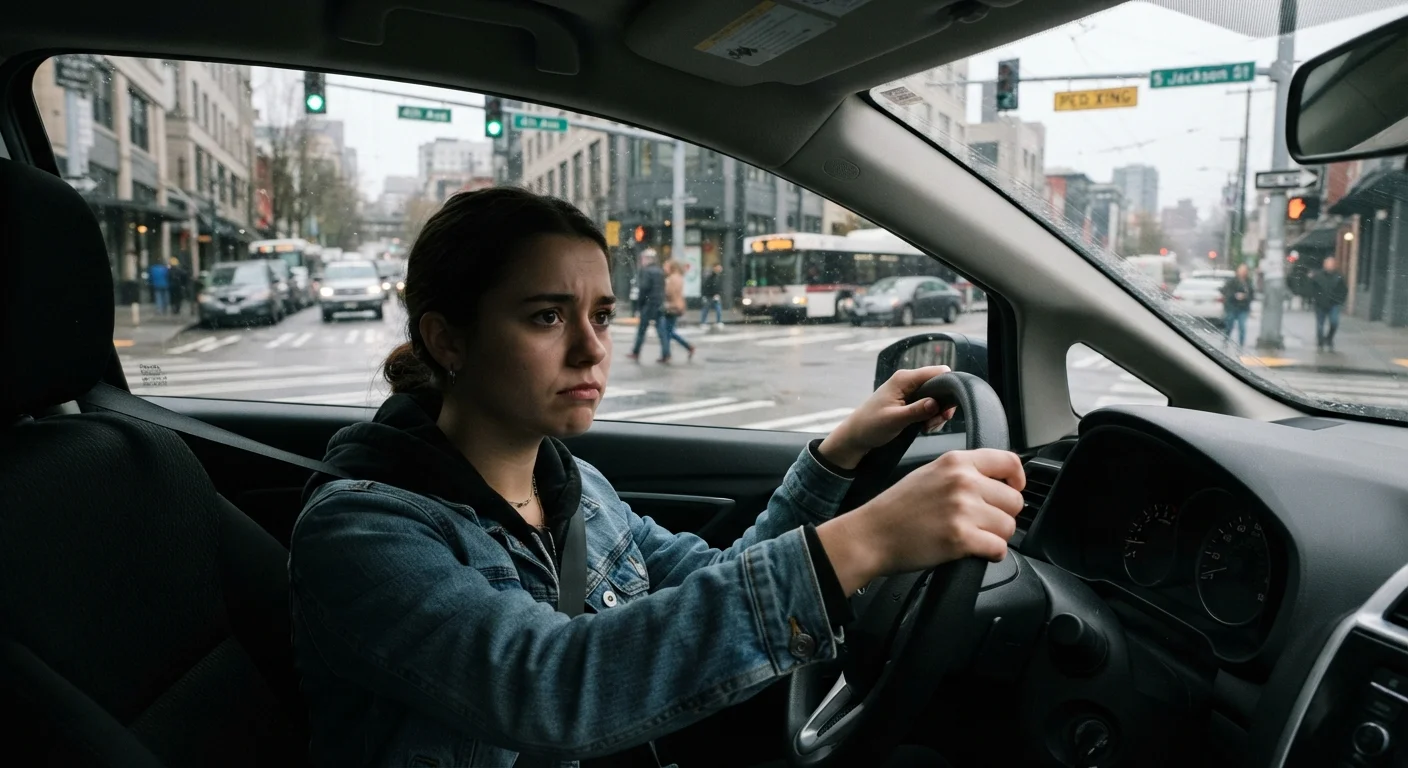
Why the First Year Carries Disproportionate Risk
Getting a driver's licence is a genuine achievement - but the data is unambiguous: the first 12 months of solo driving are the most dangerous a driver will face. Crash rates drop sharply after year one and continue falling with experience. The gap isn't primarily about attitude; it's about the gap between knowing how to control a car and truly reading a dynamic road environment.
Experienced drivers process hazards semi-automatically, which frees up mental resources to monitor mirrors, anticipate other road users, and adjust positioning before problems materialise. New drivers are still allocating conscious attention to the basics - clutch, steering, lane position - leaving far less capacity for everything else. The result is predictable: slower hazard recognition, misjudged gaps, and decisions that work out fine until, suddenly, they don't.
First-Year Crash Risk Is Not a Myth
Research consistently shows that newly licensed drivers face crash rates far higher than any other age or experience group. This is not about recklessness alone - it reflects genuine gaps in hazard perception and situational awareness that only accumulated experience can fully close. Recognising these gaps is the first step toward managing them.
Understanding which specific errors are statistically most common gives new drivers something more useful than generic advice to "be careful." The mistakes below represent real, documented patterns - and each has a concrete fix.
The Most Common Errors - and How to Correct Them
Overestimating their own skill level after passing the test.
Why it happens: Passing a driving test feels like a milestone of competence, and it is - but it certifies minimum legal standard, not mastery. The structured, supervised conditions of lessons rarely replicate night driving, heavy rain, or complex urban traffic.
Misjudging gaps when joining traffic or overtaking.
Why it happens: Accurate gap judgement requires experience calibrating vehicle speed and distance simultaneously - a skill the brain builds through repetition. New drivers often look at a gap and read it as safe based on distance alone, ignoring approach speed.
Scanning too narrowly - only watching the car directly ahead.
Why it happens: New drivers are mentally absorbed by immediate vehicle control: steering, braking, gear selection. This absorbs cognitive bandwidth that experienced drivers use for wide-area scanning.
Using a phone or adjusting music while driving.
Why it happens: Habits built as pedestrians and passengers - checking notifications, skipping tracks - don't automatically switch off behind the wheel. New drivers underestimate how much attention driving actually demands.
Underestimating how speed amplifies stopping distance.
Why it happens: Stopping distance increases exponentially, not linearly, with speed - a relationship that is counterintuitive and not viscerally obvious until you experience a near-miss. Driver education covers this in theory but rarely makes it feel real.
Neglecting basic vehicle checks until something goes wrong.
Why it happens: New drivers tend to focus entirely on the act of driving and treat the vehicle itself as a given. Tyre pressure, fluid levels, and lights feel like someone else's responsibility.
Many of these errors share a common root: the gap between what a new driver consciously knows and what their driving brain can execute automatically under real-world conditions. That gap closes with deliberate, varied practice - not just accumulated hours on the same commute.
Passengers Multiply Inexperience Risk
Studies show crash risk for teenage and new drivers rises sharply with each additional passenger in the vehicle. Social pressure, distraction, and the desire to perform all compete for the focused attention that new drivers cannot yet spare. Consider limiting passengers - especially multiple peers - until your driving confidence and hazard perception are genuinely solid.
High-speed roads introduce an additional layer of complexity. If you haven't yet built confidence on motorways, our motorway driving guide for first-timers covers joining, lane discipline, and exiting safely. And for the behaviours that consistently separate low-risk drivers from high-risk ones over time, see the habits that separate safe drivers from lucky ones.
Building Better Habits Before Bad Ones Stick
The encouraging truth is that new drivers are in a uniquely good position to build strong habits - because they haven't yet hardened bad ones. The patterns you establish in year one tend to persist. That cuts both ways: complacency picked up early is hard to shed, but discipline adopted early becomes automatic.
~3x
Higher crash rate for drivers in year one vs. experienced drivers
Data from road safety organisations consistently shows newly licensed drivers face crash rates several times higher than those with five or more years of experience.
50%+
Increase in wet-road stopping distances
According to general highway safety guidance, braking distances on wet roads can more than double compared to dry conditions at the same speed.
23%
Of teen crash deaths involve distracted driving
The CDC has reported that distraction - including phone use - is a significant contributing factor in a substantial share of crashes involving young drivers.
Practical steps worth prioritising: extend your following distance beyond what feels necessary, actively practise checking mirrors on a timed rhythm, and resist the social pressure to fill gaps that feel borderline. Vehicle condition matters too - a car with worn tyres or a faulty brake light isn't just an inconvenience. See our guide to car maintenance for new drivers to understand what to check and how often.
Safe driving isn't a personality trait - it's a skill set built through informed, intentional practice. The drivers who get through their first year cleanly aren't necessarily more cautious by nature; they've simply understood earlier that the licence is where learning starts, not ends.