Why Drivers Keep Getting This Wrong
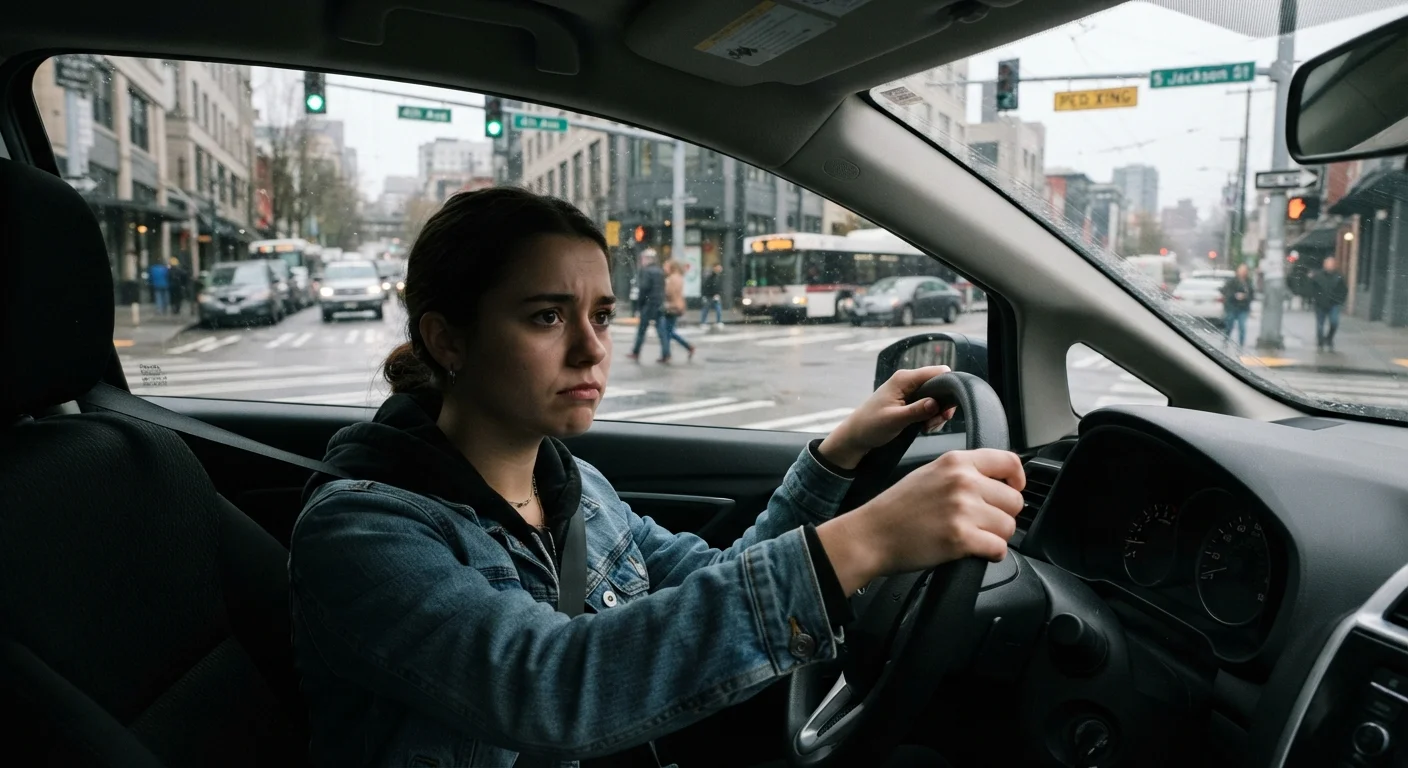
Most drivers know, in principle, that using a phone behind the wheel is dangerous. Yet surveys consistently show that a significant share of the same drivers who call it risky admit to doing it regularly. This gap between knowledge and behavior isn't simple hypocrisy - it's rooted in a cluster of well-documented cognitive biases that make self-assessment unreliable at the wheel.
The core problem is that distraction impairs the very faculties you'd need to notice you're impaired. When your brain is partially engaged with a phone conversation or a notification, your hazard detection degrades without producing an obvious warning signal. You don't feel slower. You don't feel less aware. You just are - and you don't know it in the moment.
Understanding the actual mechanisms of distraction, not just the general warning, is what helps drivers make meaningfully safer decisions. See also how consistent safety habits differ from relying on skill alone.
Myth
Hands-free calling is safe because my hands stay on the wheel and my eyes stay on the road.
Fact
Hands-free calling still produces significant cognitive distraction - your brain's capacity to detect and respond to hazards is reduced even when both hands are on the wheel.
The danger of phone use while driving isn't primarily about physical hand placement - it's about where your brain's attention is directed. Research on inattention blindness shows that drivers engaged in phone conversations (handheld or hands-free) fail to register visual information their eyes technically scan. You can be looking directly at a hazard and not consciously process it. This is fundamentally different from talking to a passenger, where a co-present person naturally pauses the conversation in complex traffic and provides an additional set of eyes on the road.
Myth
A quick glance at my phone only takes a second - that's not enough time to cause an accident.
Fact
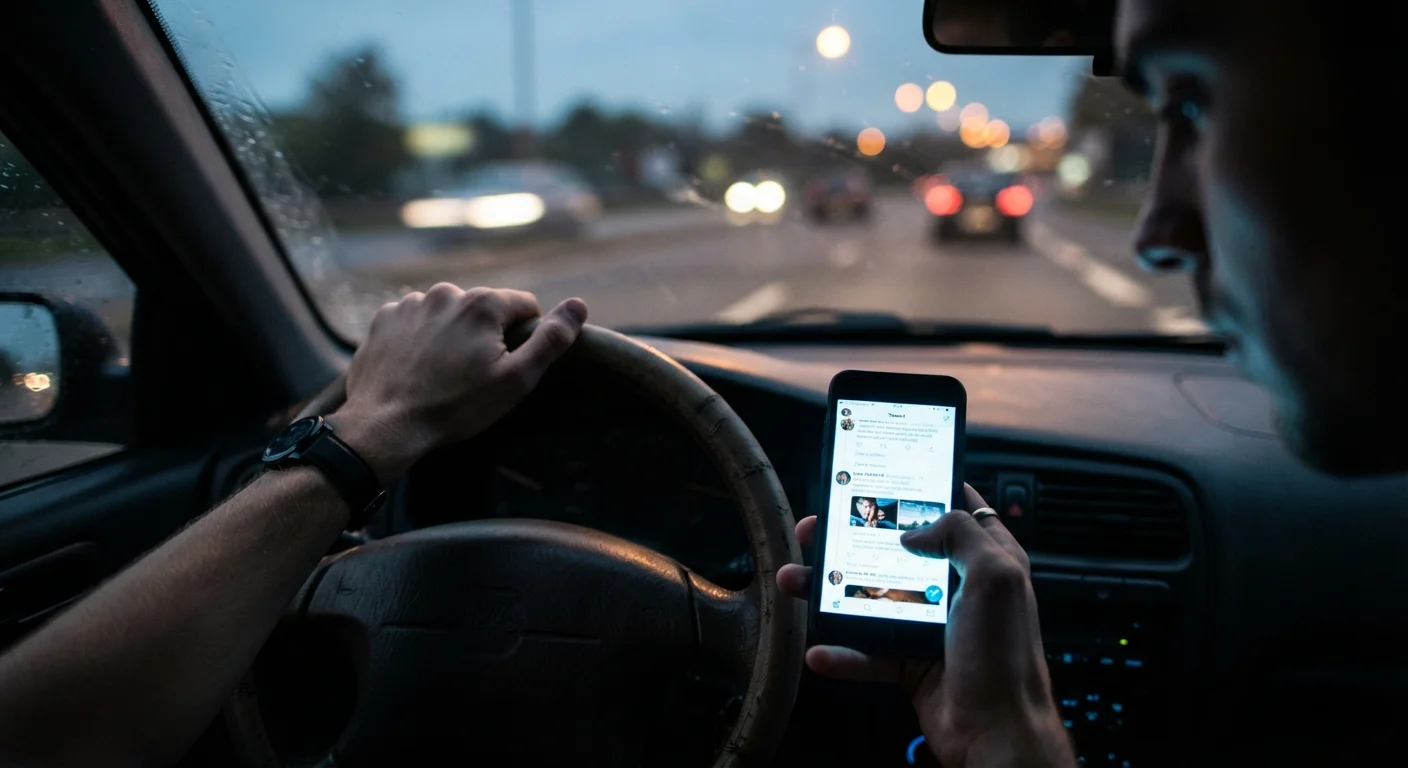
The average driver takes around 5 seconds to read or send a text. At highway speeds, that equates to traveling the length of a full football field without fully attending to the road.
The NHTSA has documented that text messaging creates a crash risk approximately 23 times higher than undistracted driving. A "quick glance" is rarely a single second in practice - the time to pick up the device, unlock it, read the message, and process the content routinely exceeds four to five seconds. Even short glances degrade performance not just during the look away, but in the seconds afterward as your attention refocuses. The road doesn't pause while you do.
Myth
I'm an experienced driver - my reflexes and muscle memory mean I can handle brief distractions better than a new driver.
Fact
Experience does not protect against the cognitive load imposed by phone use. Reaction time and hazard detection degrade regardless of driving experience when attentional resources are divided.
Experienced drivers do have more automated responses for routine driving tasks - but those automated responses depend on the brain's background monitoring system still being engaged. Phone use specifically taxes the prefrontal cortex, which governs attention allocation, hazard recognition, and decision-making. These higher-order processes don't become immune to overload with experience. Studies comparing novice and experienced drivers on dual-task performance (driving plus phone use) show performance degradation in both groups, with experienced drivers sometimes showing more overconfidence about their actual performance.
Myth
Voice-to-text is safe because I'm not looking at my phone.
Fact
Voice-to-text tasks still require significant mental engagement - composing, reviewing, and correcting messages demands cognitive resources that are drawn away from driving.
Research from the AAA Foundation for Traffic Safety found that voice-to-text messaging can be more mentally demanding than speaking on a handheld phone, largely because users compose sentences, monitor accuracy, and make corrections - all mentally intensive tasks. The eyes may remain forward, but attentional resources are split. Studies measuring brain activity during voice-to-text use show reduced activation in visual processing regions, meaning drivers see less of what's in front of them even though their eyes are open and pointed at the road.
Myth
I only use my phone at red lights or in slow traffic, so the risk is minimal.
Fact
Cognitive engagement with a phone persists for several seconds after you put it down, meaning impairment carries over into moving traffic even if you stop interacting before the light changes.
Researchers refer to this lag as an attention residue effect. When you put a phone down after reading or composing something, full cognitive focus on driving doesn't return instantaneously - studies suggest residual distraction can persist for 15 to 27 seconds. In a slow traffic scenario, that window often covers the moment cars begin moving again and the most immediate hazard-detection demands peak. Distraction at the point of resuming motion is a particularly common contributor to low-speed rear-end collisions at intersections.
The Numbers Behind the Risk
Research from the National Highway Traffic Safety Administration (NHTSA) and independent traffic safety bodies has produced a consistent body of evidence on distracted driving. The figures are striking not because they confirm phones are dangerous, but because they reveal how large the impairment actually is compared to most drivers' estimates.
23×
Increased crash risk while texting
According to NHTSA research, text messaging while driving creates a crash risk approximately 23 times higher than undistracted driving.
~400 ft
Distance covered in a 5-second phone glance at 55 mph
NHTSA estimates that at highway speeds, the average text-related glance away from the road covers roughly the length of a football field.
4×
Elevated crash risk from any handheld phone use
Research published by the Insurance Institute for Highway Safety indicates that handheld phone use of any kind raises crash risk roughly fourfold.
This scale of impairment places phone-distracted driving in the same risk category as other well-understood dangers like fatigue. Driver fatigue research shows similarly degraded reaction time and hazard detection - yet most drivers treat both conditions as manageable with a little extra effort. That assumption is where the risk compounds.
Newer drivers face a compounded challenge. Hazard perception and situational awareness are skills that develop gradually with experience, meaning less-practiced drivers have less cognitive reserve to absorb distractions. New drivers already face elevated risk from gap-judgement errors and overconfidence - adding phone use to that equation meaningfully raises the probability of a serious incident.
Impairment You Won't Feel in the Moment
Cognitive distraction is uniquely dangerous because it doesn't produce a subjective warning signal. Unlike fatigue - where drowsiness is noticeable - attentional impairment from phone use feels normal while it's happening. Drivers reliably rate their own performance higher than it actually measures in controlled studies. This means self-monitoring alone is not a reliable safety strategy; the phone needs to be physically removed from reach before the drive begins.
Building Habits That Actually Stick
Awareness of the risk is a starting point, but it rarely changes behavior on its own. The most effective countermeasures work by removing the decision in the moment - before the phone buzzes and the habitual impulse kicks in.
Practical approaches that traffic safety researchers and driver educators consistently recommend include: placing the phone in a bag or the back seat before driving (out of reach, not just out of sight), using built-in Do Not Disturb While Driving modes available on most smartphones, and establishing a personal rule of stopping safely before checking any notification. These are behavioral design choices, not willpower exercises.
The broader framework here aligns with defensive driving principles - the idea that safe driving is built on anticipation and preparation, not on reacting well under pressure. A driver who has already decided not to interact with their phone doesn't need to exercise restraint at the moment of distraction. The decision is already made.
Conditions that already tax attention - night driving, heavy traffic, unfamiliar routes - amplify the cost of any additional distraction. Night driving already reduces hazard perception; layering phone use on top creates compounding impairment that most drivers don't account for.
State Laws Are a Floor, Not a Safety Standard
Hands-free laws in many US states legally permit phone calls while driving, which some drivers interpret as confirmation those calls are safe. The research evidence does not support that interpretation - legal permission and cognitive safety are not the same thing. Compliance with local distracted driving laws is necessary but not sufficient for minimizing distraction risk.